 Send
Send Share
Share
 Details

 Download
 Similars
 Diaporama
Bust of the Regent


 Read More
Giclée / Art Print
Museum-quality giclée or canvas print with fast production and flexible finish options. ( Buy Hand Made Painting Buy Image)




































Pick from our preset sizes that match the artwork's original proportions.

You may enter your own dimensions to fit a specific frame or space. If your selected size does not match the original image's proportions, we will either crop the artwork or extend the image with a mirrored or solid-fill edge. A digital mockup will be sent for your approval before production begins.
Please note that the on-screen preview does not reflect the actual cropping or extension. Only the mockup will accurately show the final composition.
While custom sizes are available, we recommend selecting a dimension from the predefined list to preserve the original proportions.
Worldwide Delivery () in 2 weeks instead of standard 4/5 weeks. (22 August)

Free Worldwide Express Shipping

High-Quality Linen Canvas

Full Shipping Insurance

Customs Tax Refund Guarantee

True Color Matching Guarantee

60-Day Return Policy (Defects Only)

100% Money-Back Guarantee

Bulk Discount Offer
 Glass option is only available in size under 110 CM

Bust of the Regent
Giclée / Art Print
Reproduction Size
-


Total Price
$ 63
Collectible Description
A Vision of Regal Authority
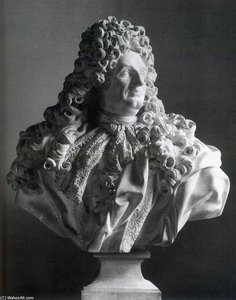
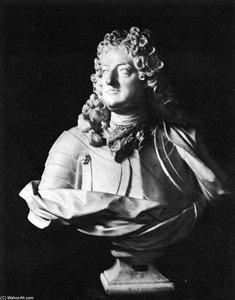
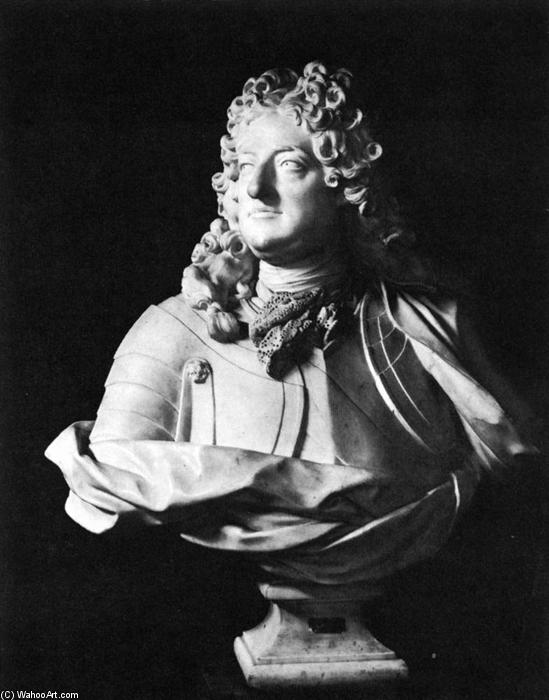
In the quiet majesty of Jean Louis Lemoyne’s Bust of the Regent, we encounter more than just a fragment of stone; we meet the very essence of eighteenth-century power. Created in 1715, this exquisite marble sculpture serves as a profound window into the era of French Neoclassicism, capturing a moment where the weight of political responsibility meets the grace of artistic refinement. The subject, a figure of immense stature known as "The Regent," is rendered with a dignified composure that commands immediate respect. Through the masterful manipulation of light and shadow, Lemoyne breathes life into the cold marble, transforming it into a vessel of character and historical significance.
The composition of the bust is a masterclass in balanced dynamism. While the figure appears anchored by a sense of eternal stillness, there is a subtle movement captured in the gaze directed toward the upper right, suggesting a leader looking toward a future shaped by his decisions. The crossed arms of the subject do not merely suggest rest, but rather a controlled strength and an air of impenetrable authority. For the discerning collector or interior designer, this piece offers a focal point of profound gravity, capable of anchoring a room with its classical elegance and commanding presence.
The Artistry of Form and Texture
To behold this work is to appreciate the incredible technical virtuosity of Lemoyne’s hand. The sculptor demonstrates an unparalleled ability to differentiate textures within a single medium. One can almost feel the contrast between the smooth, polished skin of the face and the intricate, voluminous curls of the elaborate wig that frames the head. The drapery of the clothing flows with a liquid grace, where deep folds create pockets of shadow that lend the sculpture a breathtaking three-dimensional depth. This interplay of light—often referred to as chiaroscuro in a sculptural context—accentuates every contour and subtle imperfection of the marble, making the stone appear soft, almost organic.
The stylistic elements of the piece bridge the gap between the ornate flourishes of the late Baroque and the restrained beauty of Neoclassicism. The sharp, clean lines of the decorative collar provide a structural counterpoint to the rounded, flowing forms of the hair and face. This tension between the angular and the organic creates a visual rhythm that keeps the eye moving across the surface, discovering new details with every glance. It is this meticulous attention to detail that makes a high-quality reproduction of such a work so impactful; it allows the play of light and the intricate textures to become a living part of a modern interior.
A Legacy of Elegance for the Modern Space
Beyond its physical beauty, the Bust of the Regent carries an emotional weight that transcends time. It evokes a sense of nostalgia for an age of grandeur, making it an ideal choice for those looking to infuse their spaces with a sense of history and intellectual depth. Whether placed in a sunlit library, a formal study, or a sophisticated gallery setting, the bust acts as a silent storyteller, whispering tales of French courtly life and the enduring pursuit of idealized beauty.
For the art lover seeking to curate a collection that speaks of permanence and prestige, this sculpture represents an incomparable investment in aesthetic excellence. A reproduction of Lemoyne’s masterpiece allows for the appreciation of such monumental history within the intimacy of a private home. It is not merely a decoration, but an invitation to contemplate the intersection of human ambition and artistic perfection, bringing the timeless spirit of 1715 into the contemporary world.
Related Artworks
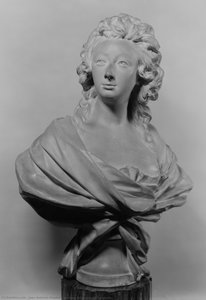
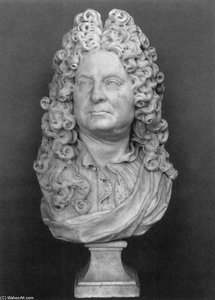
Artist Biography
The Sculptural Legacy of Jean-Louis Lemoyne
In the grand tapestry of eighteenth-century French art, few names evoke the delicate transition from the structured grandeur of the Baroque to the playful intimacy of the Rococo as effectively as Jean-Louis Lemoyne. Born in Paris in 1704, Lemoyne was a man shaped by the very essence of the French artistic tradition. As a sculptor deeply embedded in the cultural fabric of his era, his life and work were inextricably linked to a lineage of masters. He was not merely an individual creator but a vital link in a generational chain of talent, inheriting a profound understanding of form, texture, and the emotive power of stone and bronze.
The foundations of Lemoyne's artistry were laid within the prestigious workshops of Paris, where the influence of his contemporaries and predecessors provided a rigorous training ground. His development was characterized by an ability to capture the fleeting nuances of human expression, a skill that would become his hallmark. While much of the historical narrative surrounding his era focuses on the dramatic shifts in political power, Lemoyne’s work remained focused on the enduring beauty of the human figure, navigating the complex waters between the formal requirements of royal commissions and the burgeoning desire for more naturalistic, emotive portraiture.
A Mastery of Form and Emotion
To observe a work by Lemoyne is to witness a delicate dance between strength and softness. His technique was marked by an extraordinary command over his medium, allowing him to imbue cold materials with a sense of warmth and vitality. He possessed a unique ability to manipulate light and shadow across the surfaces of his sculptures, creating a sense of movement that seemed to defy the stillness of the medium. This mastery was particularly evident in his approach to portraiture, where he sought to capture not just the physical likeness of his subjects, but their very essence—the subtle flicker of a smile or the dignified weight of a gaze.
His contributions to the sculptural landscape were significant, contributing to an era where art served as both a mirror to the aristocracy and a testament to the technical prowess of French craftsmen. Through his work, we see the evolution of a style that embraced:
- The Intimacy of Rococo: A focus on smaller-scale, more personal subjects that allowed for greater detail and emotional resonance.
- Classical Foundations: An underlying respect for the proportions and structural integrity inherited from the classical tradition.
- Textural Realism: The meticulous rendering of fabrics, lace, and skin to create a lifelike presence within the sculpture.
Historical Significance and Artistic Resonance
The era in which Jean-Louis Lemoyne practiced was one of profound transformation, as the rigid hierarchies of the previous century began to yield to the more fluid social structures of the Enlightenment. His work stands as a testament to this period of transition. While some critics of later movements would look back upon the Rococo style with skepticism, viewing it as a departure from classical austerity, Lemoyne’s ability to bridge these two worlds ensures his place in the canon of great French sculptors. He helped define an aesthetic that celebrated elegance, grace, and the profound beauty found in the momentary.
Though time and the turbulent shifts of history have obscured some of the finer details of his complete oeuvre, the impact of his vision remains palpable. His legacy is found in the way he taught future generations to look beyond the surface of a subject, seeking instead the soul beneath the stone. In the annals of art history, Lemoyne remains a vital figure whose work continues to inspire awe through its seamless blend of technical perfection and heartfelt expression.
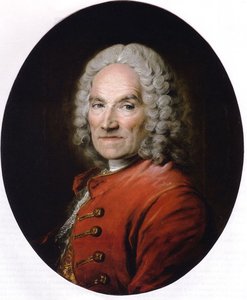
jean louis lemoyne
1704 - 1778 , France
Quick Facts
- Artistic Movement Or Style: Rococo
- Artists Or Movements Influenced By This Artist: ['Neoclassicism']
- Artists Who Influenced This Artist:
- Robert Le Lorrain
- Jean Louis Lemoyne (father)
- Date Of Birth: Paris, France (1679)
- Date Of Death: Paris, France (1731)
- Full Name: Jean-Baptiste Lemoyne
- Nationality: French
- Notable Artworks:
- A Companion of Diana
- Bust of the Regent
- Place Of Birth: Paris
Related Articles
The Enduring Allure of Marble in Art History: From Classical Sculpture to Modern Abstraction
Explore the captivating history of marble sculpture from ancient Greece to modern art. Discover renowned artists like Canova & Michelangelo, carving techniques, and investment insights at ArtsDot.

Bronze Sculptures That Defined Art History | ArtsDot
Journey through art history with our Top 10 bronze sculptures! Explore masterpieces by Rodin, Michelangelo & more. Discover stories behind iconic statues and find museum-quality reproductions for your home decor at ArtsDot.com.

The Enduring Form: Exploring Themes & Techniques in Sculpture Across Historical Periods
Explore the rich history of sculpture from ancient masterpieces to contemporary innovations. Discover key techniques, influential artists & investment potential for discerning art collectors.
The Enduring Form: Sculpture Across History, Technique & Emotional Resonance
Explore the rich history of sculpture with ArtsDot. Discover key techniques, influential artists & investment potential for discerning collectors. Expert insights into valuing and collecting timeless masterpieces.
Antonio Canova: Neoclassical Sculpture & the Pursuit of Emotional Perfection
Explore the life & art of Antonio Canova, the greatest Neoclassical sculptor. Discover his masterpieces, innovative techniques, and lasting influence on fine art collecting. Expert insights for discerning investors.