

 Preview
 Send
Send Share
Share
 Details

 Download
 Similars
 X-Ray
X-Ray Diaporama
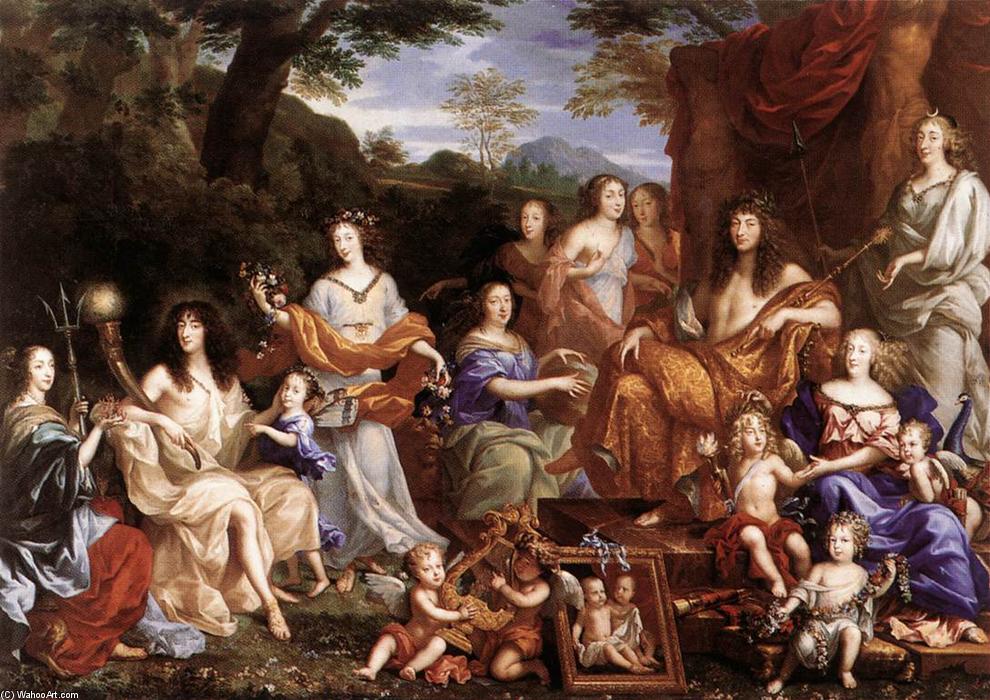
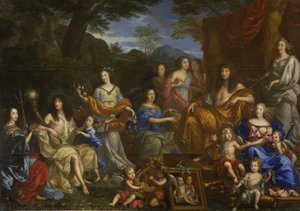
The Family of Louis XIV
 Oil On Canvas
- WallArt
- Baroque
 1670
1670- Early Modern
 305.0 x 420.0 cm
 Château de Versailles
 Read More
Purchase a high-resolution, enhanced digital image, far superior to the online preview.
Each file is meticulously prepared by our in-house specialists using advanced tools and expert manual retouching. We ensure every image has exceptional clarity, precise color accuracy, and fine detail.
The final file is delivered via email within 72 hours, optimized for immediate use in professional, editorial, and print environments. This is the same quality trusted by top-tier design studios, publishers, and galleries.
Digital Image
Download a high-resolution file for personal display, printing, and creative projects. ( Buy Print Buy Hand Made Painting)
Included in Every Digital Image Order
Expert Digital Delivery, Guaranteed
When you choose ArtsDot.com, you're not just getting an image - you're receiving a professionally enhanced digital artwork, crafted with precision and backed by a satisfaction guarantee. Here's everything that comes with your order, automatically:

Fast Email Delivery
Your high-resolution digital image file will be emailed to you within 72 hours of ordering - ready for immediate use.

AI-Enhanced Digital File
Your artwork is professionally optimized using advanced AI tools and manual editing, ensuring maximum detail, clarity, and color accuracy.

Free Lifetime Re-Delivery
Accidentally deleted or lost your file? No worries - we'll resend it to you anytime, free of charge.

No Import Fees - Ever
Enjoy your artwork instantly with zero customs, duties, or delivery fees - digital downloads are always tax-free.

Color Accuracy Guarantee
We ensure your digital image reflects the original colors as closely as possible using professional tools and color management.

60-Day Satisfaction Guarantee
If you're not satisfied with your digital image, we'll revise it or refund 100% within 60 days - no questions asked.

100% Money-Back Guarantee
Not satisfied? Get a full refund within 60 days of receiving your digital file - no questions asked.

Bulk Order Discounts
Buy 3 images, save 10% - Buy 5, save 15% - Buy 10+, save 20%. Great for creative projects, galleries, and agencies.
A Divine Assembly: The Majesty of the Sun King
To stand before Jean Nocret’s 1670 masterpiece, The Family of Louis XIV, is to be transported into the very heart of French absolutism. This is not merely a portrait of a royal lineage; it is a breathtakingly orchestrated allegory that blurs the line between the mortal and the divine. At its center sits Louis XIV, the Sun King, rendered not just as a monarch, but as the radiant god Apollo. He occupies a throne of golden splendor, his presence anchoring a composition that feels both monumental and intimately powerful. Beside him, Queen Marie-Thérèse is transformed into Juno, the queen of the gods, embodying a sense of celestial protection and matrimonial grace. The painting serves as a visual manifesto, designed to convince the viewer of the divine right of the Bourbon dynasty through a sophisticated language of myth and light.
The sheer scale of the work—a commanding 305 x 420 cm—demands an emotional response, pulling the observer into a world where every gesture and every fold of fabric carries profound weight. Nocret masterfully weaves the royal children into this celestial tapestry, portraying them alongside figures like Diana, the goddess of the hunt, to imbue the young heirs with qualities of virtue, nobility, and strength. The background, a stylized glimpse of Mount Olympus, provides a lush, ethereal stage that elevates the French court from the terrestrial realm to the heights of eternal legend.
Technique and the Baroque Brilliance
Executed with the meticulous precision characteristic of the late French Baroque, Nocret’s technique is a triumph of oil on canvas. The artist employs a sophisticated layering of glazes to achieve a luminous depth that seems to glow from within the fabric itself. One can almost feel the tactile richness of the heavy golden draperies and the intricate, shimmering patterns of the royal costumes. Through the careful application of impasto, Nocret creates highlights that catch the light, lending a three-dimensional vitality to the figures that makes them appear to breathe within their mythological landscape.
The color palette is a symphony of regal tones—deep golds, royal blues, and rich crimsons—balanced by the soft, atmospheric greens and earthy hues of the Olympian backdrop. This careful tonal management ensures that while the central figures command absolute attention, the eye is constantly led through the complex narrative of the painting. For the collector or interior designer, this work offers an unparalleled sense of drama and prestige. A high-quality reproduction of such a piece brings with it the opulence of Versailles, offering a focal point that radiates historical significance, academic excellence, and an enduring sense of grandeur.
A Legacy of Power and Decoration
Commissioned for Monsieur Philippe d’Orléans, the King's brother, this artwork was born from a desire to decorate the most prestigious spaces of the French aristocracy with scenes of mythic importance. Nocret, a student of the great Jean LeClerc and an artist who moved in the circles of Nicolas Poussin, understood how to use art as a tool for political and social elevation. The painting reflects the era's obsession with French Classicism—a style defined by harmony, regularity, and an unshakeable sense of majesty.
In a contemporary setting, The Family of Louis XIV serves as more than just decoration; it is a conversation piece that evokes the golden age of the Château de Versailles. Whether placed in a grand salon or a sophisticated study, the painting provides a window into an era where art was the ultimate expression of sovereignty. It offers an atmosphere of timeless elegance, making it an ideal choice for those looking to infuse their spaces with the weight of history and the breathtaking beauty of the Baroque spirit.
Related Artworks
Artist Biography
Salvator Rosa: A Rebel of the Italian Baroque
Salvator Rosa (1615 – 15 March 1673) stands as a singular and profoundly influential figure within the tumultuous landscape of 17th-century Italian art. More than simply a painter, he was a poet, satirist, actor, musician, and printmaker—a true Renaissance man whose life was as vibrant and unconventional as his artwork. Born in Arenella, near Naples, Rosa’s trajectory defied easy categorization, oscillating between the formal training of the Baroque and a fiercely independent spirit that ultimately defined his artistic legacy. His work, particularly his dramatic landscapes imbued with a sense of wildness and untamed nature, exerted an unexpected yet powerful influence on the burgeoning Romantic movement centuries later.Early Life and Artistic Training
Rosa’s early life was marked by instability and hardship. He received limited formal training, initially apprenticed to the painter Francesco Napione in Naples. However, it was his encounter with the established Neapolitan artist, Giuseppe Carafa, that proved pivotal. Carafa recognized Rosa's raw talent and encouraged him to embrace a more expressive and less rigidly academic approach. This mentorship fostered a distinctive style characterized by bold brushstrokes, dramatic lighting, and an intense emotionality—a departure from the polished elegance favored by many of his contemporaries. Rosa’s early works often depicted scenes of battle, mythological subjects, and portraits, reflecting the artistic trends of Naples at the time. Yet, even in these initial pieces, a rebellious streak began to emerge, foreshadowing his later rejection of conventional artistic norms.Rome: Scandal and Innovation
In 1639, Rosa moved to Rome, a city teeming with artistic competition and intellectual ferment. It was here that he truly established himself as a controversial figure. His satirical poems and prints, often sharply critical of the Papal court and its artists—particularly the celebrated Gian Lorenzo Bernini—earned him powerful enemies. Rosa’s outspokenness led to periods of exile and forced relocation throughout his career, yet it also fueled his artistic innovation. He sought out obscure and challenging subjects – forgotten biblical tales, esoteric philosophical concepts, and scenes of witchcraft – often rendering them with a visceral intensity that was both unsettling and captivating. His frescoes for the Palazzo Pamphili in Valmontone, depicting scenes from Virgil’s *Aeneid*, are prime examples of this approach: grand historical narratives presented through a lens of rugged wilderness and dramatic emotion.The Landscape as Revelation
Rosa's most enduring contribution to art lies in his revolutionary landscapes. Unlike the idealized, harmonious vistas championed by artists like Claude Lorrain, Rosa’s scenes were imbued with a sense of primal power and untamed beauty. He depicted towering cliffs, gnarled trees, stormy skies, and treacherous rivers—elements that evoked both awe and terror. These weren't picturesque views designed for tranquil contemplation; they were representations of nature in its rawest, most formidable state. Rosa’s landscapes anticipated the Romantic sensibility by prioritizing emotional response over rational observation, capturing a world where humanity was dwarfed by the overwhelming forces of nature. His work challenged the established conventions of landscape painting and paved the way for future generations of artists who sought to capture the sublime in their art.Legacy and Influence
Despite facing periods of obscurity during his lifetime, Salvator Rosa’s influence grew steadily over the centuries. In 18th-century England, his work was embraced by Romantic poets like James Thomson and William Wordsworth, who celebrated his depiction of wild nature as a symbol of freedom and rebellion. Rosa became a cult figure, his life embellished with tales of banditry and wanderlust—a romanticized persona that mirrored the spirit of his art. Today, Rosa is recognized as a pivotal figure in the transition from Baroque to Romanticism, a master of dramatic composition, and an artist who dared to challenge artistic conventions with unwavering conviction. His paintings continue to resonate with viewers today, offering a powerful reminder of the enduring allure of untamed beauty and the transformative power of artistic rebellion.
jean nocret
1615 - 1672 , France
Quick Facts
- Artistic Movement Or Style: Baroque, Romanticism
- Artists Or Movements Influenced By This Artist: ['Romanticism']
- Artists Who Influenced This Artist: ['Nicolas Poussin']
- Date Of Birth: June 20, 1615
- Date Of Death: March 15, 1673
- Full Name: Salvator Rosa
- Nationality: Italian
- Notable Artworks:
- Sacrifice of Abraham
- River Landscape with Apollo
- Place Of Birth: Arenella, near Naples

