 Preview
 Send
Send Share
Share
 Details

 Download
 Similars
 X-Ray
X-Ray Diaporama
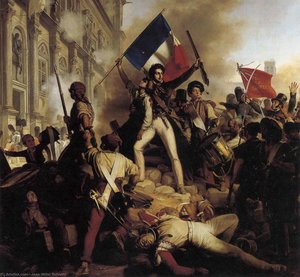
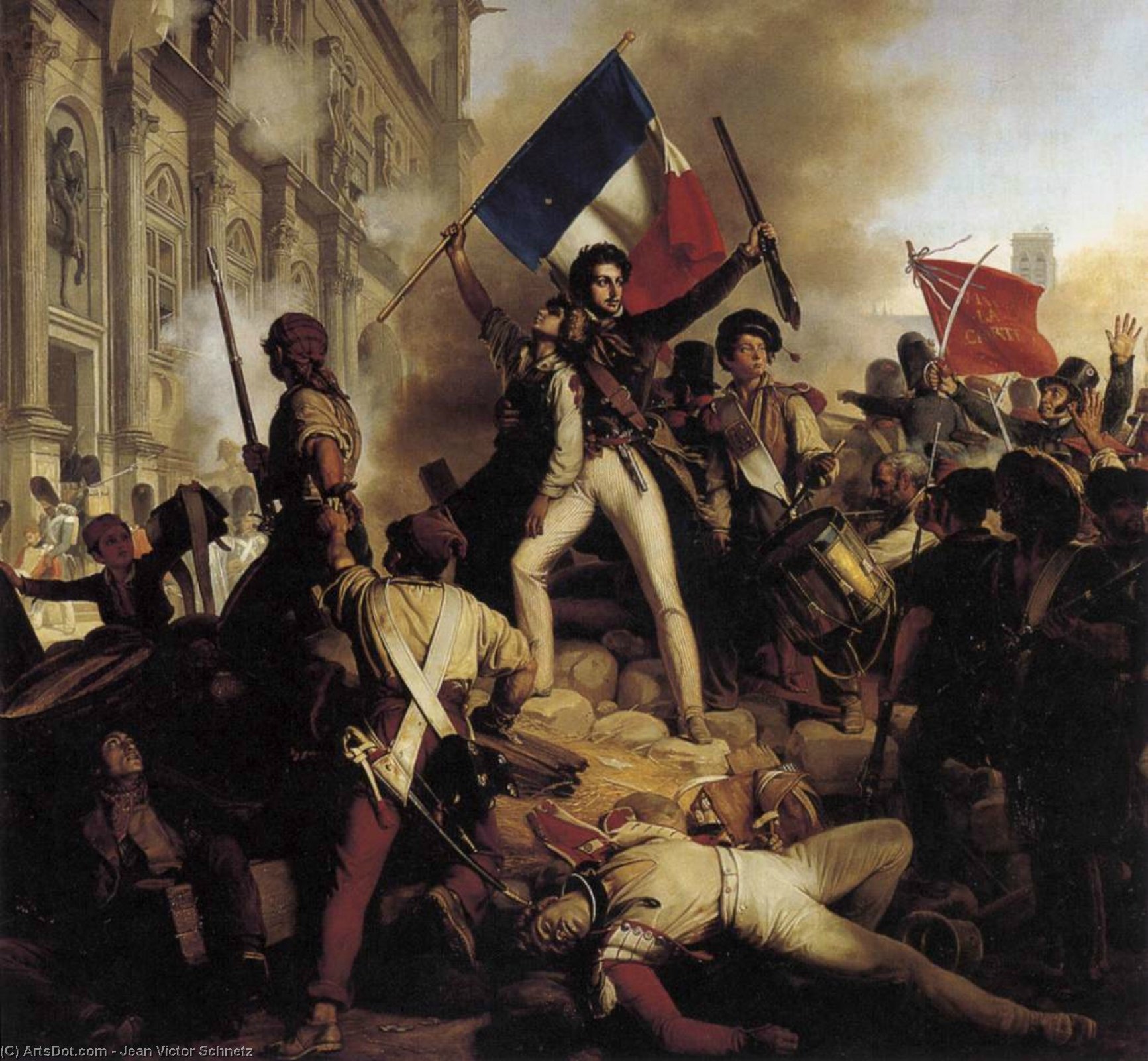
The Battle for the Town Hall, 28 July 1830


 Read More
Hand Made Oil Reproduction
Hand-painted oil on canvas in your size and frame, made to order by our artists. ( Buy Print Buy Image)




































Pick from our preset sizes that match the artwork's original proportions.

You may enter your own dimensions to fit a specific frame or space. If your selected size does not match the original image's proportions, we will either crop the artwork or extend the painting with additional hand-painted elements. A digital mockup will be sent for your approval before production begins.
Please note that the on-screen preview does not reflect the actual cropping or extension. Only the mockup will accurately show the final composition.
While custom sizes are available, we recommend selecting a dimension from the predefined list to preserve the original proportions.
After order, ArtsDot.com team will email client for instructions and provide a mockup preview
Worldwide Delivery () in 3/4 weeks instead of standard 5 weeks. (16 August). No compromise on quality.

Free Worldwide Express Shipping

High-Quality Linen Canvas

Full Shipping Insurance

Customs Tax Refund Guarantee

True Color Matching Guarantee

60-Day Return Policy (Defects Only)

100% Money-Back Guarantee

Bulk Discount Offer
 Glass option is only available in size under 110 CM

The Battle for the Town Hall, 28 July 1830
Reproduction Medium
Reproduction Size
-


Total Price
$ 438
Artwork Description
A Symphony of Revolution: The Spirit of 1830
In the heart of Jean-Victor Schnetz’s masterpiece, The Battle for the Town Hall, 28 July 1830, we are thrust into the very epicenter of French history. This large-scale oil painting is not merely a depiction of a historical date; it is a visceral experience of revolutionary fervor. As the viewer approaches this canvas, they are met with a chaotic and dramatic scene that captures the precise moment when the streets of Paris became a stage for upheaval. The composition is masterfully dense, pulling the observer into a crowded throng of revolutionaries whose bodies overlap in a rhythmic, almost musical, display of struggle. At the heart of this tumult, a central figure rises above the fray, dramatically hoisting the tricolor flag. This single, powerful gesture serves as the painting's emotional and visual anchor, directing the eye upward toward the symbols of liberty, equality, and fraternity that defined an era.
The artistry of Schnetz lies in his ability to balance the meticulous discipline of his Neoclassical training under Jacques-Louis David with the burgeoning, untamed energy of the Romantic movement. The technique is characterized by a rich, impastoed texture that lends a sense of physical weight to the scene. Light plays a transformative role here; a dramatic, spotlight-like illumination strikes the central figures, carving them out from the deep, atmospheric shadows that shroud the periphery. This chiaroscroll effect does more than create depth—it heightens the tension, casting the smoke and haze of battle in a way that feels both immediate and legendary. The brushwork is energetic, capturing the movement of cloth, the grit of the streets, and the raw determination etched into the faces of the combatants.
Symbolism and the Romantic Vision
Beyond the surface-level action, the painting serves as a profound exploration of political symbolism and human emotion. Every element within the frame is imbued with meaning. The tricolor flag is not just a piece of fabric; it is a beacon of republicanism, standing in stark contrast to the darker, more uncertain tones of the background. The organic shapes of the crowd—the limbs, the weapons, and the flowing garments—create a sense of an unstoppable force of nature, representing the collective will of the people. Schnetz utilizes a flattened perspective in certain areas to intensify this feeling of claustrophobia and urgency, making the viewer feel as though they are standing amidst the barricades themselves.
For the discerning collector or interior designer, this artwork offers more than just historical interest; it provides a commanding presence. The painting’s ability to evoke passion and drama makes it an extraordinary centerpiece for a room designed to inspire thought and conversation. Whether placed in a grand library, a sophisticated study, or a contemporary gallery space, a high-quality reproduction of this piece brings with it the weight of history and the timeless beauty of the Romantic spirit. It is a work that celebrates the resilience of the human spirit and the enduring power of ideals, making it an investment in both art and emotion.
Related Artworks

Artist Biography
The Master of History: The Life and Legacy of Jean-Victor Schnetz
In the grand tapestry of nineteenth-century French art, few threads are as intricately woven between the disciplined precision of Neoclassicism and the turbulent passion of Romanticism as those belonging to Jean-Victor Schnetz. Born on April 14, 1787, in the regal surroundings of Versailles, Schnetz emerged from an era defined by monumental shifts in political and aesthetic thought. His early artistic formation was profoundly shaped by the shadow of the legendary Jacques-Louis David, the titan of Neoclassicism. Under David’s rigorous tutelage, Schnetz mastered the art of anatomical accuracy, balanced composition, and a certain sculptural clarity that would remain a hallmark of his technical prowess throughout his long career.
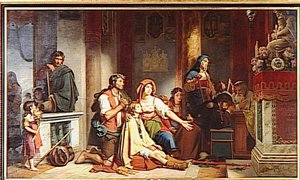
As the decades progressed, however, the rigid structures of the Davidian school began to yield to a more emotive and dramatic sensibility. Schnetz proved himself not merely a student of tradition but a versatile visionary capable of navigating this profound stylistic evolution. While his foundational training instilled in him a meticulous attention to detail—evident in works such as “LE VOEU A LA MADONNE”—his heart increasingly beat in rhythm with the Romantic movement. He began to infuse his canvases with a sense of narrative urgency and emotional depth, moving away from static idealism toward the capturing of fleeting, high-stakes moments in human history.
A Career of Grandeur and Institutional Eminence
The trajectory of Schnetz’s life was marked by significant professional triumphs that elevated him to the highest echelons of the French art world. His ability to blend historical accuracy with dramatic flair earned him the respect of royal patrons and secured his place in the most prestigious galleries of Europe. His works found permanent homes in institutions that remain pillars of cultural heritage today, including the Louvre Museum and the Petit Palais in Paris.
Beyond the easel, Schnetz was a pivotal figure in the institutional life of French art. His influence extended far beyond his own brushstrokes through several key roles:
- Academic Recognition: His election to the Académie des Beaux-Arts in 1837 served as a formal validation of his mastery and standing among his peers.
- Leadership in Rome: Serving twice as the Director of the French Academy in Rome (1841–1846 and 1853–1866), he acted as a vital mentor to a new generation of painters, fostering an environment where classical tradition could meet modern innovation.
- National Honors: His contributions to French culture were recognized with the prestigious Legion of Honor, receiving both the Knight’s Cross in 1825 and the Commander’s Cross in 1866.
The Narrative Canvas: Historical Depth and Emotional Resonance
To gaze upon a Schnetz painting is to witness history unfolding with theatrical intensity. His oeuvre is characterized by a profound dedication to historical and genre scenes, often focusing on pivotal European milestones. He possessed a unique ability to transform a mere chronicle of events into a living, breathing drama. One of his most evocative achievements is “The Battle for the Town Hall,” painted in 1830, which captures the raw, chaotic energy of the July Revolution with an emotional charge that resonates long after the viewer has turned away.
His technical approach often utilized oil on canvas to create rich textures and deep, atmospheric lighting, a technique that allowed him to bridge the gap between the clarity of his Neoclassical roots and the moody, chiaroscuro-driven aesthetics of Romanticism. Whether depicting the solemnity of a monarch receiving an envoy or the frantic movement of a battlefield, Schnetz maintained a sense of dignity and structural integrity. His legacy remains that of a painter who did not merely record the past but breathed life into it, ensuring that the triumphs and tribulations of history were preserved through the lens of profound human emotion.
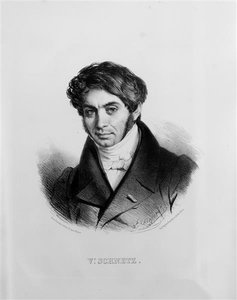
jean victor schnetz
1787 - 1870 , France
Quick Facts
- Artistic Movement Or Style: Academic Painter
- Artists Or Movements Influenced By This Artist: ['Romanticism']
- Artists Who Influenced This Artist: ['Jacques-Louis David']
- Date Of Birth: Versailles, France (1787)
- Date Of Death: 1870
- Full Name: Jean Victor Schnetz
- Nationality: French
- Notable Artworks:
- The Battle for the Town Hall, 28 July 1830
- LE VOEU A LA MADONE
- Place Of Birth: Versailles
Related Articles
Romantic Realism's Finest: 10 Masterpieces for Your Home | ArtsDot
Explore 10 defining masterpieces of Romantic Realism! Discover Courbet, Millet & Daumier's powerful paintings—capturing emotion and social realities. Find museum-quality reproductions for your home at ArtsDot.com.

The Enduring Legacy of Oil on Canvas: Technique, History & Aesthetic Impact
Explore the rich history & techniques of oil painting – from Renaissance masters to Impressionism. Discover pigments, layering methods, and why this timeless medium endures. Expert insights for artists & art enthusiasts.

Oil on Canvas: A Historical & Technical Exploration of a Timeless Artistic Medium
Explore the rich history & enduring techniques of oil painting on canvas. Discover the science behind its longevity, conservation practices, and contemporary relevance. Expert insights for art enthusiasts.
Émile Jean Horace Vernet: Romantic Realism & Depicting 19th-Century Life
Explore the life & art of Émile Jean Horace Vernet, a master of Romantic Realism. Discover his captivating battle scenes, portraits, and Orientalist works – a window into 19th-century France. Learn about his techniques & enduring legacy.

The Enduring Power of Painting: A Historical & Contemporary Exploration of Form and Emotion
Explore the rich history & enduring techniques of oil painting with ArtsDot. Discover masterpieces, learn about art collecting, and find authentic handmade reproductions crafted by skilled artists.