 Preview
 Send
Send Share
Share
 Details

 Download
 Similars
 X-Ray
X-Ray Diaporama
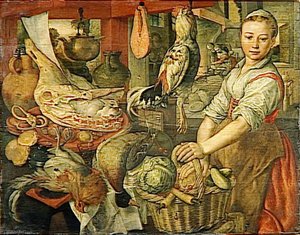
INTERIEUR DE CUISINE


 Read More
Hand Made Oil Reproduction
Hand-painted oil on canvas in your size and frame, made to order by our artists. ( Buy Print Buy Image)




P118B $10

P118H $10

P118W $10

P438Z $10

P508JH $12

P508YH $12

P805H $10

P805Z $10

P919BZ $10

P919G $10

P919XJ $10

P959ZH $10

P968JZ $12

W106C $8

W218G $10

W218JH $8

W218Y $10

W307PJ $10

W316G $10

W316PJ $8

W316Y $10

W398PJ $8

W4111J $10

W500HY $15

W500JH $15

W692G $12

W849H $8

W940BG $15

W953PJ $8




Pick from our preset sizes that match the artwork's original proportions.

You may enter your own dimensions to fit a specific frame or space. If your selected size does not match the original image's proportions, we will either crop the artwork or extend the painting with additional hand-painted elements. A digital mockup will be sent for your approval before production begins.
Please note that the on-screen preview does not reflect the actual cropping or extension. Only the mockup will accurately show the final composition.
While custom sizes are available, we recommend selecting a dimension from the predefined list to preserve the original proportions.
After order, ArtsDot.com team will email client for instructions and provide a mockup preview
Worldwide Delivery () in 3/4 weeks instead of standard 5 weeks. (17 August). No compromise on quality.

Free Worldwide Express Shipping

High-Quality Linen Canvas

Full Shipping Insurance

Customs Tax Refund Guarantee

True Color Matching Guarantee

60-Day Return Policy (Defects Only)

100% Money-Back Guarantee

Bulk Discount Offer
 Glass option is only available in size under 110 CM

INTERIEUR DE CUISINE
Reproduction Medium
Reproduction Size
-


Total Price
$ 263
Artwork Description
A Window Into Domesticity: Joachim Beuckelaer’s “Interieur de Cuisine”
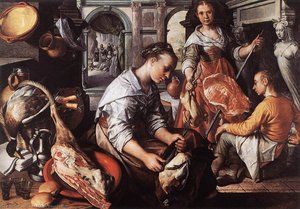
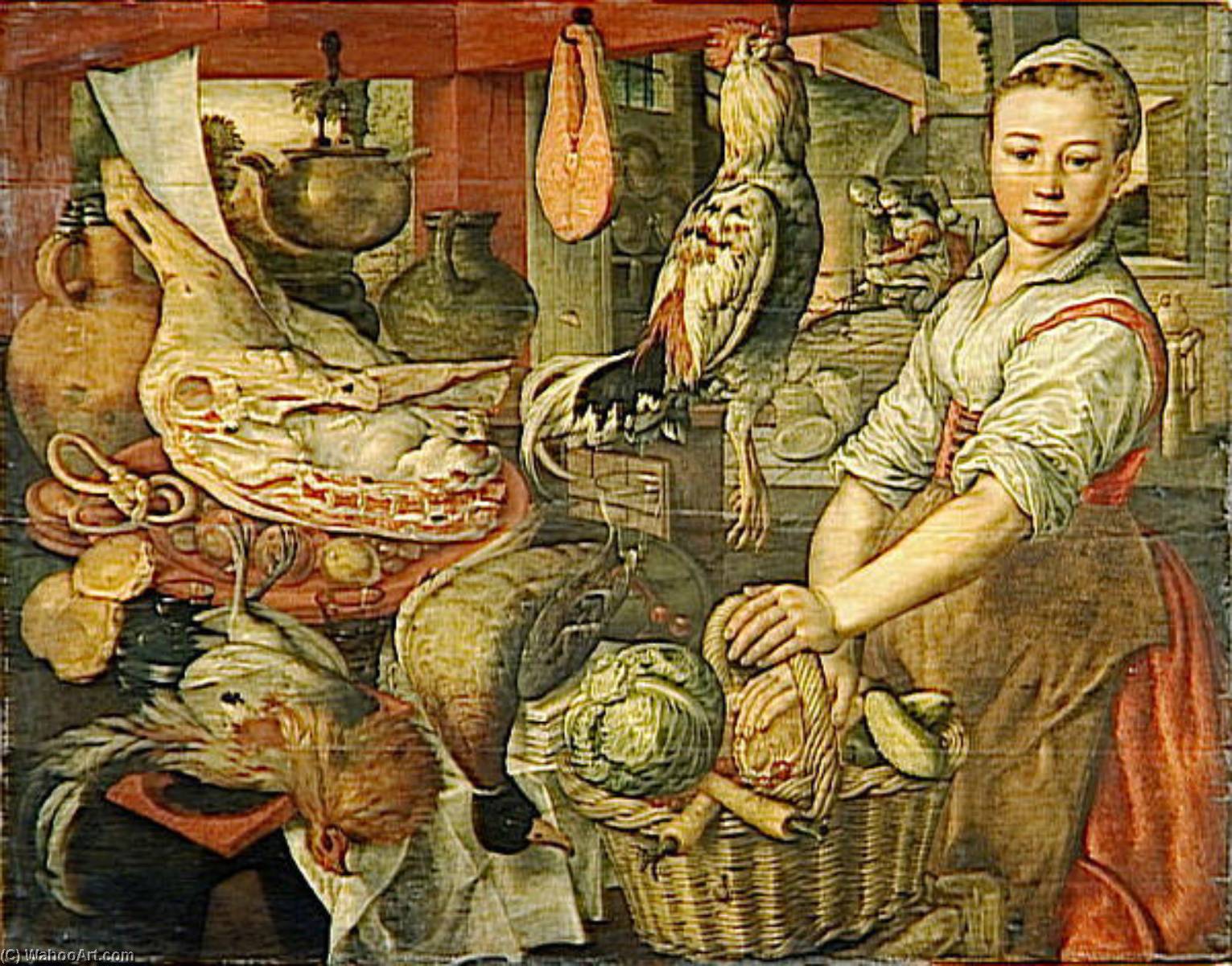
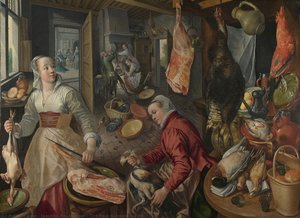
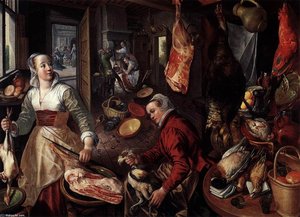
Joachim Beuckelaer's "Interieur de Cuisine" (Interior of the Kitchen) is more than just a depiction of a domestic scene; it’s a meticulously crafted tableau vivant, offering a rare glimpse into the heart of 16th-century Flemish life. Painted around 1568, this remarkable work transcends mere representation, becoming a poignant meditation on abundance, labor, and the subtle interplay between earthly pleasures and spiritual contemplation. It resides within the Musée du Louvre in Paris, a testament to its enduring artistic merit.
Beuckelaer, a pivotal figure in the transition from religious art to genre painting, masterfully captures the bustling energy of a kitchen—a space that was simultaneously a center of sustenance and a microcosm of daily life. Unlike earlier depictions of kitchens which often focused on idealized cleanliness and order, Beuckelaer presents a scene brimming with activity, overflowing with food, poultry, and earthenware. The composition is remarkably dense, almost claustrophobic in its detail, yet it avoids feeling chaotic thanks to the artist’s careful arrangement and use of overlapping forms. The young woman at the center, serving as the focal point, isn't merely a passive observer; she embodies responsibility and perhaps even a quiet pride within this industrious environment.
A Symphony of Color and Texture
The painting’s palette is rich and earthy—a tapestry woven from deep reds, browns, ochres, and yellows. These warm tones are expertly layered to create an astonishingly tactile effect. Beuckelaer's mastery of oil paint is immediately apparent in the rendering of textures: the plumpness of ripe vegetables, the ruffled feathers of poultry, the rough surfaces of pottery, and the delicate folds of fabric. He employs a glazing technique—building up layers of translucent color—to achieve an incredible sense of depth and realism. Notice how the light catches on the glistening skin of the meat or the sheen of polished earthenware; these subtle details elevate the painting beyond simple representation.
The artist’s attention to detail extends to the arrangement of objects, each carefully positioned to contribute to the overall narrative. The abundance of food—a veritable cornucopia of fruits, vegetables, and meats—symbolizes prosperity and fertility, a common theme in Flemish art of the period. However, Beuckelaer subtly introduces elements of moral contemplation. The presence of various tools and utensils – ladles, spoons, knives – alongside the lavish display of food suggests not only the act of preparing meals but also the labor involved in sustaining life. The inclusion of a small table with a loaf of bread and a jug of wine hints at simple pleasures and communal gatherings.
Symbolism and Context
“Interieur de Cuisine” is deeply rooted in the cultural context of 16th-century Flanders, a region grappling with religious upheaval and social change. The painting reflects a shift away from solely religious themes towards a greater interest in depicting everyday life—a trend that would profoundly influence the development of still life art. Beuckelaer’s work is often interpreted as a subtle commentary on the temptations of earthly pleasures, juxtaposing the abundance of food with reminders of spiritual values. The background, frequently featuring scenes from biblical stories like the “Four Elements” or Christ in the House of Mary and Martha, serves as a visual reminder of the importance of faith amidst worldly pursuits.
The young woman’s direct gaze, a characteristic feature of Beuckelaer's work, invites the viewer to engage with the scene on a personal level. She is not simply serving food; she embodies a sense of agency and responsibility within this domestic sphere. Her posture and expression suggest both diligence and perhaps even a quiet satisfaction in her role.
A Legacy of Detail
Joachim Beuckelaer’s “Interieur de Cuisine” stands as a remarkable achievement—a testament to the artist's skill, observation, and ability to imbue everyday scenes with profound meaning. It is a painting that rewards close study, revealing layers of detail and symbolism that continue to fascinate art historians and viewers alike. Reproductions of this masterpiece offer a tangible connection to a pivotal moment in artistic history, allowing us to appreciate the beauty and complexity of Flemish genre painting at its finest.
Related Artworks
Artist Biography
A Life Immersed in the Everyday: Joachim Beuckelaer and the Dawn of Still Life
Joachim Beuckelaer, a name perhaps less instantly recognizable than his contemporaries, occupies a pivotal position in the history of Flemish painting. Born around 1533 in Antwerp, a city then pulsing with artistic innovation, he emerged as a master of scenes depicting the bustling world of markets and kitchens. These weren’t merely depictions of daily life; they were carefully constructed narratives, often subtly interwoven with religious symbolism, that signaled a shift in artistic focus—a move towards observing and celebrating the tangible realities of existence alongside traditional spiritual themes. Beuckelaer wasn't simply *painting* what he saw; he was elevating the commonplace to a level worthy of artistic attention, laying crucial groundwork for the development of still life as an independent genre. His family background steeped in artistry—his father, Mattheus Beuckeleer, and uncle, Pieter Aertsen, were both established painters—provided him with early exposure and training. It was within his uncle’s workshop that he likely honed his skills, absorbing Aertsen's pioneering approach to market scenes before ultimately surpassing him in technical prowess and nuanced storytelling.The Antwerp Workshop and Artistic Development
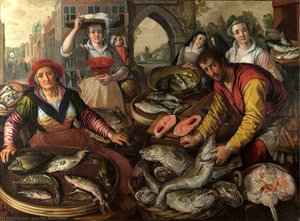
Antwerp during the 16th century was a vibrant hub of commerce and culture, and Beuckelaer’s art reflects this energy. He became an independent master within the Guild of Saint Luke in 1560, solidifying his place within the artistic community. However, he didn't simply replicate Aertsen’s style; he refined it, adding layers of complexity and detail. While Aertsen often presented a somewhat chaotic abundance, Beuckelaer brought a greater sense of order and clarity to his compositions. His scenes are meticulously arranged, with each object rendered with remarkable precision—the glistening scales of fish, the plumpness of fruit, the sheen of pewter vessels. This dedication to realism wasn’t merely about technical skill; it was about imbuing these everyday objects with a sense of presence and significance. The Four Elements series stands as a testament to this approach—a set of paintings depicting fish markets that simultaneously celebrate the bounty of nature and subtly allude to biblical narratives, with twelve varieties of fish representing the apostles and Christ’s miracle of the loaves and fishes unfolding in the background. This ability to seamlessly blend the secular and the sacred became a hallmark of his work.Kitchens as Canvases: Symbolism and Narrative
Beyond market scenes, Beuckelaer also excelled at depicting kitchens—spaces brimming with activity and symbolic potential. His Kitchen Scene with Christ at Emmaus, for example, is a particularly striking example of his innovative approach. He doesn’t simply depict the biblical story as a separate scene; he integrates it directly into the bustling environment of a kitchen, where preparations for a meal are underway. This juxtaposition creates a powerful sense of immediacy and invites viewers to contemplate the spiritual significance of everyday acts. The abundance of food in these scenes wasn't merely decorative; it often carried symbolic weight—representing prosperity, fertility, or even temptation. Beuckelaer’s skill lay in his ability to imbue these seemingly mundane settings with layers of meaning, transforming them into compelling visual narratives. He also ventured into pure still life compositions, such as Still Life of a Carcass (1563), considered one of the earliest dated examples of this subject, further demonstrating his mastery of detail and realism and pushing the boundaries of artistic convention.Legacy and Influence: A Bridge to New Artistic Horizons
Joachim Beuckelaer’s influence extended far beyond his own lifetime. His detailed depictions of everyday life paved the way for a new generation of artists who would further explore the possibilities of still life painting. Artists like Frans Snyders, known for his lavish and elaborate displays of food, directly built upon the foundations laid by Beuckelaer. His impact wasn’t limited to Northern Europe; his work also resonated with Italian painters such as Vincenzo Campi, demonstrating the widespread appeal of his innovative approach. By shifting the focus from primarily religious themes towards more secular subjects—while still retaining a subtle spiritual undercurrent—Beuckelaer played a crucial role in transforming Flemish art and anticipating the artistic trends that would define the centuries to come. He died around 1573, leaving behind a body of work that continues to captivate and inspire, reminding us of the beauty and significance hidden within the ordinary moments of life.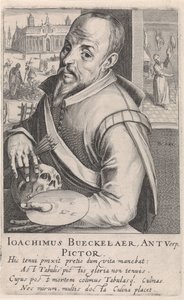
Joachim Beuckelaer
1533 - 1573 , Belgium
Quick Facts
- Artistic Movement Or Style: Renaissance art
- Artists Or Movements Influenced By This Artist:
- Frans Snyders
- Vincenzo Campi
- Artists Who Influenced This Artist: ['Pieter Aertsen']
- Date Of Birth: c. 1533
- Date Of Death: c. 1573
- Full Name: Joachim Beuckelaer
- Nationality: Flemish
- Notable Artworks:
- Four Elements series
- Kitchen Scene with Christ
- Still Life of a Carcass
- Place Of Birth: Antwerp, Belgium
Related Articles
Silent Narratives: Exploring the Enduring Appeal of Still Life Painting Across Centuries
Explore the rich history of still life painting with ArtsDot. Discover Dutch Masters, decode vanitas symbolism & learn about collecting timeless art. Expert insights and museum-quality reproductions.
The Enduring Appeal of Still Life: A Historical & Contemporary Exploration
Explore the rich history & symbolism of still life painting with ArtsDot. Discover masterpieces from the Dutch Golden Age, learn about vanitas art, and find expert guidance for collecting timeless artworks.
Gastronomic Canvas: Culinary Aesthetics & Artistic Representation for Hotel Design
Explore the captivating intersection of culinary arts & artistic representation for hotel design. Discover techniques to elevate dining experiences through visual harmony, composition, and inspiration from classic still life painting.
Clyfford Still's Abstract Expressionism: A Study of Color, Form & the Existential Landscape
Explore the profound world of Clyfford Still's Abstract Expressionism with ArtsDot. Discover his unique style, existential themes & investment potential. Expert analysis for discerning collectors.
Abraham Hendricksz van Beyeren: Pioneering Dutch Still Life & the Banquet Tradition
Explore the captivating world of Dutch Golden Age still life with Abraham van Beyeren. Discover his innovative techniques, symbolic banquet scenes & lasting influence on art history. Learn about collecting these masterpieces.