 Preview
 Send
Send Share
Share
 Details

 Download
 Similars
 X-Ray
X-Ray Diaporama
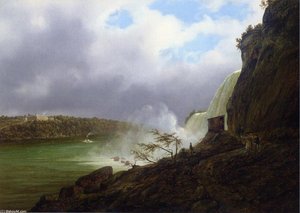
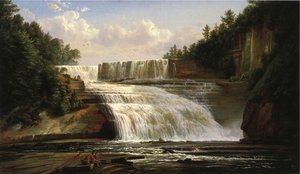
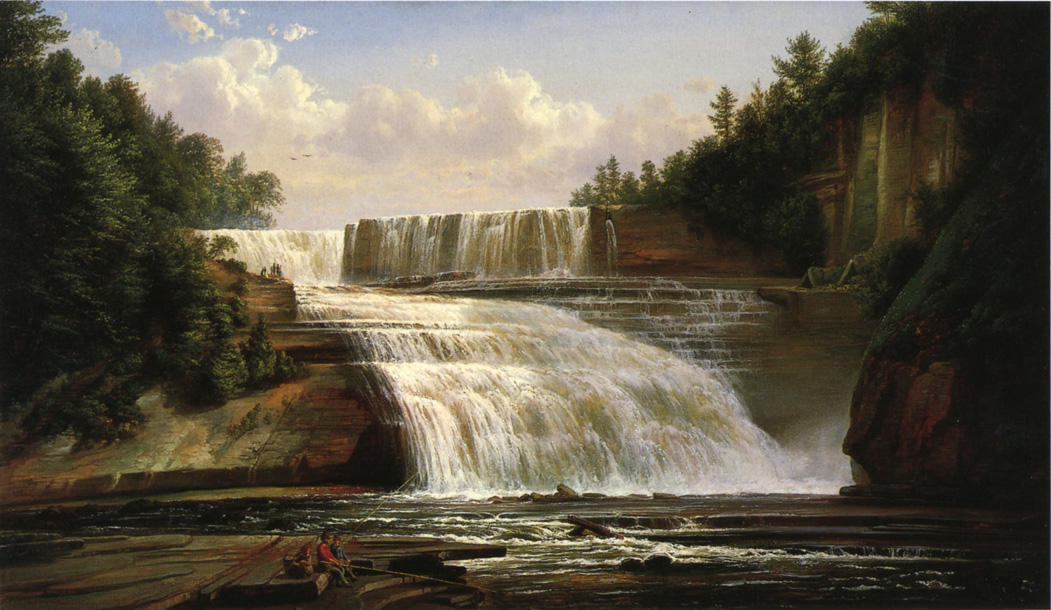
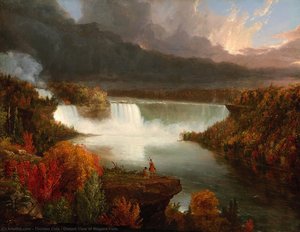
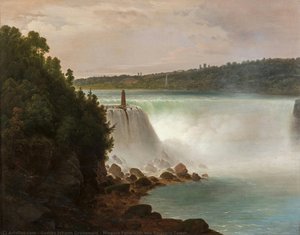
Trenton High Falls

 Read More
Hand Made Oil Reproduction
Hand-painted oil on canvas in your size and frame, made to order by our artists. ( Buy Print Buy Image)




































Pick from our preset sizes that match the artwork's original proportions.

You may enter your own dimensions to fit a specific frame or space. If your selected size does not match the original image's proportions, we will either crop the artwork or extend the painting with additional hand-painted elements. A digital mockup will be sent for your approval before production begins.
Please note that the on-screen preview does not reflect the actual cropping or extension. Only the mockup will accurately show the final composition.
While custom sizes are available, we recommend selecting a dimension from the predefined list to preserve the original proportions.
After order, ArtsDot.com team will email client for instructions and provide a mockup preview
Worldwide Delivery () in 3/4 weeks instead of standard 5 weeks. (17 August). No compromise on quality.

Free Worldwide Express Shipping

High-Quality Linen Canvas

Full Shipping Insurance

Customs Tax Refund Guarantee

True Color Matching Guarantee

60-Day Return Policy (Defects Only)

100% Money-Back Guarantee

Bulk Discount Offer
 Glass option is only available in size under 110 CM

Trenton High Falls
Reproduction Medium
Reproduction Size
-


Total Price
$ 263
Related Artworks
![Grande Cascata Da Tijuca [great Tijuca Waterfall] — Manuel José De Araújo Porto-alegre, Baron Of Santo Ângelo](/media/artworks/images/thumbnails/7f/60/7f6044d6c2b44652a5ab3869cbefbfe4.jpg)
Artist Biography
A Life Bridging Continents: The Artistic Journey of Ferdinand Richardt
Joachim Ferdinand Richardt, often known simply as Ferdinand Richardt, was a painter whose life and work embodied a fascinating transatlantic dialogue. Born in 1819 in the small Danish village of Brøndby, his story is one of artistic dedication, geographical displacement, and ultimately, a rediscovery of his legacy through an iconic image – his breathtaking depiction of Niagara Falls. Richardt’s early years were steeped in the atmosphere of rural Denmark; his father managed the inn and company store at the Brede factory, providing a stable yet modest upbringing. Though briefly apprenticed as a carpenter in 1835, young Ferdinand's true calling lay elsewhere. He swiftly pursued formal training at the Royal Danish Academy of Art in Copenhagen from 1836 to 1840, studying under esteemed masters like Gustav Friedrich Hetsch, J.L. Lund, and Bertel Thorvaldsen. This foundational education instilled within him a meticulous technique and an appreciation for both architectural precision and landscape’s emotive power—qualities that would define his artistic career. Early recognition came in the form of silver medals awarded by the Academy in 1839 and 1840, paving the way for a five-year stipend in 1847, a testament to his burgeoning talent. This grant required him to contribute both architectural studies and landscape paintings annually to the royal collection, solidifying his position within the Danish art world.From Danish Manor Houses to American Grandeur
Richardt’s artistic focus initially centered on capturing the essence of Denmark itself. Between 1844 and 1870, he embarked on an ambitious project: a series of lithographs depicting Danish and Swedish manor houses. These detailed renderings proved immensely popular throughout Scandinavia, appealing to the region's landed gentry and establishing Richardt’s reputation for precision and artistry. However, a thirst for new horizons led him to America in 1855. This journey marked a pivotal shift in his artistic trajectory. For four years, he immersed himself in the American landscape, establishing a studio in New York City while venturing extensively throughout the eastern United States. It was Niagara Falls that truly captivated him. He produced numerous canvases of the cascading waters, attempting to capture its raw power and sublime beauty. This fascination wasn’t merely aesthetic; it reflected a broader Romantic sensibility—a reverence for nature's grandeur and an attempt to convey the divine within the natural world. His travels weren’t solitary endeavors either. In 1862 he married Sophia Schneider née Linnemann, and together they explored Southern Europe and spent time in England, where his work was even presented to Queen Victoria at Windsor Castle in 1864—a significant acknowledgement of his international standing.A New Home, A Lasting Legacy
Despite the recognition he received in Europe, Richardt ultimately chose to make America his permanent home. In 1872, he and his family emigrated, initially settling near Niagara Falls before eventually relocating to San Francisco and Oakland, California. This move signaled a renewed commitment to American landscapes. While continuing to paint scenes of Niagara—the subject that had brought him considerable acclaim—he also turned his attention to the vistas of California, capturing its unique light and topography. He continued to exhibit and sell his work in San Francisco well into his later years, even offering private drawing lessons in Oakland. Richardt’s prolific output included hundreds of oil paintings, drawings, and lithographs, a testament to his unwavering dedication to his craft. His style remained consistent throughout his career: characterized by meticulous detail, strong saturated colors, and that inherent sense of the sublime—a hallmark of National Romanticism.Rediscovery and Enduring Influence
Although well-regarded during his lifetime, Richardt’s work experienced a period of relative obscurity after his death in 1895. However, fate intervened in a remarkable way. In 2009, his painting *View of Niagara Falls* was chosen as the backdrop for President Barack Obama's second inauguration luncheon. This unexpected spotlight brought renewed attention to Richardt’s artistry and highlighted the symbolic resonance of his work—representing American grandeur, possibility, and the enduring power of nature. Further bolstering his legacy, over 500 original drawings, serving as studies for his paintings and lithographs, were rediscovered in the 1990s. These invaluable works are now preserved at the Nationalmuseet in Denmark and other institutions, providing scholars with a deeper understanding of his creative process. Ferdinand Richardt’s contribution to American landscape art is undeniable. His extensive depictions of Niagara Falls and California landscapes not only captured the beauty of these regions but also helped shape their visual identity, leaving an enduring mark on the artistic record.A Synthesis of Styles
- National Romanticism: Richardt’s work is deeply rooted in the National Romantic movement, evident in his reverence for nature and his attempt to capture a sense of national identity through landscape.
- Danish Golden Age Influence: His training at the Royal Danish Academy instilled within him the meticulous technique and attention to detail characteristic of the Danish Golden Age of painting.
- American Landscape Tradition: His American period saw him engaging with the burgeoning tradition of American landscape painting, contributing to its development while maintaining his distinct European sensibility.
- Lithographic Skill: His mastery of lithography allowed him to disseminate his images widely, particularly his depictions of Scandinavian manor houses, making his work accessible to a broad audience.
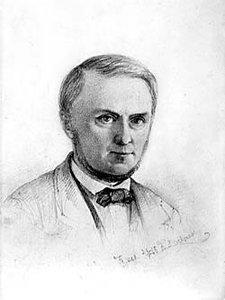
Joachim Ferdinand Richardt
1819 - 1895 , Denmark
Quick Facts
- Artistic Movement Or Style: National Romanticism
- Artists Or Movements Influenced By This Artist: ['American landscape painting']
- Artists Who Influenced This Artist:
- Gustav Friedrich Hetsch
- J. L. Lund
- Bertel Thorvaldsen
- Date Of Birth: 1819
- Date Of Death: 1895
- Full Name: Joachim Ferdinand Richardt
- Nationality: Danish-American
- Notable Artworks:
- View of Niagara Falls
- View of Hetch-Hetchy
- Place Of Birth: Brøndby, Denmark