

![Grande Cascata Da Tijuca [great Tijuca Waterfall] — Manuel José De Araújo Porto-alegre, Baron Of Santo Ângelo](/media/artworks/images-full/03/5f/035f1767f85479efb3e5ed5b265577d9.jpg)
 Preview
 Send
Send Share
Share
 Details

 Download
 Similars
 X-Ray
X-Ray Diaporama
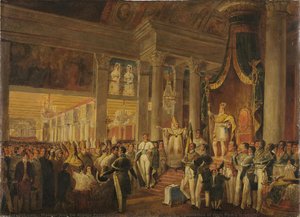
Grande cascata da Tijuca [Great Tijuca Waterfall]
 1833
1833 65.0 x 81.0 cm
 Pinacoteca do Estado de São Paulo
 Read More
Hand Made Oil Reproduction
Hand-painted oil on canvas in your size and frame, made to order by our artists. ( Buy Print Buy Image)




































Pick from our preset sizes that match the artwork's original proportions.

You may enter your own dimensions to fit a specific frame or space. If your selected size does not match the original image's proportions, we will either crop the artwork or extend the painting with additional hand-painted elements. A digital mockup will be sent for your approval before production begins.
Please note that the on-screen preview does not reflect the actual cropping or extension. Only the mockup will accurately show the final composition.
While custom sizes are available, we recommend selecting a dimension from the predefined list to preserve the original proportions.
After order, ArtsDot.com team will email client for instructions and provide a mockup preview
Worldwide Delivery () in 3/4 weeks instead of standard 5 weeks. (6 September). No compromise on quality.

Free Worldwide Express Shipping

High-Quality Linen Canvas

Full Shipping Insurance

Customs Tax Refund Guarantee

True Color Matching Guarantee

100-Day Return Policy (Defects Only)

100% Money-Back Guarantee

Bulk Discount Offer
 Glass option is only available in size under 110 CM

Grande cascata da Tijuca [Great Tijuca Waterfall]
Reproduction Medium
Reproduction Size
-


Total Price
$ 263
Related Artworks






Artist Biography
Manuel José de Araújo Porto-Alegre, Baron of Santo Ângelo: A Life in Art and Letters
Early Life and Education
Born on November 29, 1806, in Rio Pardo, Brazil, Manuel José de Araújo Porto-Alegre, Baron of Santo Ângelo was a pivotal figure in 19th-century Brazilian art and culture. His early life demonstrated a strong inclination towards the arts, leading him to pursue formal training at the Imperial Academy of Fine Arts in Rio de Janeiro. He studied under the tutelage of Jean-Baptiste Debret, a French painter who played a crucial role in establishing artistic education in Brazil.
Artistic Career and Influences
Porto-Alegre’s artistic career flourished within the context of Romanticism, a movement that prioritized emotion, imagination, and individualism. He became renowned for his landscapes and portraits, which often captured the essence of Brazilian life and scenery. His work was deeply influenced by his travels to Europe, particularly Italy, where he encountered Gonçalves de Magalhães, another prominent Brazilian poet. This exposure broadened his artistic horizons and contributed to his nationalistic approach.
Key Artistic Contributions
- Landscapes: Porto-Alegre’s landscapes often depicted the natural beauty of Brazil, showcasing lush vegetation, dramatic waterfalls, and expansive vistas.
- Portraits: His portraits were characterized by their realism and attention to detail, capturing the personalities and social standing of his subjects.
- Literary Works: Beyond painting, Porto-Alegre was a prolific writer. His epic poem, “Colombo”, stands as a testament to his nationalistic fervor and literary talent.
Engagement with Brazilian Romanticism
Porto-Alegre actively participated in shaping the Romantic movement in Brazil through his contributions to influential magazines such as Niterói (1836) and Guanabara (1849). These publications served as platforms for disseminating Romantic ideals and fostering a sense of national identity.
Major Achievements and Legacy
Throughout his multifaceted career, Porto-Alegre excelled not only as an artist and writer but also as a politician, journalist, architect, caricaturist, historian, and art critic. This diverse range of pursuits underscores his intellectual curiosity and commitment to cultural development. His legacy continues to influence Brazilian art and literature, solidifying his place as a significant figure in the nation’s history.
Historical Significance
Manuel José de Araújo Porto-Alegre played a vital role in establishing a distinctly Brazilian artistic identity during the 19th century. His work reflected the social, political, and cultural transformations of his time, contributing to the formation of national consciousness. His contributions extended beyond the realm of art, encompassing literature, journalism, and politics, making him a true Renaissance man of Brazil.
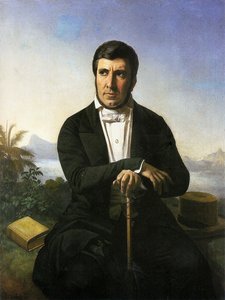
manuel josé de araújo porto-alegre, baron of santo ângelo
1806 - 1879 , Brazil
Quick Facts
- Birth Date: November 29, 1806
- Birth Place: Rio Pardo do Sul, Brazil
- Death Date: 1879
- Influenced By: ['Jean-Baptiste Debret']
- Movement: Romanticism
- Name: Manuel José de Araújo Porto-Alegre, Baron of Santo Ângelo
- Nationality: Brazilian
- Notable Works: ['Colombo']
![Grande cascata da Tijuca [Great Tijuca Waterfall]](/media/artworks/images-thumb/4d/aa/4daa8d7f0beeb06e9ac81238a49bbe46.jpg)