 Preview
 Send
Send Share
Share
 Details

 Download
 Similars
 X-Ray
X-Ray Diaporama
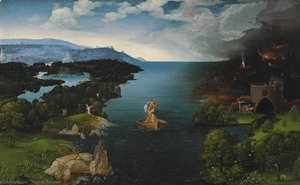
Charon
 Oil
Oil- WallArt
- Flemish Renaissance
 Renaissance
 64.0 x 103.0 cm
 Museo del Prado
 Read More
Hand Made Oil Reproduction
Hand-painted oil on canvas in your size and frame, made to order by our artists. ( Buy Print Buy Image)




P118B $10

P118H $10

P118W $10

P438Z $10

P508JH $12

P508YH $12

P805H $10

P805Z $10

P919BZ $10

P919G $10

P919XJ $10

P959ZH $10

P968JZ $12

W106C $8

W218G $10

W218JH $8

W218Y $10

W307PJ $10

W316G $10

W316PJ $8

W316Y $10

W398PJ $8

W4111J $10

W500HY $15

W500JH $15

W692G $12

W849H $8

W940BG $15

W953PJ $8




Pick from our preset sizes that match the artwork's original proportions.

You may enter your own dimensions to fit a specific frame or space. If your selected size does not match the original image's proportions, we will either crop the artwork or extend the painting with additional hand-painted elements. A digital mockup will be sent for your approval before production begins.
Please note that the on-screen preview does not reflect the actual cropping or extension. Only the mockup will accurately show the final composition.
While custom sizes are available, we recommend selecting a dimension from the predefined list to preserve the original proportions.
After order, ArtsDot.com team will email client for instructions and provide a mockup preview
Worldwide Delivery () in 3/4 weeks instead of standard 5 weeks. (16 August). No compromise on quality.

Free Worldwide Express Shipping

High-Quality Linen Canvas

Full Shipping Insurance

Customs Tax Refund Guarantee

True Color Matching Guarantee

60-Day Return Policy (Defects Only)

100% Money-Back Guarantee

Bulk Discount Offer
 Glass option is only available in size under 110 CM

Charon
Reproduction Medium
Reproduction Size
-


Total Price
$ 263
Artwork Description
A Vision of the Eternal Descent
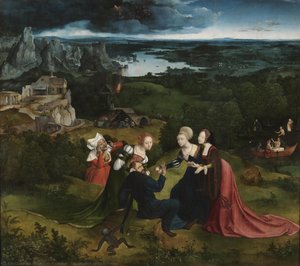
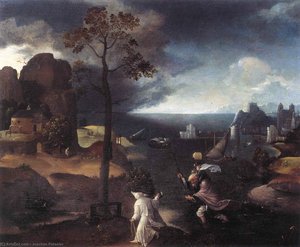
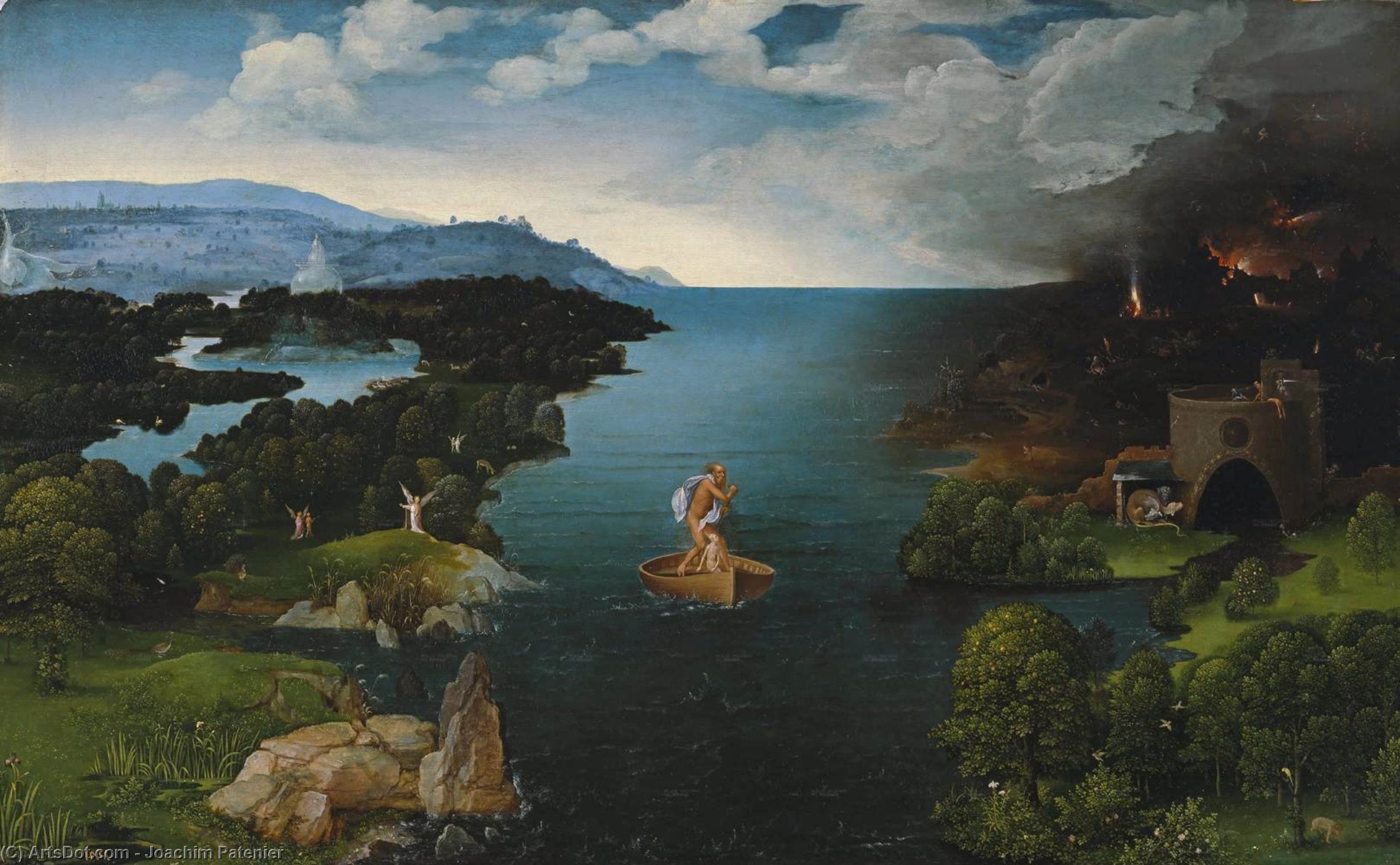
Joachim Patenier stands as a singular figure in the burgeoning landscape of Flemish Renaissance painting, a master who dared to prioritize atmosphere and emotion alongside meticulous detail. While many of his contemporaries focused on the rigid precision of portraiture or genre scenes, Patiner revolutionized the medium by treating the landscape not merely as a backdrop, but as a profound psychological conduit. As Albrecht Dürer famously observed, Patenier was “the good painter of landscapes,” possessing an uncanny ability to channel the very essence of nature into his canvases. In his haunting masterpiece, Charon, we are invited to witness a vision of descent, where the boundaries between the physical world and the spiritual realm blur into a singular, breathtaking experience of the sublime.The landscape serves as a soulful reflection of the human condition, utilizing the brooding expanse of water and rocky shores to convey deep-seated psychological states. The painting is a masterful exploration of chiaroscuro, employing dramatic contrasts between light and dark to sculpt the scene and create an illusionistic depth that draws the viewer inward, mirroring the very descent into Hades itself. This technique serves a profound symbolic purpose, representing the eternal struggle between darkness and illumination—the earthly realm versus the afterlife—a central theme within Christian iconography of the era.
The Journey Through Myth and Spirit
At the heart of this evocative composition lies the mythological ferryman, Charon, navigating his vessel across the dark, swirling waters of the River Styx. This is not merely a depiction of classical myth; it is a profound meditation on mortality and the transition of souls toward their eternal destiny. The scene is populated by a delicate balance of figures—spirits and angels drifting through the gloom, alongside birds that punctuate the heavy atmosphere with life. Through this interplay of characters, Patenier explores the tension between the earthly and the divine, using the rugged terrain to ground the supernatural elements in a tangible, visceral reality.The painting draws heavily upon classical antiquity, referencing the ferryman who transports souls into the abyss of Tartarus. Yet, there is an understated power in the depiction of Charon rowing his boat, a quiet strength that anchors the more ethereal elements of the piece. For collectors and interior designers, this work offers a captivating narrative depth; it is a piece that demands contemplation, inviting anyone who views it to reflect on the mysteries of existence and the beauty found within the unknown.
A Masterpiece for the Discerning Collector
Visually, Charon is a triumph of color and texture. The rich and vibrant tones used by Patenier make this an eye-catching piece that commands attention in any setting. The intricate details—from the spray of the water to the weathered textures of the rocky shore—showcase a level of skill that remains breathtaking centuries later. For those seeking to incorporate art into a sophisticated interior, this reproduction offers more than just aesthetic beauty; it provides an emotional anchor and a window into the profound spiritual landscapes of the Renaissance.Whether placed in a gallery-style study or as a focal point in a grand living space, the painting’s ability to evoke wonder and solemnity makes it a timeless addition. It is an invitation to experience the sublime, capturing a moment of transition that is as hauntingly beautiful as it is historically significant.
Related Artworks
Artist Biography
A Pioneer of the Inner Landscape: Joachim Patenier and the Dawn of Atmospheric Painting
Joachim Patenier, a name often whispered alongside those of Jan van Eyck and Rogier van der Weyden, occupies a unique position in the history of Flemish painting. Born around 1480 in Dinant or Bouvignes – the precise location remains shrouded in some mystery – his artistic vision marked a pivotal shift away from the meticulous detail of earlier Netherlandish masters towards an exploration of landscape as not merely a backdrop, but as a powerful emotional and narrative force. While biographical details remain scarce, piecing together fragments from contemporary accounts, particularly those of Albrecht Dürer, reveals a man deeply engaged with the artistic currents of his time, yet forging a path distinctly his own. Dürer’s description of Patenier as “the good painter of landscapes” is remarkably prescient; it acknowledges not just technical skill but an innovative sensibility that would redefine how artists approached the representation of the natural world. He wasn't simply *depicting* landscapes, he was imbuing them with a sense of atmosphere and psychological depth previously unseen.The Flemish Primitives and the Italian Echo
Patenier’s artistic foundations were firmly rooted in the traditions of the Early Netherlandish masters. The influence of Jan van Eyck's painstaking realism and Rogier van der Weyden’s expressive figures is evident in his early works, particularly in the meticulous rendering of textures and details. However, Patenier quickly began to diverge from these established norms. He absorbed the lessons of Northern precision but yearned for something more expansive. The burgeoning Italian Renaissance, with its emphasis on classical forms and perspective, also exerted a subtle influence, though filtered through a distinctly Flemish lens. This wasn’t a wholesale adoption of Italian ideals; rather, Patenier selectively incorporated elements – a sense of spatial depth, a broader compositional scope – while retaining the Northern penchant for intricate detail and symbolic resonance. His landscapes weren't simply imitations of nature but carefully constructed allegories, often imbued with religious meaning. The vastness of his skies, the jagged peaks of distant mountains, and the winding paths through dense forests all served to amplify the spiritual drama unfolding within his paintings.Landscapes as Spiritual Realms: Major Works and Artistic Development
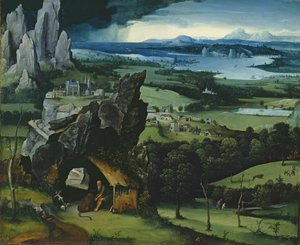
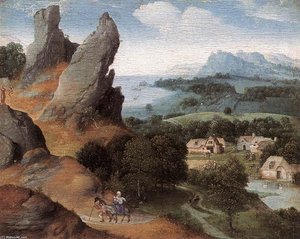
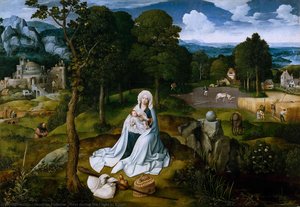
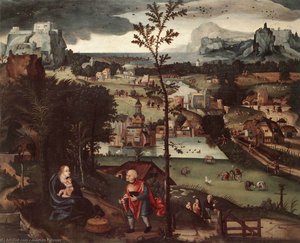
Patenier’s most celebrated works are those that showcase his innovative approach to landscape. Paintings like *Landscape with St Jerome*, of which several versions exist, exemplify his mastery. Here, the figure of Saint Jerome is dwarfed by the immensity of the surrounding wilderness, a stark contrast to earlier depictions where figures dominated the composition. The landscape isn’t merely a setting; it's an active participant in the narrative, reflecting Jerome’s solitude, contemplation, and spiritual struggle. Similarly, *Rest during the Flight into Egypt* presents a sweeping panorama that emphasizes the Holy Family’s vulnerability and their journey through a world both beautiful and perilous. The dramatic skies, often filled with swirling clouds and ominous shadows, foreshadow the trials to come.- The Deposition*, showcasing his masterful use of chiaroscuro – the dramatic contrast between light and dark – and his ability to convey profound emotional depth.
- The Holy Family* demonstrates his skill in composition, color harmony, and the depiction of intimate familial scenes.
- *Temptation of St Anthony* showcases his imaginative and often unsettling depictions of spiritual struggles.
A Lasting Legacy: Patenier’s Influence on Art History
Joachim Patenier died relatively young in 1524, but his impact on art history is undeniable. He was a true innovator, pioneering landscape as an independent genre and paving the way for later artists to explore the expressive potential of nature. His work bridged the gap between the late medieval traditions of the Flemish Primitives and the emerging Renaissance styles of the 16th century. He influenced generations of painters, inspiring them to see landscapes not just as backdrops but as powerful vehicles for conveying emotion, symbolism, and spiritual meaning. His legacy extends beyond technical innovation; he fundamentally altered how artists perceived their relationship with the natural world. Today, Patenier’s paintings can be found in prominent museums worldwide, including the Musées royaux des Beaux-Arts de Belgique in Brussels and the Prado Museum in Madrid, serving as a testament to his enduring artistic vision. His work continues to captivate viewers with its breathtaking beauty, profound symbolism, and the haunting sense of mystery that permeates his atmospheric landscapes – a true master who dared to look beyond the surface and explore the inner landscape of the soul. He remains a pivotal figure in the development of Western art, a testament to the power of innovation and the enduring allure of the natural world.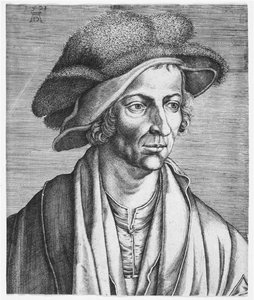
Joachim Patenier
1481 - 1524 , Belgium
Quick Facts
- Artistic Movement Or Style: Renaissance, Landscape
- Artists Or Movements Influenced By This Artist: ['Later landscape painters']
- Artists Who Influenced This Artist:
- Jan van Eyck
- Rogier van der Weyden
- Date Of Birth: 1481
- Date Of Death: 1524
- Full Name: Joachim Patenier
- Nationality: Flemish
- Notable Artworks:
- The Deposition
- Holy Family
- St Jerome landscape
- Flight into Egypt
- Temptation of St Anthony
- Place Of Birth: Dinan, Belgium
Related Articles

Beyond the Horizon: 10 Landscape Masterpieces for Your Home Decor
Journey through 10 breathtaking landscape paintings by Monet, Van Gogh & more! Explore iconic artworks, artistic techniques & find inspiration for your home decor. Museum-quality reproductions at ArtsDot.com. Discover all masterpieces on ArtsDot.com

Evocations of Place: A Historical Journey Through Landscape Art
Explore the rich history of landscape art with ArtsDot. Discover renowned artists, movements like Impressionism & Romanticism, and expert guidance for collecting timeless pieces. Find your perfect serene escape today!

Romantic Landscapes: 10 Masterpieces for Your Home | ArtsDot
Journey through 10 Romantic landscape masterpieces by Friedrich, Turner & Cole. Explore emotional art, sublime nature scenes & iconic 19th-century paintings. Find museum-quality reproductions for your home at ArtsDot.com – discover the full collection online!

John Constable's Masterpieces: Explore 25 Iconic Landscapes for Your Home
Journey through John Constable's 25 most celebrated landscapes. Explore Romanticism, Dedham Vale & his masterful use of light in iconic paintings like 'Hay Wain'. Find museum-quality art reproductions and elevate your home decor on ArtsDot.com.

Evocations of Place: A Historical Journey Through Landscape Art
Explore the rich history of landscape art with ArtsDot. Discover renowned artists, movements like Impressionism & tonalism, and expert guidance for collecting timeless pieces. Find your perfect serene escape today!