 Preview
 Send
Send Share
Share
 Details

 Download
 Similars
 X-Ray
X-Ray Diaporama
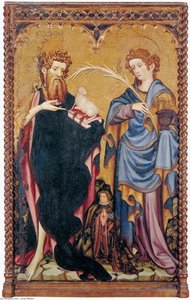
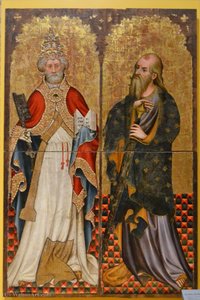
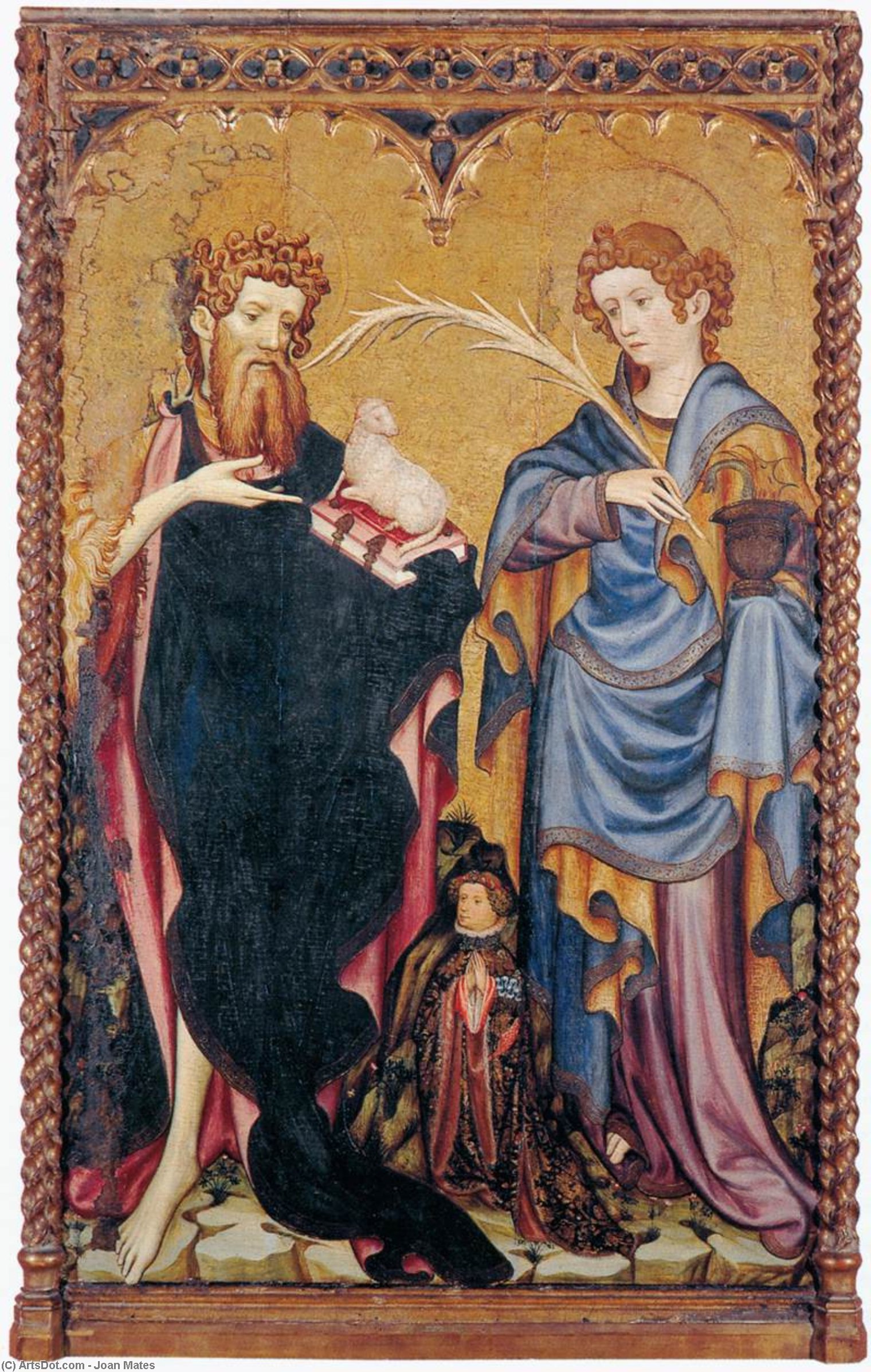
Sts John the Baptist and John the Evangelist with a Donor
 Oil On Canvas
- WallArt
- Catalan Gothic
 1410
1410- Late Medieval
 191.0 x 121.0 cm
 Museo Thyssen-Bornemisza
 Read More
Hand Made Oil Reproduction
Hand-painted oil on canvas in your size and frame, made to order by our artists. ( Buy Print Buy Image)




P118B $10

P118H $10

P118W $10

P438Z $10

P508JH $12

P508YH $12

P805H $10

P805Z $10

P919BZ $10

P919G $10

P919XJ $10

P959ZH $10

P968JZ $12

W106C $8

W218G $10

W218JH $8

W218Y $10

W307PJ $10

W316G $10

W316PJ $8

W316Y $10

W398PJ $8

W4111J $10

W500HY $15

W500JH $15

W692G $12

W849H $8

W940BG $15

W953PJ $8




Pick from our preset sizes that match the artwork's original proportions.

You may enter your own dimensions to fit a specific frame or space. If your selected size does not match the original image's proportions, we will either crop the artwork or extend the painting with additional hand-painted elements. A digital mockup will be sent for your approval before production begins.
Please note that the on-screen preview does not reflect the actual cropping or extension. Only the mockup will accurately show the final composition.
While custom sizes are available, we recommend selecting a dimension from the predefined list to preserve the original proportions.
After order, ArtsDot.com team will email client for instructions and provide a mockup preview
Worldwide Delivery () in 3/4 weeks instead of standard 5 weeks. (26 August). No compromise on quality.

Free Worldwide Express Shipping

High-Quality Linen Canvas

Full Shipping Insurance

Customs Tax Refund Guarantee

True Color Matching Guarantee

60-Day Return Policy (Defects Only)

100% Money-Back Guarantee

Bulk Discount Offer
 Glass option is only available in size under 110 CM

Sts John the Baptist and John the Evangelist with a Donor
Reproduction Medium
Reproduction Size
-


Total Price
$ 263
Artwork Description
A Tapestry of Devotion: Sts John the Baptist and John the Evangelist with a Donor
To gaze upon this magnificent panel is to step directly into the deeply spiritual atmosphere of the early Quattrocento, where faith was not merely an observance but the very fabric of daily life. This work, depicting Saints John the Baptist and John the Evangelist alongside a donor figure, pulses with the quiet intensity characteristic of Catalan art at its most devout. The composition immediately draws the eye to the two central figures: one robed in somber black, embodying the ascetic fervor of St. John the Baptist, standing beside his counterpart draped in rich, celestial blue—the scholar and evangelist, John the Evangelist. Their shared gaze, directed toward an unseen focal point or perhaps acknowledging the presence of the donor, creates an immediate sense of narrative connection, inviting the viewer into their sacred moment.
Mastery of Form and Symbolism
Joan Mates, a painter whose career spanned the cusp between the Gothic grandeur and the emerging Renaissance spirit in Catalonia, imbues this piece with meticulous detail. Observe the careful rendering of the drapery; it falls with a weight that speaks to both earthly materiality and divine grace. The inclusion of the book held by one saint is not merely an attribute but a profound statement on scripture and recorded wisdom. Furthermore, the subtle presence of nature—the delicate bird nestled within the scene—serves as a poignant reminder of creation's enduring beauty juxtaposed against eternal spiritual truths. These elements work in concert, elevating the portrait from a simple depiction to a complex meditation on divine knowledge and human piety.
Historical Echoes and Artistic Context
Dating to 1410, this artwork anchors itself firmly within the rich cultural currents of the early fifteenth century. Mates’s style reflects the period's yearning for spiritual depth while simultaneously embracing the burgeoning naturalism that would define the Renaissance. His connection to broader European artistic networks, evidenced by altarpieces destined for distant lands like Scotland, speaks to the cosmopolitan nature of art patronage during this era. Owning a reproduction of this piece allows one to connect with that vibrant exchange—a tangible link to the devotional artistry that once adorned the most sacred spaces.
Bringing Sacred Grandeur Home
For the discerning collector or those seeking to infuse a space with profound cultural resonance, this panel offers unparalleled depth. The rich jewel tones of the robes, contrasted with the earthy tones of the background and the subtle luminosity captured in the faces, create an atmosphere of timeless reverence. Whether displayed in a formal drawing-room, a library dedicated to contemplation, or as a centerpiece for devotional reflection, this reproduction captures not just paint on wood, but centuries of human aspiration toward the sublime. It is an object that commands quiet contemplation, whispering tales of faith and artistic genius across the ages.
Related Artworks

Artist Biography
Joan Mates: A Catalan Visionary Bridging Medieval Tradition and Renaissance Innovation
To step into the world of Joan Mates is to enter a period of profound spiritual intensity and burgeoning artistic curiosity. Born around 1370 in Vilafranca del Penedès, Spain, Mates emerged during a transformative era for Catalan art—a time when the rigid structures of the Gothic tradition began to breathe with the nascent naturalism of the early Renaissance. While much of his personal history remains shrouded in the mists of the fourteenth century, his artistic legacy is vividly preserved through works that pulse with a quiet, devotional power. His career was not merely a local phenomenon; it was part of an expanding European network, evidenced by his workshop's ability to produce altarpie and commissions that reached as far as Scotland and various regions across Aragon.
The foundations of Mates’s style were likely laid within the prestigious Catalan Gothic tradition. It is widely believed that he absorbed the techniques of masters such as Pere Serra, whose influential workshop set the standard for monumental altarpieces in the region. This early training instilled in him a reverence for clarity of form and theological precision, yet Mates possessed a unique ability to transcend mere imitation. He became an expressive painter, one who utilized sharp contrasts of line to achieve a striking intensity of effect. Rather than becoming lost in complex architectural settings, Mates focused his creative energy on the human figure, imbuing his subjects with a refined elegance that suggests the delicate influence of Franco-Flemish manuscript illumination.
A Legacy of Devotion and Masterful Technique
The breadth of Mates’s achievements is best understood through his significant commissions for the great cathedrals and chapels of Catalonia. His ability to complete monumental tasks, such as finishing the retable of Saints Thomas and Anthony for the Barcelona Cathedral in 1409—a project left incomplete by Pere Serra—demonstrates both his technical skill and his standing within the professional guild system. His oeuvre is a tapestry of sacred narratives, ranging from the deeply personal to the grandly liturgical:
- The Altarpiece of Saint Martin of Tours and Saint Ambrose of Milan: A masterpiece executed in tempera on wood, this work exemplifies the stylistic shift of his era. Through subtly modulated drapery and nuanced facial expressions, Mates bridged the gap between Gothic formalism and a new, more humanistic approach to divinity.
- Sts John the Baptist and John the Evangelist with a Donor: This panel serves as a profound meditation on faith. The composition draws the viewer into a sacred moment, where the weight of the drapery and the symbolic presence of nature—such as a delicate bird—remind the faithful of the intersection between the earthly and the eternal.
- The Retable of Saint Sebastian: Created for the chapel of Pia Almoina in Barcelona, this work showcases his mastery of the human form and his ability to convey spiritual suffering through refined aesthetic beauty.
- Other Notable Contributions: His reach extended to the high altar retable of S Maria in Vila-rodena and various attributed works like the Entombment, which continue to showcase his signature use of line and light.
Ultimately, the historical significance of Joan Mates lies in his role as a transitional figure. He did not simply exist within the Gothic era; he helped navigate its evolution toward the Renaissance. By prioritizing the emotional resonance of the human figure and integrating international influences from the Flemish tradition, he helped craft a visual language that was both deeply rooted in Catalan identity and vibrantly connected to the broader currents of European art history. His works remain enduring testaments to a period when art served as the primary bridge between the mortal soul and the divine.
joan mates
1370 - 1431 , Spain
Quick Facts
- Artistic Movement Or Style: Medieval Painting
- Date Of Birth: ca. 1370
- Date Of Death: 1431
- Full Name: Joan Mates
- Nationality: Spanish
- Notable Artworks:
- Sts John the Baptist and John the Evangelist with a Donor
- Altarpiece of Saint Martin of Tours and Saint Ambrose of Milan
- St. John On Patmos
- Place Of Birth: Vilafranca del Penedès, Spain
Related Articles

John Singer Sargent's 25 Masterpieces: Portraits & Beyond | ArtsDot
Explore 25 iconic John Singer Sargent paintings – from dazzling portraits to Impressionist landscapes. Discover the stories behind Madame X, El Jaleo & more! Find museum-quality art reproductions and elevate your home decor with ArtsDot.com.

John Constable's Masterpieces: Explore 25 Iconic Landscapes for Your Home
Journey through John Constable's 25 most celebrated landscapes. Explore Romanticism, Dedham Vale & his masterful use of light in iconic paintings like 'Hay Wain'. Find museum-quality art reproductions and elevate your home decor on ArtsDot.com.
High Medieval Art: 10 Masterpieces That Shaped an Era | ArtsDot
Journey through High Medieval Art! Explore 10 iconic masterpieces – from Giotto's frescoes to stunning Gothic cathedrals. Discover the stories behind these timeless paintings, sculptures & illuminated manuscripts. Find museum-quality art reproductions at ArtsDot.com.
The Radiant Dusk of Medieval Vision: Exploring Late Gothic Art's Synthesis of Faith, Form & Emotionality (c. 1300-1500)
Explore the exquisite beauty & spiritual depth of Late Gothic art (c. 1300-1500). Discover key artists, symbolism, and its lasting influence on the Renaissance. Expert insights at ArtsDot.

Late Medieval Masterpieces: 10 Artworks That Defined an Era | ArtsDot
Journey through 10 defining Late Medieval masterpieces – from Giotto's frescoes to Jan van Eyck’s realism. Explore the stories, techniques & vibrant colors of Gothic art. Find museum-quality reproductions and elevate your home decor with ArtsDot.com! Discover all masterpieces on ArtsDot.com