

 Preview
 Send
Send Share
Share
 Details

 Download
 Similars
 X-Ray
X-Ray Diaporama
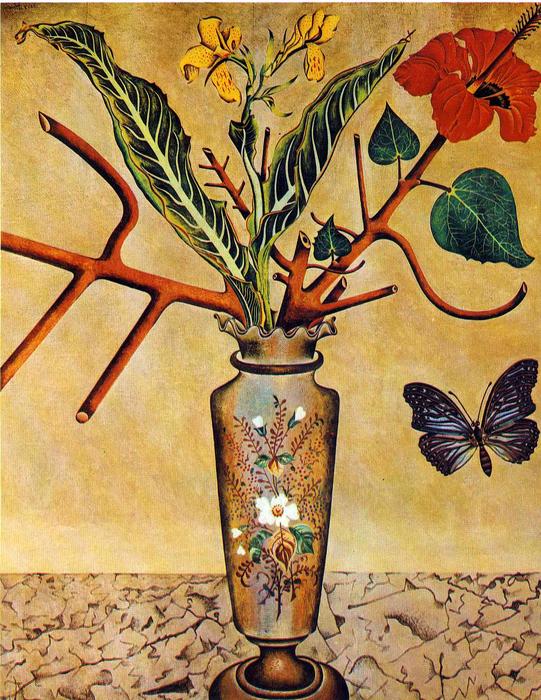
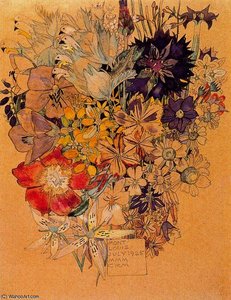
Flowers and Butterfly


 Read More
Purchase a high-resolution, enhanced digital image, far superior to the online preview.
Each file is meticulously prepared by our in-house specialists using advanced tools and expert manual retouching. We ensure every image has exceptional clarity, precise color accuracy, and fine detail.
The final file is delivered via email within 72 hours, optimized for immediate use in professional, editorial, and print environments. This is the same quality trusted by top-tier design studios, publishers, and galleries.
Digital Image
Download a high-resolution file for personal display, printing, and creative projects. ( Buy Print Buy Hand Made Painting)
Included in Every Digital Image Order
Expert Digital Delivery, Guaranteed
When you choose ArtsDot.com, you're not just getting an image - you're receiving a professionally enhanced digital artwork, crafted with precision and backed by a satisfaction guarantee. Here's everything that comes with your order, automatically:

Fast Email Delivery
Your high-resolution digital image file will be emailed to you within 72 hours of ordering - ready for immediate use.

AI-Enhanced Digital File
Your artwork is professionally optimized using advanced AI tools and manual editing, ensuring maximum detail, clarity, and color accuracy.

Free Lifetime Re-Delivery
Accidentally deleted or lost your file? No worries - we'll resend it to you anytime, free of charge.

No Import Fees - Ever
Enjoy your artwork instantly with zero customs, duties, or delivery fees - digital downloads are always tax-free.

Color Accuracy Guarantee
We ensure your digital image reflects the original colors as closely as possible using professional tools and color management.

60-Day Satisfaction Guarantee
If you're not satisfied with your digital image, we'll revise it or refund 100% within 60 days - no questions asked.

100% Money-Back Guarantee
Not satisfied? Get a full refund within 60 days of receiving your digital file - no questions asked.

Bulk Order Discounts
Buy 3 images, save 10% - Buy 5, save 15% - Buy 10+, save 20%. Great for creative projects, galleries, and agencies.
Collectible Description
A Dance of Dreams: Exploring Joan Miró’s ‘Flowers and Butterfly’
Joan Miró's 1922 painting, ‘Flowers and Butterfly,’ is more than just a depiction of a vase brimming with blossoms; it’s an immersion into the artist’s intensely personal world. Created during a pivotal period in his career – a time when he was actively rejecting representational art for a purely expressive language – this work embodies the core tenets of Miró's unique vision: a celebration of intuition, subconscious imagery, and the raw beauty of childlike wonder. The painting immediately captivates with its vibrant palette dominated by yellows, reflecting the radiant petals of the flowers, while the delicate butterflies introduce an element of ethereal grace and fleeting joy.
- Subject Matter: A still life featuring a vase overflowing with yellow flowers, accompanied by several butterflies.
- Style: Characterized by its naive art style, profoundly influenced by Miró’s exploration of the subconscious and his desire to move beyond traditional artistic conventions.
The Naive Aesthetic and Catalan Roots
Miró's approach in ‘Flowers and Butterfly’ aligns perfectly with the burgeoning “naive art” movement of the early 20th century, a reaction against academic realism. This style, often associated with folk artists and untrained visionaries, prioritizes direct emotional expression over technical precision. The painting’s simplified forms, bold colors, and lack of perspective are hallmarks of this aesthetic. Furthermore, the work is deeply rooted in Miró's Catalan heritage. Barcelona, a city renowned for its architectural innovations – particularly those of Antoni Gaudí – provided a constant source of inspiration, evident in the organic curves and playful distortions present throughout his oeuvre. The rugged landscapes and traditions of Catalonia infused his art with a sense of regional identity and a profound connection to the natural world.
Symbolism and Emotional Resonance
The inclusion of butterflies is particularly significant. In Miró’s work, butterflies frequently represent transformation, hope, and the ephemeral nature of beauty. Their fluttering movements evoke a sense of lightness and freedom, contrasting with the grounded stillness of the vase and flowers. The yellow color itself carries symbolic weight – often associated with joy, optimism, and enlightenment. The overall effect is one of serene contemplation, inviting the viewer to lose themselves in the artist’s dreamlike vision. It's a piece that speaks to the universal human desire for beauty, tranquility, and connection to something beyond the everyday.
Technical Execution and Reproduction
This original painting showcases Miró’s distinctive technique – a combination of oil paint applied with broad brushstrokes and meticulous detailing achieved through scratching and incising the surface. This layering creates a textured, almost sculptural effect, adding depth and complexity to the composition. ArtsDot offers meticulously crafted hand-painted reproductions that faithfully capture this unique textural quality and vibrant color palette. Our skilled artisans employ traditional painting techniques to recreate Miró’s vision with exceptional accuracy, ensuring that each reproduction is a true work of art in its own right. The result is a stunning addition to any collection or a captivating element for interior design, bringing the magic of Joan Miró into your space.
Related Artworks
Artist Biography
A Catalan Visionary: The Life and Art of Joan Miró
Joan Miró i Ferrà, born in Barcelona in 1893, stands as one of the most significant figures in 20th-century art. His journey was not merely a progression through styles but an exploration of inner worlds, translating dreams, memories, and Catalan identity onto canvas with a uniquely poetic visual language. From humble beginnings marked by illness and initial parental reservations about his artistic pursuits, Miró persevered, driven by an innate need to express the intangible—the emotions, sensations, and subconscious currents that lie beneath the surface of reality. His early life was steeped in the traditions of Barcelona, a city brimming with architectural marvels thanks to Antoni Gaudí, whose organic forms would subtly influence Miró’s later abstractions. The goldsmithing profession of his father instilled an appreciation for meticulous craftsmanship, while the rugged Catalan landscape became a recurring motif and source of inspiration throughout his career.Early Influences and the Path to Surrealism
Miró's formal artistic training began at La Llotja in Barcelona, where he honed his skills in traditional techniques. However, it was exposure to the avant-garde movements sweeping through Paris that truly ignited his creative evolution. The vibrant colors of Fauvism and the fragmented forms of Cubism resonated deeply, prompting him to move to Paris in 1920. This period proved pivotal as he encountered artists like Pablo Picasso and began experimenting with increasingly abstract compositions. Yet, Miró didn’t simply adopt these styles; he synthesized them, forging a path toward his own distinctive aesthetic. He sought to distill forms to their essence, stripping away representational details in favor of symbolic shapes and evocative colors. This exploration led him to the Surrealist group in 1924, aligning him with artists such as Max Ernst and Salvador Dalí. While embracing the Surrealist interest in the subconscious, Miró maintained a unique sensibility—his work was less about shocking imagery or Freudian symbolism than it was about creating a world of playful forms and poetic suggestion.The Language of Symbols: Key Works and Artistic Innovations
Throughout the 1920s and 30s, Miró developed his signature visual vocabulary—a universe populated by biomorphic shapes, floating forms, and vibrant colors. The Farm (1922), often considered a cornerstone of his oeuvre, exemplifies this transition. It’s not merely a depiction of rural life but an evocation of Catalan identity and a symbolic representation of the natural world. His collaborative spirit led to innovative techniques like *grattage*, pioneered with Max Ernst in 1926 for designs intended for Sergei Diaghilev's ballet, where textures were revealed by scraping paint across canvas. The Dutch Interiors (1928) series demonstrated his ability to reinterpret the Old Masters through a distinctly modern lens, transforming domestic scenes into dreamlike abstractions. Painting (1933), with its bold colors and simplified forms, encapsulates Miró’s exploration of the subconscious and his rejection of conventional artistic boundaries. Beyond painting, Miró fearlessly experimented with sculpture, ceramics, and printmaking, expanding his creative horizons and demonstrating a remarkable versatility.Legacy and Enduring Influence
Joan Miró's impact on 20th-century art is undeniable. He wasn’t simply a painter; he was a visionary who challenged the very definition of artistic expression. His work paved the way for abstract expressionism and continues to inspire artists across disciplines. He established two foundations—the Fundació Joan Miró in Barcelona (1975) and the Fundació Pilar i Joan Miró in Palma de Mallorca (1981)—ensuring that his legacy would endure, providing spaces for artistic exploration and education. Throughout his long career, he remained committed to pushing boundaries, questioning conventions, and exploring the depths of human imagination. Miró’s art is a testament to the power of abstraction, symbolism, and poetic expression—a vibrant celebration of life, dreams, and the enduring spirit of Catalan culture. His work continues to resonate with audiences worldwide, inviting us to enter a world where anything is possible and the boundaries between reality and fantasy blur into a captivating dance of color and form.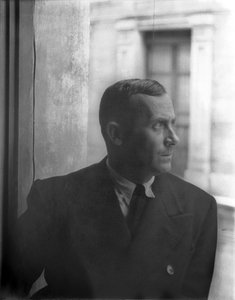
Joan Miró
1893 - 1983 , Spain
Quick Facts
- Artistic Movement Or Style: Surrealism, Abstract Art
- Artists Or Movements Influenced By This Artist:
- Surrealism
- Abstract Art
- Artists Who Influenced This Artist:
- Van Gogh
- Cézanne
- Date Of Birth: 1893
- Date Of Death: 1983
- Full Name: Joan Miró i Ferrà
- Nationality: Spanish
- Notable Artworks:
- The Farm
- Dutch Interiors
- Painting
- Place Of Birth: Barcelona, Spain

