- Home

- Oil Painting Reproduction
- joannes van doetechum, i, joannes van doetecom, i, jan van doetechum, i, johannes van doetecum, the elder
 Preview
 Send
Send Share
Share
 Details

 Download
 Similars
 X-Ray
X-Ray Diaporama
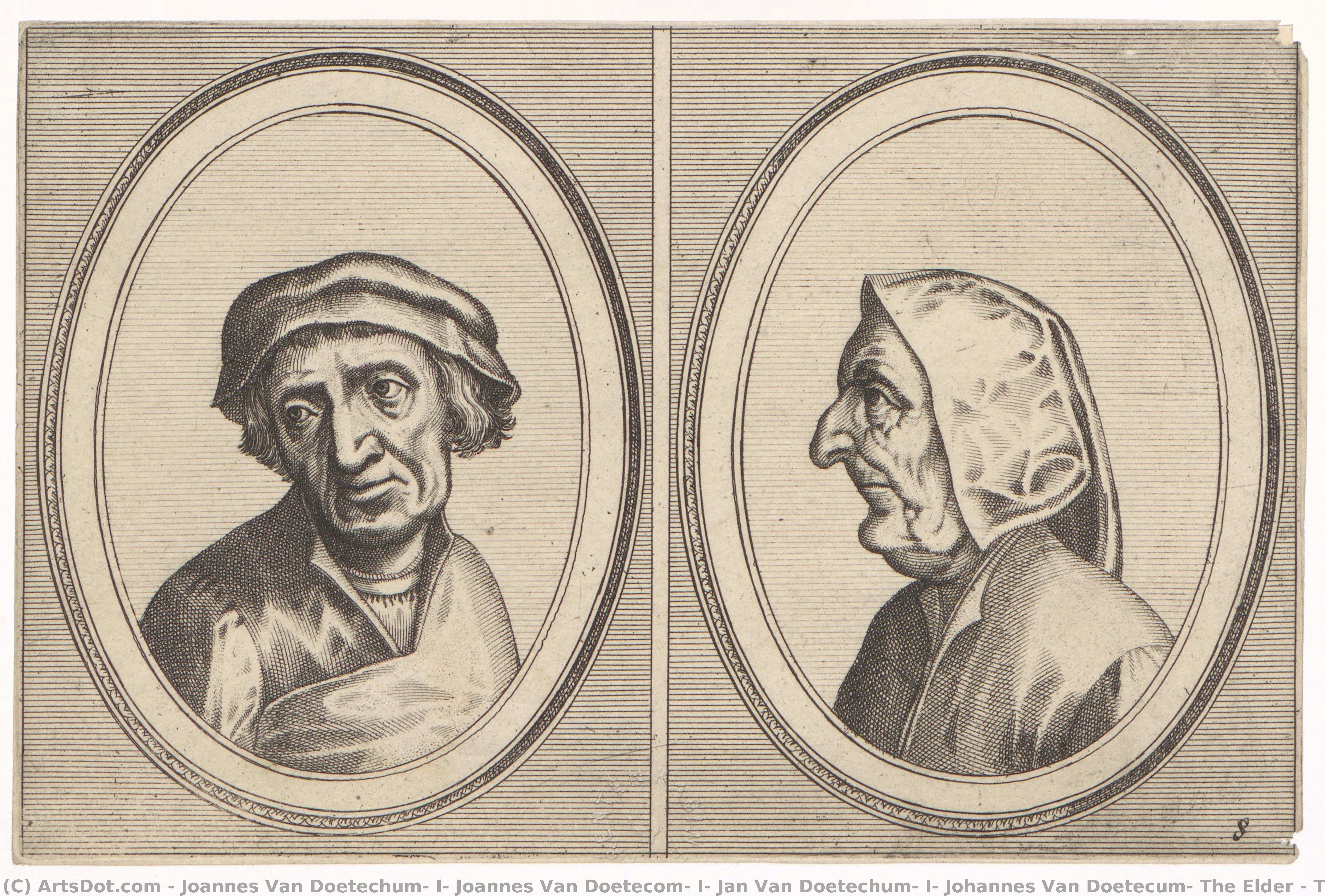
The heads of a farmer and farmer


 Read More
Hand Made Oil Reproduction
Hand-painted oil on canvas in your size and frame, made to order by our artists. ( Buy Print Buy Image)




































Pick from our preset sizes that match the artwork's original proportions.

You may enter your own dimensions to fit a specific frame or space. If your selected size does not match the original image's proportions, we will either crop the artwork or extend the painting with additional hand-painted elements. A digital mockup will be sent for your approval before production begins.
Please note that the on-screen preview does not reflect the actual cropping or extension. Only the mockup will accurately show the final composition.
While custom sizes are available, we recommend selecting a dimension from the predefined list to preserve the original proportions.
After order, ArtsDot.com team will email client for instructions and provide a mockup preview
Worldwide Delivery () in 3/4 weeks instead of standard 5 weeks. (4 September). No compromise on quality.

Free Worldwide Express Shipping

High-Quality Linen Canvas

Full Shipping Insurance

Customs Tax Refund Guarantee

True Color Matching Guarantee

60-Day Return Policy (Defects Only)

100% Money-Back Guarantee

Bulk Discount Offer
 Glass option is only available in size under 110 CM

The heads of a farmer and farmer
Reproduction Medium
Reproduction Size
-


Total Price
$ 263
Related Artworks

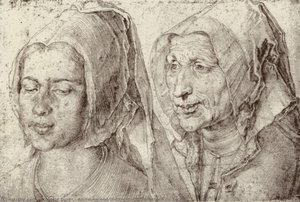
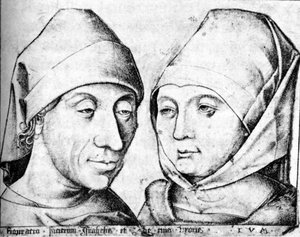
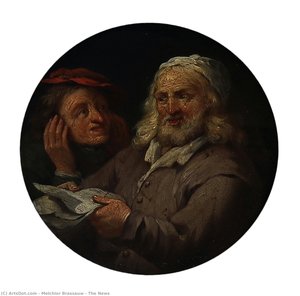
Artist Biography
Quentin Matsys: A Pioneer of Antwerp’s Artistic Renaissance
Quentin Matsys, a name often overshadowed by his contemporaries yet profoundly influential in the development of 16th-century art, stands as a pivotal figure in the burgeoning artistic landscape of Antwerp. Born around 1465/6 and tragically dying in 1530 at the age of 63–64, Matsys’s life was marked by both legend and demonstrable skill, leaving behind a legacy that bridged the gap between late Gothic traditions and the emerging realism of the Renaissance. While much of his early biography remains shrouded in romanticized tales – including the improbable story of his transformation from an ironsmith to a painter driven by love – the evidence points to a man deeply rooted in the practical crafts of his time, ultimately finding his true calling in the captivating world of art. Matsys’s formative years were spent in Louvain, Belgium, where he likely received a basic education before migrating to Antwerp around 1491. This move coincided with a period of remarkable growth and prosperity for the city, transforming it into a vibrant center for trade, craftsmanship, and artistic innovation. He quickly joined the guild of painters, establishing himself as a respected artist within the burgeoning community. His early works demonstrate a clear debt to the style of Hans Memling, whose meticulous detail and refined elegance provided a foundational influence. However, Matsys swiftly developed his own distinctive voice, incorporating elements of Italian Renaissance art – particularly Leonardo da Vinci’s subtle realism and atmospheric perspective – into his compositions. This synthesis of Northern and Southern artistic traditions would become a hallmark of his oeuvre.A Diverse Artistic Output: Portraits, Religious Scenes, and Satirical Visions
Matsys's artistic output was remarkably diverse, encompassing portraits, religious scenes, and, perhaps most notably, works imbued with a subtle yet unmistakable satirical edge. His portraiture, particularly the “Ugly Duchess” (circa 1530), is renowned for its unflinching realism and psychological depth. The painting’s subject, a wealthy merchant’s wife, is depicted with remarkable honesty – warts, wrinkles, and all – challenging conventional notions of beauty and offering a poignant commentary on aging and social status. This willingness to confront uncomfortable truths would become increasingly prevalent in his later works. Beyond portraits, Matsys produced numerous religious paintings, often characterized by their intricate detail and dramatic compositions. His altarpieces, such as the “Legend of Saint Anna” (circa 1509), are testaments to his technical skill and mastery of perspective. However, it is in his more unconventional works that Matsys truly distinguishes himself. He frequently employed allegory and symbolism to convey moral lessons, often with a slyly humorous undertone. The "Ill-Matched Marriage" (circa 1530) exemplifies this approach, depicting a scene of marital discord with a sharp wit and subtle critique of societal norms.Influences and Artistic Development
Matsys’s artistic development can be traced through several key influences. Initially, his work was heavily influenced by the meticulous realism and refined elegance of Hans Memling, whose workshop he likely frequented during his early years in Antwerp. However, as he matured as an artist, he began to incorporate elements of Italian Renaissance art, particularly those of Leonardo da Vinci. The influence of Leonardo is evident in Matsys’s use of atmospheric perspective, subtle modeling of forms, and psychological realism. Furthermore, the close association between Matsys and Joachim Patinir – with Patinir reportedly studying under Matsys – facilitated a cross-pollination of ideas and techniques, contributing to the development of Antwerp's artistic identity.Legacy and Historical Significance
Quentin Matsys’s contribution to the history of art is often underestimated, yet his influence was profound. He is widely considered the founder of the Antwerp school of painting, a movement that would become one of the most important centers for artistic innovation in Europe during the 16th century. His willingness to experiment with new techniques and subject matter – particularly his satirical depictions of human folly – paved the way for subsequent generations of artists. While few of his paintings survive today, they remain invaluable examples of early Renaissance art, offering a unique glimpse into the vibrant artistic culture of Antwerp during a period of remarkable transformation. Matsys’s legacy endures as a testament to the power of observation, innovation, and a willingness to challenge conventional norms – qualities that continue to resonate with artists and viewers alike.
Quick Facts
- Artistic Movement Or Style: Early Netherlandish
- Artists Or Movements Influenced By This Artist: ['Joachim Patinir']
- Artists Who Influenced This Artist: ['Hans Memling']
- Date Of Birth: 1466/6
- Date Of Death: 1530
- Full Name: Quentin Matsys
- Nationality: Flemish
- Notable Artworks:
- The Ugly Duchess
- Ill-Matched Marriage
- Place Of Birth: Louvain, Belgium
Related Articles

White on Canvas: 10 Masterpieces & Timeless Elegance for Your Home Decor
Explore 10 iconic white paintings by Monet, Whistler & Rothko! Discover the stories behind these serene masterpieces and their impact on art history. Find museum-quality reproductions for your home decor at .
Etching Masters: 10 Legendary Prints That Revolutionized Art | ArtsDot
Journey through 10 legendary etching masterpieces by Rembrandt, Dürer & Goya. Explore the history of printmaking and discover timeless art for your home. Find museum-quality reproductions at ArtsDot.com.

Dark Masterpieces: 10 Iconic Paintings Dominated by Black Tones |
Explore 10 iconic paintings dominated by black tones, from Rembrandt’s chiaroscuro to Goya's dark expressions. Discover the stories behind these masterpieces & find museum-quality art reproductions for your home at .
Etching: A Historical Survey of Technique, Aesthetic Qualities & Enduring Artistic Significance
Explore the rich history of etching, from its origins to Rembrandt's masterful innovations. Discover the technique, aesthetic qualities & enduring legacy of this captivating art form. Expert insights for collectors and enthusiasts.
The Intricate World of Etching: A Historical Survey of Technique, Aesthetic Evolution, and Enduring Artistic Impact
Explore the rich history of etching, from its origins to modern practice. Discover techniques, key artists like Rembrandt, and insights for collectors. A comprehensive guide by ArtsDot.