

 Preview
 Send
Send Share
Share
 Details

 Download
 Similars
 X-Ray
X-Ray Diaporama
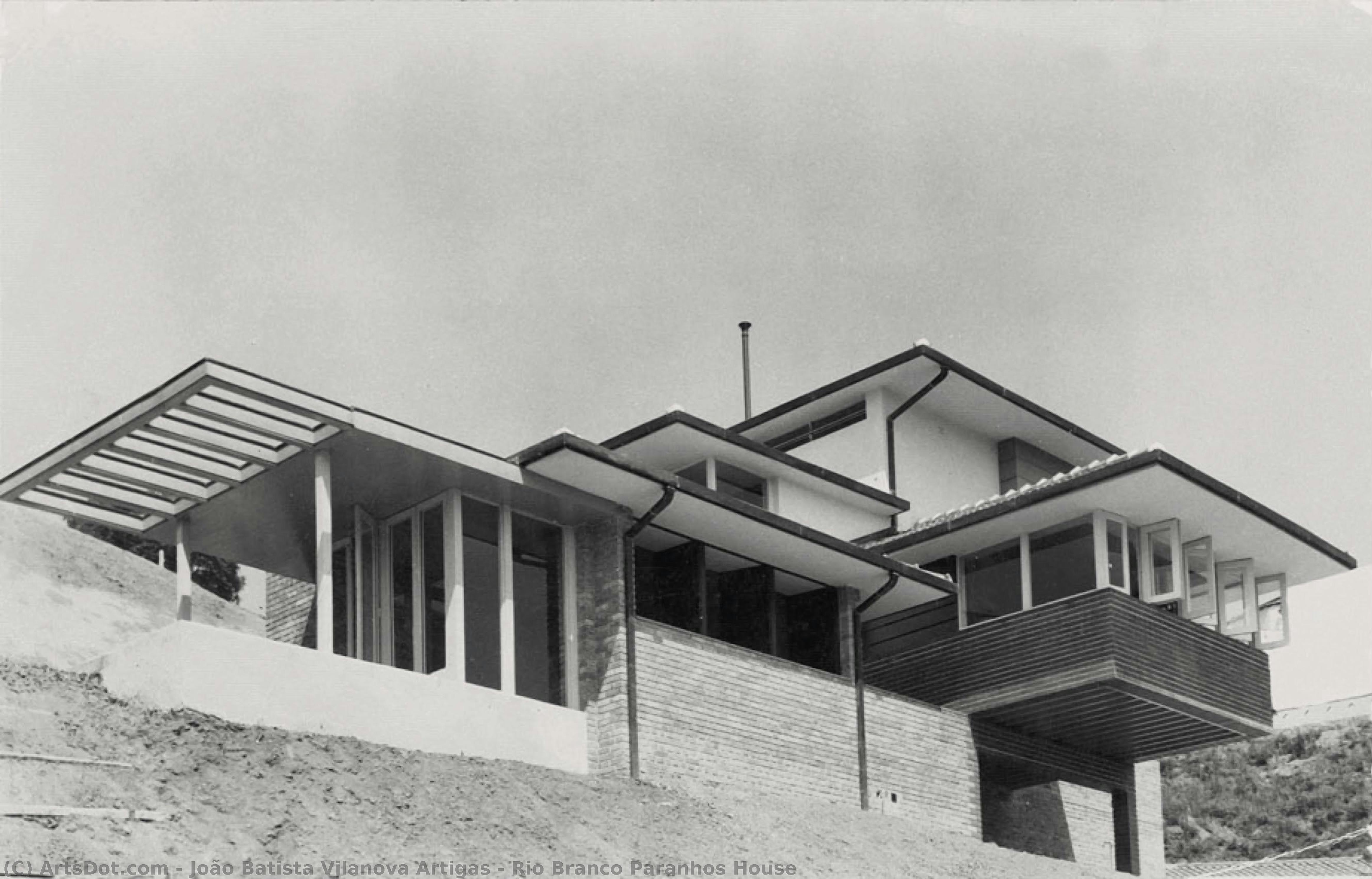
Rio Branco Paranhos House


 Read More
Purchase a high-resolution, enhanced digital image, far superior to the online preview.
Each file is meticulously prepared by our in-house specialists using advanced tools and expert manual retouching. We ensure every image has exceptional clarity, precise color accuracy, and fine detail.
The final file is delivered via email within 72 hours, optimized for immediate use in professional, editorial, and print environments. This is the same quality trusted by top-tier design studios, publishers, and galleries.
Digital Image
Download a high-resolution file for personal display, printing, and creative projects. ( Buy Print Buy Hand Made Painting)
Included in Every Digital Image Order
Expert Digital Delivery, Guaranteed
When you choose ArtsDot.com, you're not just getting an image - you're receiving a professionally enhanced digital artwork, crafted with precision and backed by a satisfaction guarantee. Here's everything that comes with your order, automatically:

Fast Email Delivery
Your high-resolution digital image file will be emailed to you within 72 hours of ordering - ready for immediate use.

AI-Enhanced Digital File
Your artwork is professionally optimized using advanced AI tools and manual editing, ensuring maximum detail, clarity, and color accuracy.

Free Lifetime Re-Delivery
Accidentally deleted or lost your file? No worries - we'll resend it to you anytime, free of charge.

No Import Fees - Ever
Enjoy your artwork instantly with zero customs, duties, or delivery fees - digital downloads are always tax-free.

Color Accuracy Guarantee
We ensure your digital image reflects the original colors as closely as possible using professional tools and color management.

60-Day Satisfaction Guarantee
If you're not satisfied with your digital image, we'll revise it or refund 100% within 60 days - no questions asked.

100% Money-Back Guarantee
Not satisfied? Get a full refund within 60 days of receiving your digital file - no questions asked.

Bulk Order Discounts
Buy 3 images, save 10% - Buy 5, save 15% - Buy 10+, save 20%. Great for creative projects, galleries, and agencies.
Collectible Description
A Visionary’s Embrace: The Rio Branco Paranhos House
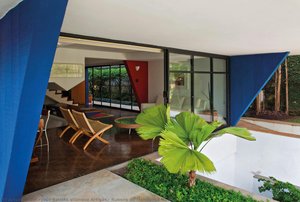
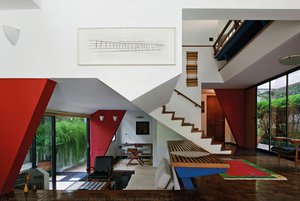
João Batista Vilanova Artigas's Rio Branco Paranhos House, conceived in 1942 and completed in 1943, isn’t merely a dwelling; it’s a profound statement of architectural philosophy and social conscience. Nestled into the rolling hills overlooking São Paulo, Brazil, this residence represents a pivotal moment in Brazilian modernism – a deliberate rejection of conventional norms and an embrace of radical openness, both within its walls and in its relationship with the surrounding landscape. Artigas, a key figure in the Paulista School, sought to create a space that transcended the traditional role of shelter, transforming it into a dynamic expression of social responsibility and artistic vision.
The house’s design is immediately striking – a harmonious blend of geometric precision and organic integration. Influenced by Frank Lloyd Wright's principles of “organic architecture,” Artigas employed a horizontal emphasis, mirroring the undulating terrain of the hillside upon which it sits. The structure appears to grow directly from the earth, utilizing pilotis—concrete columns that elevate the living spaces above ground level—to minimize its impact on the landscape and create an illusion of lightness and transparency. The use of exposed concrete, a hallmark of Brutalism, speaks not only to structural integrity but also to a deliberate rejection of ornamentation, prioritizing functionality and honest expression of materials.
Form and Function: A Study in Modernist Principles
Artigas’s approach is deeply rooted in the tenets of modernism, yet he transcends mere adherence to stylistic trends. The house's layout emphasizes open spaces and fluid transitions between rooms, fostering a sense of connection and interaction. The absence of a traditional kitchen-to-backyard door is particularly significant – a bold gesture that symbolically dismantles the hierarchical structure of domestic life, challenging established social conventions and reflecting Artigas’s commitment to egalitarianism. The design also incorporates elements of rationalism, prioritizing clarity of form and efficient use of space, while simultaneously embracing a dramatic aesthetic through the interplay of light and shadow.
The exterior façade is characterized by clean lines and rectangular shapes, punctuated by large expanses of glass that flood the interior with natural light. The brickwork, carefully chosen for its textural contrast against the smooth concrete surfaces, adds a tactile dimension to the design. The overall effect is one of understated elegance and sophisticated restraint – a testament to Artigas’s ability to distill complex ideas into a powerfully simple form.
Symbolism and Context: A Legacy of Social Engagement
Beyond its formal qualities, the Rio Branco Paranhos House carries profound symbolic weight. Constructed during a period of intense political upheaval in Brazil – marked by military dictatorship and social unrest – Artigas’s design can be interpreted as an act of defiance against oppressive forces. The house represents a commitment to human dignity, equality, and social justice, embodying the ideals of the Paulista School and its dedication to improving the lives of ordinary Brazilians. The influence of Gregori Warchavchik, a fellow architect and communist activist, is evident in Artigas’s embrace of functionalism and his willingness to challenge established architectural norms.
Furthermore, the house's design reflects Artigas’s broader philosophical stance – a belief that architecture should be more than just a building; it should be a catalyst for social change. His work consistently prioritized human needs and social responsibility, making him one of the most influential architects of his time. The Rio Branco Paranhos House stands as a powerful reminder of this legacy, inviting us to contemplate the transformative potential of architecture.
A Timeless Masterpiece: Reproduction and Appreciation
Today, the Rio Branco Paranhos House remains a cherished landmark in São Paulo’s architectural landscape. High-quality reproductions capture the essence of Artigas's vision, allowing enthusiasts to experience the beauty and intellectual depth of this remarkable structure. When selecting a reproduction, consider the meticulous attention to detail – the accurate rendering of materials, the nuanced play of light and shadow, and the faithful representation of the house’s unique spatial qualities. This artwork is not simply a copy; it's an invitation to engage with a profound architectural statement and appreciate the enduring legacy of João Batista Vilanova Artigas.
Related Artworks
Artist Biography
A Pioneer of Brazilian Modernism: The Life and Legacy of João Batista Vilanova Artigas
João Batista Vilanova Artigas, born in Curitiba, Brazil, in 1915, stands as a monumental figure in the evolution of Brazilian architecture. More than simply a builder of structures, Artigas was a visionary who sought to imbue his designs with social responsibility and artistic expression, ultimately becoming the founding father of the Paulista School. His journey began at the Polytechnic School of the University of São Paulo, where he earned his degree in 1937, an education that would serve as the bedrock for a career defined by innovation and a deep commitment to the Brazilian people. An early formative experience was his collaboration with Gregori Warchavchik on the ambitious remodeling of Praça da República, a project that hinted at the modernist sensibilities he would soon champion. From 1941 to 1947, Artigas dedicated himself to academia, shaping young minds as a professor of aesthetics, architecture, and planning at the University of São Paulo. This period culminated in the prestigious Guggenheim Fellowship awarded in 1946, solidifying his growing reputation within architectural circles and providing him with invaluable opportunities for international exposure.Evolving Styles and Defining Works
Artigas’s architectural style wasn't static; it was a dynamic process of exploration and refinement, reflecting both the changing currents of global design and his own evolving artistic vision. His work is generally understood through three distinct phases. The initial period, from 1937 to 1945, clearly demonstrates the influence of Frank Lloyd Wright, particularly in his residential designs—a focus on organic forms and a harmonious integration with the surrounding landscape. This was followed by a transitional phase, spanning roughly from 1945 to the mid-1950s, where Artigas began incorporating elements of the International Style, experimenting with curtain walls and pilotis in larger projects. However, it was during his final period, from the 1960s through the 1970s, that he truly found his voice—a dramatic style heavily influenced by Brutalism, characterized by its raw concrete aesthetic and monumental scale. This phase saw him tackle large-scale public buildings with a boldness and expressiveness that would become his signature. Among his most celebrated works are the House Ariosto Martirani, an early example showcasing Wright’s influence; the House Elza Berquó, demonstrating a minimalist aesthetic infused with striking geometric abstraction and Brutalist undertones; and the Guarulhos Gymnasium, representing his later, more dramatic style characterized by concrete expressionism. These projects collectively highlight his mastery of materials—particularly reinforced concrete—and his unwavering commitment to addressing social needs through thoughtful architectural design.Political Conviction and Artistic Expression
Artigas’s life was inextricably linked with political activism. A dedicated member of the Brazilian Communist Party, he believed that architecture had a crucial role to play in shaping a more just and equitable society. This conviction led to his removal from his teaching position at the University of São Paulo in 1969, alongside fellow architect Paulo Mendes da Rocha, during a period of intense political repression in Brazil. Despite this setback, Artigas remained steadfast in his beliefs, continuing to advocate for social change through his work. His commitment was eventually recognized; both he and Mendes da Rocha were reinstated to their positions in the 1980s, a testament to their enduring influence and the eventual triumph of democratic ideals. The Guggenheim Fellowship received earlier in his career further acknowledged his significant contributions to architecture. Today, his works are preserved in institutions like the Museu Antonio Parreiras and the Oscar Niemeyer Museum in Curitiba, ensuring that his legacy continues to inspire future generations. He believed deeply in the power of “minutiae”—the small details—to elevate a building from mere structure to a work of art, infusing each project with a unique character and sense of place.The Paulista School and Lasting Influence
João Batista Vilanova Artigas’s impact on Brazilian architecture is immeasurable. He wasn't just an architect; he was a teacher, a political activist, and a cultural icon who helped define the identity of a nation. The Paulista School, which he founded, emphasized functional design, expressed structural elements—particularly reinforced concrete—and a profound concern for social needs. This approach challenged conventional architectural norms and paved the way for a new generation of Brazilian architects to explore innovative forms and materials. His emphasis on creating spaces that were both aesthetically pleasing and socially responsible continues to resonate with contemporary practitioners around the world. Artigas’s work stands as a powerful reminder of the potential of architecture to reflect artistic vision, societal values, and a deep commitment to improving the lives of those it serves. He left behind not just buildings, but a philosophy—a belief that architecture could be a force for positive change in the world. His legacy endures, inspiring architects to create spaces that are both beautiful and meaningful.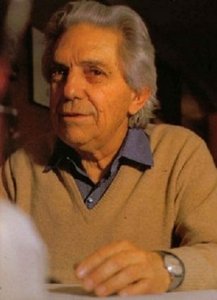
João Batista Vilanova Artigas
1915 - 1985 , Brazil
Quick Facts
- Artistic Movement Or Style: Modernism, Brutalism
- Artists Or Movements Influenced By This Artist: ['Paulista School']
- Artists Who Influenced This Artist: ['Frank Lloyd Wright']
- Date Of Birth: 1915
- Date Of Death: 1985
- Full Name: João Batista Vilanova Artigas
- Nationality: Brazilian
- Notable Artworks:
- House Ariosto Martirani
- House Elza Berquó
- Guarulhos Gymnasium
- Place Of Birth: Curitiba, Brazil

