 Send
Send Share
Share
 Details

 Download
 Similars
 Diaporama
The Jaú Bus Station


 Read More
Giclée / Art Print
Museum-quality giclée or canvas print with fast production and flexible finish options. ( Buy Hand Made Painting Buy Image)




































Pick from our preset sizes that match the artwork's original proportions.

You may enter your own dimensions to fit a specific frame or space. If your selected size does not match the original image's proportions, we will either crop the artwork or extend the image with a mirrored or solid-fill edge. A digital mockup will be sent for your approval before production begins.
Please note that the on-screen preview does not reflect the actual cropping or extension. Only the mockup will accurately show the final composition.
While custom sizes are available, we recommend selecting a dimension from the predefined list to preserve the original proportions.
Worldwide Delivery () in 2 weeks instead of standard 4/5 weeks. (27 August)

Free Worldwide Express Shipping

High-Quality Linen Canvas

Full Shipping Insurance

Customs Tax Refund Guarantee

True Color Matching Guarantee

60-Day Return Policy (Defects Only)

100% Money-Back Guarantee

Bulk Discount Offer
 Glass option is only available in size under 110 CM

The Jaú Bus Station
Giclée / Art Print
Reproduction Size
-


Total Price
$ 63
A Concrete Echo: João Batista Vilanova Artigas’s ‘The Jaú Bus Station’
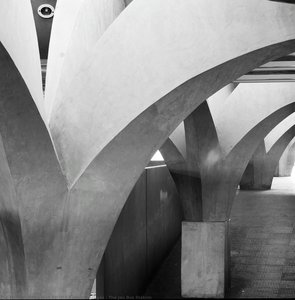
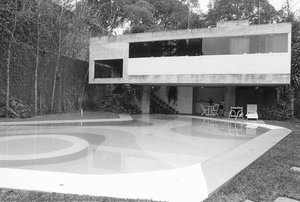
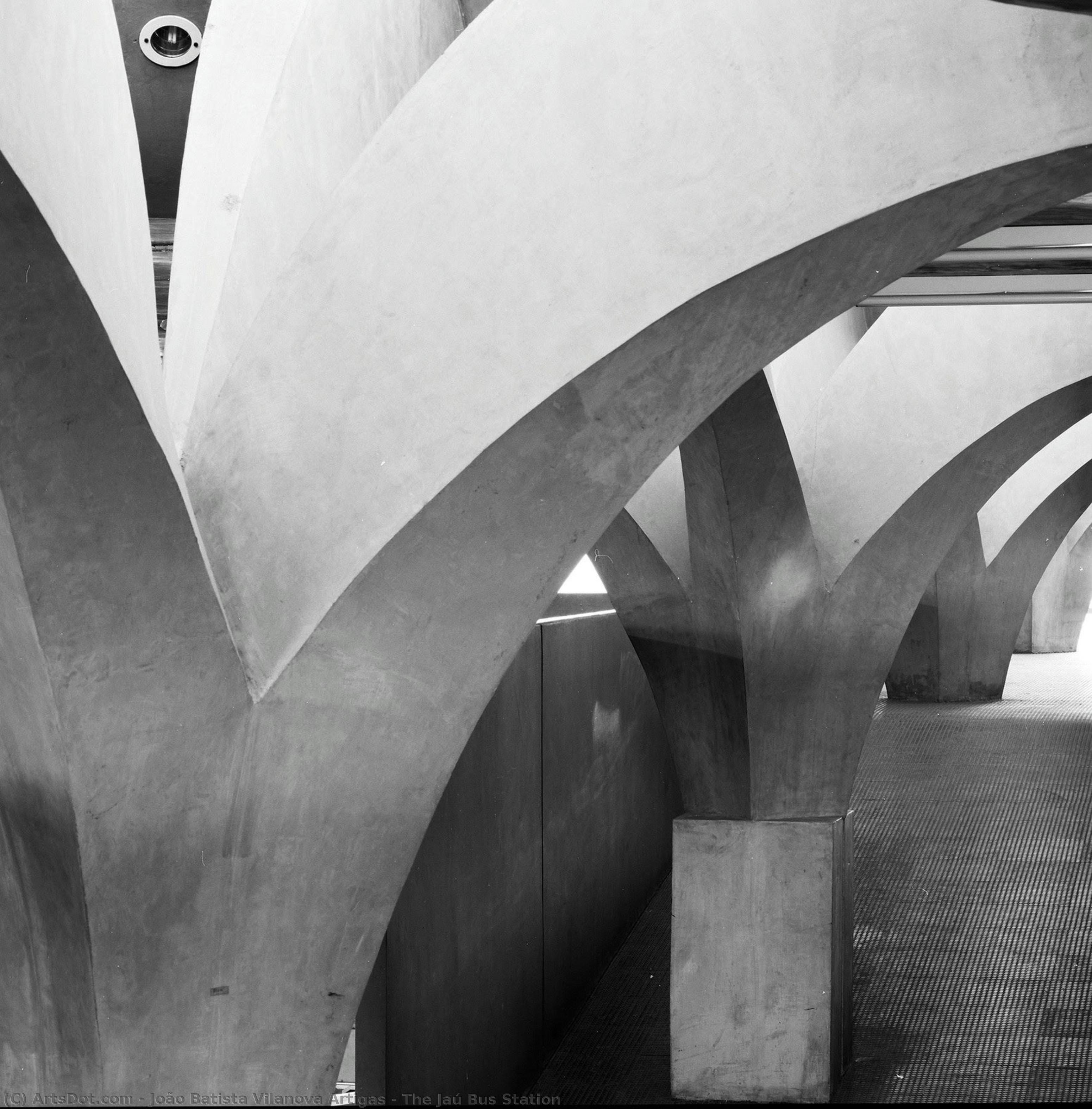
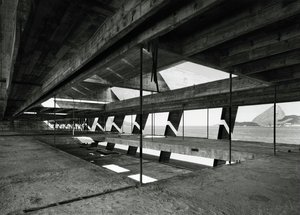
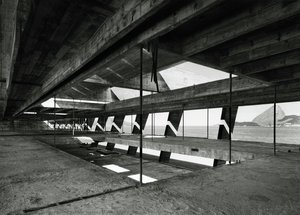
João Batista Vilanova Artigas's 'The Jaú Bus Station' isn’t merely a photograph of an architectural space; it’s a distilled essence of Brazilian modernism, a testament to Brutalist concrete and the social consciousness that defined his pioneering work. Captured in stark black and white, the image plunges us into a world of echoing arches, monumental scale, and profound stillness – a deliberate invitation to contemplate the very fabric of urban life. The photograph, likely created sometime between Artigas’s prolific career (1915-1985), speaks volumes about his commitment to designing structures that were not just functional but also imbued with a sense of civic responsibility and artistic integrity.
Artigas, considered the founding father of São Paulo's Paulista School of architecture, rejected European stylistic influences in favor of a distinctly Brazilian approach. He sought to create buildings that reflected the nation’s identity, prioritizing accessibility and social impact alongside aesthetic considerations. This photograph perfectly embodies this philosophy; it’s not about opulent decoration or individual grandeur, but rather about the honest expression of materials – the rough texture of concrete, the interplay of light and shadow – and the powerful geometry of the space itself. The repetition of arches creates a mesmerizing rhythm, drawing the eye deeper into the station's heart while simultaneously evoking a sense of enclosure and perhaps even a subtle melancholy.
Deconstructing Brutalism: Form and Texture
The photograph’s strength lies in its meticulous attention to detail. Artigas, a master of capturing texture, has rendered the concrete with remarkable realism. The visible aggregate within the material, the staining patterns – all contribute to a palpable sense of age and history. The directional lighting is crucial; it dramatically emphasizes the three-dimensional form of the arches, casting deep shadows that reveal their structural complexity and create an almost theatrical effect. This isn’t simply a depiction of a bus station; it's a study in light, shadow, and material – a celebration of concrete as both a building element and a sculptural medium.
Notice the subtle contrasts: the dark panel strategically placed to accentuate the lighter concrete surfaces. These details aren’t accidental; they are carefully orchestrated to guide the viewer’s eye and heighten the photograph's impact. The small, circular light fixture, positioned high above, adds a touch of human scale to this otherwise imposing structure, hinting at the everyday lives that unfold within its walls.
A Reflection of Modernity: Context and Legacy
‘The Jaú Bus Station’ was created during a pivotal period in Brazilian history – a time of rapid urbanization, social upheaval, and burgeoning modernism. Artigas's work often addressed issues of housing inequality and the need for accessible public spaces. While this particular photograph doesn’t explicitly depict these themes, it reflects the broader context of his career: a commitment to designing buildings that served the needs of the people. It aligns with the Brutalist architectural movement, characterized by its use of raw concrete and functional design – though Artigas infused this style with a distinctly Brazilian sensibility.
Further research reveals that Artigas’s influence extends far beyond São Paulo. His designs, including housing projects and urban planning initiatives, continue to be studied and admired for their innovative approach to social architecture. As highlighted in ArchDaily's analysis (Design - The Iconic Lesson Proffered by Vilanova Artigas), his lessons at the University of São Paulo profoundly shaped a generation of Brazilian architects, establishing a legacy that endures to this day. Reproductions of ‘The Jaú Bus Station’ offer a unique opportunity to bring this powerful image into your home or office – a tangible connection to a visionary architect and a significant moment in Brazilian design history.
Bringing the Concrete Echo Home
ArtsDot offers meticulously crafted, hand-painted reproductions of João Batista Vilanova Artigas’s ‘The Jaú Bus Station’. Each reproduction captures the photograph's dramatic lighting, textural detail, and inherent sense of scale. Whether you are an art collector, interior designer, or simply someone captivated by modern architecture, this artwork provides a stunning addition to any space. Explore our high-quality reproductions today and experience the enduring power of Artigas’s vision.
Related Artworks

Artist Biography
A Pioneer of Brazilian Modernism: The Life and Legacy of João Batista Vilanova Artigas
João Batista Vilanova Artigas, born in Curitiba, Brazil, in 1915, stands as a monumental figure in the evolution of Brazilian architecture. More than simply a builder of structures, Artigas was a visionary who sought to imbue his designs with social responsibility and artistic expression, ultimately becoming the founding father of the Paulista School. His journey began at the Polytechnic School of the University of São Paulo, where he earned his degree in 1937, an education that would serve as the bedrock for a career defined by innovation and a deep commitment to the Brazilian people. An early formative experience was his collaboration with Gregori Warchavchik on the ambitious remodeling of Praça da República, a project that hinted at the modernist sensibilities he would soon champion. From 1941 to 1947, Artigas dedicated himself to academia, shaping young minds as a professor of aesthetics, architecture, and planning at the University of São Paulo. This period culminated in the prestigious Guggenheim Fellowship awarded in 1946, solidifying his growing reputation within architectural circles and providing him with invaluable opportunities for international exposure.Evolving Styles and Defining Works
Artigas’s architectural style wasn't static; it was a dynamic process of exploration and refinement, reflecting both the changing currents of global design and his own evolving artistic vision. His work is generally understood through three distinct phases. The initial period, from 1937 to 1945, clearly demonstrates the influence of Frank Lloyd Wright, particularly in his residential designs—a focus on organic forms and a harmonious integration with the surrounding landscape. This was followed by a transitional phase, spanning roughly from 1945 to the mid-1950s, where Artigas began incorporating elements of the International Style, experimenting with curtain walls and pilotis in larger projects. However, it was during his final period, from the 1960s through the 1970s, that he truly found his voice—a dramatic style heavily influenced by Brutalism, characterized by its raw concrete aesthetic and monumental scale. This phase saw him tackle large-scale public buildings with a boldness and expressiveness that would become his signature. Among his most celebrated works are the House Ariosto Martirani, an early example showcasing Wright’s influence; the House Elza Berquó, demonstrating a minimalist aesthetic infused with striking geometric abstraction and Brutalist undertones; and the Guarulhos Gymnasium, representing his later, more dramatic style characterized by concrete expressionism. These projects collectively highlight his mastery of materials—particularly reinforced concrete—and his unwavering commitment to addressing social needs through thoughtful architectural design.Political Conviction and Artistic Expression
Artigas’s life was inextricably linked with political activism. A dedicated member of the Brazilian Communist Party, he believed that architecture had a crucial role to play in shaping a more just and equitable society. This conviction led to his removal from his teaching position at the University of São Paulo in 1969, alongside fellow architect Paulo Mendes da Rocha, during a period of intense political repression in Brazil. Despite this setback, Artigas remained steadfast in his beliefs, continuing to advocate for social change through his work. His commitment was eventually recognized; both he and Mendes da Rocha were reinstated to their positions in the 1980s, a testament to their enduring influence and the eventual triumph of democratic ideals. The Guggenheim Fellowship received earlier in his career further acknowledged his significant contributions to architecture. Today, his works are preserved in institutions like the Museu Antonio Parreiras and the Oscar Niemeyer Museum in Curitiba, ensuring that his legacy continues to inspire future generations. He believed deeply in the power of “minutiae”—the small details—to elevate a building from mere structure to a work of art, infusing each project with a unique character and sense of place.The Paulista School and Lasting Influence
João Batista Vilanova Artigas’s impact on Brazilian architecture is immeasurable. He wasn't just an architect; he was a teacher, a political activist, and a cultural icon who helped define the identity of a nation. The Paulista School, which he founded, emphasized functional design, expressed structural elements—particularly reinforced concrete—and a profound concern for social needs. This approach challenged conventional architectural norms and paved the way for a new generation of Brazilian architects to explore innovative forms and materials. His emphasis on creating spaces that were both aesthetically pleasing and socially responsible continues to resonate with contemporary practitioners around the world. Artigas’s work stands as a powerful reminder of the potential of architecture to reflect artistic vision, societal values, and a deep commitment to improving the lives of those it serves. He left behind not just buildings, but a philosophy—a belief that architecture could be a force for positive change in the world. His legacy endures, inspiring architects to create spaces that are both beautiful and meaningful.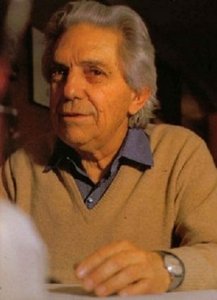
João Batista Vilanova Artigas
1915 - 1985 , Brazil
Quick Facts
- Artistic Movement Or Style: Modernism, Brutalism
- Artists Or Movements Influenced By This Artist: ['Paulista School']
- Artists Who Influenced This Artist: ['Frank Lloyd Wright']
- Date Of Birth: 1915
- Date Of Death: 1985
- Full Name: João Batista Vilanova Artigas
- Nationality: Brazilian
- Notable Artworks:
- House Ariosto Martirani
- House Elza Berquó
- Guarulhos Gymnasium
- Place Of Birth: Curitiba, Brazil
Related Articles

Monochrome Visions: Exploring the Aesthetic & Historical Significance of Black & White Photography
Explore the rich history & artistic power of black and white photography. From early techniques to iconic masters like Ansel Adams, discover why monochrome continues to captivate art lovers today. Expert insights for collectors.

White on Canvas: 10 Masterpieces & Timeless Elegance for Your Home Decor
Explore 10 iconic white paintings by Monet, Whistler & Rothko! Discover the stories behind these serene masterpieces and their impact on art history. Find museum-quality reproductions for your home decor at .
Beyond the Lens: Photography's Enduring Influence on Modern & Contemporary Art
Explore photography's pivotal role in shaping modern & contemporary art. Discover key movements, influential artists like Stieglitz, and expert collecting advice from ArtsDot.
Timeless & Chic: Elevating Your New Home with the Sophistication of Black and White Photography
Transform your new home with the timeless allure of black and white photography. ArtsDot.com specializes in elegant monochrome decor and custom hand-painted wedding portraits that turn cherished milestones into lasting, soulful masterpieces. Elevate your space with ease.

Pictorialism: A Search for Artistic Photography's Soul – Aesthetics, Techniques & Legacy
Explore the captivating world of Pictorialism – a pivotal movement that transformed photography into fine art. Discover key artists like Stieglitz & Käsebier, techniques, and collecting tips from experts.