 Preview
 Send
Send Share
Share
 Details

 Download
 Similars
 X-Ray
X-Ray Diaporama
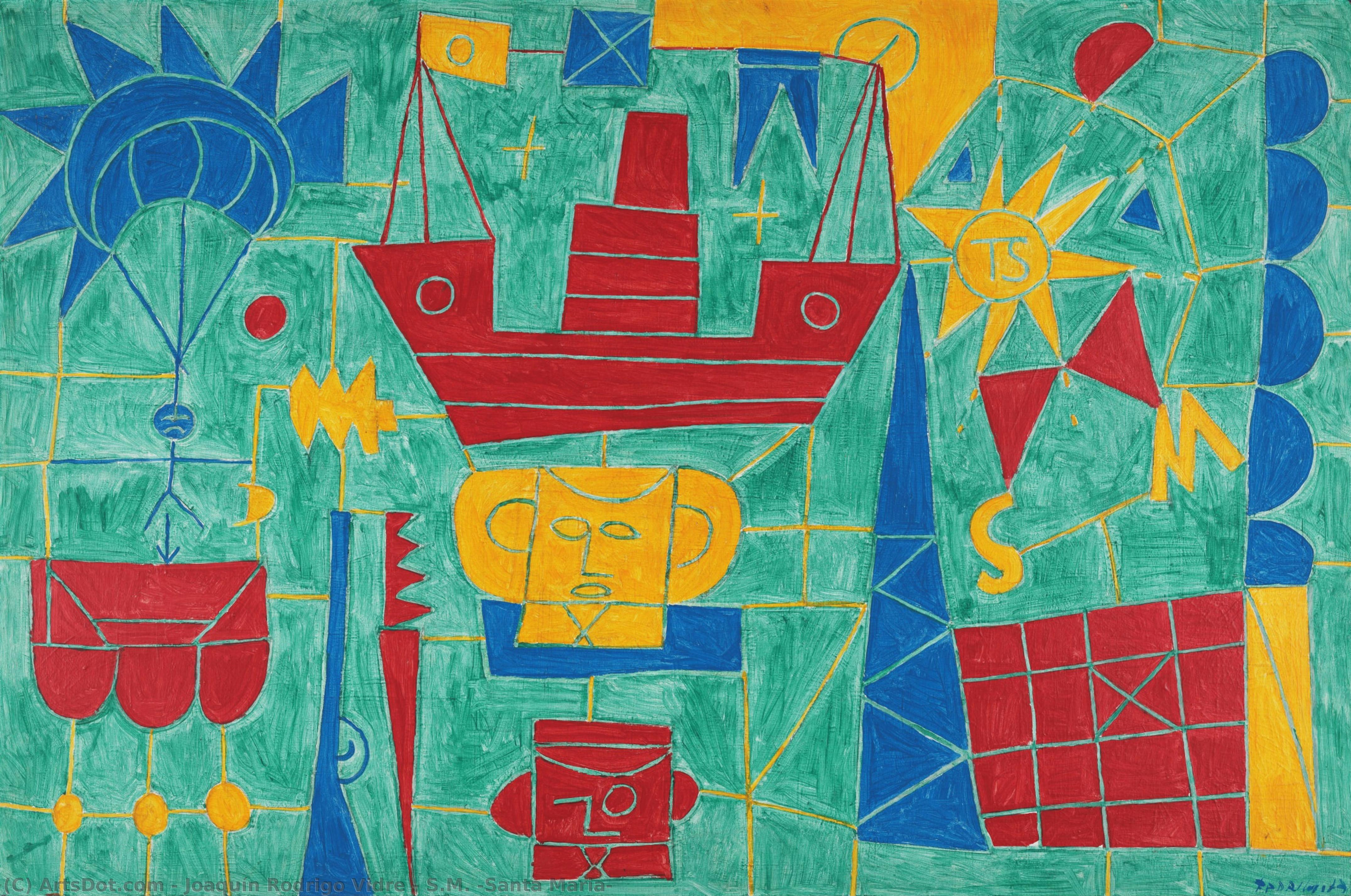
S.M. (Santa Maria)
 Painting
- Contemporary Art
 1961
1961- Modern
 97.0 x 146.0 cm
 National Museum of Contemporary Art - Museu do Chiado
 Read More
Giclée / Art Print
Museum-quality giclée or canvas print with fast production and flexible finish options. ( Buy Hand Made Painting Buy Image)




































Pick from our preset sizes that match the artwork's original proportions.

You may enter your own dimensions to fit a specific frame or space. If your selected size does not match the original image's proportions, we will either crop the artwork or extend the image with a mirrored or solid-fill edge. A digital mockup will be sent for your approval before production begins.
Please note that the on-screen preview does not reflect the actual cropping or extension. Only the mockup will accurately show the final composition.
While custom sizes are available, we recommend selecting a dimension from the predefined list to preserve the original proportions.
Worldwide Delivery () in 2 weeks instead of standard 4/5 weeks. (16 August)

Free Worldwide Express Shipping

High-Quality Linen Canvas

Full Shipping Insurance

Customs Tax Refund Guarantee

True Color Matching Guarantee

60-Day Return Policy (Defects Only)

100% Money-Back Guarantee

Bulk Discount Offer
 Glass option is only available in size under 110 CM

S.M. (Santa Maria)
Giclée / Art Print
Reproduction Size
-


Total Price
$ 63
Collectible Description
A Narrative in Geometry: The Enigma of S.M.
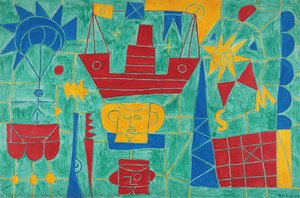
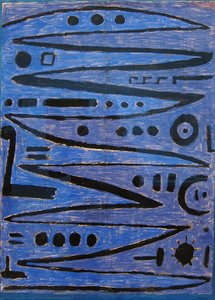
In the profound landscape of twentieth-century abstraction, few works capture the intersection of political tension and graphic precision as poignantly as Joaquín Rodrigo Vidre’s S.M. (Santa Maria). Created in 1961, this masterpiece serves as a visual chronicle of a pivotal moment in Portuguese history. The title itself holds a hidden cipher, referencing the hijacking of the liner Santa Maria by Henrique Galvão—a daring act of maritime protest intended to illuminate the stifling political climate of Portugal to the international community. Through his unique lens, Vidre transforms a historical episode into a sophisticated language of signs, where the weight of real-world events is distilled into an elegant, orthogonal grid.
The painting presents a mesmerizing tension between order and chaos. At first glance, the viewer is met with an agitated, watery-green background that suggests the restless depths of the sea. Upon closer inspection, this fluid expanse is structured by a strict geometric arrangement. Vidre utilizes three primary colors to construct shapes that appear as if viewed through various architectural perspectives—elevation, plan, and cross-section. This technique allows the painting to function not merely as an image, but as a complex register of information, much like a written text or a map, where every shape contributes to a larger, unfolding narrative.
A Symphony of Symbols and Motion
The visual experience of S.M. is one of vibrant, rhythmic movement. While the underlying structure remains disciplined, the surface is alive with a multitude of elements that breathe life into the composition. Central to the work is the depiction of a boat carrying a solitary figure, acting as the optical anchor for the entire piece. Surrounding this central vessel, a fleet of other boats drifts through the green expanse, some pressing toward the edges of the frame while others cluster near the heart of the painting. This arrangement creates a sense of depth and a dynamic flow that guides the eye across the canvas.
Adding to this sense of vitality is the presence of numerous birds, scattered throughout the composition like musical notes on a staff. Some soar close to the central boat, while others appear as distant silhouettes, creating a layered atmosphere of movement and life. This interplay between the graphic, almost pictographic signs and the organic elements of nature creates a profound emotional resonance. For the collector or the interior designer, this piece offers more than just aesthetic beauty; it provides a window into a moment where art became a vessel for truth, making it an intellectually stimulating addition to any curated collection.
The Legacy of a Visionary
To appreciate S.M. is to understand the broader genius of Joaquín Rodrigo Vidre. While history often remembers him as the legendary composer of the Concierto de Aranjuez, his visual contributions reveal a mind capable of translating complex human experiences into pure, impactful form. His ability to synthesize information through color and geometry mirrors the precision of his musical compositions, where every note is placed with intentionality. This painting stands as a testament to his ability to bridge the gap between the personal, the political, and the abstract.
For those seeking to adorn a space with art that invites contemplation, this reproduction offers an unparalleled opportunity. It brings into a room a sense of historical gravity and modern sophistication. The work’s ability to function as both a decorative element—with its captivating greens and primary accents—and a deep narrative piece makes it a timeless choice for those who value art that speaks, challenges, and inspires.
Related Artworks

Artist Biography
early life and education
joaquín rodrigo vidre, a renowned spanish composer and virtuoso pianist, was born on november 22, 1901, in sagunto, province of valencia. at the age of three, he lost his sight completely due to diphtheria. despite this, he began studying solfège, piano, and violin at eight years old. he later studied harmony and composition under francisco antich in valencia and paul dukas at the école normale de musique in paris.notable works
rodrigo's most famous work, concierto de aranjuez, was composed in 1939 for the guitarist regino sainz de la maza. this concerto for guitar and orchestra has become a cornerstone of the classical guitar repertoire. the central adagio movement, featuring the interplay of guitar with cor anglais, is one of the most recognizable in twentieth-century classical music. * concierto de aranjuez (1939) - a concerto for guitar and orchestra * fantasía para un gentilhombre (1954) - composed at the request of andrés segovia * concierto andaluz (1963) - commissioned by celedonio romero for four guitars and orchestraawards and honors
rodrigo received numerous awards for his contributions to music, including:- premio nacional de música (1983)
- marqués de los jardines de aranjuez (1991) - a hereditary title bestowed by king juan carlos i
- prince of asturias award (1996) - spain's highest civilian honor
- commander of the order of arts and letters (1998) - awarded by the french government
personal life
rodrigo married victoria kamhi, a turkish-born pianist, in 1933. their daughter, cecilia rodrigo, was born on january 27, 1941. rodrigo passed away at his home in madrid on july 6, 1999, aged 97.legacy
rodrigo's legacy can be seen through his numerous compositions and the impact he had on classical music. his works continue to inspire musicians and artists around the world. to explore more of rodrigo's life and work, visit joaquín rodrigo vidre on ArtsDot.com.- view joaquín rodrigo vidre's artworks at ArtsDot.com
- learn more about rodrigo's life and work on wikipedia
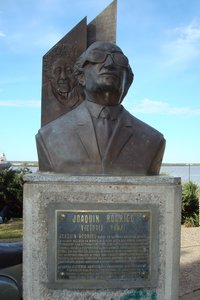
joaquín rodrigo vidre
1901 - 1999 , Spain
Quick Facts
- Artistic Movement Or Style: Neoclassical
- Artists Or Movements Influenced By This Artist: ['Classical Guitar']
- Artists Who Influenced This Artist:
- Paul Dukas
- Francisco Antich
- Date Of Birth: November 22, 1901
- Date Of Death: July 6, 1999
- Full Name: Joaquín Rodrigo Vidre
- Nationality: Spanish
- Notable Artworks:
- Concierto de Aranjuez
- Fantasía para un gentilhombre
- Concierto Andaluz
- Place Of Birth: Sagunto, Spain
Related Articles
Verdant Visions: Exploring the Symbolism & Aesthetic Impact of Green in Art History
Explore the rich history & symbolism of green in art! Discover iconic paintings, techniques, and how to bring verdant harmony into your home with ArtsDot's expert guide.
Dark Olive Green Masterpieces: 10 Iconic Paintings & Decor Ideas
Explore 10 iconic paintings where dark olive green reigns supreme! From Van Gogh to Rembrandt, discover art history's most captivating masterpieces & the stories behind them. Find museum-quality reproductions and curated decor ideas at .
Chrome Green Masterpieces: 10 Famous Paintings & Their Alluring Hues |
Explore 10 famous paintings where 'Chrome Green' reigns supreme! Discover Monet, Manet & Van Gogh’s masterpieces. Learn the stories behind these iconic artworks and find museum-quality art reproductions for your home at .

Emerald Visions: Top 10 Paintings Dominated by Cadmium Green |
Explore 10 iconic paintings where cadmium green reigns supreme! From Monet to Van Gogh, discover the stories behind these masterpieces & the power of color. Find museum-quality art reproductions and elevate your home decor on .
Seafoam & Masterpieces: 10 Paintings Dominated by Medium Sea Green | ArtsDot
Dive into serenity with 10 famous paintings bathed in calming medium sea green. Explore Impressionist masterpieces by Monet, Degas & Renoir. Find museum-quality art reproductions and elevate your home decor at ArtsDot.com.