 Preview
 Send
Send Share
Share
 Details

 Download
 Similars
 X-Ray
X-Ray Diaporama
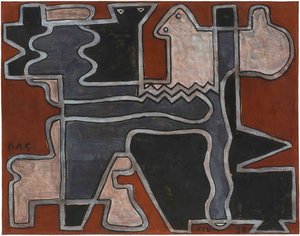
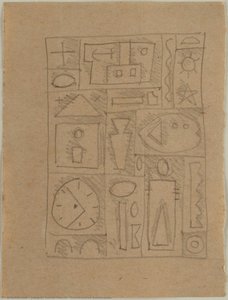
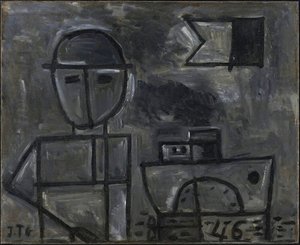
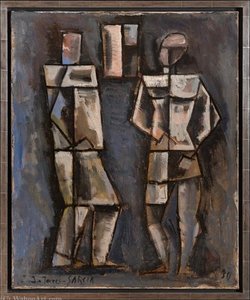
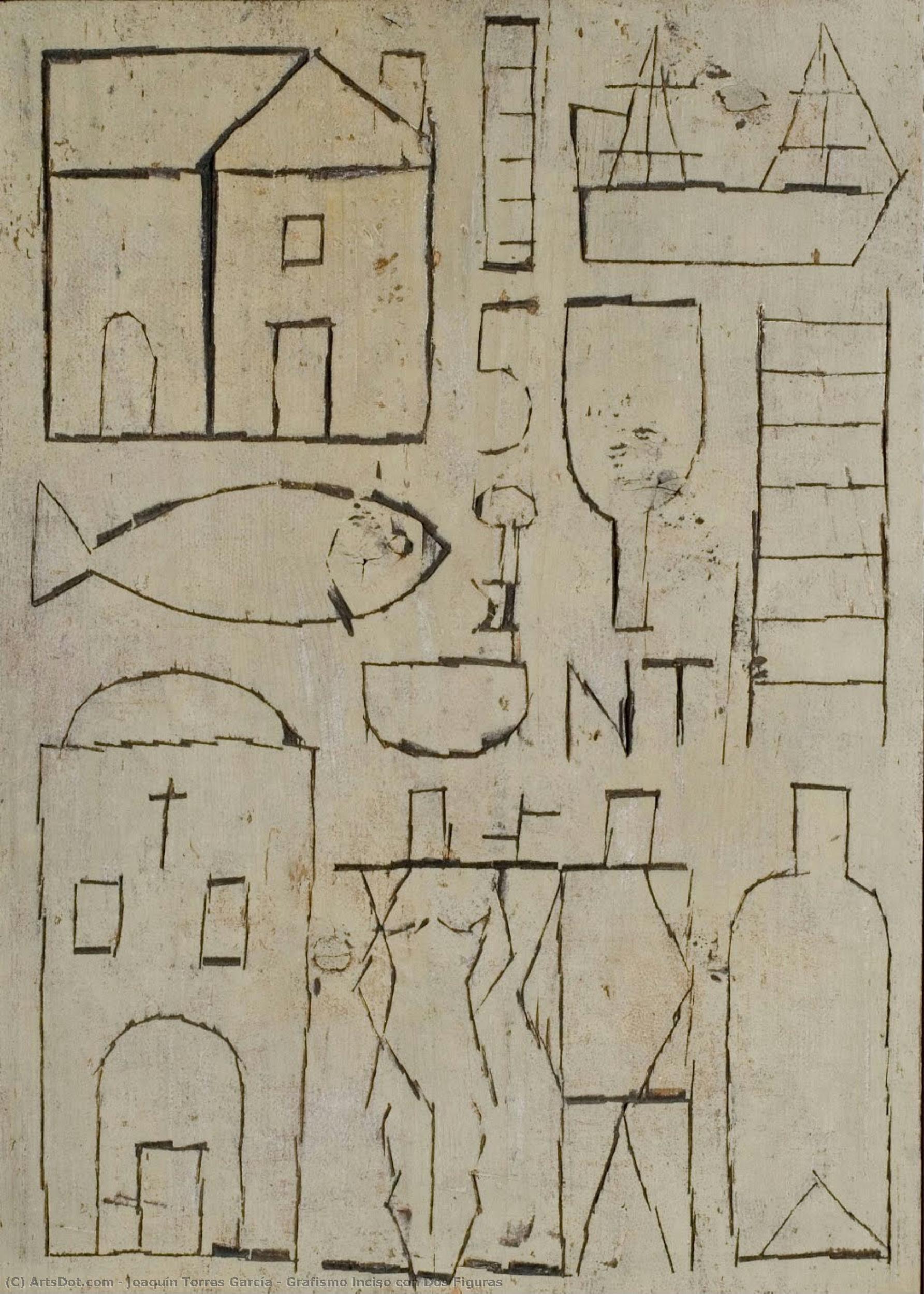
Grafismo Inciso con Dos Figuras


 Read More
Hand Made Oil Reproduction
Hand-painted oil on canvas in your size and frame, made to order by our artists. ( Buy Print Buy Image)




P118B $10

P118H $10

P118W $10

P438Z $10

P508JH $12

P508YH $12

P805H $10

P805Z $10

P919BZ $10

P919G $10

P919XJ $10

P959ZH $10

P968JZ $12

W106C $8

W218G $10

W218JH $8

W218Y $10

W307PJ $10

W316G $10

W316PJ $8

W316Y $10

W398PJ $8

W4111J $10

W500HY $15

W500JH $15

W692G $12

W849H $8

W940BG $15

W953PJ $8




Pick from our preset sizes that match the artwork's original proportions.

You may enter your own dimensions to fit a specific frame or space. If your selected size does not match the original image's proportions, we will either crop the artwork or extend the painting with additional hand-painted elements. A digital mockup will be sent for your approval before production begins.
Please note that the on-screen preview does not reflect the actual cropping or extension. Only the mockup will accurately show the final composition.
While custom sizes are available, we recommend selecting a dimension from the predefined list to preserve the original proportions.
After order, ArtsDot.com team will email client for instructions and provide a mockup preview
Worldwide Delivery () in 3/4 weeks instead of standard 5 weeks. (25 August). No compromise on quality.

Free Worldwide Express Shipping

High-Quality Linen Canvas

Full Shipping Insurance

Customs Tax Refund Guarantee

True Color Matching Guarantee

60-Day Return Policy (Defects Only)

100% Money-Back Guarantee

Bulk Discount Offer
 Glass option is only available in size under 110 CM

Grafismo Inciso con Dos Figuras
Reproduction Medium
Reproduction Size
-


Total Price
$ 263
Artwork Description
A Window into Torres García’s Vision
Joaquín Torres García's "Grafismo Inciso con Dos Figuras" transcends mere visual representation; it embodies a profound philosophical statement about the relationship between tradition and innovation—a cornerstone of Latin American artistic thought during its formative decades. Painted in 1930, this enigmatic artwork captures a moment frozen in time, yet brimming with layers of meaning that continue to fascinate scholars and connoisseurs alike. It’s not simply a depiction of a fish navigating towards a house; it's an exploration of how seemingly disparate elements can coalesce into a harmonious whole, mirroring the artist’s own intellectual journey.Stylistic Influences: Bridging European Avant-Garde and Indigenous Roots
Torres García skillfully blends influences from Cubism and Surrealism with echoes of Andean iconography—a daring juxtaposition that speaks volumes about his desire to forge a distinctly Latin American aesthetic. The fractured planes characteristic of Cubist technique are subtly incorporated into the composition, disrupting conventional perspective and inviting viewers to reconsider their perception of space. Simultaneously, elements reminiscent of shamanistic symbols—particularly the stylized fish motif—suggest a connection to ancient Andean beliefs concerning fertility and transformation. This duality underscores Torres García’s conviction that artistic progress shouldn't abandon its heritage but rather reinterpret it through contemporary sensibilities.Technique: Precision Meets Intuition
The painting employs meticulous etching techniques, reflecting Torres García’s dedication to mastering traditional printmaking methods alongside his embrace of experimental approaches. The artist painstakingly rendered the fish and house with remarkable detail, utilizing a combination of hatching and cross-hatching to achieve tonal gradations that imbue the artwork with depth and luminosity. Yet, despite this technical precision, there's an undeniable element of spontaneity—a feeling that captures the essence of Torres García’s artistic process. This balance between control and improvisation is crucial to understanding the artwork's expressive power.Historical Context: Montevideo Amidst Artistic Transformation
Painted during a period of significant cultural upheaval in Uruguay and Latin America, “Grafismo Inciso con Dos Figuras” reflects the broader anxieties and aspirations of the era. The rise of Surrealism challenged rational thought and championed subconscious imagery—a reaction against the rigid formalism of earlier artistic movements. Torres García’s work aligns with this intellectual current while simultaneously reaffirming the importance of indigenous traditions in shaping Latin American identity. Montevideo, where Torres García resided during his formative years, served as a crucible for artistic experimentation, fostering dialogues between European vanguardism and local cultural expressions.Emotional Resonance: A Symbol of Hope Amidst Uncertainty
Ultimately, “Grafismo Inciso con Dos Figuras” communicates a powerful message about resilience and optimism—a visual metaphor for overcoming obstacles and embracing change. The fish’s journey towards the house symbolizes aspiration and perseverance, suggesting that even amidst difficulties, one must maintain faith in progress and strive toward a brighter future. The chimney represents warmth and comfort, offering solace during times of hardship. This subtle yet profound symbolism elevates the artwork beyond mere visual beauty, transforming it into an enduring emblem of Latin American artistic spirit.Related Artworks

Artist Biography
A Life Forged in Cosmopolitan Currents
Joaquín Torres García stands as a monumental figure in 20th-century art, an artist whose journey was defined by a relentless pursuit of synthesis—a desire to reconcile the burgeoning European avant-garde with the rich artistic heritage of Latin America. Born in Montevideo, Uruguay, in 1874, his life unfolded as a continuous dialogue between continents and cultures. He wasn’t simply a painter; he was a sculptor, muralist, novelist, writer, educator, and theorist—a true polymath whose influence continues to resonate deeply within the art world today. His story is one of constant intellectual ferment, driven by an unwavering belief in the power of art to transcend boundaries and connect humanity through universal symbols. The early years spent in Montevideo, a bustling port city brimming with cultural exchange, instilled in him a keen observational sensibility and a profound appreciation for the interplay of diverse influences that would shape his artistic vision.
Barcelona’s Crucible and the Seeds of Modernism
In 1891, Torres García's family relocated to Barcelona, Spain—a decision that irrevocably altered the course of his artistic development. Immersing himself in the vibrant Catalan art scene, he studied at the School of Fine Arts, Baixas Academy, and Saint Lluc Artists’ Circle. It was here he encountered a generation of artists who would become titans of modernism: Pablo Picasso, Ricard Canals, Manolo Hugue, Joaquim Mir, and Isidre Nonell. The legendary café Els Quatre Gats became a frequent haunt—a crucible where the latest artistic currents from Paris were debated and absorbed. Torres García quickly established himself as a skilled draftsman, contributing illustrations to prominent newspapers and magazines like *La Vanguardia*, *Iris*, *Barcelona Cómica*, and *La Saeta*. This period was marked by an exploration of decorative arts, culminating in his commission in 1903 from Antoni Gaudí to create stained-glass windows for the Palma Cathedral in Mallorca. This project, spanning several years, allowed him to hone his skills while engaging with the architectural grandeur of Gaudí’s vision and demonstrated a remarkable versatility. He continued to receive commissions for monumental frescoes in churches such as San Agustín and Divina Pastora, showcasing his burgeoning talent for mural painting. During this time, his work reflected the influence of Noucentisme, a Catalan cultural movement that emphasized classical ideals, order, and a return to Mediterranean values—a sensibility that would remain a constant undercurrent throughout his career.
The Genesis of Universal Constructivism
Following a sojourn in the United States during World War I, Torres García embarked on a period of profound artistic and intellectual transformation. By 1920, he began to develop a unique style that defied easy categorization, drawing inspiration from Cubism, Dada, Neo Plasticism, Primitivism, Surrealism, and Abstraction. However, these influences were not merely adopted wholesale; they were filtered through his own deeply held convictions about the fundamental principles of art. He coined the term "Universal Constructivism" to articulate his approach—a philosophy that emphasized the inherent human understanding of geometric forms and sought to integrate classical elements with avant-garde techniques. Torres García believed that art should be accessible to all, rooted in universal symbols and archetypes. This conviction led him to establish numerous art schools, including one in Spain and another in Montevideo, where he tirelessly imparted his knowledge and philosophy to a new generation of artists. In 1929, he co-founded the Cercle et Carré (Circle and Square) group in Paris—a pioneering abstract art movement that brought together leading figures like Piet Mondrian and Wassily Kandinsky. This collaboration solidified his position at the forefront of the European avant-garde while simultaneously providing a platform for promoting his own distinctive vision. He was also a prolific writer, publishing over 150 books, essays, and articles on aesthetics and avant-garde literature in multiple languages.
A Legacy Bridging Tradition and Modernity
Joaquín Torres García’s influence extended far beyond his individual artistic output. He was a dedicated mentor, nurturing numerous artists who would become prominent figures in their own right—among them Joan Miró, Helion, and Pere Daura, all of whom considered him “maestro.” Major retrospectives of his work were held in Paris (1955) and Amsterdam (1961), cementing his place in the history of abstract art. However, perhaps his most enduring legacy lies in his impact on Latin American modernism. He is widely regarded as a foundational figure in the region’s artistic development, introducing Constructivism to South America and inspiring generations of artists through his *Escuela del Sur* (*School of the South*) initiative. The *Taller Torres García*, established in Montevideo in 1932, became a hub for artistic experimentation and intellectual exchange. It fostered a uniquely Latin American brand of Constructivism—one that was deeply rooted in indigenous traditions and pre-Columbian symbolism. His work sought to reclaim and celebrate the cultural identity of Latin America, rejecting European dominance and forging a new path for artistic expression. Torres García passed away in Montevideo in 1949, leaving behind a body of work that continues to challenge, inspire, and provoke—a testament to the enduring power of an artist who dared to bridge tradition and modernity, Europe and Latin America, into a singular and unforgettable vision.
Key Characteristics & Enduring Impact
The hallmarks of Torres García’s artistic style are readily apparent in his mature works: geometric abstraction utilizing circles, squares, and triangles arranged in carefully balanced compositions; a symbolic language rooted in pre-Columbian art and ancient mythology, imbuing his pieces with layers of meaning; an embrace of Universal Classicism, seeking to integrate classical elements with avant-garde techniques; and adherence to Constructivist principles emphasizing clarity, precision, and the rejection of illusionistic representation.
- Geometric Abstraction: The foundation of his visual language.
- Symbolic Language: Infusing works with layers of meaning drawn from ancient cultures.
- Universal Classicism: A synthesis of tradition and modernity.
- Constructivist Principles: Clarity, precision, and a rejection of illusionism.
- Cultural Integration: Seamlessly blending European modernism with Latin American heritage.
His legacy extends beyond the canvas; he fundamentally reshaped the landscape of Latin American art, inspiring generations to embrace their cultural identity while engaging with global artistic movements. He remains a pivotal figure whose work continues to captivate and challenge viewers today.
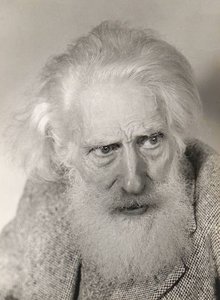
Joaquín Torres García
1874 - 1949 , Uruguay
Quick Facts
- Artistic Movement Or Style: Constructivism, Abstraction
- Artists Or Movements Influenced By This Artist:
- Miró
- Latin American Modernism
- Artists Who Influenced This Artist:
- Gaudí
- Picasso
- Mondrian
- Date Of Birth: 1874
- Date Of Death: 1949
- Full Name: Joaquín Torres García
- Nationality: Uruguayan-Spanish
- Notable Artworks:
- Construction in red & ochre
- New york street scene
- Portrait of J. Torres García
- Place Of Birth: Montevideo, Uruguay
Related Articles

Giclée Prints: Archival Quality & Aesthetic Nuances for the Discerning Collector
Explore the world of giclée prints with ArtsDot. Learn about archival quality, aesthetic nuances & investment potential. Expert guidance for discerning art collectors seeking museum-quality reproductions and lasting value.

The Enduring Legacy of Fine Art Prints: Technique, History & Aesthetic Impact
Explore the rich history & techniques of fine art prints. Discover investment potential, assess authenticity, and learn how to preserve your collection with expert guidance. Trusted insights for discerning collectors.

Echoes of Time: Exploring the Enduring Appeal & Historical Context of Vintage Art Prints
Explore the captivating world of vintage art prints! Discover their history, collecting tips & enduring appeal. Expert insights on chromolithography and building a legacy collection with ArtsDot.
The Enduring Legacy of Printmaking: Techniques, Themes & Artistic Innovation Across Centuries
Explore the rich history of printmaking with ArtsDot. Discover techniques from intaglio to lithography, learn about collecting valuable prints & find museum-quality reproductions. Expert insights for art enthusiasts and collectors.
The Enduring Legacy of Woodblock Printmaking: Technique, History & Artistic Expression
Explore the rich history of woodblock printmaking – from ancient techniques to Ukiyo-e masterpieces. Discover expert insights on collecting, preserving & appreciating this enduring art form.