 Preview
 Send
Send Share
Share
 Details

 Download
 Similars
 X-Ray
X-Ray Diaporama
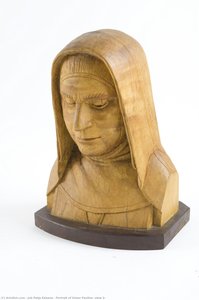
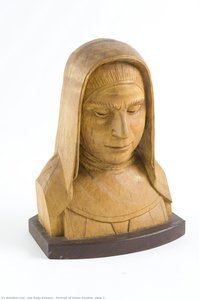
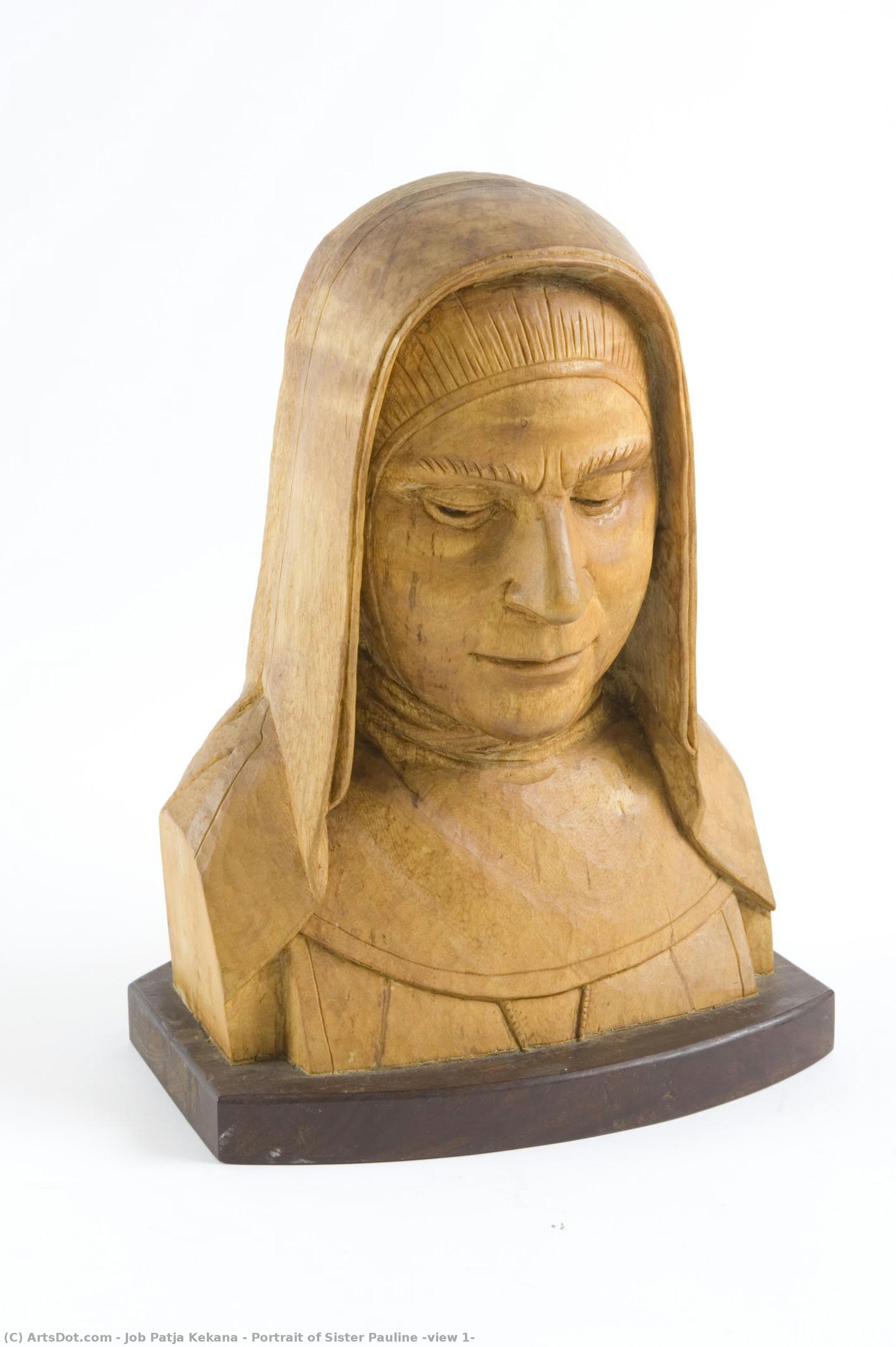
Portrait of Sister Pauline (view 1)

 Read More
Hand Made Oil Reproduction
Hand-painted oil on canvas in your size and frame, made to order by our artists. ( Buy Print Buy Image)




































Pick from our preset sizes that match the artwork's original proportions.

You may enter your own dimensions to fit a specific frame or space. If your selected size does not match the original image's proportions, we will either crop the artwork or extend the painting with additional hand-painted elements. A digital mockup will be sent for your approval before production begins.
Please note that the on-screen preview does not reflect the actual cropping or extension. Only the mockup will accurately show the final composition.
While custom sizes are available, we recommend selecting a dimension from the predefined list to preserve the original proportions.
After order, ArtsDot.com team will email client for instructions and provide a mockup preview
Worldwide Delivery () in 3/4 weeks instead of standard 5 weeks. (5 September). No compromise on quality.

Free Worldwide Express Shipping

High-Quality Linen Canvas

Full Shipping Insurance

Customs Tax Refund Guarantee

True Color Matching Guarantee

60-Day Return Policy (Defects Only)

100% Money-Back Guarantee

Bulk Discount Offer
 Glass option is only available in size under 110 CM

Portrait of Sister Pauline (view 1)
Reproduction Medium
Reproduction Size
-


Total Price
$ 263
Related Artworks
Artist Biography
A Pioneer of African Modernism: The Life and Legacy of Job Patja Kekana
Born in 1916 in the rural Zebediela region of South Africa, Job Patja Kekana emerged as a pivotal figure in the development of modern sculpture within the country. His life story is one of dedication to artistic expression amidst challenging socio-political landscapes, and his work represents a crucial bridge between traditional African artistry and contemporary forms. Growing up on a homestead outside Potgietersrus (now Mokopane) in Limpopo province, Kekana’s early exposure to craftsmanship came through his father, a carpenter and lay preacher. This foundational experience instilled in him a deep respect for the materiality of wood and its potential for storytelling. The untimely death of his father spurred a period of self-discovery, leading him to create walking sticks as a young herd boy—his first foray into carving and an early indication of his innate talent.Early Training and Artistic Foundations
Kekana’s formal artistic journey began at the Grace Dieu Mission Diocesan Training College near Pietersburg (now Polokwane). This institution provided him with structured training in woodworking and carving, but perhaps more importantly, it introduced him to a network of influential figures. The presence of Ernest Mancoba, a pioneering sculptor who had previously taught at the workshop, proved particularly inspiring. Kekana absorbed Mancoba’s approach to form and his commitment to exploring African aesthetics. Crucially, his mentorship under Sister Pauline at the carving workshop was transformative. She nurtured his skills and provided him with opportunities to hone his craft over several years. This period laid the groundwork for his distinctive style—a blend of realism, religious iconography, and a deep connection to his cultural heritage. The unexpected closure of the carving center in 1939 forced Kekana to relocate to Johannesburg, where he faced initial difficulties establishing himself as an artist.Pioneering Arts Education in South Africa and Rhodesia
A turning point came with Sister Pauline’s invitation to join her at St. Faith’s mission in Rusape, Zimbabwe (then Rhodesia). This marked the beginning of Kekana's career as a dedicated art teacher—a role he embraced with passion and foresight. He introduced the Arts and Crafts style to African communities in both South Africa and Rhodesia, breaking down barriers and empowering aspiring artists. His teaching methods were innovative for their time, emphasizing practical skills alongside artistic expression. He wasn’t merely imparting technical knowledge; he was fostering a sense of cultural pride and self-belief within his students. Several of these pupils went on to become the first professional African artists in Rhodesia, establishing a new generation of sculptors and painters. Kekana's impact extended beyond the classroom as he secured commissions for church artwork—crucifixes, panels, and carvings that adorned pulpits across South Africa, including St Mary’s Anglican Cathedral in Johannesburg.International Exposure and Continued Development
Kekana’s artistic pursuits led him to Europe in 1960, a journey that broadened his horizons and deepened his understanding of art history. He visited numerous museums, absorbing the techniques and styles of master sculptors and painters. His attendance at the Passion play in Oberammergau, Germany, further fueled his interest in religious themes—a recurring motif throughout his career. He spent three years studying at Sir John Cass College in London, supported by a grant from the Beit Trust, refining his drawing and modeling skills and focusing on realist representation of the human figure. A subsequent period at Camberwell School of Art allowed him to explore casting techniques. This international exposure culminated in three successful solo exhibitions in England, providing him with recognition and financial stability. While offered a teaching position at Sir John Cass College, Kekana chose to return to St. Faith’s mission in 1964, driven by his commitment to nurturing the artistic talent within his community.Legacy of Innovation and Cultural Impact
Job Patja Kekana's legacy extends far beyond his own sculptures. He was a true pioneer—a sculptor who not only created impactful portraits but also dedicated his life to fostering artistic expression among African communities. His work, particularly his portrait of Sister Pauline, stands as a testament to his skill and sensitivity. He introduced the Arts and Crafts style to regions where it had previously been inaccessible, empowering countless individuals to pursue their creative passions. The success of his students—many of whom became leading artists in their own right—is perhaps his greatest achievement. Kekana’s ability to blend traditional African aesthetics with contemporary techniques established a unique artistic voice that continues to resonate today. Though he passed away in 1974, his influence remains palpable in the vibrant art scene of South Africa and beyond, solidifying his position as a foundational figure in African modernism. His sculptures are not merely objects; they are embodiments of cultural pride, spiritual devotion, and the transformative power of artistic education.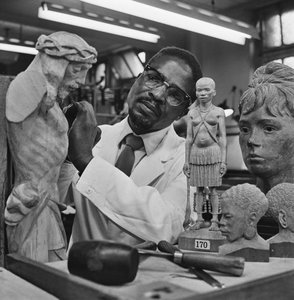
job patja kekana
1916 - , South Africa
Quick Facts
- Artistic Movement Or Style: Arts and Crafts style
- Artists Who Influenced This Artist: ['Ernest Mancoba']
- Date Of Birth: January 1, 1916
- Full Name: Job Patja Kekana
- Nationality: South African
- Notable Artworks: ['Portrait of Sister Pauline']
- Place Of Birth: Zebediela, South Africa