 Preview
 Send
Send Share
Share
 Details

 Download
 Similars
 X-Ray
X-Ray Diaporama
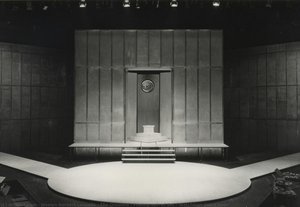
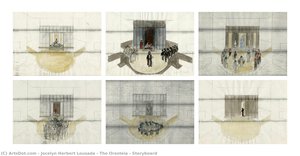
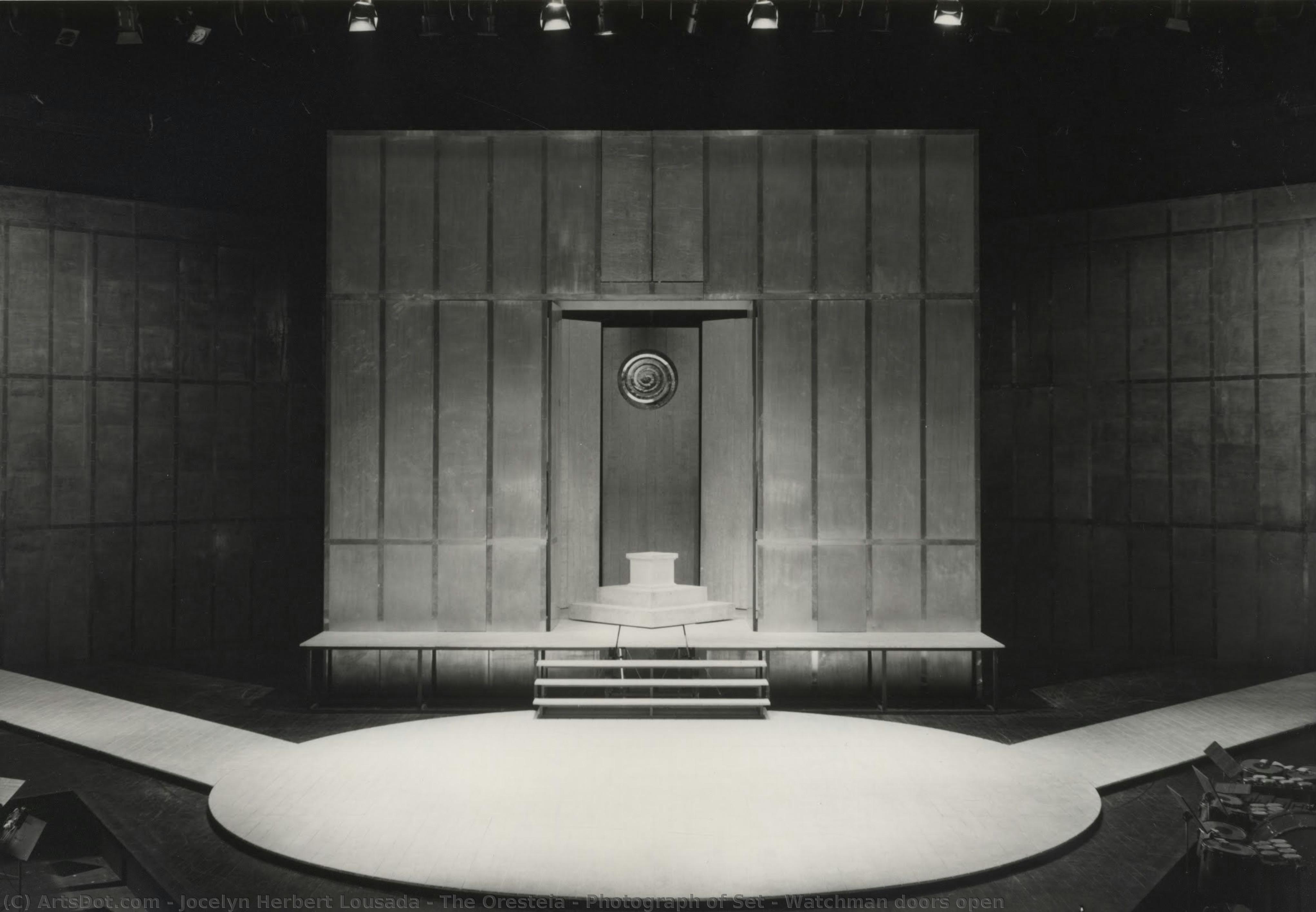
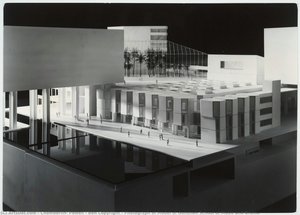
The Oresteia - Photograph of Set - Watchman doors open


 Read More
Giclée / Art Print
Museum-quality giclée or canvas print with fast production and flexible finish options. ( Buy Hand Made Painting Buy Image)




P118B $10

P118H $10

P118W $10

P438Z $10

P508JH $12

P508YH $12

P805H $10

P805Z $10

P919BZ $10

P919G $10

P919XJ $10

P959ZH $10

P968JZ $12

W106C $8

W218G $10

W218JH $8

W218Y $10

W307PJ $10

W316G $10

W316PJ $8

W316Y $10

W398PJ $8

W4111J $10

W500HY $15

W500JH $15

W692G $12

W849H $8

W940BG $15

W953PJ $8




Pick from our preset sizes that match the artwork's original proportions.

You may enter your own dimensions to fit a specific frame or space. If your selected size does not match the original image's proportions, we will either crop the artwork or extend the image with a mirrored or solid-fill edge. A digital mockup will be sent for your approval before production begins.
Please note that the on-screen preview does not reflect the actual cropping or extension. Only the mockup will accurately show the final composition.
While custom sizes are available, we recommend selecting a dimension from the predefined list to preserve the original proportions.
Worldwide Delivery () in 2 weeks instead of standard 4/5 weeks. (24 August)

Free Worldwide Express Shipping

High-Quality Linen Canvas

Full Shipping Insurance

Customs Tax Refund Guarantee

True Color Matching Guarantee

60-Day Return Policy (Defects Only)

100% Money-Back Guarantee

Bulk Discount Offer
 Glass option is only available in size under 110 CM

The Oresteia - Photograph of Set - Watchman doors open
Giclée / Art Print
Reproduction Size
-


Total Price
$ 63
Collectible Description
Related Artworks
Artist Biography
Jocelyn Herbert Lousada: Architect of Shadows and Stage
Jocelyn Herbert (1917-2003) wasn’t merely a theatre designer; she was a sculptor of atmosphere, a weaver of illusion. Born in Hammersmith, London, into the artistic lineage of playwright A.P. Herbert, her early life fostered an appreciation for visual storytelling that would profoundly shape her career. From a young age, she immersed herself in the world of art, studying at the Slade School of Art and then honing her skills in Paris under André Lhote, absorbing the principles of Cubism and modern abstraction – influences subtly embedded within her later, strikingly minimalist designs.
Herbert’s professional journey began with a pivotal role at the London Theatre Studio (LTS) in 1936. This experimental environment, guided by Margaret Harris and Sophie Harris, instilled in her a collaborative approach to design, emphasizing the interconnectedness of stagecraft – set, lighting, costume, and performance. It was here that she developed a philosophy rooted in serving the text, believing that the visual elements should enhance, not overshadow, the playwright’s vision. This commitment would become a defining characteristic of her work.
The Royal Court and the Dawn of Modern Theatre
Her career truly ignited at the Royal Court Theatre in 1956, where she joined George Devine's English Stage Company. This marked a turning point, not just for Herbert but for British theatre itself. The Court, under Devine’s visionary leadership, became a crucible for new voices and experimental productions. Herbert’s designs were instrumental in shaping this environment, moving away from the opulent, literal representations of space that had previously dominated the stage. She embraced simplicity, utilizing gauzes, arches, and strategic lighting to create evocative atmospheres – suggesting rather than explicitly depicting reality.
Her early collaborations with playwrights like Eugène Ionesco, John Arden, Arnold Wesker, and Samuel Beckett were groundbreaking. The design for *The Chairs* (1957) is particularly notable, establishing a style characterized by its haunting beauty and subtle power. Herbert’s approach was deeply intuitive; she sought to capture the essence of a play through carefully considered visual elements, prioritizing mood and atmosphere over detailed representation. This commitment to the text manifested in her work on Beckett's *Endgame* (1957) and *Krapp’s Last Tape* (1958), productions that cemented her reputation as a visionary designer.
A Partnership with Olivier and Beyond
Herbert’s influence extended beyond the Royal Court, culminating in a significant association with Laurence Olivier at the National Theatre. Invited to join the planning committee for the theatre's iconic South Bank building, she played a crucial role in shaping its design – reflecting her belief that architecture should complement artistic expression. Her collaborations with Olivier produced memorable productions of *Othello* and *Early Days*, showcasing her ability to create visually arresting environments that supported compelling performances.
However, Herbert’s most enduring legacy lies perhaps in her work with Tony Harrison on his translation of Sophocles' *Oresteia* (1980). This ambitious undertaking demonstrated her willingness to push boundaries and explore complex themes through innovative design. The production, staged at the Epidaurus amphitheatre in Greece, became a landmark event, solidifying Herbert’s reputation as a designer who could seamlessly blend ancient drama with contemporary sensibilities. Her work continued throughout the 1960s and 70s, encompassing productions for the Old Vic, the West End, and even opera houses in Paris and New York.
A Legacy of Minimalism and Collaboration
Jocelyn Herbert’s designs were characterized by a profound respect for the playwright's vision. She eschewed elaborate spectacle, favoring instead a minimalist aesthetic that drew attention to the text and the actors. Her approach was deeply collaborative, working closely with directors and writers to create productions that resonated emotionally and intellectually. Her influence extended beyond theatre, informing her work in film, where she collaborated with directors like Lindsay Anderson and Karel Reisz on films such as *Tom Jones*, *If....*, and *The Hotel New Hampshire*.
Herbert’s legacy is one of innovation, subtlety, and a deep commitment to the art of theatre. She wasn't simply designing sets; she was crafting immersive experiences that transported audiences to other worlds – a testament to her extraordinary talent and enduring influence on British stagecraft.
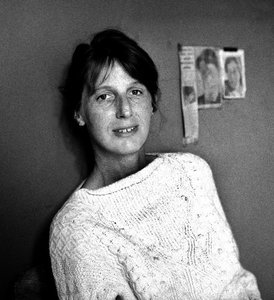
jocelyn herbert lousada
1917 - 2003 , United Kingdom
Quick Facts
- Artistic Movement Or Style: Theatrical photography & stage design
- Artists Or Movements Influenced By This Artist:
- George Devine
- Laurence Olivier
- Artists Who Influenced This Artist:
- André Lhote
- Margaret Harris
- Sophie Harris
- Date Of Birth: Feb 22, 1917
- Date Of Death: May 6, 2003
- Full Name: Jocelyn Herbert Lousada
- Nationality: British
- Notable Artworks:
- Tom Jones
- If…
- Is That All There Is?
- Place Of Birth: Hammersmith, UK
Related Articles
Documentary Photography's Defining Moments: 10 Masterpieces for Your Home |
Explore 10 defining documentary photography masterpieces – from Dorothea Lange to Robert Capa. Discover powerful stories, iconic images & timeless art for your home. Museum-quality prints at .
Beyond the Lens: Photography's Enduring Influence on Modern & Contemporary Art
Explore photography's pivotal role in shaping modern & contemporary art. Discover key movements, influential artists like Stieglitz, and expert collecting advice from ArtsDot.

Monochrome Visions: Exploring the Aesthetic & Historical Significance of Black & White Photography
Explore the rich history & artistic power of black and white photography. From early techniques to iconic masters like Ansel Adams, discover why monochrome continues to captivate art lovers today. Expert insights for collectors.
Witnessing History Through Lens & Light: Documentary Photography's Enduring Legacy
Explore the powerful history of documentary photography – from its origins to contemporary masters like Gordon Parks & W. Eugene Smith. Discover how this art form shapes our understanding of society and witness pivotal moments in time.
Pictorialism: A Search for Artistic Photography's Soul – Aesthetics, Techniques & Legacy
Explore the captivating world of Pictorialism – a pivotal movement that transformed photography into fine art. Discover key artists like Stieglitz & Käsebier, techniques, and collecting tips from experts.