 Preview
 Send
Send Share
Share
 Details

 Download
 Similars
 X-Ray
X-Ray Diaporama
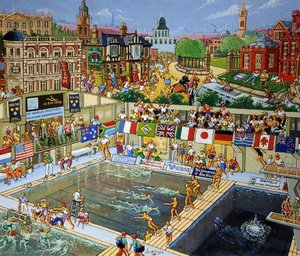
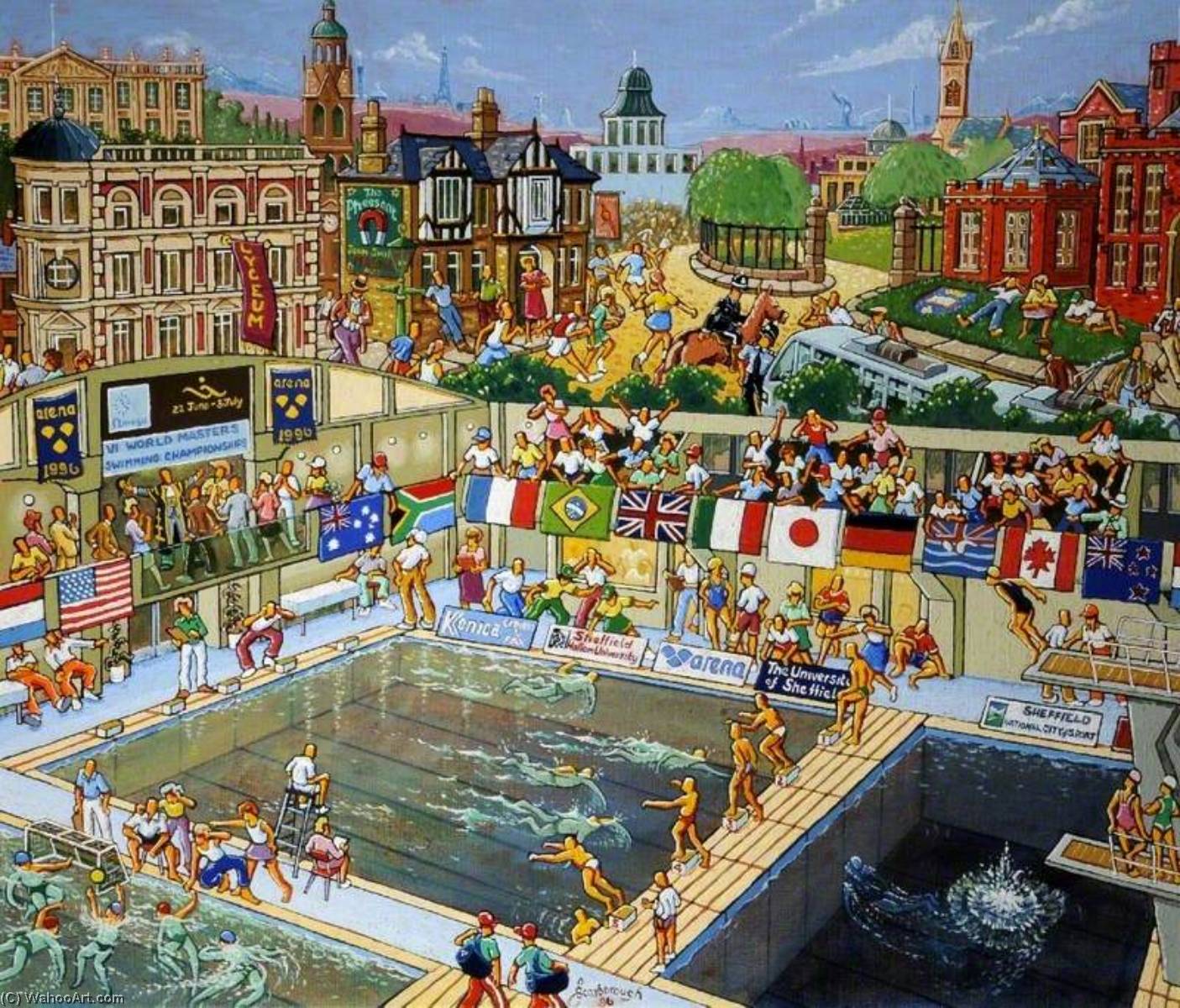
VI World Masters Swimming Championships, Sheffield
 Oil On Canvas
- WallArt
- Contemporary Realism
 1996
1996- Contemporary
 84.0 x 100.0 cm
 Sheffield Town Hall
 Read More
Giclée / Art Print
Museum-quality giclée or canvas print with fast production and flexible finish options. ( Buy Hand Made Painting Buy Image)




P118B $10

P118H $10

P118W $10

P438Z $10

P508JH $12

P508YH $12

P805H $10

P805Z $10

P919BZ $10

P919G $10

P919XJ $10

P959ZH $10

P968JZ $12

W106C $8

W218G $10

W218JH $8

W218Y $10

W307PJ $10

W316G $10

W316PJ $8

W316Y $10

W398PJ $8

W4111J $10

W500HY $15

W500JH $15

W692G $12

W849H $8

W940BG $15

W953PJ $8




Pick from our preset sizes that match the artwork's original proportions.

You may enter your own dimensions to fit a specific frame or space. If your selected size does not match the original image's proportions, we will either crop the artwork or extend the image with a mirrored or solid-fill edge. A digital mockup will be sent for your approval before production begins.
Please note that the on-screen preview does not reflect the actual cropping or extension. Only the mockup will accurately show the final composition.
While custom sizes are available, we recommend selecting a dimension from the predefined list to preserve the original proportions.
Worldwide Delivery () in 2 weeks instead of standard 4/5 weeks. (28 August)

Free Worldwide Express Shipping

High-Quality Linen Canvas

Full Shipping Insurance

Customs Tax Refund Guarantee

True Color Matching Guarantee

60-Day Return Policy (Defects Only)

100% Money-Back Guarantee

Bulk Discount Offer
 Glass option is only available in size under 110 CM

VI World Masters Swimming Championships, Sheffield
Giclée / Art Print
Reproduction Size
-


Total Price
$ 63
A Moment Frozen in Motion: The Spirit of Sheffield
In the vibrant oil on canvas masterpiece, VI World Masters Swimming Championships, Sheffield, artist Joe Scarborough invites us into a whirlwind of athletic energy and communal celebration. Painted in 1996, this expansive work captures more than just a sporting event; it preserves the very heartbeat of a global gathering. The scene is a masterful tapestry of movement, where the stillness of the poolside meets the dynamic propulsion of athletes mid-stroke. As your eyes wander across the canvas, you encounter a lively assembly of at least thirteen individuals, each contributing to a narrative of dedication and joy. From the breathtaking moment of a diver suspended in mid-air to the ethereal, silent grace of a swimmer gliding beneath the water's surface, Scarborough utilizes the medium of oil to breathe life into the fleeting seconds of competition.
The composition is rich with the lived-in details that transform a mere sporting record into a poignant piece of social history. Scattered throughout the poolside are the humble artifacts of human presence—backpacks resting near the edges, a solitary bench waiting for a weary competitor, and spectators poised on the brink of excitement. These elements ground the grand scale of the World Masters Championships in a relatable, human reality. For the collector or interior designer, this painting offers a unique window into 1996 Sheffield, blending the monumental significance of an international championship with the intimate, everyday textures of life at the water's edge.
Technique and Visual Resonance
The artist employs a sophisticated approach to light and texture that defines the piece's emotional depth. Through the deliberate application of oil paint, Scarborough achieves a remarkable sense of fluidity, mimicking the undulating surface of the pool and the rhythmic motion of the swimmers. The interplay of light reflecting off the water creates a shimmering effect that draws the viewer into the cool, inviting depths of the arena. This technique does not merely depict water; it evokes the sensation of humidity, the splash of a descent, and the quiet tension of an underwater glide.
Beyond the technical prowess, the painting serves as a profound exploration of energy and atmosphere. The color palette, while grounded in the realistic tones of a swimming complex, is infused with a vitality that mirrors the competitive spirit of the era. There is a palpable sense of "organized chaos"—a controlled frenzy where every brushstroke contributes to the feeling of a crowd in motion. For those seeking to adorn a space with art that inspires movement and vigor, this work stands as a testament to the enduring power of human endeavor and the beauty found in shared triumph.
An Essential Addition to any Curated Collection
For the discerning art lover, VI World Masters Swimming Championships, Sheffield represents a rare opportunity to own a piece of contemporary sporting history. It is an artwork that transcends the boundaries of sports memorabilia, elevating a specific historical moment into a timeless study of human vitality. Its large scale and commanding presence make it an ideal centerpiece for sophisticated interiors, offering a conversation starter that bridges the gap between historical documentation and fine art expression.
Whether placed in a modern gallery setting or a classic study, this reproduction brings with it an aura of nostalgia and unbridled optimism. It captures a world where the focus is on the pure, rhythmic joy of movement—a sentiment that remains as relevant today as it was when the brushes first met the canvas in 1996. To possess this work is to hold a fragment of Sheffield's legacy and the universal spirit of the masters who gathered there.
Related Artworks




Artist Biography
Georg Baselitz: A Life Forged in Destruction and Rebirth
Born Hans-Georg Kern in Deutschbaselitz, a small village in the desolate landscape of Upper Lusatia, Germany, on January 23, 1938, Georg Baselitz’s life has been inextricably linked to themes of loss, displacement, and the struggle for artistic expression. His early years were profoundly shaped by the devastation wrought by World War II – a period marked by widespread destruction, forced migrations, and the lingering trauma of occupation. This experience wasn't merely biographical; it became the very bedrock upon which his entire artistic vision was built, informing a deeply personal and often unsettling exploration of identity, memory, and the nature of representation.
Baselitz’s childhood was far from idyllic. His father, a schoolteacher, instilled in him a love for literature and a critical perspective on societal norms. However, the pervasive atmosphere of destruction and uncertainty profoundly impacted his development. The concept of order—both social and artistic—was shattered, leading Baselitz to question established conventions and forge his own unique path. This formative period fueled a desire to break free from traditional modes of expression, ultimately manifesting in his revolutionary approach to painting.
The Emergence of the Upside-Down Figure
Baselitz’s artistic journey began with conventional figurative painting in the late 1950s and early 1960s. Initially influenced by artists like Wyndham Lewis and the Expressionists, his work reflected a growing dissatisfaction with the representational constraints of traditional art. A pivotal moment arrived in 1969 when he began to paint his subjects upside down – a radical departure that would define his signature style. This seemingly arbitrary decision was not a random act; it represented a deliberate attempt to dismantle the viewer’s expectations and challenge the inherent authority of the image.
As explained in his own words, “I was born into a destroyed order, a destroyed landscape, a destroyed people, a destroyed society. And I didn't want to reestablish an order: I had seen enough of so-called order. I was forced to question everything, to be ‘naive’, to start again.” By inverting his figures and stripping away the illusion of depth, Baselitz sought to expose the artifice of painting itself – to reveal the act of creation as a process of construction rather than imitation. This technique served as a powerful metaphor for confronting the trauma of his past and rejecting the imposed narratives of history.
Influences and Artistic Language
Baselitz’s artistic language is remarkably eclectic, drawing inspiration from a diverse range of sources. He cites influences ranging from Soviet-era illustration art – particularly its bold lines and simplified forms – to the Mannerist period with its elongated figures and distorted perspectives, as well as African sculptures for their expressive power and primal energy. These disparate elements coalesce into a distinctly personal style characterized by energetic brushwork, fragmented compositions, and a sense of raw emotion.
The artist’s work is often described as “neo-expressionist,” although he himself rejects this label. While sharing certain characteristics with the movement—such as its focus on subjective experience and emotional intensity—Baselitz's approach is fundamentally different. His paintings are not simply representations of reality; they are expressions of a deeply felt inner world, filtered through the lens of his personal history and artistic experimentation.
Major Achievements and Legacy
Georg Baselitz’s impact on contemporary art has been profound. His groundbreaking technique of inverting figures revolutionized painting, challenging established conventions and opening up new possibilities for expression. Throughout his career, he has exhibited extensively around the world, receiving numerous awards and accolades, including the Golden Lion at the Venice Biennale (1997) and the Knight Commander’s Cross of the Order of Merit in Germany (2018).
Baselitz's work continues to be exhibited in major museums and galleries worldwide. His paintings are valued for their emotional intensity, technical virtuosity, and enduring relevance. He remains a vital force in contemporary art, inspiring artists with his willingness to challenge the status quo and explore the boundaries of artistic expression. His legacy lies not only in his distinctive style but also in his courageous refusal to conform—a testament to the power of individual vision in the face of adversity.

joe scarborough
1938 - , United Kingdom
Quick Facts
- Artistic Movement Or Style: Neo-Expressionism
- Artists Or Movements Influenced By This Artist: ['Gerhard Richter']
- Artists Who Influenced This Artist:
- Soviet illustration art
- Mannerist period
- African sculptures
- Date Of Birth: January 23, 1938
- Full Name: Georg Baselitz
- Nationality: German
- Notable Artworks:
- Where is the Yellow Milkjug?
- Mrs Bird?
- Place Of Birth: Deutschbaselitz, Germany
Related Articles

Elevating Corporate Events Through Artful Gifting: A Concierge Service for Personalized Artwork Selection and Delivery
Elevate your corporate events with personalized artwork! Our art concierge service offers curated collections & bespoke commissions for lasting impressions. Expert guidance, secure delivery & legal compliance guaranteed.
John Frederick Herring Sr.: Equestrian Mastery & the Rise of Sporting Art in Victorian England
Explore the life & work of John Frederick Herring Sr., a leading Victorian equestrian artist. Discover his masterpieces, patronage, techniques & investment potential. Expert insights for collectors.

The Art of Gifting: ’s Comprehensive Services for Wedding & Event Planners
offers wedding planners exclusive access to unique, personalized art gifts – from custom paintings to miniature reproductions. Elevate your clients’ celebrations with unforgettable keepsakes and expert art consultation.

Ramsay Richard Reinagle: A Study in British Sporting Art & Zoological Illustration
Explore the life & work of Ramsay Richard Reinagle (1775-1862), a key figure in British sporting art and animal portraiture. Discover his landscapes, panoramas, and contributions to zoological illustration with ArtsDot.
Jorge Apperley: A Life Painted with Sporting Elegance – Technique, Patronage & 19th-Century Art
Discover the captivating life & art of Jorge Apperley (George Owen Wynne Apperley). Explore his stunning portraits, Spanish influences, and legacy in 19th-century equestrian painting. Expert insights for collectors.