 Preview
 Send
Send Share
Share
 Details

 Download
 Similars
 X-Ray
X-Ray Diaporama
NOTRE DAME DE PARIS


 Read More
Hand Made Oil Reproduction
Hand-painted oil on canvas in your size and frame, made to order by our artists. ( Buy Print Buy Image)




P118B $10

P118H $10

P118W $10

P438Z $10

P508JH $12

P508YH $12

P805H $10

P805Z $10

P919BZ $10

P919G $10

P919XJ $10

P959ZH $10

P968JZ $12

W106C $8

W218G $10

W218JH $8

W218Y $10

W307PJ $10

W316G $10

W316PJ $8

W316Y $10

W398PJ $8

W4111J $10

W500HY $15

W500JH $15

W692G $12

W849H $8

W940BG $15

W953PJ $8




Pick from our preset sizes that match the artwork's original proportions.

You may enter your own dimensions to fit a specific frame or space. If your selected size does not match the original image's proportions, we will either crop the artwork or extend the painting with additional hand-painted elements. A digital mockup will be sent for your approval before production begins.
Please note that the on-screen preview does not reflect the actual cropping or extension. Only the mockup will accurately show the final composition.
While custom sizes are available, we recommend selecting a dimension from the predefined list to preserve the original proportions.
After order, ArtsDot.com team will email client for instructions and provide a mockup preview
Worldwide Delivery () in 3/4 weeks instead of standard 5 weeks. (17 August). No compromise on quality.

Free Worldwide Express Shipping

High-Quality Linen Canvas

Full Shipping Insurance

Customs Tax Refund Guarantee

True Color Matching Guarantee

60-Day Return Policy (Defects Only)

100% Money-Back Guarantee

Bulk Discount Offer
 Glass option is only available in size under 110 CM

NOTRE DAME DE PARIS
Reproduction Medium
Reproduction Size
-


Total Price
$ 263
Artwork Description
Johan Barthold Jongkind: A Pioneer of Parisian Impressionism
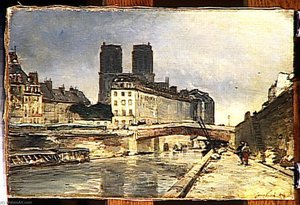
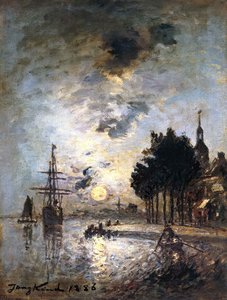
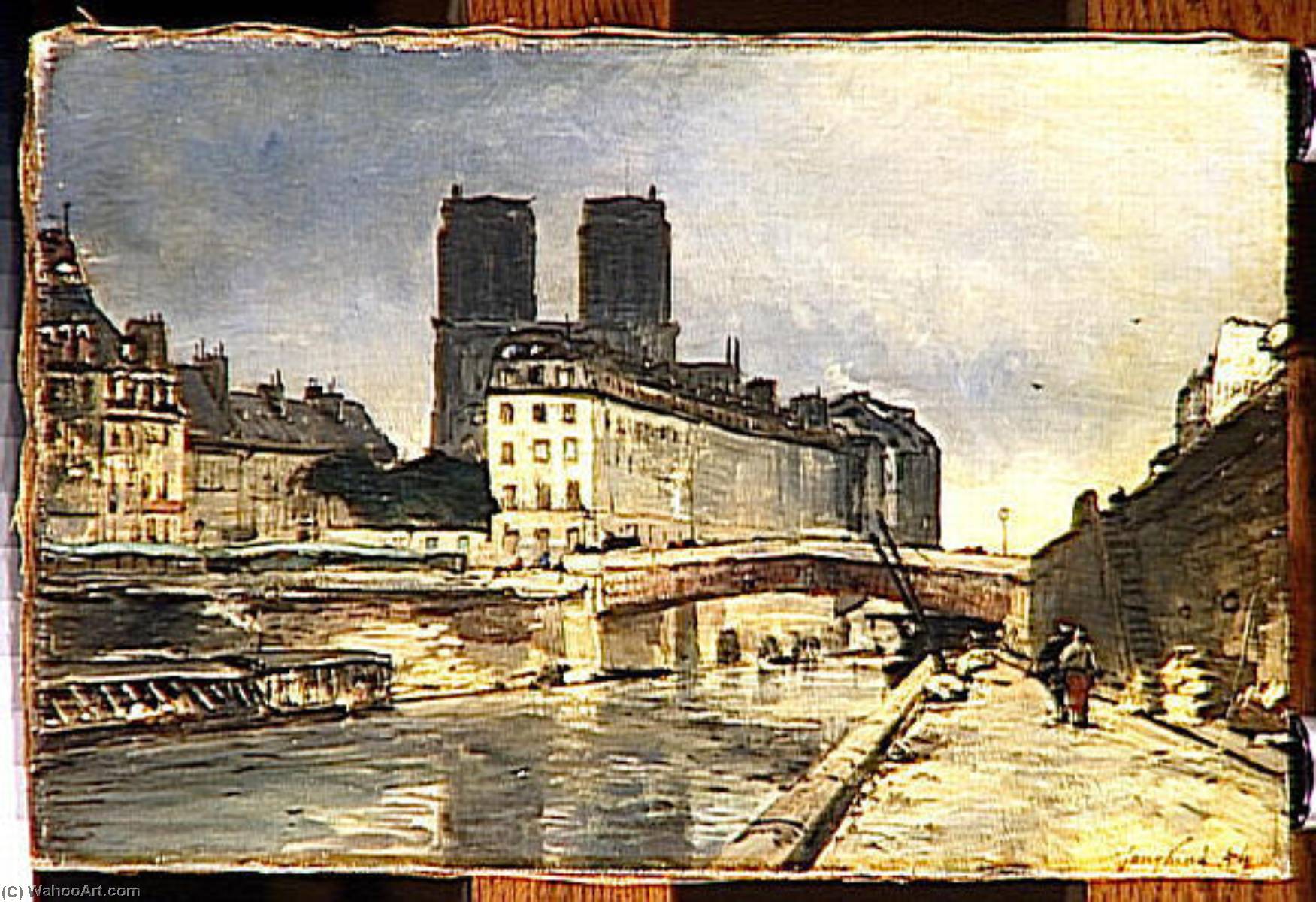
Johan Barthold Jongkind (1819-1891) stands as an unsung hero in the annals of Impressionist art, a figure whose influence on Monet and subsequent generations of painters deserves greater recognition. Born in Lattrop, Netherlands, Jongkind’s artistic journey began with a grounding in Dutch landscape painting traditions under Andreas Schelfhout, fostering a meticulous observation of nature—a characteristic that would propel him toward capturing the ephemeral beauty of light and atmosphere. Unlike many of his contemporaries who focused on idealized depictions of rural scenes, Jongkind turned his gaze towards the burgeoning metropolis of Paris, specifically Notre Dame Cathedral, marking a decisive step away from academic conventions and embracing the revolutionary spirit of Impressionism.- Subject Matter: Jongkind’s “Notre Dame de Paris” isn't merely a depiction of a landmark; it’s an embodiment of Parisian identity at the cusp of industrialization. The cathedral towers dominate the composition, symbolizing faith and permanence against the backdrop of bustling city life—a deliberate juxtaposition that speaks to the anxieties and aspirations of the era.
- Style & Technique: The painting exemplifies Impressionistic style through its loose brushstrokes, prioritizing capturing fleeting moments rather than precise detail. Jongkind eschewed blending colors smoothly, opting for visible marks that convey texture and movement—a technique honed during his formative years studying Schelfhout’s landscapes. This approach aligns perfectly with the Impressionists' desire to represent sensory experience directly.
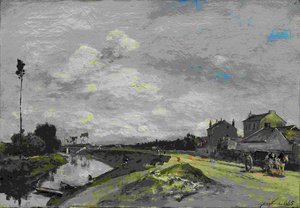
- Color Palette & Lighting: Dominated by muted grays, blues, and browns, Jongkind’s palette evokes a contemplative mood, mirroring the overcast skies typical of Parisian days. Subtle hints of warmer hues—primarily reflected in the Seine River—introduce luminosity and dynamism, skillfully manipulating light to heighten the emotional impact of the scene.
- Composition & Perspective: The horizontal format emphasizes the breadth of the river and establishes a linear arrangement of buildings that recedes into the distance, creating depth through careful perspective. Jongkind’s viewpoint is positioned at eye level, offering a realistic portrayal of the cathedral and its surroundings—a stylistic choice reflecting the Impressionists' commitment to capturing everyday life with honesty and immediacy.
- Historical Context: Created in 1866, “Notre Dame de Paris” arrived during a period of significant social and artistic upheaval. Jongkind’s decision to depict Notre Dame alongside the Seine River wasn’t simply aesthetic; it signaled a rejection of academic idealism and an embrace of modern urban life—a pivotal moment in establishing Impressionism as a dominant force in European art.
Exploring the Impressionistic Vision
Jongkind’s masterful use of light and texture elevates “Notre Dame de Paris” beyond mere representation. The diffused sunlight casts shimmering highlights on the water surface, creating an illusion of movement and capturing the ephemeral quality that defines Impressionism. Jongkind's technique—applying paint in visible strokes—is reminiscent of Schelfhout’s landscapes, demonstrating a dedication to meticulous observation and translating natural beauty onto canvas with remarkable sensitivity. This stylistic choice underscores Jongkind’s commitment to conveying not just what he saw but how he *felt* when encountering the grandeur of Notre Dame and the vibrancy of Parisian life.A Legacy Enduring Through Reproduction
ArtsDot offers exceptional reproductions of Johan Barthold Jongkind's “Notre Dame de Paris,” allowing art enthusiasts worldwide to experience the beauty and emotional depth of this iconic Impressionist masterpiece. Each print is crafted with archival inks on premium canvas, guaranteeing vibrant colors and lasting quality—a testament to Jongkind’s artistic vision and a captivating addition to any interior space. Discover the transformative power of owning a piece of art history.Related Artworks

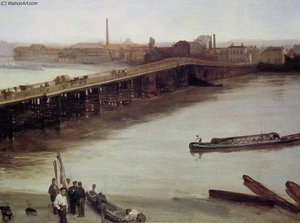
Artist Biography
A Forerunner of Light: The Life and Art of Johan Barthold Jongkind
Johan Barthold Jongkind, a name perhaps less immediately recognizable than those of Monet or Renoir, occupies a pivotal position in the story of Impressionism. Born on June 3, 1819, in Lattrop, a small town in the Netherlands, Jongkind’s artistic journey was one marked by both profound talent and personal struggle. His early life unfolded amidst the tranquil landscapes of Overijssel province, a region that would deeply inform his lifelong fascination with water, light, and atmosphere. Though initially employed as a clerk, his inherent artistic inclinations led him to The Hague in 1837, where he began formal training under Andreas Schelfhout, a respected landscape painter steeped in the Dutch tradition. This foundation proved crucial, instilling in Jongkind a meticulous observation of nature and a mastery of technique that would later be infused with a distinctly modern sensibility. It was a period of learning the fundamentals, but also one of burgeoning ambition, prompting him to seek further artistic development in the vibrant heart of Paris.Parisian Encounters and Artistic Development
The move to Paris in 1846 proved transformative. Jongkind entered the studios of Eugène Isabey and François-Édouard Picot, immersing himself in the French art scene. He quickly gained recognition, exhibiting at the Salon as early as 1848, earning praise from influential critics like Charles Baudelaire and Émile Zola. These were years of promise, yet shadowed by a growing internal turmoil. Jongkind battled with bouts of depression and alcoholism, challenges that would intermittently disrupt his career and personal life. Despite these struggles, he continued to paint prolifically, focusing on scenes of the Seine River, the bustling Parisian streets, and the atmospheric nuances of the surrounding countryside. His work during this period reveals a unique blend of Dutch realism and emerging French Romanticism, characterized by vigorous brushwork and a keen sensitivity to light effects. He wasn’t merely depicting landscapes; he was capturing their fleeting moods, their ephemeral beauty. This ability to convey atmosphere would become his signature style and a key influence on the artists who followed.A Mentor to Monet: The Seeds of Impressionism
Jongkind's return to the Netherlands in 1855 was temporary. He eventually settled back in Paris in 1861, where his artistic path intersected with that of a young Claude Monet. This encounter proved profoundly significant for both artists. Jongkind became a mentor to Monet, sharing his knowledge of *plein air* painting – working outdoors directly from nature – and encouraging him to embrace a more spontaneous and expressive approach. Monet himself credited Jongkind with providing the “definitive education” of his eye, recognizing in the older artist’s work a freedom and sensitivity that resonated deeply with his own artistic aspirations. Jongkind's influence can be seen in Monet’s early landscapes, particularly those depicting scenes along the Seine, where the emphasis on light, atmosphere, and fleeting impressions is strikingly similar. He wasn’t simply teaching technique; he was imparting a philosophy of seeing, a way of capturing the essence of a moment in time.Legacy and Lasting Influence
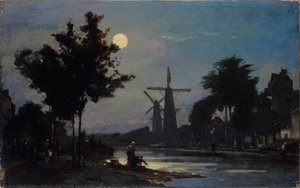
Though Jongkind never fully achieved the widespread fame enjoyed by some of his contemporaries, his contribution to the development of Impressionism is undeniable. His paintings, often characterized by their loose brushwork, dramatic skies, and evocative use of color, paved the way for a new approach to landscape painting. He demonstrated that capturing the subjective experience of light and atmosphere was as important as accurately representing physical reality. His work can be found in prominent museums such as the Van Gogh Museum in Amsterdam and the Musée d'Orsay in Paris, testaments to his enduring artistic merit.- Notable Works: *Moonlight on the Canal*, numerous paintings of the Seine near Notre-Dame Cathedral.
- Influence: A key influence on Claude Monet and a forerunner of Impressionism.
- Final Years: Jongkind passed away on February 9, 1891, in Saint-Égrève, France, leaving behind a legacy that continues to inspire artists and art enthusiasts today.
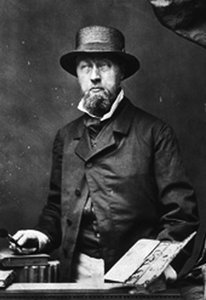
Johan Barthold Jongkind
1819 - 1891 , Netherlands
Quick Facts
- Artistic Movement Or Style: Impressionism forerunner
- Artists Or Movements Influenced By This Artist:
- Claude Monet
- Impressionism
- Artists Who Influenced This Artist:
- Eugène Isabey
- Andreas Schelfhout
- Date Of Birth: June 3, 1819
- Date Of Death: February 9, 1891
- Full Name: Johan Barthold Jongkind
- Nationality: Dutch
- Notable Artworks:
- Moonlight on the canal
- Seine landscapes
- Place Of Birth: Lattrop, Netherlands
Related Articles
Hendrik Willem Mesdag: Pioneering Impressionism & the Dutch Maritime Tradition
Explore the life & work of Hendrik Willem Mesdag, a pioneer of Dutch Impressionism and leading figure of the Hague School. Discover his captivating seascapes and the immersive Panorama Mesdag – a true masterpiece.
Wilhelmus de Zwart: Capturing Dutch Life Through the Lens of Realism & Impressionism
Explore the captivating world of Wilhelmus de Zwart, a Dutch master bridging Realism & Impressionism. Discover his landscapes, cityscapes, and unique technique – a compelling study for art enthusiasts and collectors.
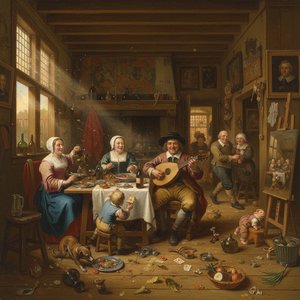
Jan Steen: A Master of Dutch Genre Painting & the Golden Age
Explore the life & art of Jan Steen, a leading Dutch Golden Age painter renowned for his humorous genre scenes & insightful social commentary. Discover his techniques, legacy, and collecting tips.

Impressionism's Masterpieces: 10 Paintings That Defined a Movement | ArtsDot
Journey through Impressionism's heart with 10 iconic paintings by Monet, Renoir & Degas. Explore light, color & the stories behind these masterpieces. Find museum-quality art reproductions and elevate your home decor on ArtsDot.com.

Golden Age Reflections: Dutch Baroque Painting & Cultural Innovation
Explore the Dutch Golden Age of painting! Discover key artists like Vermeer & ter Borch, their innovative techniques, and the rich cultural context behind these Baroque masterpieces. Learn about collecting & appreciating this iconic art period.