
Early Life & Apprenticeship: The Foundations of a Dutch Painter
Wilhelmus "Willem" Hendrikus Petrus Johannes de Zwart (16 May 1862 – 11 December 1931) was a Dutch painter, engraver, and watercolorist with many connections to the Hague School and later associated with the Amsterdam Impressionism movement. == Bio...
Wilhelmus Hendrikus Petrus Johannes de Zwart, born in The Hague on May 16th, 1862, emerged from a family steeped in the practical trades – his father a carriage painter. This early exposure to craftsmanship, though not initially artistic in intent, laid a crucial foundation for the meticulous observation and technical skill that would later define his work. At fourteen, Willem followed in his father’s footsteps, apprenticed to a carriage maker. However, even amidst the demands of this trade, a nascent passion for art flickered. He diligently copied prints gleaned from magazines, a testament to an innate desire to translate the world onto paper. This self-directed study led him, at fifteen, to evening classes at the Royal Academy of Visual Art in The Hague, marking his formal entry into the realm of artistic pursuit. A year later, he secured admission to the studio of Jacob Maris, a pivotal moment that would shape his early development and connect him with the burgeoning circle of artists known as the Hague School.
The Hague School Influence: Realism, Coastal Scenes, and Somber Tones
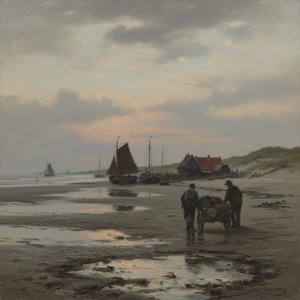
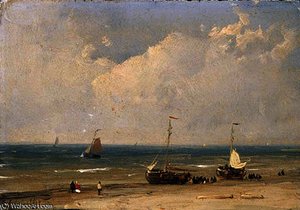 Bomschuiten on the beach
Discover 'Bomschuiten on the beach' by Wilhelmus Zwart! This Hague School/Amsterdam Impressionist oil painting captures a tranquil coastal scene with loose brushstrokes & muted colors.
The Hague School, flourishing between 1860 and 1890, represented a significant shift in Dutch art. Rejecting the idealized romanticism of earlier periods, these painters embraced realism, focusing on depicting everyday life with honesty and authenticity. Maris’s guidance proved instrumental in De Zwart's absorption of this aesthetic. He was encouraged to observe nature directly, to capture its nuances without embellishment – a practice that instilled in him a deep appreciation for the subtleties of light and atmosphere. This influence is readily apparent in his early works, particularly those depicting the Dutch coastline. Scenes of fishing boats (“Bomschuiten on the beach”) and expansive skies became recurring motifs, rendered with a palette characterized by relatively somber colors – earning the Hague School its occasional moniker as the “Gray School.” Yet, within this muted tonality lay a profound emotional depth, conveyed through expressive brushwork and a keen sensitivity to the melancholic beauty of the Dutch landscape. De Zwart wasn’t merely recording what he saw; he was interpreting it, imbuing his canvases with a sense of quiet contemplation.
Transition to Amsterdam Impressionism: Embracing Light and Expressive Brushwork
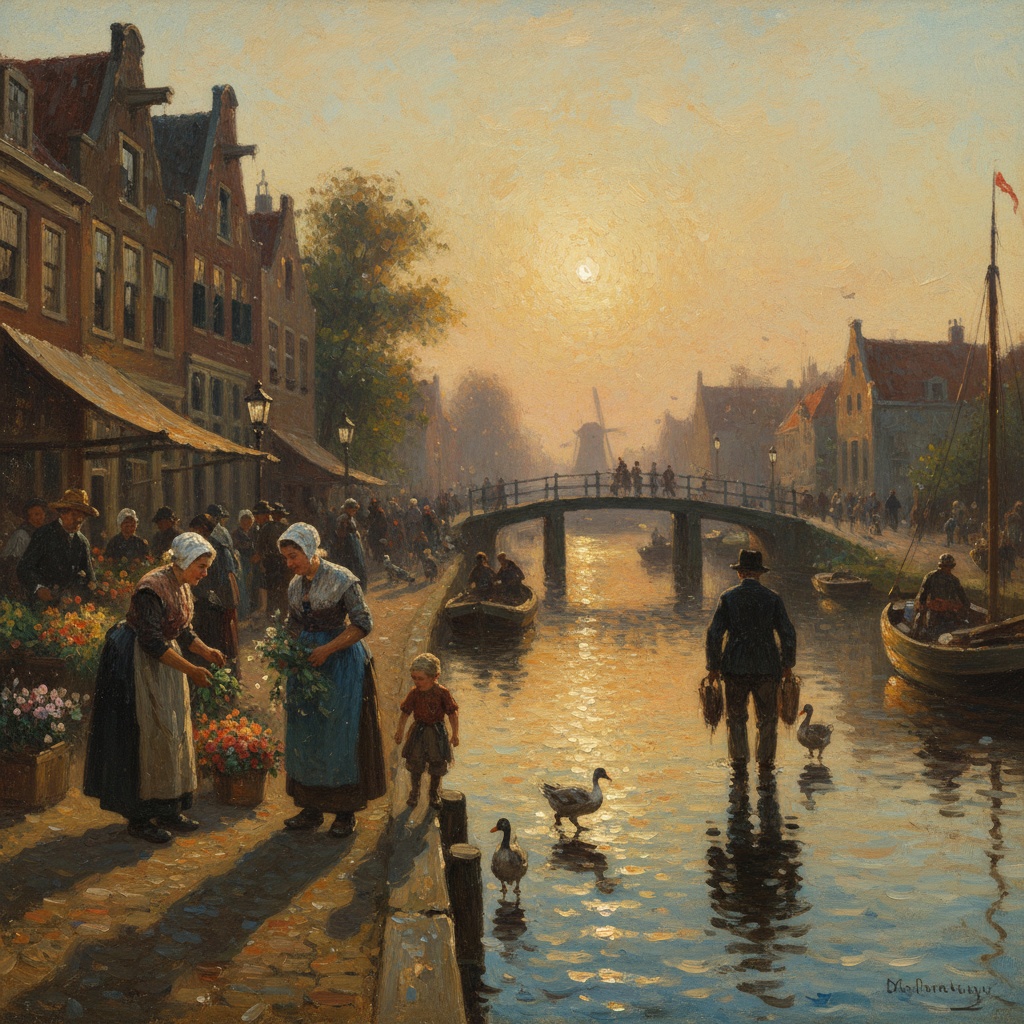
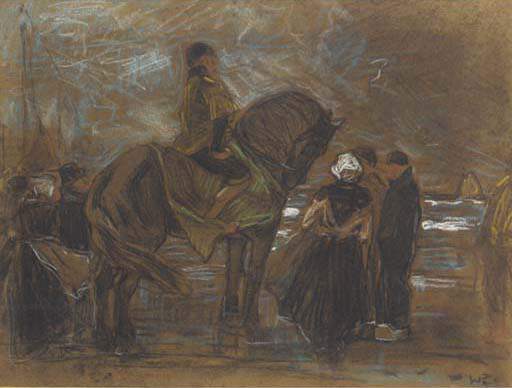 wilhelmus hendrikus petrus johannes zwart
Discover Wilhelmus Hendrikus Petrus Johannes Zwart (1862-1931), a Dutch painter linked to the Hague School & Amsterdam Impressionism. Explore his vibrant landscapes, cityscapes, portraits & animal studies.
While firmly rooted in the Hague School's principles, De Zwart’s artistic journey didn’t remain static. Around 1890, he began to gravitate towards the more vibrant and experimental techniques of the Amsterdam Impressionists. This wasn’t a complete abandonment of his earlier style but rather an evolution – a loosening of brushwork, a bolder use of color, and a greater emphasis on capturing fleeting moments of light. He found kinship with artists like George Hendrik Breitner, sharing a fascination with urban life and a desire to depict the energy of modern society. This shift is visible in his cityscapes, where he employed loose, dynamic strokes to convey the bustle of streets and the play of sunlight on buildings. The impasto technique – applying paint thickly to create texture – became increasingly prominent, adding a tactile quality to his work and further enhancing its expressive power. His paintings began to radiate a newfound vibrancy, reflecting not just observation but also feeling.
Recurring Themes in De Zwart’s Oeuvre: Landscapes, Cityscapes & Rural Life
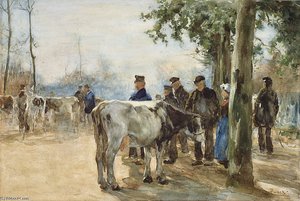 The Cattle Market
Discover 'The Cattle Market' by Wilhelmus Zwart, a nostalgic watercolor capturing rural life in 19th-century Netherlands. Explore Hague School & Impressionism.
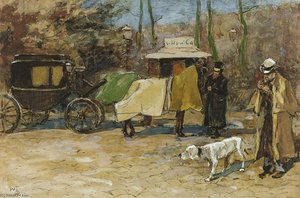
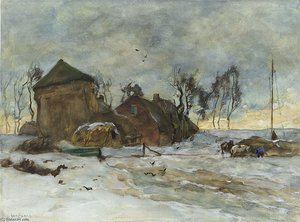
Throughout his career, several themes consistently surfaced in De Zwart's art. Landscapes remained a constant source of inspiration, evolving from the tranquil coastal scenes of his Hague School period to more dynamic depictions of the Dutch countryside. He possessed an exceptional ability to capture the atmosphere of a place – the dampness of a meadow, the chill of a winter morning, the warmth of sunlight on a field. Cityscapes, particularly those of The Hague and Amsterdam, offered another compelling subject matter. He wasn’t interested in grand monuments or historical events but rather in the everyday rhythms of urban life: stationary carriages, bustling streets, figures going about their daily routines. Perhaps less frequently explored, yet equally poignant, were his depictions of rural life – scenes like “The Cattle Market” revealing a nostalgic appreciation for traditional ways of farming and a sensitivity to the dignity of labor. These diverse subjects weren’t isolated explorations; they were all interconnected by De Zwart's unwavering commitment to realism and emotional honesty.
De Zwart's Technique & Style: Impasto, Color Palette, and Emotional Resonance
Wilhelmus de Zwart’s distinctive style was characterized by a masterful application of impasto – the thick layering of paint that creates visible texture on the canvas. This wasn’t merely a technical flourish; it was integral to his expressive intent. The raised brushstrokes captured light in unique ways, adding depth and dynamism to his compositions. His color palette, while initially restrained within the somber tones of the Hague School, gradually expanded with his embrace of Impressionism. He employed bright touches of red, yellow, and blue – often applied directly from the tube – to create a sense of vibrancy and immediacy. However, even at its most colorful, his work retained a certain earthiness, grounded in the natural world. More than just technical skill, De Zwart possessed an exceptional ability to convey emotion through color and brushwork. His paintings aren’t simply representations of reality; they are interpretations – imbued with a sense of quiet contemplation, melancholic beauty, and profound empathy for his subjects.
Legacy and Recognition: A Bridge Between Traditions of Dutch Painting
Wilhelmus de Zwart occupies a unique position in the history of Dutch art. He served as a crucial bridge between the realism of the Hague School and the expressive freedom of Amsterdam Impressionism, absorbing influences from both movements while forging his own distinctive style. Though he experienced periods of financial hardship and personal turmoil – including struggles with depression and a difficult relationship with the art market – his work continued to evolve, reflecting his unwavering commitment to artistic exploration. He received recognition during his lifetime, exhibiting at national and international exhibitions and securing commissions that allowed him to sustain his practice. Today, De Zwart’s paintings are increasingly appreciated for their technical skill, emotional depth, and insightful portrayal of Dutch life. His legacy lies not only in the beauty of his individual works but also in his ability to capture a specific moment in time – a fleeting glimpse into the heart and soul of 19th-century Netherlands. Discover more exceptional artworks at ArtsDot.com, where masterpieces are brought to life with unparalleled quality and care.