

 Preview
 Send
Send Share
Share
 Details

 Download
 Similars
 X-Ray
X-Ray Diaporama
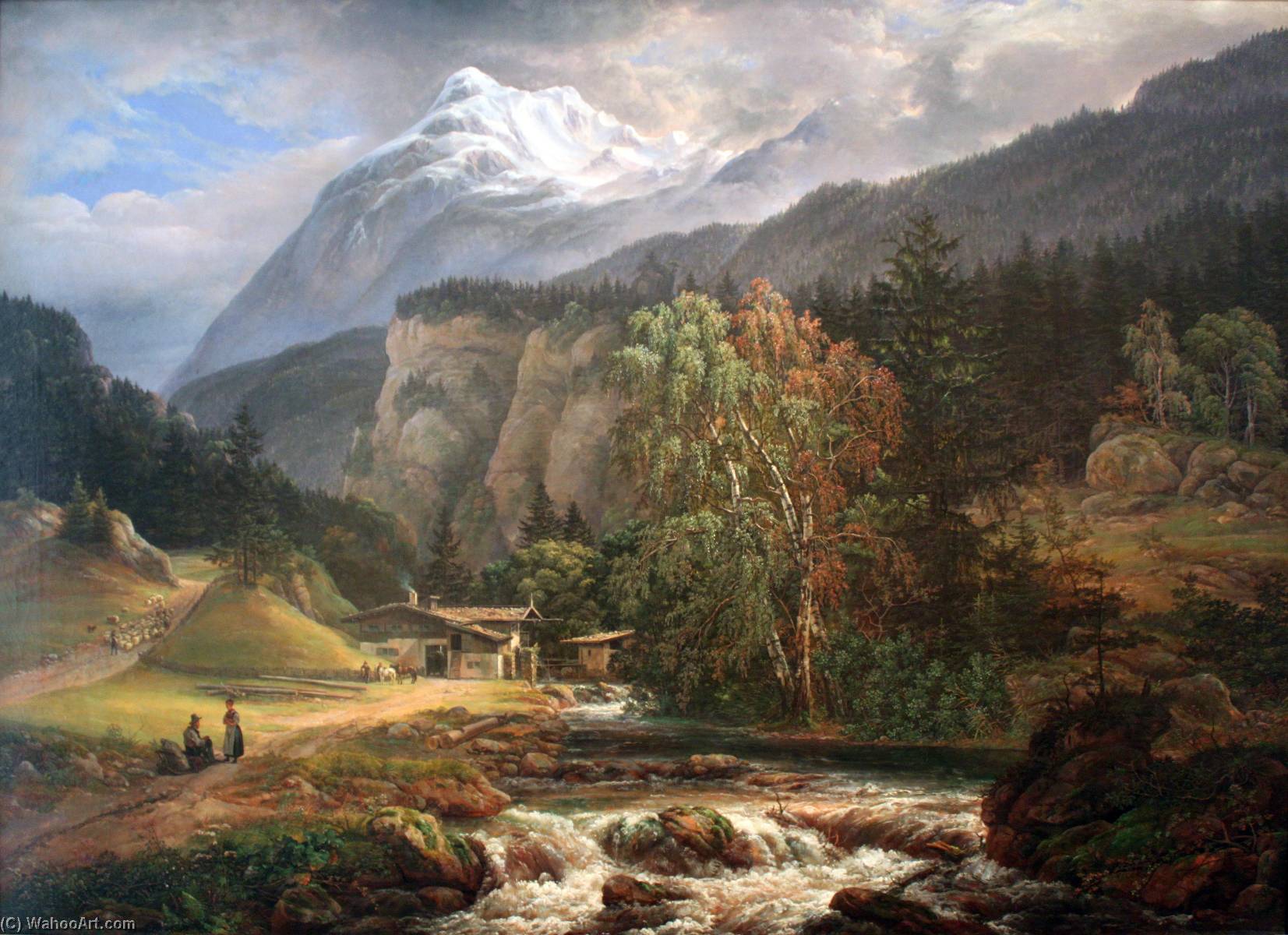
Alpine Landscape
 Oil On Canvas
- WallArt
- Romanticism
 1821
1821 110.0 x 148.0 cm
 Germanisches Nationalmuseum
 Read More
Purchase a high-resolution, enhanced digital image, far superior to the online preview.
Each file is meticulously prepared by our in-house specialists using advanced tools and expert manual retouching. We ensure every image has exceptional clarity, precise color accuracy, and fine detail.
The final file is delivered via email within 72 hours, optimized for immediate use in professional, editorial, and print environments. This is the same quality trusted by top-tier design studios, publishers, and galleries.
Digital Image
Download a high-resolution file for personal display, printing, and creative projects. ( Buy Print Buy Hand Made Painting)
Included in Every Digital Image Order
Expert Digital Delivery, Guaranteed
When you choose ArtsDot.com, you're not just getting an image - you're receiving a professionally enhanced digital artwork, crafted with precision and backed by a satisfaction guarantee. Here's everything that comes with your order, automatically:

Fast Email Delivery
Your high-resolution digital image file will be emailed to you within 72 hours of ordering - ready for immediate use.

AI-Enhanced Digital File
Your artwork is professionally optimized using advanced AI tools and manual editing, ensuring maximum detail, clarity, and color accuracy.

Free Lifetime Re-Delivery
Accidentally deleted or lost your file? No worries - we'll resend it to you anytime, free of charge.

No Import Fees - Ever
Enjoy your artwork instantly with zero customs, duties, or delivery fees - digital downloads are always tax-free.

Color Accuracy Guarantee
We ensure your digital image reflects the original colors as closely as possible using professional tools and color management.

60-Day Satisfaction Guarantee
If you're not satisfied with your digital image, we'll revise it or refund 100% within 60 days - no questions asked.

100% Money-Back Guarantee
Not satisfied? Get a full refund within 60 days of receiving your digital file - no questions asked.

Bulk Order Discounts
Buy 3 images, save 10% - Buy 5, save 15% - Buy 10+, save 20%. Great for creative projects, galleries, and agencies.
Collectible Description
A Vision of the Norwegian Wilderness: Exploring Johan Christian Dahl’s “Alpine Landscape”
Johan Christian Dahl's "Alpine Landscape," painted in 1821, isn’t merely a depiction of a mountain scene; it’s a profound meditation on nature’s power and humanity’s place within its vastness. This seminal work, deeply rooted in the Romantic movement, transcends simple landscape painting to become a powerful expression of emotion and a testament to Dahl's mastery of capturing the spirit of Norway. The painting immediately draws the viewer into a dramatic vista – a towering mountain range dominates the upper portion of the canvas, their jagged peaks piercing an overcast sky, while a verdant valley unfolds below, threaded by a rushing stream that snakes its way towards a diminutive cabin nestled amongst the trees. The scene is imbued with a palpable sense of both beauty and foreboding, reflecting the Romantic fascination with the sublime – that feeling of awe and terror inspired by the grandeur of nature.
Romanticism’s Embrace: Style and Technique
Dahl's style firmly aligns with the tenets of Romanticism, prioritizing emotional response over strict realism. He eschews precise detail in favor of capturing the *feeling* of the landscape – its wildness, its solitude, and its inherent drama. The painting’s composition is carefully orchestrated to emphasize this effect; the horizontal expanse of the valley grounds the viewer while the towering mountains create a sense of depth and scale. Dahl's technique is equally crucial to the work’s impact. He employs a textured brushstroke – visible impasto, particularly in the depiction of foliage and rocky surfaces – that lends a remarkable physicality to the scene. The paint itself seems to shimmer with light and shadow, conveying not just the appearance of the landscape but also its very essence. The use of cool blues and greens dominates the palette, creating a sense of atmospheric depth and reflecting the often-dramatic weather conditions characteristic of the Norwegian mountains. Contrasting these cool tones are warm browns and ochres used to depict the rocks and trees, adding warmth and grounding the composition.
Symbolism in the Landscape: Humanity’s Smallness
Beyond its purely aesthetic qualities, “Alpine Landscape” is rich in symbolic meaning. The small cabin nestled within the valley represents humanity's presence within this immense natural world – a tiny speck against the backdrop of towering mountains and endless skies. The rushing stream symbolizes the relentless flow of time and the interconnectedness of all things. The overcast sky, with its dramatic clouds, hints at both beauty and potential danger, mirroring the Romantic fascination with the unpredictable forces of nature. The figures in the lower left corner – a small group of people – further emphasize this theme, suggesting humanity’s vulnerability and our dependence on the natural world. Dahl's choice to include these figures subtly reminds us of our own insignificance within the grand scheme of things, prompting contemplation about our relationship with the environment.
A Legacy Forged in Norway: Historical Context
Johan Christian Dahl’s work emerged during a pivotal period in Norwegian history – a time of burgeoning national identity and artistic awakening. Following centuries of Danish rule, Norway had recently gained its independence, and there was a fervent desire to establish a distinct Norwegian cultural heritage. Dahl played a crucial role in this process, becoming the first truly celebrated Norwegian landscape painter and establishing a new standard for artistic expression. His paintings were not merely beautiful images; they were imbued with a deep sense of national pride and a celebration of Norway’s unique natural beauty. The painting's creation coincided with the rise of Romanticism across Europe, but Dahl adapted this movement to reflect the specific landscapes and cultural values of his homeland. He was deeply influenced by artists like Caspar David Friedrich, whose emphasis on the sublime and the spiritual resonated strongly with Dahl’s own artistic vision. The work is a testament to Dahl's skill as an artist and his contribution to the development of Norwegian art.
Additional Research: Explore ‘Alpine Landscape’ by Johan Christian Dahl (1821) at ArtsDot. Discover more about the artist at ArtsDot and read articles on his legacy at ArtsDot. You can also view the painting’s original image at Wikimedia Commons.
Related Artworks
Artist Biography
early life and career
johan christian claussen dahl, a danish-norwegian artist, was born on february 24, 1788, in norway. he is widely regarded as the first great romantic painter in norway and the founder of the 'golden age' of norwegian painting.artistic contributions
dahl's work had a profound impact on norwegian art, earning him the title 'the father of norwegian landscape painting'. his paintings not only showcased his technical skill but also reflected his deep love for norway. some of his notable works include:- winter landscape near vordingborg, denmark (oil on canvas, national gallery of denmark, copenhagen, denmark), a testament to his mastery of capturing the essence of nature.
- other works, such as harnham church, near salisbury, demonstrate his ability to balance light and color, characteristic of the romanticism movement.
legacy and cultural impact
dahl's influence extends beyond his art. he was a key figure in the founding of the nasjonalgalleriet (oslo, norway), a prominent institution dedicated to preserving and promoting norwegian and international art. his efforts have had a lasting impact on norwegian culture.comparison with other artists
when compared to other romantic painters like john constable (malvern hall, warwickshire) and caspar david friedrich (the ruins of teplitz castle), dahl's unique style and technique set him apart as a pioneer in norwegian landscape painting.conclusion
johan christian claussen dahl's legacy continues to inspire artists and art enthusiasts alike. his contributions to norwegian art have cemented his place in the annals of art history, making him an indispensable figure in the world of romanticism. explore more of his works and the romantic movement on ArtsDot.- visit johan christian claussen dahl's page for a comprehensive collection of his artworks.
- discover the nasjonalgalleriet (oslo, norway), a museum co-founded by dahl, and its extensive collection.
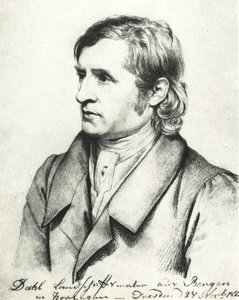
johan christian claussen dahl
1788 - 1857 , Norway
Quick Facts
- Artistic Movement Or Style: Romanticism
- Artists Or Movements Influenced By This Artist: ['Knud Baade']
- Artists Who Influenced This Artist:
- John Constable
- Caspar David Friedrich
- Date Of Birth: February 24, 1788
- Date Of Death: October 14, 1857
- Full Name: Johan Christian Claussen Dahl
- Nationality: Norwegian
- Notable Artworks:
- Winter landscape near Vordingborg
- Harnham church, near Salisbury
- Place Of Birth: Bergen, Norway


.jpg)