 Preview
 Send
Send Share
Share
 Details

 Download
 Similars
 X-Ray
X-Ray Diaporama
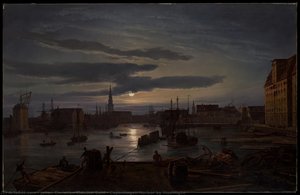
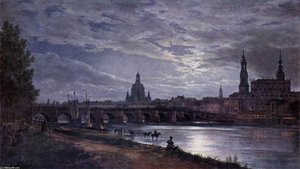
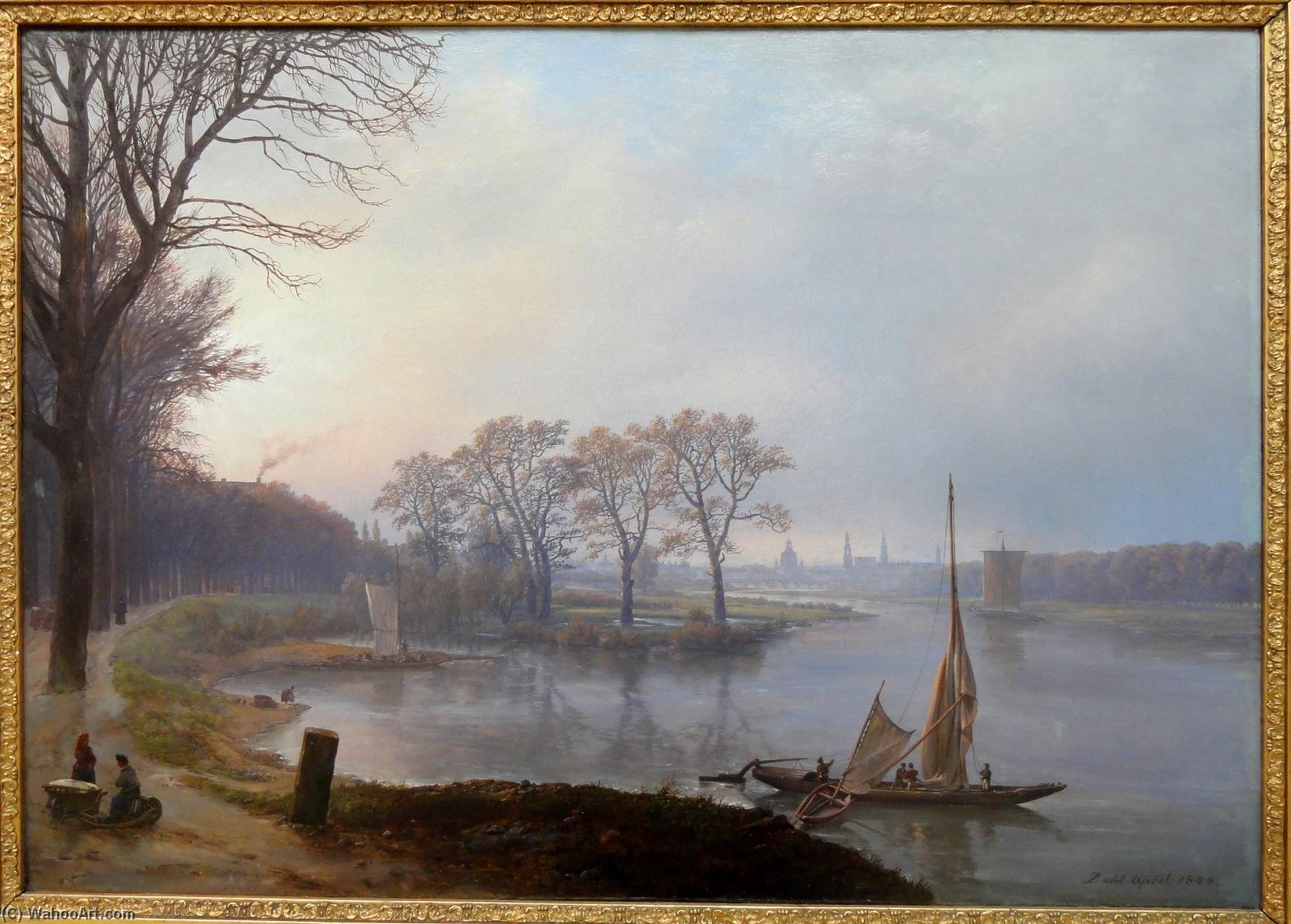
Prospect of Dresden Seen from Pieschen, March Haze
 Acrylic On Canvas
- WallArt
- Romanticism
 1844
1844 54.0 x 75.0 cm
 Ny Carlsberg Glyptotek
 Read More
Hand Made Oil Reproduction
Hand-painted oil on canvas in your size and frame, made to order by our artists. ( Buy Print Buy Image)




P118B $10

P118H $10

P118W $10

P438Z $10

P508JH $12

P508YH $12

P805H $10

P805Z $10

P919BZ $10

P919G $10

P919XJ $10

P959ZH $10

P968JZ $12

W106C $8

W218G $10

W218JH $8

W218Y $10

W307PJ $10

W316G $10

W316PJ $8

W316Y $10

W398PJ $8

W4111J $10

W500HY $15

W500JH $15

W692G $12

W849H $8

W940BG $15

W953PJ $8




Pick from our preset sizes that match the artwork's original proportions.

You may enter your own dimensions to fit a specific frame or space. If your selected size does not match the original image's proportions, we will either crop the artwork or extend the painting with additional hand-painted elements. A digital mockup will be sent for your approval before production begins.
Please note that the on-screen preview does not reflect the actual cropping or extension. Only the mockup will accurately show the final composition.
While custom sizes are available, we recommend selecting a dimension from the predefined list to preserve the original proportions.
After order, ArtsDot.com team will email client for instructions and provide a mockup preview
Worldwide Delivery () in 3/4 weeks instead of standard 5 weeks. (1 September). No compromise on quality.

Free Worldwide Express Shipping

High-Quality Linen Canvas

Full Shipping Insurance

Customs Tax Refund Guarantee

True Color Matching Guarantee

60-Day Return Policy (Defects Only)

100% Money-Back Guarantee

Bulk Discount Offer
 Glass option is only available in size under 110 CM

Prospect of Dresden Seen from Pieschen, March Haze
Reproduction Medium
Reproduction Size
-


Total Price
$ 263
A Frozen Moment of Serenity: Exploring Dahl’s “Prospect of Dresden Seen from Pieschen”
Johan Christian Claussen Dahl's "Prospect of Dresden Seen from Pieschen, March Haze" (1844) isn’t merely a landscape painting; it’s a carefully constructed distillation of Romanticism’s core tenets – a profound meditation on nature, memory, and the melancholic beauty of the fleeting moment. Painted during a period of intense artistic evolution in Norway, this work stands as a pivotal example of Dahl's unique style, blending meticulous observation with deeply felt emotion. The scene unfolds along the Elbe River near Dresden, capturing not just a visual representation but an atmosphere saturated with both the chill of approaching spring and the lingering vestiges of winter’s grip.
Dahl, often hailed as “the father of Norwegian landscape painting,” was profoundly influenced by the artistic currents sweeping through Europe. He absorbed the dramatic lighting and emotional intensity of German Romanticism – particularly the works of Caspar David Friedrich – while simultaneously forging a distinctly Scandinavian sensibility. This is evident in the painting’s muted palette dominated by greys, blues, and browns, creating a sense of subdued grandeur rather than vibrant spectacle. The hazy atmosphere, achieved through delicate layering of paint and subtle shifts in tone, evokes a feeling of distance and introspection, inviting the viewer to step into the scene and contemplate its quiet beauty.
The Techniques of Romantic Detail
Dahl’s technical mastery is immediately apparent in the painting's remarkable detail. He employed a technique known as ‘pointillé,’ meticulously applying tiny dots of paint to build up texture and create an illusion of depth and atmosphere. This method, reminiscent of Japanese woodblock prints, adds a subtle shimmering quality to the water and snow-covered trees, imbuing the landscape with a tactile realism. The artist’s use of light is particularly noteworthy; it's not harsh or dramatic but rather diffused and atmospheric, casting long shadows and highlighting the delicate details of the winter foliage. The composition itself is carefully balanced, drawing the eye along the riverbank towards the distant cityscape of Dresden, creating a sense of spatial depth and inviting the viewer to lose themselves in the scene.
Symbolism Within the Landscape
Beyond its purely visual appeal, “Prospect of Dresden Seen from Pieschen” is rich with symbolic meaning. The painting’s title explicitly references "Pieschen," a suburb of Dresden, suggesting a connection between the natural world and the urban landscape. The hazy March weather itself symbolizes transition – the end of winter and the beginning of spring, representing both loss and renewal. The boats on the river evoke themes of travel, commerce, and human interaction within the vastness of nature. The solitary figure in the foreground, partially obscured by the mist, could be interpreted as a symbol of introspection or perhaps a longing for connection with the natural world.
A Legacy of Romantic Vision
“Prospect of Dresden Seen from Pieschen” is more than just a beautiful painting; it’s a testament to Dahl's artistic vision and his profound understanding of the relationship between humanity and nature. It exemplifies the core values of the Romantic movement – an emphasis on emotion, imagination, and the sublime power of the natural world. Dahl’s work continues to resonate with viewers today, offering a glimpse into a bygone era while simultaneously reminding us of the enduring beauty and mystery of the landscape. Reproductions of this iconic painting provide a tangible connection to this pivotal moment in art history, allowing us to experience the emotional depth and technical brilliance of one of Norway's greatest artistic figures.
Related Artworks


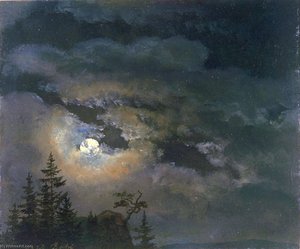
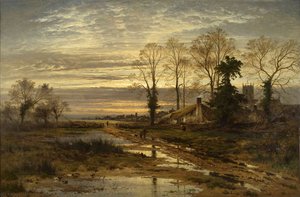
Artist Biography
early life and career
johan christian claussen dahl, a danish-norwegian artist, was born on february 24, 1788, in norway. he is widely regarded as the first great romantic painter in norway and the founder of the 'golden age' of norwegian painting.artistic contributions
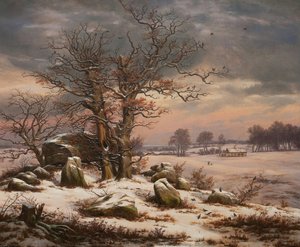
dahl's work had a profound impact on norwegian art, earning him the title 'the father of norwegian landscape painting'. his paintings not only showcased his technical skill but also reflected his deep love for norway. some of his notable works include:- winter landscape near vordingborg, denmark (oil on canvas, national gallery of denmark, copenhagen, denmark), a testament to his mastery of capturing the essence of nature.
- other works, such as harnham church, near salisbury, demonstrate his ability to balance light and color, characteristic of the romanticism movement.
legacy and cultural impact
dahl's influence extends beyond his art. he was a key figure in the founding of the nasjonalgalleriet (oslo, norway), a prominent institution dedicated to preserving and promoting norwegian and international art. his efforts have had a lasting impact on norwegian culture.comparison with other artists
when compared to other romantic painters like john constable (malvern hall, warwickshire) and caspar david friedrich (the ruins of teplitz castle), dahl's unique style and technique set him apart as a pioneer in norwegian landscape painting.conclusion
johan christian claussen dahl's legacy continues to inspire artists and art enthusiasts alike. his contributions to norwegian art have cemented his place in the annals of art history, making him an indispensable figure in the world of romanticism. explore more of his works and the romantic movement on ArtsDot.- visit johan christian claussen dahl's page for a comprehensive collection of his artworks.
- discover the nasjonalgalleriet (oslo, norway), a museum co-founded by dahl, and its extensive collection.
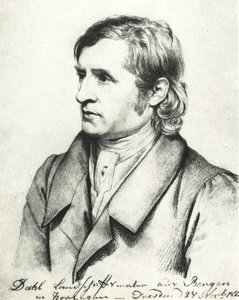
johan christian claussen dahl
1788 - 1857 , Norway
Quick Facts
- Artistic Movement Or Style: Romanticism
- Artists Or Movements Influenced By This Artist: ['Knud Baade']
- Artists Who Influenced This Artist:
- John Constable
- Caspar David Friedrich
- Date Of Birth: February 24, 1788
- Date Of Death: October 14, 1857
- Full Name: Johan Christian Claussen Dahl
- Nationality: Norwegian
- Notable Artworks:
- Winter landscape near Vordingborg
- Harnham church, near Salisbury
- Place Of Birth: Bergen, Norway
Related Articles
Johan Christian Dahl: Pioneering Norwegian Romantic Landscape Painting
Explore the life & art of Johan Christian Dahl, Norway's first great Romantic painter. Discover his iconic landscapes, cultural impact, and lasting legacy with ArtsDot.

Romantic Landscapes: 10 Masterpieces for Your Home | ArtsDot
Journey through 10 Romantic landscape masterpieces by Friedrich, Turner & Cole. Explore emotional art, sublime nature scenes & iconic 19th-century paintings. Find museum-quality reproductions for your home at ArtsDot.com – discover the full collection online!

John Constable's Masterpieces: Explore 25 Iconic Landscapes for Your Home
Journey through John Constable's 25 most celebrated landscapes. Explore Romanticism, Dedham Vale & his masterful use of light in iconic paintings like 'Hay Wain'. Find museum-quality art reproductions and elevate your home decor on ArtsDot.com.

Evocations of Place: A Historical Journey Through Landscape Art
Explore the rich history of landscape art with ArtsDot. Discover renowned artists, movements like Impressionism & Romanticism, and expert guidance for collecting timeless pieces. Find your perfect serene escape today!
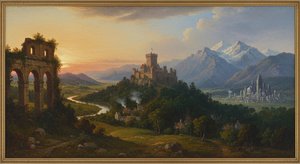
Evocations of Place: A Historical Journey Through Landscape Art
Explore the rich history of landscape art with ArtsDot. Discover renowned artists, movements like Impressionism & tonalism, and expert guidance for collecting timeless pieces. Find your perfect serene escape today!