 Preview
 Send
Send Share
Share
 Details

 Download
 Similars
 X-Ray
X-Ray Diaporama
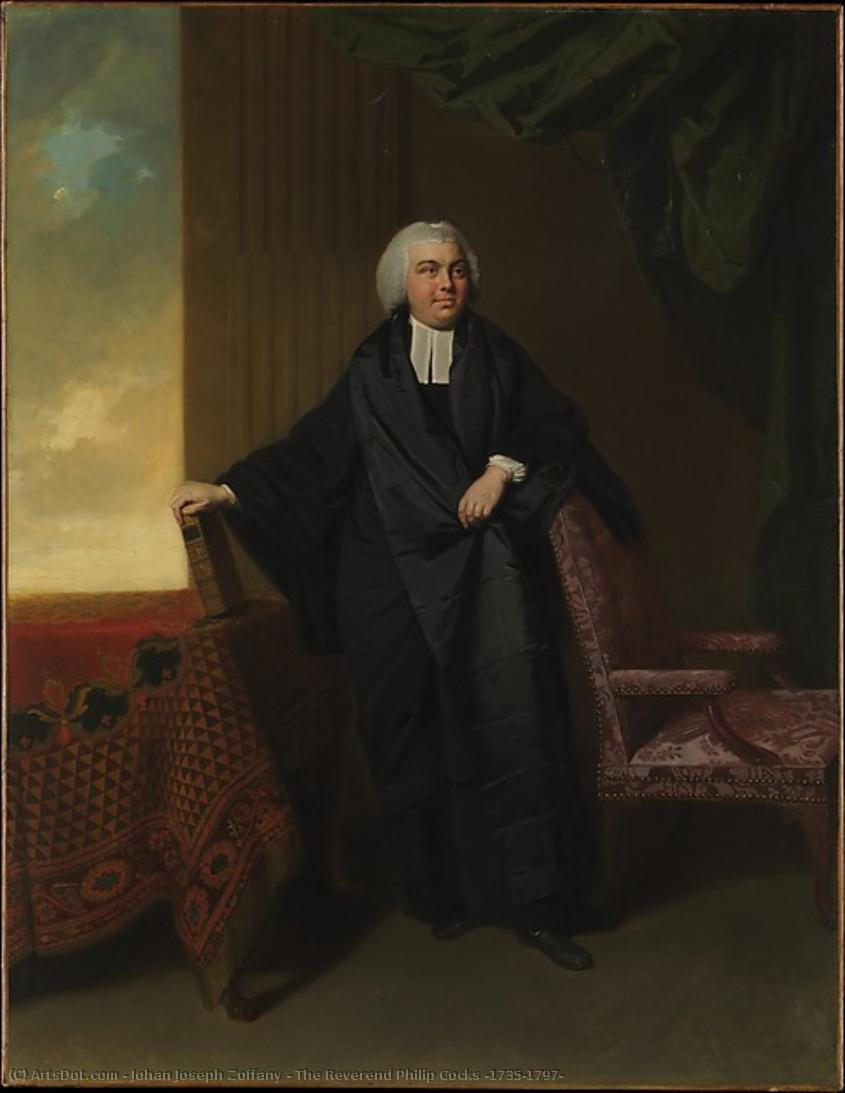
The Reverend Philip Cocks (1735–1797)
 1760
1760 90.0 x 69.0 cm
 Read More
Hand Made Oil Reproduction
Hand-painted oil on canvas in your size and frame, made to order by our artists. ( Buy Print Buy Image)




































Pick from our preset sizes that match the artwork's original proportions.

You may enter your own dimensions to fit a specific frame or space. If your selected size does not match the original image's proportions, we will either crop the artwork or extend the painting with additional hand-painted elements. A digital mockup will be sent for your approval before production begins.
Please note that the on-screen preview does not reflect the actual cropping or extension. Only the mockup will accurately show the final composition.
While custom sizes are available, we recommend selecting a dimension from the predefined list to preserve the original proportions.
After order, ArtsDot.com team will email client for instructions and provide a mockup preview
Worldwide Delivery () in 3/4 weeks instead of standard 5 weeks. (24 August). No compromise on quality.

Free Worldwide Express Shipping

High-Quality Linen Canvas

Full Shipping Insurance

Customs Tax Refund Guarantee

True Color Matching Guarantee

60-Day Return Policy (Defects Only)

100% Money-Back Guarantee

Bulk Discount Offer
 Glass option is only available in size under 110 CM

The Reverend Philip Cocks (1735–1797)
Reproduction Medium
Reproduction Size
-


Total Price
$ 263
Artwork Description
Related Artworks





Artist Biography
A Cosmopolitan Brush: The Life and Art of Johan Joseph Zoffany
Johan Joseph Zoffany, a name perhaps less instantly recognizable than his contemporaries like Reynolds or Gainsborough, nevertheless occupies a fascinating niche in the annals of 18th-century portraiture. Born in Frankfurt am Main in 1733, his journey was one of restless artistic exploration, taking him from the German workshops to the glittering courts and bohemian circles of England, India, and beyond. Zoffany wasn’t merely a painter; he was a cultural translator, adept at capturing not just likenesses but also the spirit of an age – or rather, *ages*, as his career spanned remarkably diverse social landscapes. His early training under Johann Andreas Graff in Frankfurt provided him with a solid foundation in technique, but it was his move to England around 1754 that truly ignited his artistic ambition. He initially worked as a copyist, honing his skills by replicating the works of masters like Rembrandt and Van Dyck, before establishing himself as an independent portrait painter.From London Society to the Mughal Court
Zoffany quickly found favor with the English aristocracy, becoming a member of the Society of Artists in 1761 – a rival organization to Reynolds’ Royal Academy. His portraits from this period are characterized by their lively informality and keen observation of character. Unlike the more formal, often idealized depictions favored by other artists, Zoffany sought to capture his sitters in moments of relaxed conversation or domestic intimacy. He excelled at group portraiture, famously depicting gatherings of actors, writers, and socialites – scenes that offer a vibrant glimpse into the intellectual and artistic life of Georgian England. However, it was his acceptance of a commission from the British East India Company in 1764 that would propel him to international renown. Sent to India to paint portraits of officials and local dignitaries, Zoffany embarked on an extraordinary adventure. He spent several years traveling throughout Bengal, immersing himself in Indian culture and creating a series of groundbreaking paintings that blended European portrait conventions with Mughal artistic traditions. These works are remarkable not only for their technical skill but also for their sensitivity and respect for the subjects they portray.A Synthesis of Styles: Influences and Development
Zoffany’s artistic development was shaped by a confluence of influences. His early training in Germany instilled in him a meticulous attention to detail, while his exposure to Dutch masters fostered an appreciation for realism and chiaroscuro. In England, he absorbed the elegance and refinement of Van Dyck and the psychological depth of Rembrandt. However, it was his time in India that proved most transformative. He studied local painting techniques, incorporated Indian motifs into his compositions, and adopted a more vibrant palette. His portraits from this period often feature sitters adorned in traditional Indian clothing and surrounded by lush landscapes – a deliberate attempt to capture the exotic beauty of the subcontinent. The interiors he painted during his time in India are particularly noteworthy for their detailed depictions of everyday life and customs. He wasn’t simply imposing European aesthetics onto an alien culture; he was actively engaging with it, creating a unique synthesis of styles that reflected his own cosmopolitan worldview. The influence of artists like Francesco Solimena, known for his dynamic compositions and rich color schemes, can also be detected in Zoffany's later works.Major Achievements and Lasting Legacy
Zoffany’s major achievements lie not only in the quality of his individual portraits but also in his pioneering role as a cross-cultural artist. His paintings of Indian life were among the first to offer Western audiences a realistic glimpse into the subcontinent, challenging prevailing stereotypes and fostering a greater understanding of its rich cultural heritage. His group portraiture, particularly those depicting theatrical scenes, are celebrated for their wit, energy, and insightful characterizations. Upon his return to England in 1770, he continued to paint portraits of prominent figures, but his most significant works remained those created during his time in India. He later traveled to Italy and the West Indies, further expanding his artistic horizons. Although he faced financial difficulties in his later years, Zoffany’s reputation as a talented and innovative portrait painter endured. His work continues to be admired for its technical brilliance, psychological depth, and unique blend of styles. He died in London in 1810, leaving behind a legacy that transcends national boundaries and artistic conventions – a testament to the power of art to bridge cultures and illuminate the human experience.Historical Significance
Zoffany’s historical significance extends beyond his contributions to portraiture. He was a product of the Enlightenment, an era characterized by intellectual curiosity, cultural exchange, and a growing awareness of global diversity. His travels and artistic endeavors reflect this spirit of exploration and openness.- He documented a pivotal moment in British colonial history, offering valuable insights into the complex relationship between East and West.
- His paintings challenged prevailing artistic norms, paving the way for new forms of cross-cultural representation.
- He demonstrated a remarkable ability to adapt his style to different cultural contexts, creating works that were both aesthetically pleasing and culturally sensitive.
Quick Facts
- Artistic Movement Or Style: Portraiture, Rococo
- Date Of Birth: (Unknown)
- Date Of Death: Living
- Full Name: Johan Joseph Zoffany
- Notable Artworks:
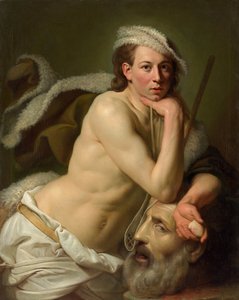
- Self-Portrait
- The Tribulation Man
- Admiral Keppel
- Charles Anderson
- Sir William Chambers
- Place Of Birth: (Unknown)