

 Preview
 Send
Send Share
Share
 Details

 Download
 Similars
 X-Ray
X-Ray Diaporama
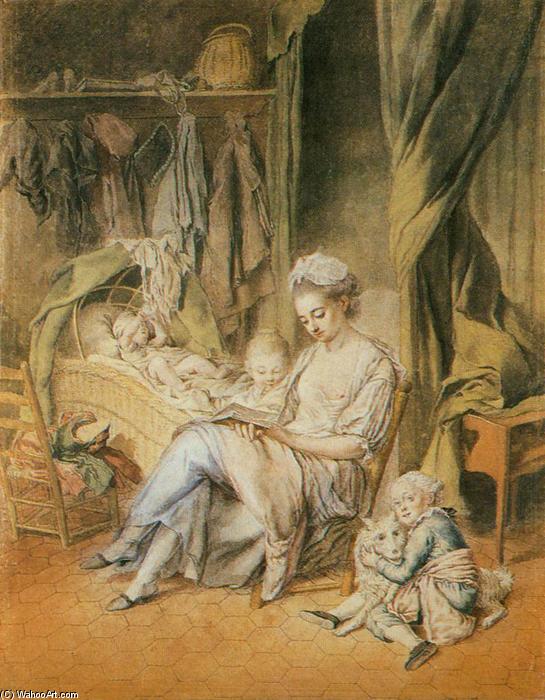
The Happy Mother
 Rococo
 1775
1775 573.0 x 420.0 cm
 Wallraf-Richartz-Museum
 Read More
Purchase a high-resolution, enhanced digital image, far superior to the online preview.
Each file is meticulously prepared by our in-house specialists using advanced tools and expert manual retouching. We ensure every image has exceptional clarity, precise color accuracy, and fine detail.
The final file is delivered via email within 72 hours, optimized for immediate use in professional, editorial, and print environments. This is the same quality trusted by top-tier design studios, publishers, and galleries.
Digital Image
Download a high-resolution file for personal display, printing, and creative projects. ( Buy Print Buy Hand Made Painting)
Included in Every Digital Image Order
Expert Digital Delivery, Guaranteed
When you choose ArtsDot.com, you're not just getting an image - you're receiving a professionally enhanced digital artwork, crafted with precision and backed by a satisfaction guarantee. Here's everything that comes with your order, automatically:

Fast Email Delivery
Your high-resolution digital image file will be emailed to you within 72 hours of ordering - ready for immediate use.

AI-Enhanced Digital File
Your artwork is professionally optimized using advanced AI tools and manual editing, ensuring maximum detail, clarity, and color accuracy.

Free Lifetime Re-Delivery
Accidentally deleted or lost your file? No worries - we'll resend it to you anytime, free of charge.

No Import Fees - Ever
Enjoy your artwork instantly with zero customs, duties, or delivery fees - digital downloads are always tax-free.

Color Accuracy Guarantee
We ensure your digital image reflects the original colors as closely as possible using professional tools and color management.

60-Day Satisfaction Guarantee
If you're not satisfied with your digital image, we'll revise it or refund 100% within 60 days - no questions asked.

100% Money-Back Guarantee
Not satisfied? Get a full refund within 60 days of receiving your digital file - no questions asked.

Bulk Order Discounts
Buy 3 images, save 10% - Buy 5, save 15% - Buy 10+, save 20%. Great for creative projects, galleries, and agencies.
Collectible Description
A Window into Eighteenth Century Sentimentality
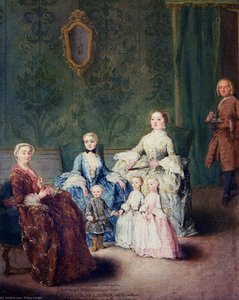
“The Happy Mother,” painted by Johann Anton de Peters in 1775, transcends mere depiction; it embodies the very essence of Rococo aesthetics—a deliberate embrace of elegance, pastel hues, and an idealized portrayal of familial affection. Currently residing within the Wallraf-Richartz Museum in Cologne, Germany, this monumental watercolour (573 x 420 cm) offers a captivating glimpse into the artistic sensibilities of its time and continues to resonate with viewers today.The Rococo Style: Harmony and Illusion
Peters’s work firmly establishes itself within the Rococo movement, characterized by a rejection of Baroque grandeur in favor of delicate ornamentation and asymmetrical compositions. Unlike the imposing scale and dramatic chiaroscuro prevalent in earlier styles, Rococo prioritizes subtlety and illusion—creating an atmosphere of airy lightness and fostering a sense of serene beauty. The artist skillfully employs earth tones – creams, browns, and muted reds – to establish a harmonious palette that reinforces this tranquil mood. Attention to detail is paramount; every brushstroke contributes to the overall impression of meticulous craftsmanship.A Scene Steeped in Symbolism
The composition itself speaks volumes about the values of the era. A woman seated comfortably on a wooden chair, bathed in soft light, occupies the central space—a deliberate choice reflecting the idealized image of motherhood prevalent during Rococo. Surrounded by her two children and a playful dog, she exudes warmth and tenderness, symbolizing domestic bliss and familial devotion. The inclusion of a bookshelf laden with books adds another layer of significance, representing knowledge, refinement, and intellectual pursuits – qualities highly esteemed within aristocratic circles.Similar Artistic Explorations: Pietro Longhi’s Domestic Visions
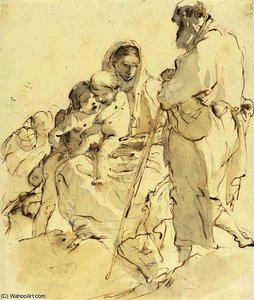
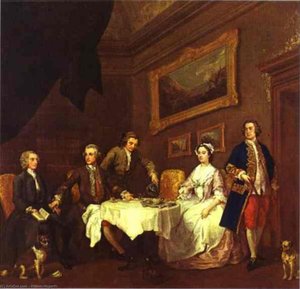
Peters's artistic approach aligns closely with that of fellow Rococo painter Pietro Longhi, who similarly captured everyday life in his canvases like “The Parlour.” Longhi’s ability to distill the complexities of human experience into visually arresting scenes demonstrates a shared commitment to realism tempered by stylistic embellishment. Exploring works such as "The Happy Couple" reveals Longhi's masterful technique in conveying emotion and capturing the spirit of Italian aristocratic society during the same period.A Legacy Preserved: Reproductions Available at ArtsDot
To experience the beauty and artistry of “The Happy Mother” firsthand, consider acquiring a high-quality reproduction from ArtsDot.com. This platform offers meticulously crafted prints that faithfully recreate the original watercolor’s luminous colors and textural nuances—allowing art enthusiasts to bring this iconic piece into their homes and appreciate its enduring appeal. Furthermore, visiting ArtsDot.com provides valuable insights into other artists of the Rococo period, including Giuseppe Rusnati, a Lombard sculptor whose works exemplify the movement's sculptural prowess.Related Artworks
Artist Biography
The Parisian Spark and the Greuze Influence
Born in the historic city of Cologne in 1725, Johann Anton de Peters embarked on an artistic odyssey that would eventually weave his name into the very fabric of the Rococo era. His formative years were defined by the vibrant, emotive atmosphere of Paris, where he sought the mentorship of the legendary Jean-BT. Greuze. Under Greuze’s tutelage, Peters mastered the art of sentimentality—a style that prioritized the psychological depth and tender vulnerability of his subjects. This period was not merely about technical instruction; it was an immersion into a world where every brushstroke could evoke a heartbeat or a sigh. His aristocratic upbringing provided the perfect foundation for this pursuit, allowing him to navigate the sophisticated salons of France with an ease that would later facilitate his ascent into the highest echelons of European society.Royal Patronage and the Zenith of Success
As his reputation grew, so did the magnitude of his opportunities. Peters’s talent caught the eyes of Europe’s most influential monarchs, leading to a period of unparalleled prestige. He was not merely an artist but a figure of social distinction, even being raised to the rank of nobility by the King of France. His career flourished under the generous patronage of Christian VII of Denmark and Charles III of Lorraine, roles that demanded both versatility and excellence. During this golden age, he moved seamlessly between the delicate precision of etching and the rich textures of oil painting, establishing himself as a master of various mediums. His repertoire included notable works such as:- The Happy Mother (1775)
- Death of Cleopatra
- A Girl leaving the Bath
- The Girl with the Carp
The Art of Intimacy: Symbolism and Technique
The true magic of Peters’s work lies in his ability to transform the mundane into the monumental. His genre scenes are windows into an idealized eighteenth-century existence, where domestic tranquility is elevated to a form of high art. In masterpieces such as The Happy Mother, we see the quintessential Rococo spirit: a harmonious blend of pastel hues, soft light, and profound emotional resonance. Through his meticulous attention to detail—the gentle curve of a child’s limb, the warmth of a maternal gaze, or the symbolic presence of books representing intellectual refinement—he created works that spoke to the values of his era. He skillfully employed earth tones, such as creams and muted reds, to establish a palette that reinforced a sense of serene beauty and atmospheric lightness.The Twilight of an Era
However, the brilliance of Peters’s career was not immune to the turbulent winds of history. The French Revolution, a seismic shift that dismantled the very aristocratic structures he inhabited, forced him away from the glittering courts of Europe and back to his native Cologne. The transition from the splendor of royal commissions to the stark reality of life in a changing Germany was profound. His final years were marked by a poignant decline, living much of his later life in poverty before passing away in 1795. Yet, despite the loss of his worldly status, his artistic legacy remains—a testament to an era of elegance and a soul that captured the fleeting beauty of human connection.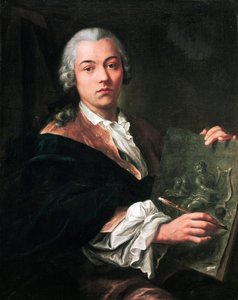
Johann Anton de Peters
1725 - 1795 , Germany
Quick Facts
- Artistic Movement Or Style: Rococo
- Artists Who Influenced This Artist: Jean-Baptiste Greuze
- Date Of Birth: 1725 Cologne Germany
- Date Of Death: 1795 Cologne Germany
- Full Name: Johann Anton de Peters
- Nationality: German
- Notable Artworks: ['The Happy Mother']
- Place Of Birth: Cologne Germany

