 Preview
 Send
Send Share
Share
 Details

 Download
 Similars
 X-Ray
X-Ray Diaporama
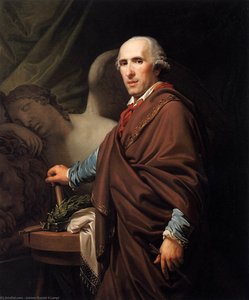
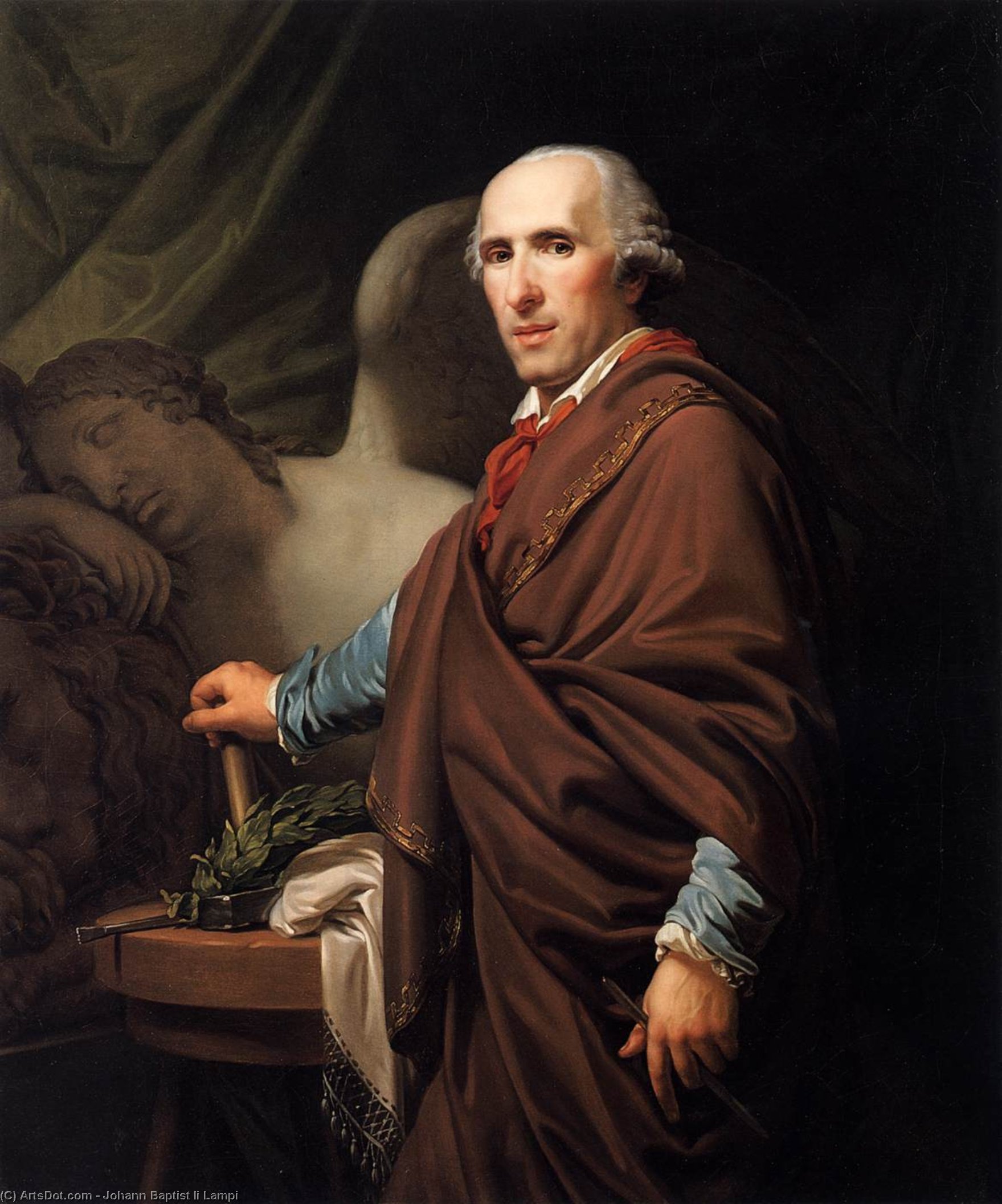
Portrait of Antonio Canova
 Oil On Canvas
- WallArt
- Neoclassical
 113.0 x 93.0 cm
 Academy of Fine Arts Vienna
 Read More
Hand Made Oil Reproduction
Hand-painted oil on canvas in your size and frame, made to order by our artists. ( Buy Print Buy Image)




P118B $10

P118H $10

P118W $10

P438Z $10

P508JH $12

P508YH $12

P805H $10

P805Z $10

P919BZ $10

P919G $10

P919XJ $10

P959ZH $10

P968JZ $12

W106C $8

W218G $10

W218JH $8

W218Y $10

W307PJ $10

W316G $10

W316PJ $8

W316Y $10

W398PJ $8

W4111J $10

W500HY $15

W500JH $15

W692G $12

W849H $8

W940BG $15

W953PJ $8




Pick from our preset sizes that match the artwork's original proportions.

You may enter your own dimensions to fit a specific frame or space. If your selected size does not match the original image's proportions, we will either crop the artwork or extend the painting with additional hand-painted elements. A digital mockup will be sent for your approval before production begins.
Please note that the on-screen preview does not reflect the actual cropping or extension. Only the mockup will accurately show the final composition.
While custom sizes are available, we recommend selecting a dimension from the predefined list to preserve the original proportions.
After order, ArtsDot.com team will email client for instructions and provide a mockup preview
Worldwide Delivery () in 3/4 weeks instead of standard 5 weeks. (2 September). No compromise on quality.

Free Worldwide Express Shipping

High-Quality Linen Canvas

Full Shipping Insurance

Customs Tax Refund Guarantee

True Color Matching Guarantee

60-Day Return Policy (Defects Only)

100% Money-Back Guarantee

Bulk Discount Offer
 Glass option is only available in size under 110 CM

Portrait of Antonio Canova
Reproduction Medium
Reproduction Size
-


Total Price
$ 263
The Enigmatic Gaze: Antonio Canova’s Portrait by Johann Baptist Lampi
Johann Baptist II Lampi's 1806 portrait of Antonio Canova is more than just a likeness; it’s a carefully constructed meditation on artistic genius, contemplation, and the very nature of creative inspiration. Housed within the hallowed halls of the Academy of Fine Arts Vienna, this oil-on-canvas masterpiece offers a rare glimpse into the mind of one of history's most celebrated sculptors, capturing Canova not merely as a figure, but as a man wrestling with his craft and the profound weight of artistic legacy.
Lampi’s skill lies in his masterful manipulation of light and shadow. The muted palette—a symphony of browns, grays, and subtle ochres—creates an atmosphere of quiet introspection. The artist doesn't employ dramatic contrasts; instead, he builds depth through delicate gradations, drawing the viewer into Canova’s world. Notice how the folds of the red cape seem to absorb light, while the highlights on the wig and face subtly illuminate his features, emphasizing a thoughtful expression. This restrained approach is characteristic of Lampi's style, rooted in the Neoclassical tradition but imbued with a distinctly personal sensitivity.
A Sculptor’s Moment
Canova himself, rendered in exquisite detail, appears lost in thought. His gaze is directed slightly off-camera, suggesting an engagement with something beyond the immediate scene—perhaps a memory, a concept, or simply the silent dialogue of his own creative process. The subtle furrow of his brow and the slight parting of his lips hint at the intensity of his concentration. The pose itself – seated, relaxed yet alert – is deliberately unostentatious, reflecting Canova’s preference for understated elegance in his work. It's a portrait that captures not just an appearance, but a state of mind.
Adding to the intrigue are the two angelic figures flanking Canova. These aren’t merely decorative elements; they represent the divine inspiration that fueled Canova’s extraordinary talent. Their presence elevates the portrait beyond a simple likeness, transforming it into a symbolic representation of the artist's relationship with his muse – a connection between human creativity and the realm of the sublime. The angels, rendered in a delicate, ethereal style, seem to offer silent encouragement, reinforcing the notion that Canova’s genius was not solely his own but bestowed upon him by a higher power.
Historical Context & Artistic Legacy
Lampi's portrait emerged during a pivotal period in European art history – the height of Neoclassicism. Inspired by the rediscovery of classical antiquity, artists like Canova sought to emulate the ideals of balance, harmony, and proportion that characterized Greek and Roman sculpture. Lampi’s work reflects this influence, evident in the carefully structured composition, the idealized features of Canova, and the overall sense of dignified restraint.
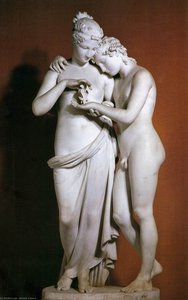
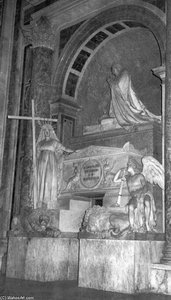
The portrait itself is a testament to Canova's own legacy. He was a titan of his time, renowned for sculptures such as “Pauline Bonaparte” and “Psyche Revived by Cupid’s Kiss.” Lampi’s depiction captures not only Canova’s physical appearance but also the aura of genius that surrounded him – a man who shaped the aesthetic sensibilities of an entire era. The work is further enriched by its connection to other significant pieces, such as the tomb sculpture of Maria Christina of Austria, which features a similar composition and thematic resonance.
Collecting a Masterpiece
Today, reproductions of Lampi’s “Portrait of Antonio Canova” offer art enthusiasts and collectors an opportunity to experience this remarkable work firsthand. ArtsDot specializes in meticulously crafted oil painting reproductions that faithfully capture the nuances of Lampi's original technique – from the subtle shading to the delicate brushstrokes. These reproductions are not mere copies; they are artistic interpretations, created by skilled artisans who share a deep appreciation for the beauty and power of this iconic portrait. Consider adding this evocative piece to your collection—a tangible reminder of the enduring legacy of Antonio Canova and Johann Baptist Lampi.
Related Artworks

Artist Biography
Johann Baptist II Lampi: Life and Legacy
Early Life and Artistic Training
- Johann Baptist II Lampi was born on December 31, 1751, in Romeno, Tyrol (modern-day Italy/Austria).
- He came from a family of artists; his father, Matteo (Mattia) Lampi, was a decorative painter known for frescoes.
- Lampi initially studied art under his father in Verona and later continued his education in Salzburg.
- In 1773, he moved to Trento where he honed his skills as a portraitist working with canvases and miniatures.
Career Development & Vienna
- Lampi traveled through Innsbruck and eventually settled in Vienna in 1786.
- His talent was recognized, and Emperor Joseph II appointed him a professor at the Vienna Academy.
- That same year, he received an invitation to work for King Stanisław II Augustus in Warsaw, marking a significant turning point in his career.
Warsaw & The Russian Empire
- Lampi flourished in Warsaw until the partitions of Poland disrupted artistic life there.
- In 1791, he relocated to St. Petersburg, Russia, where Empress Catherine II bestowed upon him a hereditary knighthood.
- This move proved incredibly lucrative; Lampi became highly sought after for his portraiture skills among the Russian nobility.
- He painted prominent figures including Empress Catherine II and Empress Maria Feodorovna.
Return to Vienna & Later Life
- Lampi returned to Vienna in 1797, becoming an honorary citizen of the city in 1799.
- He received a pension in 1822 and passed away on February 11, 1830, in Vienna.
Artistic Style & Influences
- Lampi’s style is characterized by realistic portraiture with attention to detail and a refined elegance.
- He was influenced by his father's decorative painting skills and the prevailing artistic trends of the late 18th century, including Neoclassicism.
- His work often reflects the grandeur and status of his aristocratic sitters.
Family Legacy & Sons
- Both of Lampi’s sons followed in his footsteps as accomplished painters.
- Johann Baptist III Lampi spent time with his father in Russia, continuing the family tradition there.
- Francesco (Franz Xaver) Lampi settled in Warsaw and became known as Franciszek Ksawery Lampi, establishing himself as a prominent artist in Poland.
Major Achievements & Historical Significance
- Lampi’s portraits provide valuable insights into the lives and appearances of European nobility during a period of significant political and social change.
- His success in both Vienna, Warsaw, and St. Petersburg demonstrates his adaptability and artistic skill.
- He played a key role in establishing portraiture as a prestigious art form within the Russian Imperial court.
- His work remains an important part of the artistic heritage of Austria, Poland, and Russia.

Johann Baptist II Lampi
1751 - 1830 , Austria
Quick Facts
- Birth Date: 1751-12-31
- Birth Place: Romeno, Tyrol
- Death Date: 1830-02-11
- Influenced:
- Johann Baptist III Lampi
- Francesco (Franz Xaver) Lampi
- Influenced By: Matteo (Mattia) Lampi
- Movement: Historical painting, Portraiture
- Name: Johann Baptist II Lampi
- Nationality: Austrian-Italian
- Notable Works:
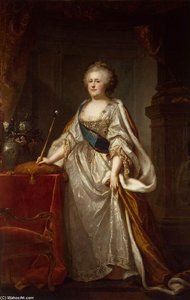
- Portrait of Catherine II
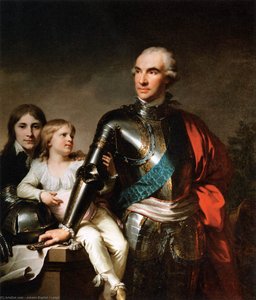
- Count Stanislas Felix Potocki and his Two Sons
Related Articles
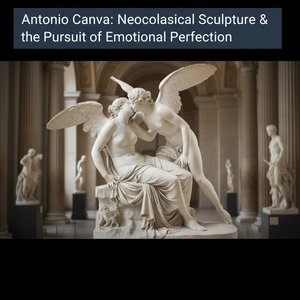
Antonio Canova: Neoclassical Sculpture & the Pursuit of Emotional Perfection
Explore the life & art of Antonio Canova, the greatest Neoclassical sculptor. Discover his masterpieces, innovative techniques, and lasting influence on fine art collecting. Expert insights for discerning investors.

Bronze Sculptures That Defined Art History | ArtsDot
Journey through art history with our Top 10 bronze sculptures! Explore masterpieces by Rodin, Michelangelo & more. Discover stories behind iconic statues and find museum-quality reproductions for your home decor at ArtsDot.com.

The Enduring Form: Exploring Themes & Techniques in Sculpture Across Historical Periods
Explore the rich history of sculpture from ancient masterpieces to contemporary innovations. Discover key techniques, influential artists & investment potential for discerning art collectors.

The Enduring Form: Sculpture Across History, Technique & Emotional Resonance
Explore the rich history of sculpture with ArtsDot. Discover key techniques, influential artists & investment potential for discerning collectors. Expert insights into valuing and collecting timeless masterpieces.

Bronze Age to Modern Masters: 10 Sculptures That Redefined Art | ArtsDot
Journey through art history with 10 legendary bronze sculptures – from Michelangelo's David to Rodin’s Thinker. Explore the stories, techniques & timeless beauty of these masterpieces. Find museum-quality reproductions & elevate your home decor on ArtsDot.com.