 Preview
 Send
Send Share
Share
 Details

 Download
 Similars
 X-Ray
X-Ray Diaporama
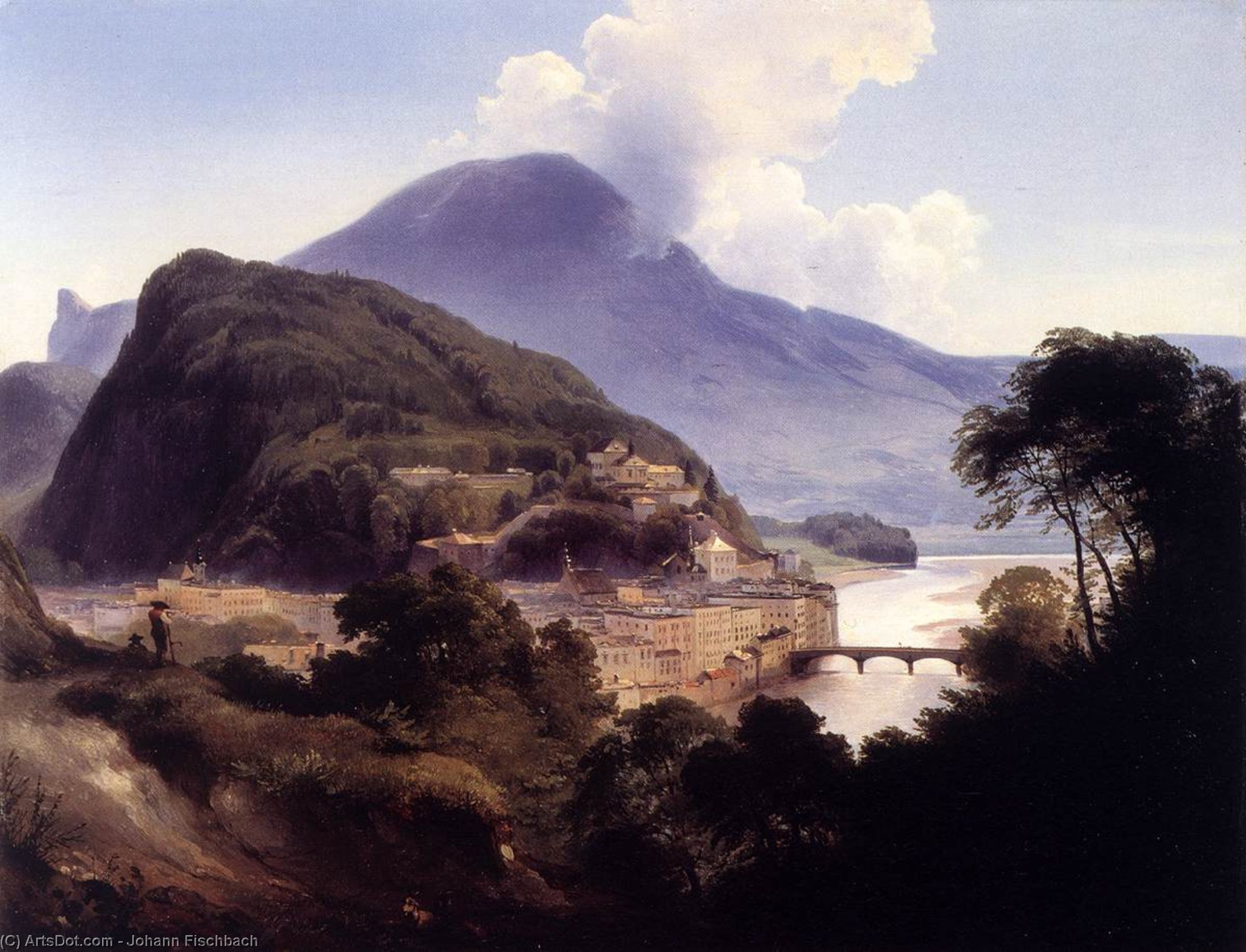
View of Salzburg with the Kapuzinerberg
 1844
1844 38.0 x 48.0 cm
 Residenzgalerie
 Read More
Giclée / Art Print
Museum-quality giclée or canvas print with fast production and flexible finish options. ( Buy Hand Made Painting Buy Image)




































Pick from our preset sizes that match the artwork's original proportions.

You may enter your own dimensions to fit a specific frame or space. If your selected size does not match the original image's proportions, we will either crop the artwork or extend the image with a mirrored or solid-fill edge. A digital mockup will be sent for your approval before production begins.
Please note that the on-screen preview does not reflect the actual cropping or extension. Only the mockup will accurately show the final composition.
While custom sizes are available, we recommend selecting a dimension from the predefined list to preserve the original proportions.
Worldwide Delivery () in 2 weeks instead of standard 4/5 weeks. (7 September)

Free Worldwide Express Shipping

High-Quality Linen Canvas

Full Shipping Insurance

Customs Tax Refund Guarantee

True Color Matching Guarantee

100-Day Return Policy (Defects Only)

100% Money-Back Guarantee

Bulk Discount Offer
 Glass option is only available in size under 110 CM

View of Salzburg with the Kapuzinerberg
Giclée / Art Print
Reproduction Size
-


Total Price
$ 63
Related Artworks






Artist Biography
Johann Fischbach (1797 – 1871): A Salzburg Landscape Painter
Johann Fischbach was born in Grafenegg, Austria, in 1797—the son of Count Breunerschen’s steward. His artistic inclinations began early, fueled by a family tradition of patronage and an innate fascination with the natural world. He embarked on his formal art education at the Akademie der bildenden Künste Vienna, where he honed his skills under Joseph Mössmer (1780-1845), absorbing the stylistic precepts of Romanticism and establishing himself as a student of academic tradition. This formative period instilled in him a meticulous approach to observation and representation—a characteristic that would define his oeuvre throughout his career.- Early Influences: Mössmer’s teachings emphasized classical ideals of beauty and proportion, shaping Fischbach's understanding of artistic composition and technique.
- Vienna Years (1821-1840): Fischbach secured the Grand Prize for landscape painting in 1821—a testament to his burgeoning talent and a pivotal moment in establishing his reputation as a master of genre art. During these years, he diligently studied topographical sketches and architectural drawings, preparing himself for future commissions.
- Move to Salzburg (1840): Recognizing the artistic vibrancy of Salzburg, Fischbach relocated there in 1840, becoming instrumental in founding the Kunstverein Salzburg and establishing a small academy alongside Josef Mayburger and Hans Makart’s father—a collaborative effort that fostered innovation and nurtured emerging talent.
Salzburg Landscapes: Defining Style and Vision
Fischbach's artistic legacy rests primarily on his breathtaking landscapes of Salzburg—scenes rendered with unparalleled detail and imbued with a palpable sense of atmosphere. He captured the grandeur of the Salzach River valley, the majesty of Hohensalzburg Fortress, and the serene beauty of alpine meadows—transforming them into canvases that embody the Romantic spirit. Fischbach’s technique involved painstaking layering of glazes—a hallmark of Viennese landscape painting—creating luminous surfaces that conveyed both accuracy and emotional resonance. His compositions prioritized harmonic balance and idealized perspectives, reflecting a desire to elevate nature's splendor to sublime heights.- Notable Works: Among his most celebrated paintings are “View of Salzburg with the Kapuzinerberg” (1844) and “Salzburg” (1850)—works that exemplify Fischbach’s mastery of tonal gradation and atmospheric perspective.
- Romantic Idealism: Fischbach's landscapes were informed by Romantic ideals—a preoccupation with sublime grandeur, emotional intensity, and the expressive power of color—reflecting a broader artistic movement concerned with capturing the essence of human experience within the context of natural beauty.
Beyond Landscape: Genre Art and Portraiture
While Fischbach is universally recognized for his landscapes, he also produced significant works in other genres—including genre scenes depicting everyday life, portraits capturing individual character, and vedute showcasing urban vistas. His meticulous attention to detail extended beyond topographical accuracy; he skillfully rendered textures and nuances of expression—demonstrating a versatility that distinguished him from many of his contemporaries. Fischbach’s portraiture often conveyed psychological depth—revealing subtle gestures and facial expressions that communicated inner states with remarkable sensitivity.- Influence: Fischbach's artistic approach influenced younger artists, particularly Hans Makart—who admired Fischbach’s compositional rigor and tonal palette.
- Legacy: Fischbach’s contribution to Austrian art history is undeniable—he stands as a cornerstone of the Biedermeier style—a movement characterized by understated elegance and an unwavering commitment to artistic integrity.
Concluding Remarks
Johann Fischbach died in Munich in 1871, leaving behind a body of work that continues to inspire admiration for its beauty and technical brilliance. His landscapes—particularly those depicting Salzburg—remain enduring symbols of Austrian Romanticism—capturing the sublime grandeur of Alpine scenery and conveying an emotional depth unmatched by many artists of his time. Fischbach’s legacy extends beyond individual paintings; he embodies a broader artistic ethos—one rooted in observation, meticulous technique, and a profound appreciation for the transformative power of art to illuminate the human condition.
johann fischbach
1797 - 1871 , Austria
Quick Facts
- Artistic Movement Or Style: Biedermeier
- Artists Or Movements Influenced By This Artist:
- Moritz von Schwind
- Ludwig Richter
- Artists Who Influenced This Artist: ['Joseph Mössmer']
- Date Of Birth: April 5, 1797
- Full Name: Johann Fischbach
- Nationality: Austrian
- Notable Artworks: ['View of Salzburg with the Kapuzinerberg']
- Place Of Birth: Grafenegg, Austria