 Preview
 Send
Send Share
Share
 Details

 Download
 Similars
 X-Ray
X-Ray Diaporama
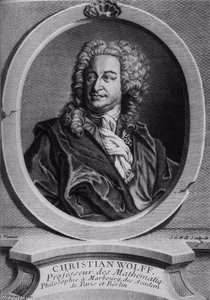
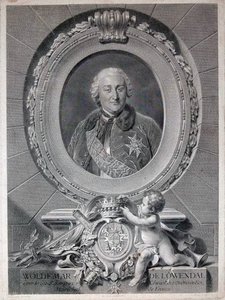
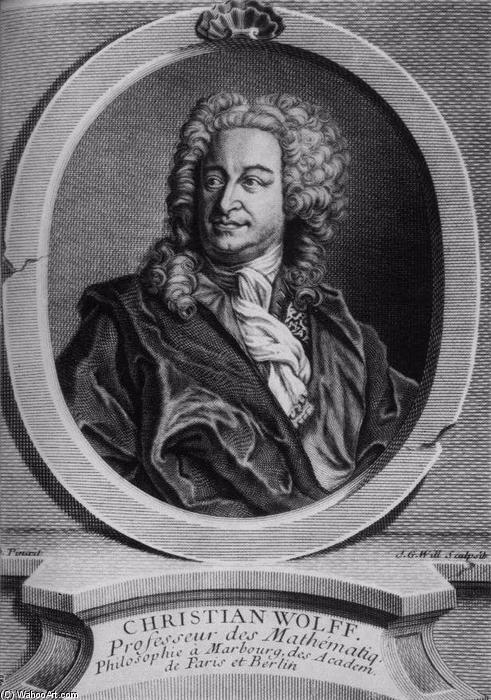
Portrait of Christian Wolff

 Read More
Hand Made Oil Reproduction
Hand-painted oil on canvas in your size and frame, made to order by our artists. ( Buy Print Buy Image)




































Pick from our preset sizes that match the artwork's original proportions.

You may enter your own dimensions to fit a specific frame or space. If your selected size does not match the original image's proportions, we will either crop the artwork or extend the painting with additional hand-painted elements. A digital mockup will be sent for your approval before production begins.
Please note that the on-screen preview does not reflect the actual cropping or extension. Only the mockup will accurately show the final composition.
While custom sizes are available, we recommend selecting a dimension from the predefined list to preserve the original proportions.
After order, ArtsDot.com team will email client for instructions and provide a mockup preview
Worldwide Delivery () in 3/4 weeks instead of standard 5 weeks. (31 August). No compromise on quality.

Free Worldwide Express Shipping

High-Quality Linen Canvas

Full Shipping Insurance

Customs Tax Refund Guarantee

True Color Matching Guarantee

60-Day Return Policy (Defects Only)

100% Money-Back Guarantee

Bulk Discount Offer
 Glass option is only available in size under 110 CM

Portrait of Christian Wolff
Reproduction Medium
Reproduction Size
-


Total Price
$ 263
Related Artworks




Artist Biography
The Master of the Burin: The Life and Legacy of Johann Georg Wille
In the luminous era of the Enlightenment, where the pursuit of precision met the grandeur of royal courts, few hands possessed the dexterity and vision of Johann Georg Wille. Born in 1715 near Biebertal, Germany, Wille’s journey from a young boy sketching birds and faces to becoming the preeminent engraver of his age is a testament to an unyielding passion for detail. Though his early academic inclinations leaned toward the structured logic of mathematics in Giessen, the call of the visual arts proved irresistible. His formative years were shaped by a unique blend of disciplines; he learned the delicate art of decorating hunting rifles under a gunsmith, a craft that instilled in him a profound respect for fine lines and the tactile mastery of metal—skills that would later define his legendary career in copper engraving.
The trajectory of Wille’s life shifted irrevocably when he embarked on a journeyman's path through Frankfurt, Worms, and Strasbourg, eventually finding his true home in Paris. It was in the heart of the French art world that his talent met its greatest catalysts. Through connections with masters like Georg Friedrich Schmidt and Friedly Wilhelm Hoeder, Wille transitioned from a skilled craftsman to a sophisticated artist. His arrival in Paris in 1736 marked the beginning of a transformative era. By immersing himself in the vibrant artistic community, he began to bridge the gap between German technical precision and French stylistic elegance, eventually earning the prestigious title of Engraver to the King.
A Symphony of Line and Light
Wille’s artistry was far more than mere reproduction; it was a sophisticated dialogue with light and texture. As a copper engraver, he possessed an uncanny ability to translate the fluid brushstrokes of oil paintings into the rigorous language of incised lines. His work often served as a bridge between different mediums, capturing the essence of masters such as Nicolas de Largillière and Hyacinthe Rigaud. When commissioned to engrave portraits of the era's most influential figures, Wille did not simply trace features; he breathed life into them, using varying depths of line to suggest the softness of skin, the heavy luster of silk, and the cold brilliance of jewels.
His versatility allowed him to navigate a vast array of subjects, from the intimate details of daily life to the sweeping narratives of historical scenes. His contributions to publications like L'Europe illustre demonstrated his role as a vital participant in the dissemination of knowledge during the Enlightenment. While much of his work involved reproducing the masterpieces of Dutch, French, and Italian painters—such as the works of Gerard Ter Borch II—his technical execution was so profound that the engravings often stood as independent triumphs of graphic art. This period of his career saw him not only as a creator but as an educator, opening an engraving school in 1753 to pass his meticulous techniques to the next generation.
The Twilight of a Visionary
Despite the heights of his professional success and his membership in the prestigious Académie Royale de Peinture et de Sculpture, Wille’s later years were marked by the bittersweet fluctuations of fortune. As the 18th century progressed and the political landscape of Europe shifted, the once-abundant royal commissions became increasingly rare. The man who had once navigated the glittering salons of the French court found himself facing the harsh realities of economic decline. The same precision that had brought him fame could not shield him from the financial instability that eventually led to a life of poverty.
Yet, the historical significance of Johann Georg Wille remains undiminished by his final struggles. He stands as a monumental figure in the history of printmaking, a master who elevated engraving from a secondary craft to a high art form capable of profound emotional and intellectual resonance. His legacy lives on in the countless prints that continue to captivate collectors and scholars, serving as a window into the aesthetic soul of the Enlightenment. Through his burin, Wille captured not just the likenesses of men, but the very spirit of an age defined by clarity, elegance, and the enduring power of the human hand.
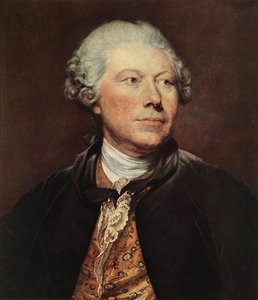
johann georg wille
1715 - 1808 , Germany
Quick Facts
- Artistic Movement Or Style: German Baroque
- Artists Or Movements Influenced By This Artist: ['Nicolas de Largillière']
- Artists Who Influenced This Artist:
- Georg Friedrich Schmidt
- Friedrich Wilhelm Hoeder
- Date Of Birth: November 5, 1715
- Full Name: Johann Georg Wille
- Nationality: German
- Notable Artworks:
- Portrait of Georges Wille
- The Triumph of Saint George
- Place Of Birth: Obermühle am Dünsberg, Germany