 Preview
 Send
Send Share
Share
 Details

 Download
 Similars
 X-Ray
X-Ray Diaporama
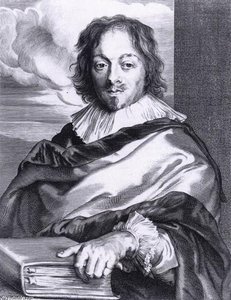
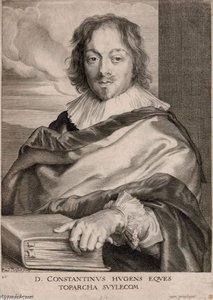
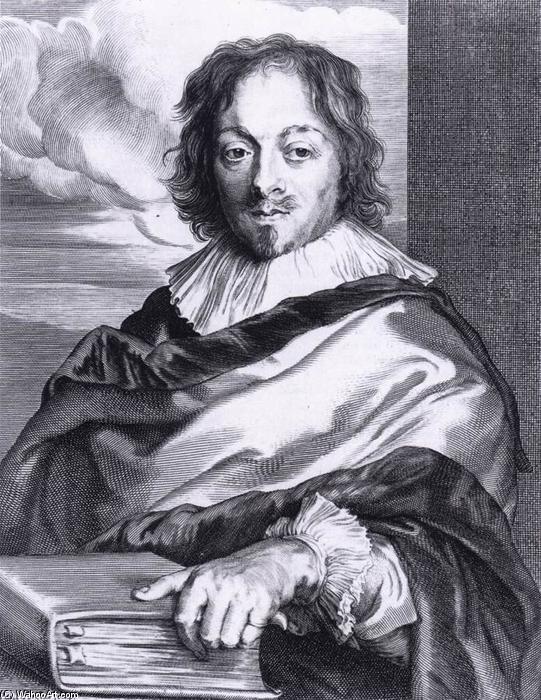
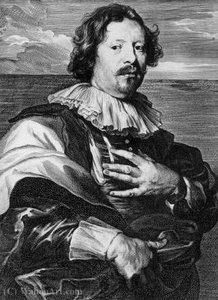
Portrait of Constantijn Huygens
 Engraving
- WallArt
- 17th-century Dutch Portraiture
 1630
1630 273.0 x 175.0 cm
 British Museum
 Read More
Hand Made Oil Reproduction
Hand-painted oil on canvas in your size and frame, made to order by our artists. ( Buy Print Buy Image)




P118B $10

P118H $10

P118W $10

P438Z $10

P508JH $12

P508YH $12

P805H $10

P805Z $10

P919BZ $10

P919G $10

P919XJ $10

P959ZH $10

P968JZ $12

W106C $8

W218G $10

W218JH $8

W218Y $10

W307PJ $10

W316G $10

W316PJ $8

W316Y $10

W398PJ $8

W4111J $10

W500HY $15

W500JH $15

W692G $12

W849H $8

W940BG $15

W953PJ $8




Pick from our preset sizes that match the artwork's original proportions.

You may enter your own dimensions to fit a specific frame or space. If your selected size does not match the original image's proportions, we will either crop the artwork or extend the painting with additional hand-painted elements. A digital mockup will be sent for your approval before production begins.
Please note that the on-screen preview does not reflect the actual cropping or extension. Only the mockup will accurately show the final composition.
While custom sizes are available, we recommend selecting a dimension from the predefined list to preserve the original proportions.
After order, ArtsDot.com team will email client for instructions and provide a mockup preview
Worldwide Delivery () in 3/4 weeks instead of standard 5 weeks. (25 August). No compromise on quality.

Free Worldwide Express Shipping

High-Quality Linen Canvas

Full Shipping Insurance

Customs Tax Refund Guarantee

True Color Matching Guarantee

60-Day Return Policy (Defects Only)

100% Money-Back Guarantee

Bulk Discount Offer
 Glass option is only available in size under 110 CM

Portrait of Constantijn Huygens
Reproduction Medium
Reproduction Size
-


Total Price
$ 263
Artwork Description
A Window into the Mind of a Golden Age Scholar
Paulus Pontius’s 1630 “Portrait of Constantijn Huygens” is more than just a likeness; it's a meticulously crafted distillation of intellect, ambition, and perhaps a touch of contemplative melancholy. This remarkable engraving, born from the painstaking process of etching onto metal, offers a rare glimpse into the world of a prominent figure during the Dutch Golden Age – a man deeply immersed in poetry, music, and the burgeoning scientific thought of his time. The image, rendered in stark monochrome, possesses an immediate power, drawing the viewer into a direct engagement with Huygens’s gaze.
The composition itself is deceptively simple yet profoundly effective. Huygens, positioned slightly off-center, commands attention not through grand gestures but through the unwavering intensity of his stare. His posture – seated comfortably with a book resting on his lap – speaks volumes about his intellectual pursuits and suggests a life dedicated to learning and creative expression. The inclusion of the book isn’t merely decorative; it's a potent symbol of Huygens’s erudition, hinting at his vast knowledge and scholarly standing within the Dutch Republic. Behind him, the cloudy sky—a recurring motif in Pontius’s work—introduces an element of ambiguity, perhaps reflecting the uncertainties inherent in artistic creation or the complexities of human thought.
The Art of the Engraver: Technique and Detail
Pontius's mastery lies not just in capturing a likeness but in demonstrating his unparalleled skill as an engraver. Every line is deliberate, every shadow carefully rendered through the masterful application of cross-hatching – a technique that creates depth and texture with astonishing precision. The fabric of Huygens’s collar, for instance, appears richly layered and voluminous, achieved entirely through the subtle manipulation of lines. This meticulous attention to detail extends to the rendering of his face—the delicate contours of his features, the suggestion of wrinkles around his eyes, all conveyed with remarkable sensitivity. The engraving process itself – cutting intricate lines into a metal plate and then meticulously transferring them onto paper through ink – is a testament to Pontius’s patience and artistic control.
Furthermore, the monochromatic palette amplifies the impact of the texture created by the engraving. The absence of color forces the viewer to focus entirely on the interplay of light and shadow, highlighting the subtle variations in tone that define Huygens's form. The artist’s ability to evoke a sense of volume and depth through line alone is truly remarkable, transforming a seemingly simple portrait into a complex and engaging work of art.
A Portrait of an Era: Context and Symbolism
Created in 1630, this portrait reflects the prevailing artistic sensibilities of the Dutch Golden Age – a period characterized by realism, meticulous detail, and a fascination with human character. It’s important to note that Pontius was not merely reproducing a likeness; he was actively participating in the dissemination of art, creating affordable prints of masterpieces for a wider audience. This role as a ‘translator of images’ was crucial during an era before mass reproduction technologies existed.
The direct gaze of Huygens is particularly significant. It conveys not just intelligence but also a degree of self-assurance – a reflection of his position as secretary to the Prince of Orange and a respected figure in intellectual circles. The cloudy sky, often interpreted as symbolizing uncertainty or introspection, adds another layer of meaning to the portrait, suggesting that even within the realm of intellect and accomplishment, there may be moments of doubt or contemplation. Ultimately, this portrait offers a compelling glimpse into the life and mind of a remarkable man who played a vital role in shaping the cultural landscape of 17th-century Holland.
Related Artworks

Artist Biography
A Life Etched in Detail: The World of Paulus Pontius
Paulus Pontius, a name perhaps less immediately recognizable than those of his celebrated contemporaries like Rubens and Van Dyck, nonetheless occupies a pivotal position within the vibrant artistic landscape of 17th-century Flanders. Born in Antwerp in 1603, Pontius distinguished himself not as a painter of grand canvases, but as a master engraver – a translator of images whose meticulous skill disseminated the masterpieces of his era across Europe and beyond. His career was deeply interwoven with the leading artists of his time, serving first as an apprentice and then as a crucial collaborator, ultimately leaving behind a legacy defined by precision, artistry, and a profound understanding of light and form. Pontius wasn’t merely reproducing art; he was preserving it, democratizing access to visual culture in an age before widespread reproduction technologies.From Apprenticeship to Rubens' Inner Circle
Pontius’s artistic journey began within the traditional framework of a guild apprenticeship. He first trained under Osias Beert, a respected still life painter, gaining a foundational understanding of painting techniques and compositional principles. However, it was his subsequent tutelage under Lucas Vorsterman that truly set him on his defining path. Vorsterman, already established as Peter Paul Rubens’ primary printmaker, imparted the intricacies of engraving – a demanding art requiring both technical mastery and artistic sensibility. This rigorous training proved invaluable when, in 1624, Pontius stepped into Vorsterman's role within Rubens’ workshop following the latter’s departure for England. For seven years, he resided within the very heart of Rubens’ creative world, an unparalleled opportunity to study firsthand the master’s groundbreaking work. This proximity wasn’t simply about access; it was a period of intense immersion, allowing Pontius to absorb Rubens' dynamic compositions, his dramatic use of light and shadow, and his expressive figural style. In 1626-1627, he solidified his position within the Antwerp artistic community by becoming a master in the Guild of Saint Luke.The Engraver as Interpreter: Reproducing Masterpieces
Pontius’s most significant contribution lay in his ability to translate paintings into engravings with remarkable fidelity and artistry. He produced approximately 42 plates based on Rubens' works, a testament to both his skill and the demand for reproductions of the master’s creations. These weren’t simple copies; Pontius possessed an exceptional talent for capturing the *essence* of the original painting – its emotional weight, its dynamic energy, and its subtle nuances of color and texture – through the monochrome medium of engraving. His work extended beyond mere replication; he subtly interpreted the paintings, adding his own artistic touch while remaining true to the spirit of the original. This ability earned him commissions for official portrait engravings, most notably that of Gaspar de Gusman, Count of Olivares in 1626, a pivotal moment that established his reputation and led to numerous further prestigious assignments. He became, in effect, the visual chronicler of the Spanish Netherlands nobility, immortalizing their likenesses through his masterful engravings.A Legacy Beyond Rubens: Collaboration and Dissemination
Following Rubens’ death in 1640, Pontius broadened his artistic horizons, collaborating with other prominent Flemish artists such as Anthony van Dyck and Jacob Jordaens. He contributed significantly to several important publications of the era, including Van Dyck’s *Iconographie*, Johannes Meyssens’ *Images de divers hommes*, Cornelis de Bie's *Het Gulden Cabinet*, and Anselm van Hulle's *Icones legatorum*. These collaborative projects were instrumental in disseminating images of leading figures throughout Europe, fostering a wider appreciation for Flemish art and culture. Pontius wasn’t simply an engraver working in isolation; he was an integral part of a thriving artistic network, actively contributing to the exchange of ideas and the propagation of visual knowledge. He also trained a new generation of engravers, including Alexander Voet the Younger, Coenraet Waumans, and Frans van den Wyngaerde, ensuring that his techniques and legacy would endure within the Flemish artistic tradition. Paulus Pontius, though often working in the shadow of greater names, stands as a vital link in the chain of art history – a master craftsman whose skill ensured that the brilliance of the Baroque period reached a wider audience than ever before. His work remains a testament to the power of engraving not just as a reproductive technique, but as an art form in its own right—a delicate dance between observation, interpretation, and technical virtuosity.
Paulus Pontius
1603 - 1685 , Belgium
Quick Facts
- Artistic Movement Or Style: Baroque
- Artists Or Movements Influenced By This Artist:
- Alexander Voet the Younger
- Coenraet Waumans
- Frans van den Wyngaerde
- Artists Who Influenced This Artist:
- Peter Paul Rubens
- Lucas Vorsterman
- Anthony van Dyck
- Date Of Birth: 1603
- Date Of Death: 1685
- Full Name: Paulus Pontius
- Nationality: Flemish
- Notable Artworks:
- Gaspar de Gusman
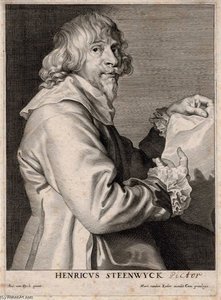
- Henricus Steenwyck
- Alvaro De Bazan
- Paulus Pontius
- Place Of Birth: Antwerp, Belgium
Related Articles
Engraving's Golden Age: 10 Masterpieces That Redefined Art | ArtsDot
Journey through art history with our Top 10 Legendary Engravings! Explore masterpieces by Dürer, Rembrandt & Goya. Discover the stories behind these iconic prints and find museum-quality reproductions for your home at ArtsDot.com.
Engraving: A Historical Survey of Technique, Artistic Expression & Enduring Legacy
Explore the rich history of engraving with ArtsDot. Discover techniques, iconic artists like Dürer & Callot, collecting tips, and expert guidance for preserving your art investment. Learn about intaglio printing & more!
The Intricate World of Engraving: A Historical Survey of Technique, Artistic Expression & Enduring Legacy
Explore the rich history of engraving with ArtsDot. Discover techniques, iconic artists like Dürer & Callot, collecting tips, and expert guidance for preserving your art investment. Learn about intaglio printing & more!
Illuminating a Century of Change: Artistic Expression & Societal Shifts in 17th-Century Europe
Explore the artistic brilliance of the 17th-century Dutch Golden Age & Baroque period. Discover Rembrandt, genre painting, and chiaroscuro techniques. Expert insights for art lovers & collectors.
Hendrick Goltzius: Master Engraver & the Flourishing of Dutch Mannerism
Explore the life & art of Hendrick Goltzius, a master engraver of Dutch Mannerism. Discover his innovative techniques, iconic engravings like 'Jahel', and lasting influence on Baroque art. Learn about collecting Goltzius today.