Early Life & Training: Forging a Unique Style
 Wikipedia: Hendrick Goltzius
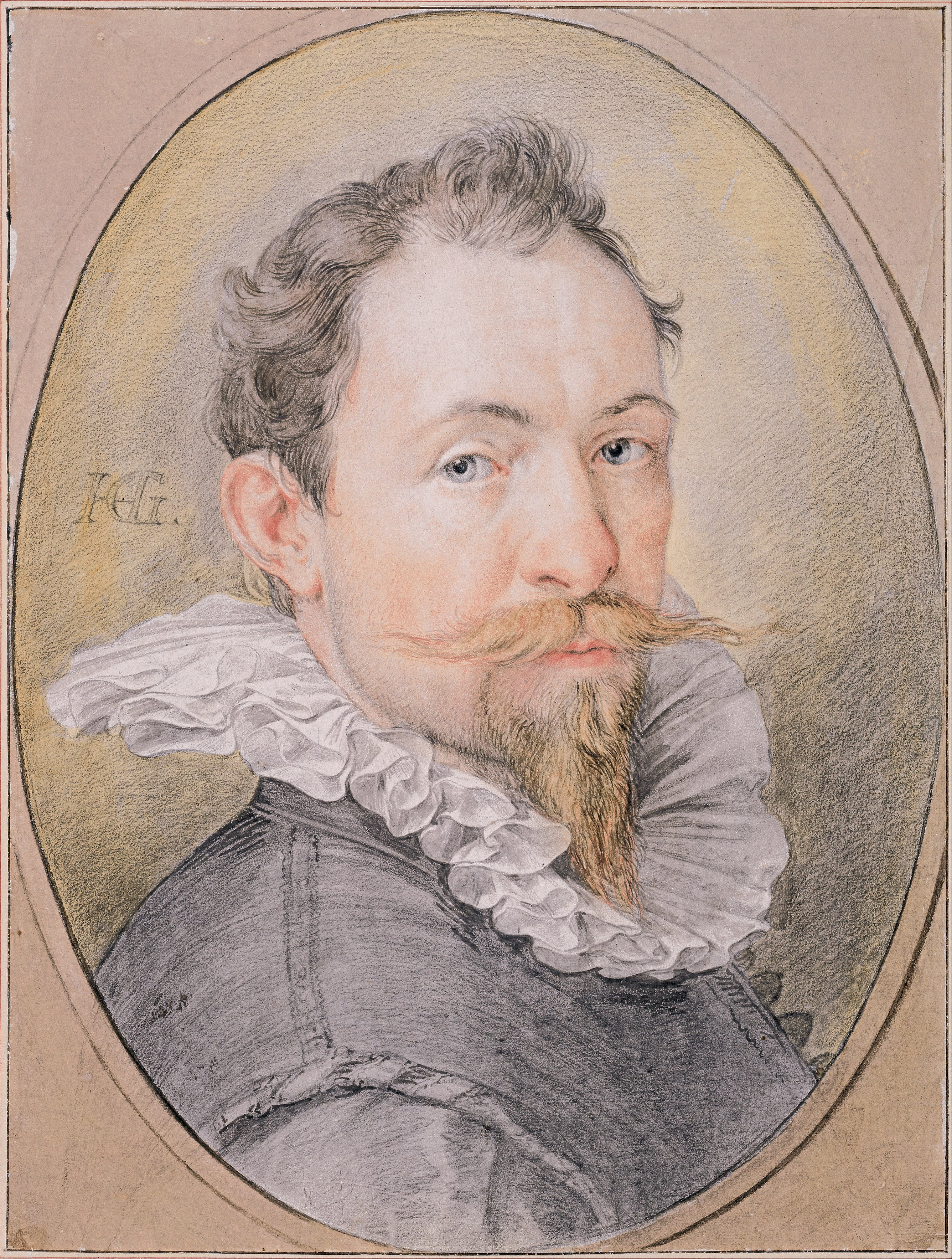
Hendrick Goltzius (German: [ˈhɛndʁɪk ˈɡɔltsi̯ʊs], Dutch: [ˈɦɛndrɪk ˈxɔltsijʏs]; born Goltz; January or February 1558 – 1 January 1617) was a German-born Dutch printmaker, draftsman, and painter. He was the leading Dutch engraver of the early Baroque ...
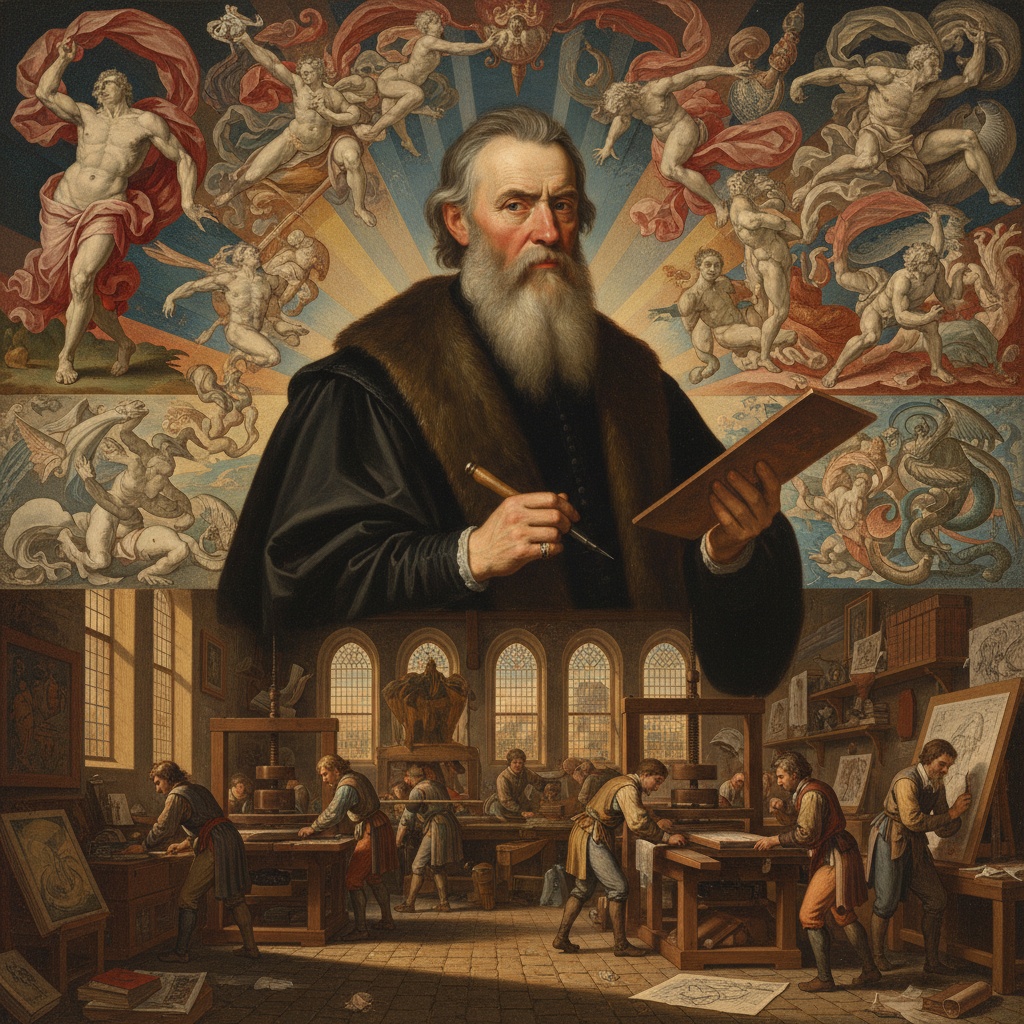
Hendrick Goltzius, born in the borderlands of Germany in 1558, emerged as one of the most compelling figures in the transition from the Northern Renaissance to the burgeoning Baroque. His story is not one of effortless genius, but rather a testament to overcoming adversity and harnessing unique circumstance into artistic strength. A childhood accident—a fire that left his right hand permanently damaged—initially seemed a cruel fate for an aspiring artist. Yet, this very affliction proved pivotal in shaping his distinctive style. The deformation forced him to grip the engraving burin with unusual intensity, developing an extraordinary control over line and pressure that would become his signature.
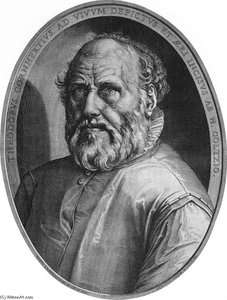
After initial training in glass painting under his father, Goltzius sought formal instruction from Dirck Volckertszoon Coornhert in Haarlem. Coornhert’s influence extended beyond mere technical skill; he instilled a deep appreciation for moral and intellectual themes within art, a sensibility that would permeate Goltzius's later work. This early education laid the foundation for an artist who wasn’t simply interested in replicating reality but in imbuing it with meaning and allegory.
The move to Haarlem proved decisive. The city was a thriving center of artistic activity, and Goltzius quickly established himself as a skilled engraver, initially producing works for established publishers like Philip Galle. However, his ambition extended beyond mere replication; he sought to create engravings of exceptional quality that would rival the output of Antwerp workshops and establish his own distinct voice.
The Hallmarks of Goltzius’ Mannerist Technique
Mannerism is a style in European art that emerged in the later years of the Italian High Renaissance around 1520, spreading by about 1530 and lasting until about the end of the 16th century in Italy, when the Baroque style largely replaced it. Northe...
Goltzius's art is inextricably linked with the stylistic currents of Mannerism, a movement characterized by elegance, artifice, and a deliberate departure from the harmonious naturalism of the High Renaissance. Where artists like Raphael prioritized balance and ideal proportions, Mannerists embraced exaggeration, tension, and complexity. Goltzius didn’t merely adopt these principles; he refined them into a uniquely powerful visual language.
Central to his style is an almost obsessive focus on the human form—specifically, idealized anatomy rendered with breathtaking precision. His figures are not simply lifelike representations but heroic embodiments of physical and moral strength, often inspired by classical sculpture and the works of Michelangelo. Muscles ripple beneath taut skin, twisting in dynamic poses that convey both power and vulnerability. This emphasis on physicality wasn’t merely aesthetic; it reflected a broader humanist ideal—the belief that man was a microcosm of the divine order.
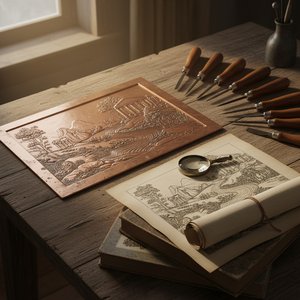
However, what truly sets Goltzius apart is his mastery of line. His engravings exhibit an unparalleled control over the burin, varying in density and weight to create nuanced gradations of light and shadow. He pioneered a technique known as “swelling line,” where the lines rhythmically thicken and thin, giving his prints a pulsating energy and sculptural quality. This wasn’t simply about technical virtuosity; it was about imbuing the image with life and emotion.
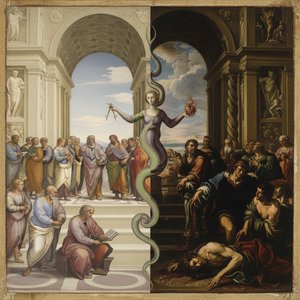
Beyond form and technique, Goltzius's work is deeply intellectual. Many of his engravings fuse classical mythology with moral allegory, reinterpreting ancient subjects as philosophical meditations on virtue, passion, and knowledge. His figures often embody complex symbolic meanings, inviting viewers to engage in a deeper contemplation of the artwork’s underlying themes.
Goltzius's Masterpieces: Exploring Key Engravings
 Jahel
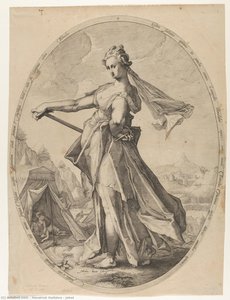
JahelAdmire 'Jahel' by Hendrick Goltzius (1597). This exquisite engraving showcases Northern Mannerism with a dynamic female figure & detailed scene. Hand-painted reproduction available.
To truly appreciate Goltzius’s genius, one must delve into his most celebrated works. Circumcision in St Bavo (1594) exemplifies his early mastery of Renaissance detail and Gothic architecture, showcasing a complex composition teeming with figures and symbolic elements. The engraving is not merely a depiction of a biblical scene; it’s a meticulously rendered historical document that captures the atmosphere and grandeur of the Haarlem church.
Jahel (1597) stands as a prime example of his Northern Mannerist style. The dynamic female figure, poised with a hammer over Sisera's head, is both powerful and unsettling. The exquisite detail and dramatic lighting create a sense of tension and immediacy, drawing the viewer into the heart of the narrative. This work demonstrates Goltzius’s ability to convey complex emotions through precise linework and carefully considered composition.
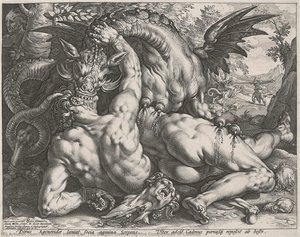
Other notable engravings, such as his series The Four Disgracers, further illustrate his thematic concerns and technical prowess. These works explore themes of ambition, betrayal, and the consequences of unchecked desire, showcasing Goltzius’s ability to create compelling narratives that resonate with contemporary audiences.
Innovation in Line and Form: The 'Swelling Line' and Beyond
Goltzius wasn’t merely a skilled imitator; he was an innovator who pushed the boundaries of engraving technique. His most celebrated contribution—the “swelling line”—revolutionized the medium, allowing for unprecedented levels of detail and expressiveness. By varying the pressure and angle of the burin, Goltzius could create lines that appeared to pulse with life, modeling forms with a sculptural quality previously unseen in engravings.
This technique wasn’t simply about aesthetics; it was deeply connected to his intellectual approach to art. The swelling line allowed him to convey subtle nuances of emotion and texture, imbuing his figures with a sense of vitality and presence. It also reflected his fascination with classical sculpture, where the play of light and shadow was crucial in defining form.
Beyond the swelling line, Goltzius experimented with other techniques, including cross-hatching and stippling, to create even more complex effects. He also explored the use of color washes and drypoint etching, further expanding his artistic vocabulary. His willingness to experiment and push boundaries cemented his reputation as a true master of engraving.
Legacy and Influence: From Dutch Golden Age to Baroque Art
Goltzius’s influence extended far beyond his own lifetime. He played a pivotal role in the development of Dutch art, bridging the gap between the Northern Renaissance and the emerging Baroque period. His workshop trained numerous engravers who carried on his style and techniques, ensuring that his legacy would endure.
His impact can be seen in the works of later artists, including Rembrandt van Rijn and Peter Paul Rubens, who admired his mastery of line and composition. Goltzius’s emphasis on dramatic lighting and emotional intensity also foreshadowed many of the key characteristics of Baroque art. He helped to establish a new standard for engraving excellence that would influence generations of artists.
Furthermore, Goltzius's prints were widely collected by scholars, aristocrats, and art lovers across Europe, contributing to the dissemination of his style and ideas. His work continues to be admired today for its technical virtuosity, intellectual depth, and enduring beauty.
Collecting Goltzius Today: Value & Appreciation
Today, original engravings by Hendrick Goltzius are highly sought after by collectors worldwide. Their value depends on factors such as rarity, condition, subject matter, and provenance. Prints from his most celebrated series, such as The Four Disgracers, command particularly high prices.
However, collecting Goltzius is not merely about financial investment; it’s about acquiring a piece of art history—a testament to the genius of one of the greatest engravers of all time. His works offer a unique window into the intellectual and artistic currents of the late sixteenth century, showcasing his mastery of line, composition, and allegory.
At ArtsDot.com, we are proud to offer high-quality reproductions of Goltzius’s most iconic engravings, allowing art lovers to experience the beauty and complexity of his work firsthand. Whether you're a seasoned collector or simply beginning your journey into the world of fine art, exploring the legacy of Hendrick Goltzius is sure to be a rewarding experience.