 Preview
 Send
Send Share
Share
 Details

 Download
 Similars
 X-Ray
X-Ray Diaporama
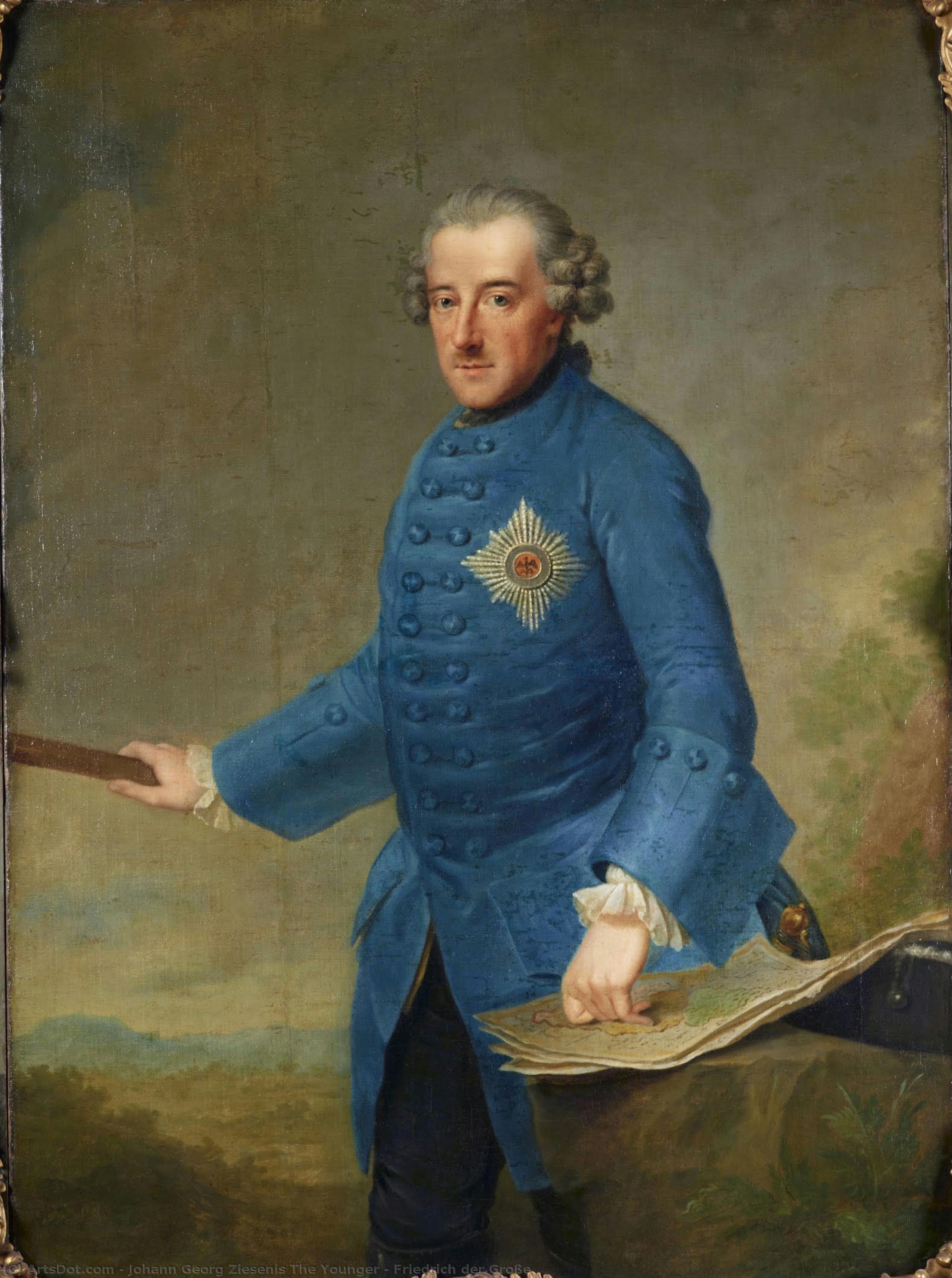
Friedrich der Große
 Oil On Canvas
- WallArt
- Baroque Rococo
 1763
1763- Early Modern
 142.0 x 98.0 cm
 Sanssouci Palace
 Read More
Giclée / Art Print
Museum-quality giclée or canvas print with fast production and flexible finish options. ( Buy Hand Made Painting Buy Image)




P118B $10

P118H $10

P118W $10

P438Z $10

P508JH $12

P508YH $12

P805H $10

P805Z $10

P919BZ $10

P919G $10

P919XJ $10

P959ZH $10

P968JZ $12

W106C $8

W218G $10

W218JH $8

W218Y $10

W307PJ $10

W316G $10

W316PJ $8

W316Y $10

W398PJ $8

W4111J $10

W500HY $15

W500JH $15

W692G $12

W849H $8

W940BG $15

W953PJ $8




Pick from our preset sizes that match the artwork's original proportions.

You may enter your own dimensions to fit a specific frame or space. If your selected size does not match the original image's proportions, we will either crop the artwork or extend the image with a mirrored or solid-fill edge. A digital mockup will be sent for your approval before production begins.
Please note that the on-screen preview does not reflect the actual cropping or extension. Only the mockup will accurately show the final composition.
While custom sizes are available, we recommend selecting a dimension from the predefined list to preserve the original proportions.
Worldwide Delivery () in 2 weeks instead of standard 4/5 weeks. (27 August)

Free Worldwide Express Shipping

High-Quality Linen Canvas

Full Shipping Insurance

Customs Tax Refund Guarantee

True Color Matching Guarantee

60-Day Return Policy (Defects Only)

100% Money-Back Guarantee

Bulk Discount Offer
 Glass option is only available in size under 110 CM

Friedrich der Große
Giclée / Art Print
Reproduction Size
-


Total Price
$ 63
Collectible Description
Friedrich der Große: A Portrait of Majesty Embodied
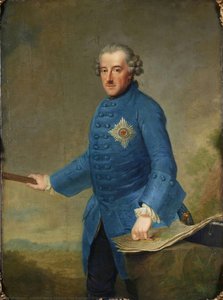
Johann Georg Ziesenis the Younger’s depiction of Friedrich II, King of Prussia, stands as one of the most iconic images of the Enlightenment era and a testament to Rococo artistic sensibilities. Completed in 1763 at Schloss Salzdahlum, commissioned by Princess Charlotte Braunschweig-Wolfenbüttel, this oil sketch transcends mere likeness; it captures the very essence of royal authority and contemplative grandeur. Ziesenis skillfully employed a muted palette—dominated by blues and browns—to convey not just physical appearance but also psychological depth. The king’s gaze is direct yet serene, reflecting his renowned intellect and unwavering resolve.- Style: Rococo – Characterized by delicate ornamentation, asymmetrical compositions, and pastel hues, Ziesenis's work exemplifies the artistic trends prevalent in Prussia during Friedrich II’s reign.
- Technique: The artist utilized a glazing technique—applying thin layers of translucent oil paint over subsequent coats—to achieve luminous effects and subtle tonal variations. This meticulous approach ensured that every nuance of texture and color was faithfully reproduced.
- Historical Context: Friedrich II, known as “The Great,” was a formidable ruler who championed scientific inquiry and philosophical debate alongside military prowess. Ziesenis’s portrait reflects this intellectual climate, portraying the king not merely as a warrior but also as a man of profound contemplation.
Symbolism Within the Composition
The inclusion of a map—likely representing Prussia's expanding territories—serves as a subtle yet powerful symbol of Friedrich II’s ambition and strategic vision. Positioned beneath his feet, it anchors him firmly to his kingdom while simultaneously hinting at his aspirations for future conquests. The rock beside the king is interpreted as representing stability and resilience – mirroring Friedrich II’s steadfast leadership during turbulent times.- Color Palette: The dominant blues evoke feelings of nobility and trustworthiness, aligning with the king's reputation for integrity.
- Posture: Friedrich II’s upright stance conveys confidence and dignity—a deliberate choice by Ziesenis to project an image of regal composure.
Beyond Appearance: Capturing Character
Ziesenis’s genius lies in his ability to convey more than just a visual representation; he captures Friedrich II's inner spirit. The artist skillfully rendered the king’s facial features—particularly his eyes—to express intelligence and thoughtfulness. This nuanced portrayal distinguishes Ziesenis’s masterpiece from simpler portraits of the period, elevating it to an enduring symbol of Prussian monarchy and intellectual enlightenment. It remains a captivating study in psychological portraiture, demonstrating Ziesenis's mastery of capturing not just what was seen but what was felt.Legacy and Reproduction
The Kniestück version—featuring Friedrich II in civilian attire alongside the rock—offers a glimpse into the king’s private life and underscores his commitment to humanist ideals. Today, reproductions of this remarkable artwork continue to inspire admiration for its artistic excellence and historical significance. ArtsDot.com provides high-quality prints that allow collectors and enthusiasts alike to experience the beauty and depth of Ziesenis's vision.Related Artworks

Artist Biography
The Legacy of Johann Georg Ziesenis the Younger
In the grand tapestry of eighteenth-century European portraiture, few names evoke the refined elegance of the Rococo era quite like Johann Georg Ziesenis the Younger. Born in Copenhagen in 1716, Ziesenis emerged from a lineage deeply rooted in the artistic traditions of Northern Europe. His father, Johan Jürgen Ziesenis, a Hanoverian painter who had embraced Danish citizenship, served as his first and most vital mentor. This early immersion in the disciplined world of drawing and classical technique provided the foundation upon which Johann Georg would build a career defined by grace, precision, and an uncanny ability to capture the psychological depth of his subjects.
The trajectory of Ziesenis’s life was one of movement and prestige, tracing a path through the most influential courts of his time. After refining his skills under his father's watchful eye, he moved to Düsseldorf, a pivotal moment that would elevate his status from a student of tradition to a master of the royal portrait. It was here that he began to attract the attention of the nobility, honing a style that balanced the delicate ornamentation of the Rococo period with a profound sense of character. His ability to render the textures of silk, the luster of pearls, and the subtle nuances of human expression allowed him to become a preferred chronicler of the era's most significant figures.
A Master of Royal Likeness
The true brilliance of Ziesenis lies in his capacity to serve as a visual historian for the monarchies of Europe. His oeuvre is not merely a collection of faces, but a window into the power structures and social graces of the mid-18th century. Throughout his prolific career, he produced approximately 260 works, including portraits, paintings, and sketches that documented the very essence of royalty. Among his most celebrated achievements are his depictions of the Danish royal family, such as his portraits of Crown Prince Frederik, which remain preserved in the splendor of Fredensborg Palace.
His influence extended far beyond the borders of Denmark, reaching into the courts of Brunswick and Berlin. Ziesenis possessed a unique versatility that allowed him to navigate different cultural landscapes with ease. One of his most historically significant works includes his portrait of Hans Egede, painted in 1764. Furthermore, his connection to the British monarchy is immortalized through his portraits of Charlotte of Mecklenburg-Strelitz, the woman who would become the future Queen of Great Britain as the wife of King George III. Through these works, Ziesenis did more than paint likenesses; he captured the political and social intersections of a continent in transition.
Artistic Lineage and Enduring Significance
The artistry of Johann Georg Ziesenis was not an isolated phenomenon but part of a larger family tradition of creative excellence. The painter’s daughters, Maria and Margaretha, both pursued paths as painters, suggesting that the technical mastery and aesthetic sensibility he possessed were deeply embedded in his domestic life. This familial dedication to the craft ensured that the Ziesenis name remained synonymous with the high standards of European portraiture during a period of immense stylistic evolution.
Today, the historical significance of Ziesenis is preserved within the hallowed halls of major institutions, most notably the National Gallery of Denmark. His works serve as vital touchstones for art historians studying the transition from the ornate flourishes of the Rococo to the more structured sensibilities that followed. When we look upon a Ziesenis portrait, we are not merely observing a face; we are witnessing the meticulous craftsmanship of an artist who mastered the art of the gaze, leaving behind a legacy that continues to inspire awe and admiration in the hearts of art lovers worldwide.
johann georg ziesenis the younger
1716 - 1776 , Denmark
Quick Facts
- Artistic Movement Or Style: Rococo
- Artists Who Influenced This Artist: ['Johann Jürgen Ziesenis']
- Date Of Birth: 1716
- Date Of Death: 1776
- Full Name: Johann Georg Ziesenis the Younger
- Nationality: German-Danish
- Notable Artworks:
- Portrait of Crown Prince Frederik
- Portrait of Frederick II
- Portrait of Charlotte of Mecklenburg-Strelitz
- Place Of Birth: Copenhagen, Denmark
Related Articles

Rococo's Radiant Legacy: 10 Masterpieces for Your Home |
Indulge in the elegance of Rococo! Explore 10 masterpieces by Fragonard, Boucher & Watteau. Discover the stories behind these iconic paintings and bring timeless art to your home with museum-quality reproductions from .

The Rococo Aesthetic: Opulence, Rebellion & the Pursuit of Pleasure in 18th-Century Art
Explore the opulent world of Rococo art! Discover its origins, key artists like Watteau & Boucher, and lasting influence on design. Expert insights for collectors & enthusiasts.

The Enduring Legacy of Oil on Canvas: Technique, History & Aesthetic Impact
Explore the rich history & techniques of oil painting – from Renaissance masters to Impressionism. Discover pigments, layering methods, and why this timeless medium endures. Expert insights for artists & art enthusiasts.
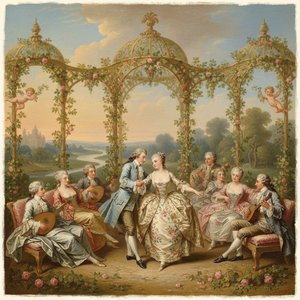
Jean-Baptiste Pater: Rococo Charm & Ephemeral Beauty of 18th-Century France
Explore the captivating world of Jean-Baptiste Pater, a master of Rococo painting. Discover his elegant *fête galante* scenes and shimmering portraits – a glimpse into 18th-century French aristocracy. Learn about his legacy & find high-quality reproductions.

Oil on Canvas: A Historical & Technical Exploration of a Timeless Artistic Medium
Explore the rich history & enduring techniques of oil painting on canvas. Discover the science behind its longevity, conservation practices, and contemporary relevance. Expert insights for art enthusiasts.