

 Preview
 Send
Send Share
Share
 Details

 Download
 Similars
 X-Ray
X-Ray Diaporama
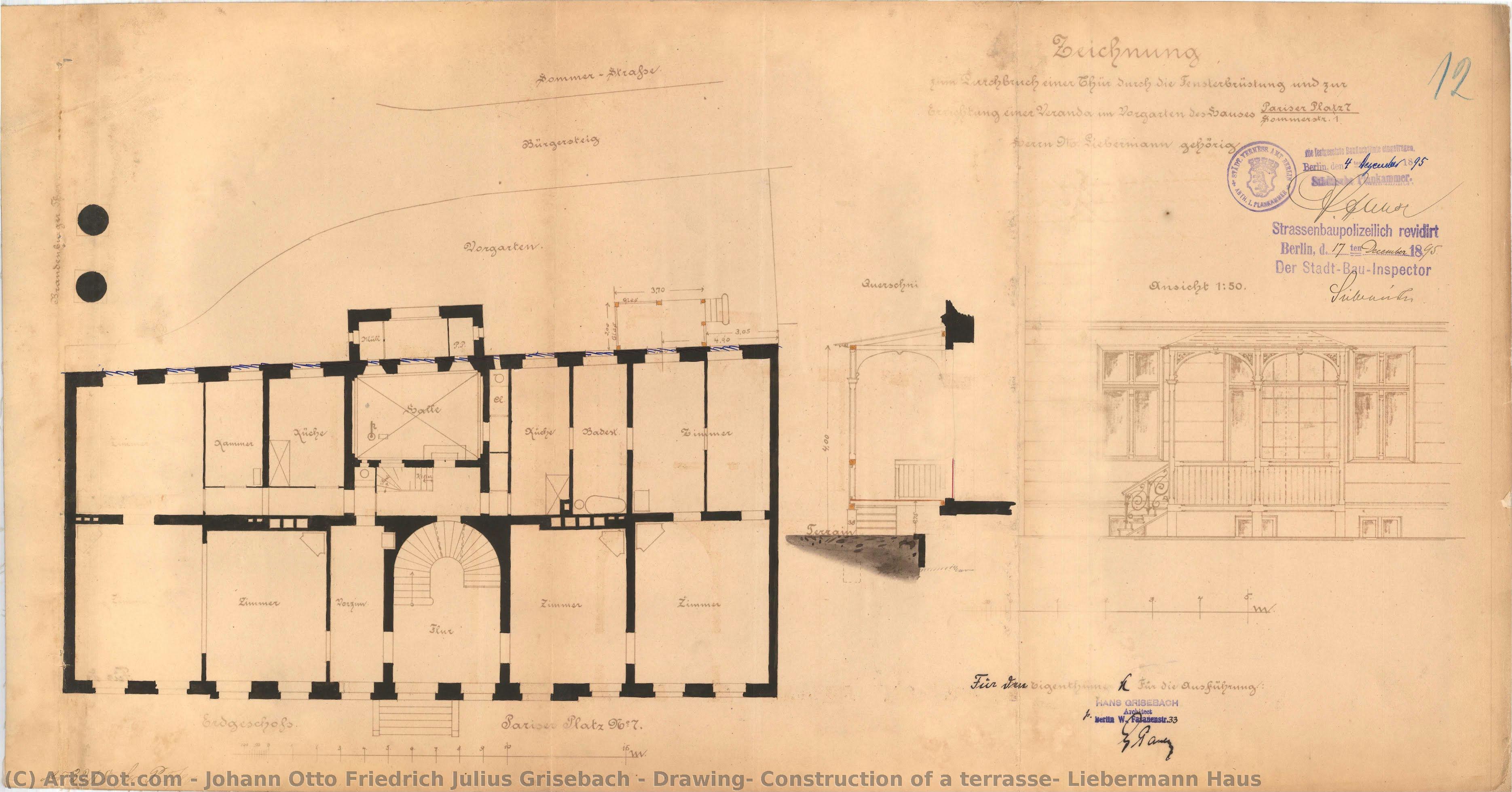
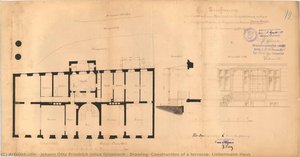
Drawing: Construction of a terrasse, Liebermann Haus


 Read More
Purchase a high-resolution, enhanced digital image, far superior to the online preview.
Each file is meticulously prepared by our in-house specialists using advanced tools and expert manual retouching. We ensure every image has exceptional clarity, precise color accuracy, and fine detail.
The final file is delivered via email within 72 hours, optimized for immediate use in professional, editorial, and print environments. This is the same quality trusted by top-tier design studios, publishers, and galleries.
Digital Image
Download a high-resolution file for personal display, printing, and creative projects. ( Buy Print Buy Hand Made Painting)
Included in Every Digital Image Order
Expert Digital Delivery, Guaranteed
When you choose ArtsDot.com, you're not just getting an image - you're receiving a professionally enhanced digital artwork, crafted with precision and backed by a satisfaction guarantee. Here's everything that comes with your order, automatically:

Fast Email Delivery
Your high-resolution digital image file will be emailed to you within 72 hours of ordering - ready for immediate use.

AI-Enhanced Digital File
Your artwork is professionally optimized using advanced AI tools and manual editing, ensuring maximum detail, clarity, and color accuracy.

Free Lifetime Re-Delivery
Accidentally deleted or lost your file? No worries - we'll resend it to you anytime, free of charge.

No Import Fees - Ever
Enjoy your artwork instantly with zero customs, duties, or delivery fees - digital downloads are always tax-free.

Color Accuracy Guarantee
We ensure your digital image reflects the original colors as closely as possible using professional tools and color management.

60-Day Satisfaction Guarantee
If you're not satisfied with your digital image, we'll revise it or refund 100% within 60 days - no questions asked.

100% Money-Back Guarantee
Not satisfied? Get a full refund within 60 days of receiving your digital file - no questions asked.

Bulk Order Discounts
Buy 3 images, save 10% - Buy 5, save 15% - Buy 10+, save 20%. Great for creative projects, galleries, and agencies.
Related Artworks
Artist Biography
Johann Otto Friedrich Julius Grisebach: Architect of Berlin’s Artistic Soul
Born in Göttingen, Germany, in 1848, Johann Otto Friedrich Julius Grisebach – often known as Hans Grisebach – was more than just an architect; he was a pivotal figure in shaping the cultural landscape of late 19th-century Berlin. His career spanned several decades, marked by a distinctive blend of historical revivalism and burgeoning Expressionist sensibilities, leaving behind a legacy of buildings that continue to resonate with their innovative design and connection to the city’s artistic community. Grisebach's work wasn't merely about constructing structures; it was about creating environments that fostered creativity and reflected the spirit of a rapidly changing era.
Grisebach’s early education laid the foundation for his unique approach. He began his studies at the Polytechnikum in Hanover under the guidance of Conrad Wilhelm Hase, a renowned architect-professor whose influence extended far beyond traditional academic principles. However, his path was interrupted by military service in 1870/71 and subsequently enriched by a transformative journey to Italy. This exposure to Romanesque and Renaissance architecture ignited within him a deep appreciation for historical styles, which he would later skillfully integrate into his own designs. The Italian experience instilled a desire to move beyond mere imitation, pushing him toward a more nuanced understanding of architectural form and its relationship to context.
His professional career commenced in Vienna, where he apprenticed under the Gothic Revival architect F. Schmid. This period proved invaluable, exposing him to established techniques and stylistic conventions. Following his time in Vienna, Grisebach spent three years in Wiesbaden, broadening his experience before embarking on a comprehensive study tour through France, Spain, Italy, and Malta. These travels weren’t simply vacations; they were deliberate investigations into architectural traditions, resulting in a remarkably eclectic portfolio of influences. Upon returning to Germany, he settled in Berlin in 1880, quickly establishing himself as a respected architect within the city's burgeoning artistic circles.
Collaboration and Innovation: The Dinklage Partnership
A defining chapter in Grisebach’s career unfolded between 1889 and 1901 through his collaboration with August Dinklage. This partnership proved extraordinarily productive, yielding a series of landmark buildings that showcased their combined creative vision. Their firm became particularly renowned for its innovative use of materials – incorporating elements like ironwork and glass in ways previously unseen – and for the sophisticated spatial relationships they established within their designs. The Liebermann Haus, completed in 1893, stands as perhaps their most celebrated achievement, a testament to their ability to seamlessly blend historical references with modern sensibilities. This building, now a museum dedicated to the work of painter Max Liebermann, exemplifies Grisebach’s commitment to creating spaces that were both aesthetically pleasing and functionally adaptable.
The architectural style of Grisebach is characterized by a captivating synthesis of historical and cultural influences. He skillfully blended Gothic Revival elements with hints of Expressionist aesthetics – a movement gaining momentum during his time. His buildings weren't simply reproductions of past styles; they were reinterpretations, imbued with a sense of dynamism and emotional resonance. The Pommersches Landesmuseum in Greifswald, featuring a remarkable collection of art including masterpieces by Caspar David Friedrich, provides a compelling parallel – demonstrating the broader cultural context within which Grisebach’s work flourished.
Notable Works and Architectural Legacy
Grisebach's architectural output extended beyond the Liebermann Haus, encompassing a diverse range of projects that significantly contributed to Berlin’s urban fabric. His designs for residential buildings, commercial spaces, and public structures reflected his meticulous attention to detail and his commitment to creating harmonious environments. While specific details on every project are scarce, it is clear that he consistently sought to elevate the quality of architectural design within the city.
The impact of Grisebach’s work extends beyond individual buildings; he played a crucial role in shaping Berlin's artistic identity. His collaborations with artists like Max Liebermann fostered a vibrant exchange between architecture and art, creating spaces that were not only functional but also inspiring. His legacy is interwoven with the city’s cultural history, and his buildings continue to be studied and admired for their innovative design and enduring beauty.
A Lasting Influence
Johann Otto Friedrich Julius Grisebach's career concluded in 1904, but his influence on German architecture continues to be felt. His work represents a pivotal moment in the transition between historical revivalism and modern architectural expression. His meticulous approach to design, combined with his deep understanding of cultural context, cemented his place as one of Berlin’s most significant architects of the late 19th century. Further research into his lesser-known projects promises to reveal even greater insights into the breadth and depth of his creative vision.
johann otto friedrich julius grisebach
1848 - 1904 , Germany
Quick Facts
- Artistic Movement Or Style: Gothic Revival & Expressionism
- Artists Or Movements Influenced By This Artist: ['Carl F.']
- Artists Who Influenced This Artist: ['Conrad Wilhelm Hase']
- Date Of Birth: July 26, 1848
- Date Of Death: May 11, 1904
- Full Name: Johann Otto Friedrich Julius Grisebach”
- Nationality: German
- Notable Artworks: ['Liebermann Haus']
- Place Of Birth: Goettingen, Germany

