 Preview
 Send
Send Share
Share
 Details

 Download
 Similars
 X-Ray
X-Ray Diaporama
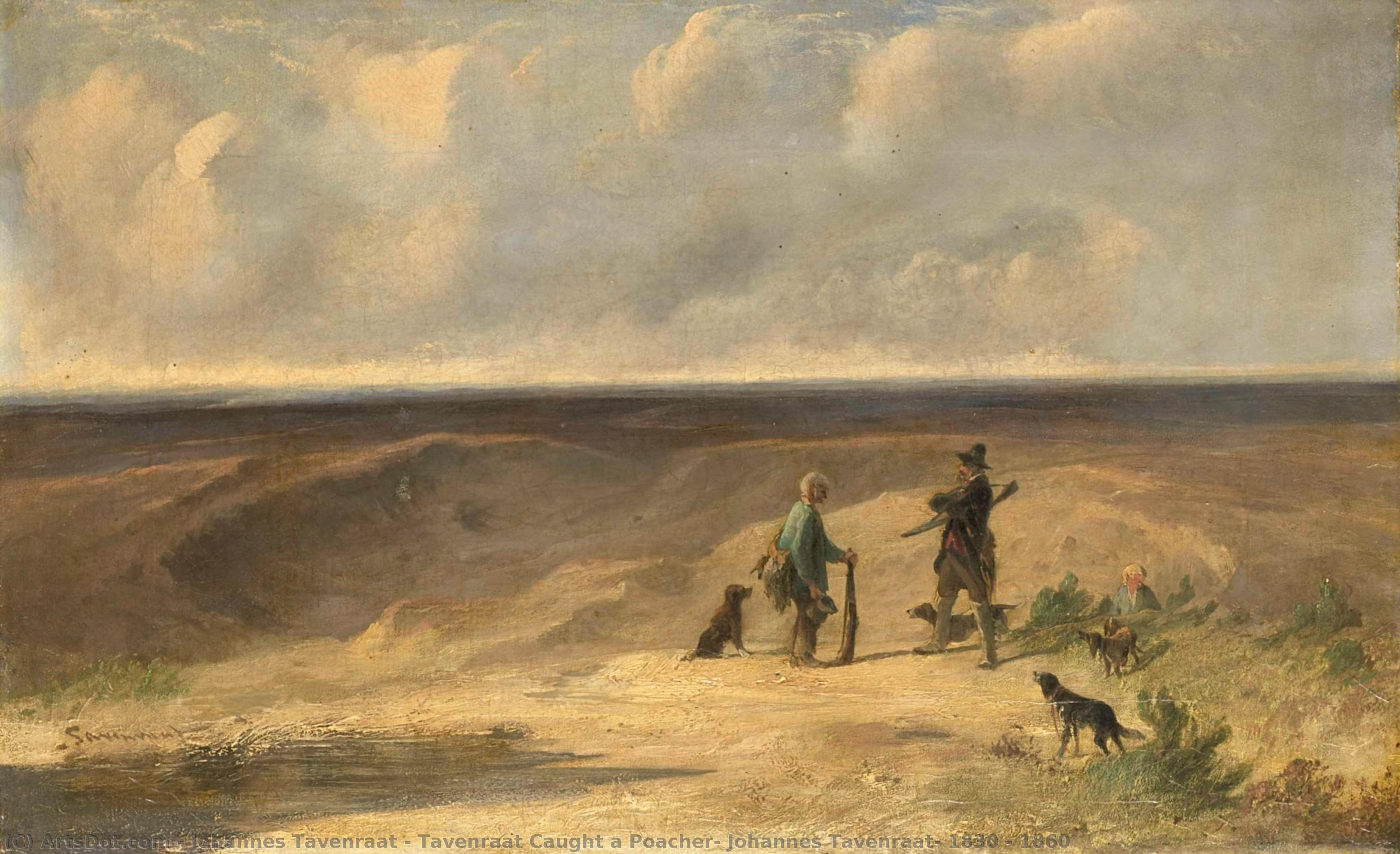
Tavenraat Caught a Poacher, Johannes Tavenraat, 1830 - 1860
 1860
1860 31.0 x 49.0 cm
 Read More
Giclée / Art Print
Museum-quality giclée or canvas print with fast production and flexible finish options. ( Buy Hand Made Painting Buy Image)




































Pick from our preset sizes that match the artwork's original proportions.

You may enter your own dimensions to fit a specific frame or space. If your selected size does not match the original image's proportions, we will either crop the artwork or extend the image with a mirrored or solid-fill edge. A digital mockup will be sent for your approval before production begins.
Please note that the on-screen preview does not reflect the actual cropping or extension. Only the mockup will accurately show the final composition.
While custom sizes are available, we recommend selecting a dimension from the predefined list to preserve the original proportions.
Worldwide Delivery () in 2 weeks instead of standard 4/5 weeks. (31 August)

Free Worldwide Express Shipping

High-Quality Linen Canvas

Full Shipping Insurance

Customs Tax Refund Guarantee

True Color Matching Guarantee

60-Day Return Policy (Defects Only)

100% Money-Back Guarantee

Bulk Discount Offer
 Glass option is only available in size under 110 CM

Tavenraat Caught a Poacher, Johannes Tavenraat, 1830 - 1860
Giclée / Art Print
Reproduction Size
-


Total Price
$ 63
Related Artworks





Artist Biography
Johannes Tavenraat: A Dutch Romantic’s Dramatic Visions
Born in Rotterdam in 1809, Johannes Tavenraat was destined for a life far removed from the artistic pursuits that would ultimately define him. His family, steeped in the tradition of cloth dyeing and trade, expected him to follow his father into the mercantile world. However, a youthful fascination with art, nurtured by early lessons and fueled by an innate sensitivity to light and atmosphere, led him down a dramatically different path. Tavenraat’s decision to embrace painting was not merely a personal choice; it represented a quiet rebellion against societal expectations and a profound commitment to expressing his unique vision of the world.
His formal training began with Hendrik Schmidt, followed by Felix Bovie, a student of the renowned B.C. Koekkoek. This lineage proved crucial, exposing Tavenraat to the theoretical foundations of painting while simultaneously introducing him to Koekkoek’s distinctive approach – one characterized by an intense study of light and color, and a fascination with the dramatic effects of nature. A significant period was spent in Kleve, Germany, where he immersed himself in the German Romantic movement, absorbing its emphasis on the sublime, the melancholic, and the power of landscape to evoke profound emotion. This influence is readily apparent in his later works, particularly those depicting rugged mountain ranges, imposing ruins, and scenes imbued with a palpable sense of mystery.
The Landscape as Narrative
Tavenraat’s artistic focus centered almost exclusively on landscapes and hunting scenes – genres that allowed him to explore his deeply felt connection to the natural world. He wasn't interested in mere representation; instead, he sought to capture *moments* within nature, those fleeting instances of beauty, drama, or solitude that resonated with a sense of timelessness. His paintings are rarely straightforward depictions; they’re carefully constructed narratives, often imbued with historical allusions and a subtle undercurrent of melancholy. He frequently depicted scenes of hunters in pursuit of game, but these weren't simply sporting events. They were explorations of human interaction with the wilderness, reflections on themes of mortality, and meditations on the relationship between man and nature.
A defining characteristic of Tavenraat’s style is his masterful use of light and shadow. He employed dramatic contrasts – intense highlights against deep shadows – to create a sense of depth, atmosphere, and emotional intensity. His brushwork was often loose and expressive, conveying the immediacy of observation while simultaneously suggesting a deeper, more contemplative mood. He favored smooth, almost velvety strokes in his landscapes, creating a luminous quality that is particularly evident in works like “Tavenraat Caught a Poacher,” where the interplay of light and shadow dramatically emphasizes the scene’s tension and drama.
Recognition and Legacy
Despite facing initial criticism for deviating from the prevailing trends of Dutch painting – which largely favored realism and direct observation – Tavenraat persevered, establishing himself as a respected artist both within the Netherlands and abroad. He was a member of the Royal Academy of Arts in Amsterdam and the Pulchri Studio in The Hague, demonstrating his commitment to artistic excellence. His work garnered international acclaim, culminating in a gold medal at the Paris Salon in 1849 – a significant achievement that validated his unique approach.
Today, Tavenraat’s paintings are held in prestigious collections, including the Rijksmuseum in Amsterdam and the Teulers Museum in Haarlem. He also served as an influential teacher, mentoring artists such as Anton Mauve, further disseminating his distinctive style. Johannes Tavenraat's legacy lies not only in his captivating landscapes and hunting scenes but also in his unwavering dedication to artistic expression and his ability to imbue his work with a profound sense of emotion and atmosphere. He remains a compelling figure in Dutch Romanticism – an artist who dared to defy convention and forge his own path, leaving behind a body of work that continues to resonate with viewers today.
Key Influences
- Andreas Schelfhout: Tavenraat’s early training under Schelfhout provided him with a solid foundation in drawing and composition.
- B.C. Koekkoek: Koekkoek's theories on light, color, and the study of nature profoundly influenced Tavenraat’s artistic approach.
- German Romanticism: The emphasis on the sublime, the melancholic, and the power of landscape in German Romantic art shaped Tavenraat’s vision and style.
Notable Works
- Tavenraat Caught a Poacher (1830-1860): A dramatic depiction of a hunter pursuing a poacher, showcasing Tavenraat’s mastery of light and shadow.
- Various landscapes featuring rugged mountain ranges and Gothic ruins.
- Numerous hunting scenes capturing the interaction between man and nature.
Johannes Tavenraat
1809 - 1881 , Netherlands
Quick Facts
- Artistic Movement Or Style: Romantic Landscape
- Artists Or Movements Influenced By This Artist: ['B.C. Koekkoek']
- Artists Who Influenced This Artist: ['Andreas Schelfhout']
- Date Of Birth: 1809
- Date Of Death: 1881
- Full Name: Johannes Tavenraat
- Nationality: Dutch
- Notable Artworks:
- Tavenraat Caught a Poacher
- Johannes Tavenraat
- Place Of Birth: Rotterdam, Netherlands