

 Preview
 Send
Send Share
Share
 Details

 Download
 Similars
 X-Ray
X-Ray Diaporama
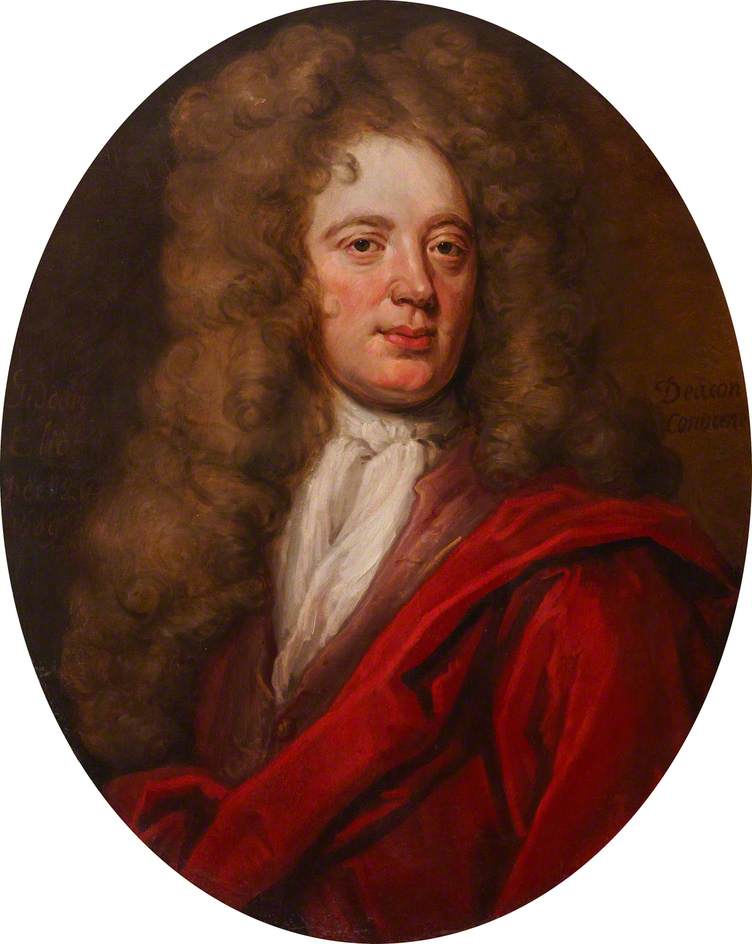
Gideon Eliot (1664–1713), FRCSEd (1689), DRCSEd (1694–1695)
 Oil On Canvas
- WallArt
- Baroque
 1700
1700- Early Modern
 75.0 x 62.0 cm
 The Royal College of Surgeons of Edinburgh
 Read More
Purchase a high-resolution, enhanced digital image, far superior to the online preview.
Each file is meticulously prepared by our in-house specialists using advanced tools and expert manual retouching. We ensure every image has exceptional clarity, precise color accuracy, and fine detail.
The final file is delivered via email within 72 hours, optimized for immediate use in professional, editorial, and print environments. This is the same quality trusted by top-tier design studios, publishers, and galleries.
Digital Image
Download a high-resolution file for personal display, printing, and creative projects. ( Buy Print Buy Hand Made Painting)
Included in Every Digital Image Order
Expert Digital Delivery, Guaranteed
When you choose ArtsDot.com, you're not just getting an image - you're receiving a professionally enhanced digital artwork, crafted with precision and backed by a satisfaction guarantee. Here's everything that comes with your order, automatically:

Fast Email Delivery
Your high-resolution digital image file will be emailed to you within 72 hours of ordering - ready for immediate use.

AI-Enhanced Digital File
Your artwork is professionally optimized using advanced AI tools and manual editing, ensuring maximum detail, clarity, and color accuracy.

Free Lifetime Re-Delivery
Accidentally deleted or lost your file? No worries - we'll resend it to you anytime, free of charge.

No Import Fees - Ever
Enjoy your artwork instantly with zero customs, duties, or delivery fees - digital downloads are always tax-free.

Color Accuracy Guarantee
We ensure your digital image reflects the original colors as closely as possible using professional tools and color management.

60-Day Satisfaction Guarantee
If you're not satisfied with your digital image, we'll revise it or refund 100% within 60 days - no questions asked.

100% Money-Back Guarantee
Not satisfied? Get a full refund within 60 days of receiving your digital file - no questions asked.

Bulk Order Discounts
Buy 3 images, save 10% - Buy 5, save 15% - Buy 10+, save 20%. Great for creative projects, galleries, and agencies.
A Glimpse into the Baroque Soul
In the quiet dignity of this 1700 masterpiece by John Baptist de Medina, we encounter more than just a likeness; we enter the intimate world of the late seventeenth-century aristocracy. The portrait of Gideon Eliot serves as a profound window into an era defined by grandeur and social stratification. As the eye meets the subject, one is immediately struck by the commanding presence of a man whose very posture radiates the stability and prestige of his station. Rendered in the rich, dramatic language of Baroque portraiture, the painting captures a moment of frozen importance, where every brushstroke serves to elevate the sitter from a mere individual to an icon of historical permanence.
The composition is masterfully centered, focusing our attention on the interplay between light and shadow that characterizes de Medina’s skilled hand. The subject's face, framed by a voluminous, meticulously detailed light-brown wig, emerges from a subtle darkness, a technique known as chiaroscuro that lends an almost sculptural depth to his features. This directional lighting does more than just illuminate; it carves out the contours of his expression, revealing a countenance marked by both intelligence and a certain solemn gravity. The soft, organic curves of his hair contrast beautifully with the structured, heavy folds of his deep red coat, creating a visual rhythm that keeps the viewer’s gaze wandering through the intricate textures of the canvas.
The Artistry of Texture and Tone
To behold this work is to appreciate a masterclass in oil technique. De Medina demonstrates an extraordinary ability to manipulate pigment to simulate the tactile reality of different materials. The heavy, luxurious weight of the crimson fabric is palpable, its deep tones enriched by shadows that suggest the density of fine wool or velvet. Against this warmth, the crisp white of the shirt provides a necessary breath of light, acting as a focal point that draws the eye toward the subject's neck and jawline. The artist’s use of a palette dominated by earthy browns, deep reds, and subtle greys creates a harmonious, somber atmosphere that feels both timeless and grounded.
Beyond the mere representation of clothing, the painting utilizes texture to convey status. The meticulous rendering of the wig—with its individual strands catching the light—and the precise linework defining the folds of the drapery, all speak to a level of craftsmanship intended to impress. For the collector or interior designer, this piece offers a sophisticated textural element that can anchor a room, providing a sense of historical weight and classical elegance. It is a work that does not merely sit upon a wall but commands the space around it, inviting closer inspection of its fine details.
Symbolism and Lasting Legacy
Every element within this portrait is steeped in the symbolic language of the turn of the eighteenth century. The choice of a deep red palette was rarely accidental; it was a color synonymous with power, passion, and high social standing. In the context of Gideon Eliot’s life and his professional distinctions, the painting acts as a visual testament to his achievements and his place within the societal hierarchy. The very act of commissioning such a portrait was an exercise in legacy-building, ensuring that the subject's dignity would endure long after his passing.
For those seeking to incorporate fine art into a contemporary setting, this reproduction offers a bridge to the past. It evokes a sense of nostalgia for an age of formal elegance and intellectual rigor. Whether placed in a study, a library, or a grand hallway, the portrait brings with it an aura of scholarly sophistication and quiet strength. It is not merely a decoration, but an emotional experience—a way to surround oneself with the enduring spirit of the Baroque era and the storied history of one of Scotland's most influential figures.
Related Artworks






Artist Biography
John Baptist de Medina: Life and Legacy
Early Life and Training
- Birth and Origins: Sir John Baptist de Medina was born in 1659 in Brussels, to a Spanish army captain. His early life was shaped by his family’s military background and the vibrant artistic environment of Brussels.
- Artistic Education: He received his initial artistic training under François Duchatel, a respected painter of the time. This foundational education instilled in him the principles of Baroque art and portraiture.
Move to England and Scotland
- London Years (1686): In 1686, de Medina moved to London, establishing his studio in Drury Lane. He quickly gained recognition for his portraiture skills.
- Scottish Patronage: De Medina specialized in painting Scottish sitters even while in London. Later, around 1688-89 or 1694, he relocated to Edinburgh, where he remained for the rest of his life. He was greatly encouraged and sponsored by the Earl of Melville.
- Political Connections: The Earl of Melville’s influence was crucial; as Secretary of State for Scotland, he provided de Medina with access to prominent figures and commissions.
Artistic Style and Influences
- Baroque Portraiture: De Medina’s style is firmly rooted in the Baroque tradition. His portraits are characterized by a sense of realism, dramatic lighting, and rich colors.
- Influences: He was significantly influenced by Sir Godfrey Kneller, whose portrait style he emulated, but often with a more relaxed and informal approach.
- Distinctive Features: De Medina favored bright blues and rose-reds in clothing and dark backgrounds. The quality of his work varied, likely due to the assistance of studio assistants.
Major Achievements and Works
- Portrait Series at Surgeons’ Hall: His most celebrated works are a collection of approximately 30 oval bust-length portraits housed in Surgeons' Hall, Edinburgh. These are often compared to Kneller’s Kit Cat Club series.
- *Paradise Lost* Illustrations (1688): De Medina was the first artist to illustrate John Milton’s epic poem *Paradise Lost*. His twelve engraved plates for the 1688 edition are notable for their careful adherence to the text and imaginative use of biblical iconography.
- Portraits of Scottish Nobility: He created numerous portraits of prominent Scottish figures, solidifying his position as the leading portraitist in Scotland during his lifetime.
Historical Significance and Legacy
- Dominant Portraitist: De Medina held a near-monopoly on portraiture in Scotland for much of his career, charging standard fees of £5 for a head and £10 for a half-length portrait.
- Knighthood (1706): He was knighted in 1706, one of the last Scottish knights created before the Acts of Union in 1707.
- Mentorship: De Medina trained both his son and William Aikman, who became a leading Scottish portrait painter of the next generation.
- Lasting Impact: While not as widely recognized internationally as some of his contemporaries, de Medina’s work provides valuable insight into 17th-century Scottish society and artistic practice.
Death and Burial
- Final Years: John Baptist de Medina died in Edinburgh on October 5, 1710.
- Burial Site: He was buried in Greyfriars Kirkyard, Edinburgh, in a solid enclosed vault near the steps leading to the northern section.

john baptist de medina
1659 - 1710
Quick Facts
- Birth_Date: 1659
- Birth_Place: Brussels
- Death_Date: 1710
- Influenced: William Aikman
- Influenced_By: François Duchatel, Sir Godfrey Kneller
- Movement: Baroque
- Name: John Baptist de Medina
- Nationality: Flemish-Spanish
- Notable_Works: Illustrations for *Paradise Lost*, Portraits of Scottish nobility

