 Preview
 Send
Send Share
Share
 Details

 Download
 Similars
 X-Ray
X-Ray Diaporama
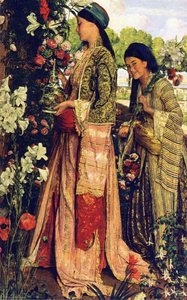
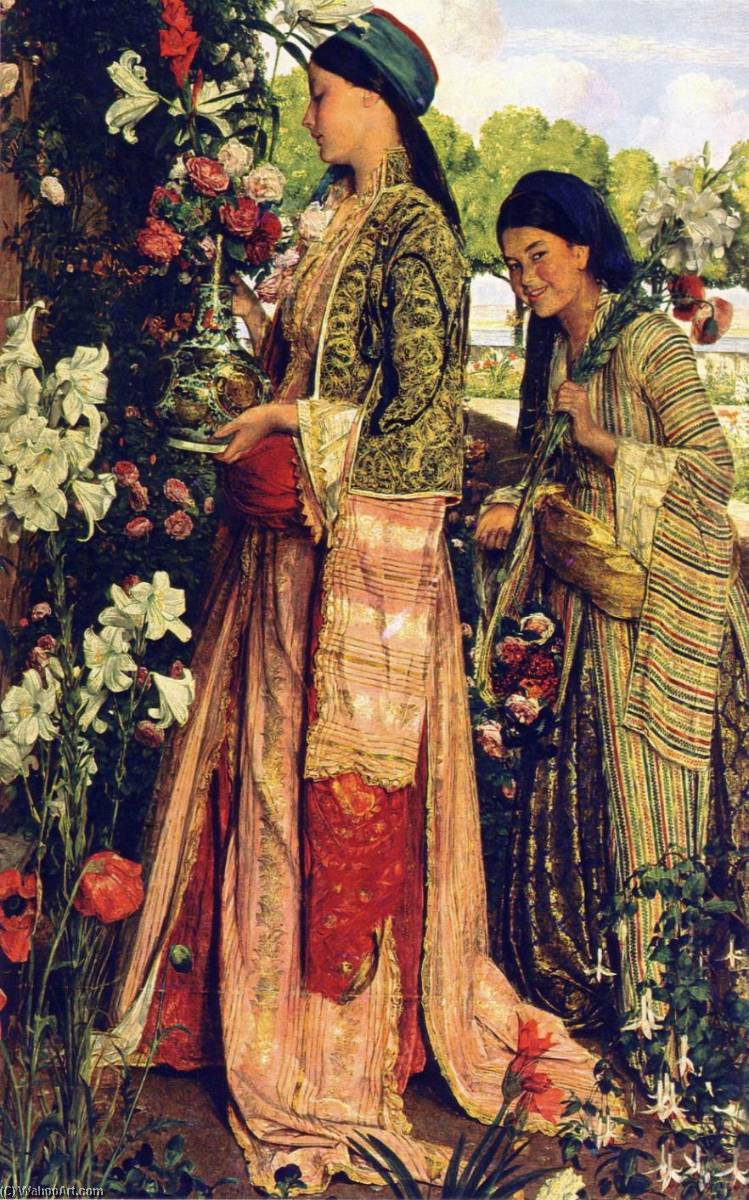
Lilium Auratum


 Read More
Hand Made Oil Reproduction
Hand-painted oil on canvas in your size and frame, made to order by our artists. ( Buy Print Buy Image)




P118B $10

P118H $10

P118W $10

P438Z $10

P508JH $12

P508YH $12

P805H $10

P805Z $10

P919BZ $10

P919G $10

P919XJ $10

P959ZH $10

P968JZ $12

W106C $8

W218G $10

W218JH $8

W218Y $10

W307PJ $10

W316G $10

W316PJ $8

W316Y $10

W398PJ $8

W4111J $10

W500HY $15

W500JH $15

W692G $12

W849H $8

W940BG $15

W953PJ $8




Pick from our preset sizes that match the artwork's original proportions.

You may enter your own dimensions to fit a specific frame or space. If your selected size does not match the original image's proportions, we will either crop the artwork or extend the painting with additional hand-painted elements. A digital mockup will be sent for your approval before production begins.
Please note that the on-screen preview does not reflect the actual cropping or extension. Only the mockup will accurately show the final composition.
While custom sizes are available, we recommend selecting a dimension from the predefined list to preserve the original proportions.
After order, ArtsDot.com team will email client for instructions and provide a mockup preview
Worldwide Delivery () in 3/4 weeks instead of standard 5 weeks. (16 August). No compromise on quality.

Free Worldwide Express Shipping

High-Quality Linen Canvas

Full Shipping Insurance

Customs Tax Refund Guarantee

True Color Matching Guarantee

60-Day Return Policy (Defects Only)

100% Money-Back Guarantee

Bulk Discount Offer
 Glass option is only available in size under 110 CM

Lilium Auratum
Reproduction Medium
Reproduction Size
-


Total Price
$ 263
Artwork Description
A Glimpse of Victorian Opulence: John Frederick Lewis’s “Lilium Auratum”
John Frederick Lewis's "Lilium Auratum," painted in 1871, is more than just a depiction of two women amidst a profusion of flowers; it’s a meticulously crafted window into the opulent sensibilities and burgeoning Orientalist movement of Victorian England. This captivating work, housed within the broader context of Lewis’s extensive travels through the Mediterranean and North Africa, offers a rare glimpse into a world of leisure, beauty, and carefully constructed narratives. The painting immediately draws the eye with its vibrant palette – rich reds, deep greens, and luminous yellows dominate, creating an atmosphere both luxurious and subtly melancholic.
The Subject and Setting: A Scene of Refined Companionship
At first glance, the scene presents a simple tableau: two elegantly dressed women positioned before a riotous display of lilies and roses. However, closer observation reveals a carefully orchestrated composition designed to evoke a sense of refined companionship. The figures are not merely present; they actively engage with their surroundings, suggesting an intimate conversation or shared enjoyment of the floral abundance. The positioning of the women – one slightly to the left, the other towards the right – creates a dynamic balance within the frame, guiding the viewer’s eye through the scene. Note the delicate fabrics of their gowns, hinting at wealth and status, while their relaxed postures suggest an atmosphere of ease and contentment.
Lewis's Technique: Watercolor and Oil - A Hybrid Approach
Lewis was a master of multiple mediums, and “Lilium Auratum” exemplifies his skill in blending watercolor with oil. The initial groundwork appears to be executed primarily in watercolor, capturing the delicate textures of the flowers and the soft light filtering through the scene. This technique lends an ethereal quality to the painting, emphasizing the beauty of the natural world. Subsequently, he applied layers of oil paint to build up depth, richness, and detail – particularly evident in the rendering of the women’s clothing and the intricate patterns within the floral arrangements. This hybrid approach allowed him to achieve both a luminous, atmospheric effect and a level of precision rarely seen in purely watercolor works.
Symbolism and Context: Orientalist Visions of Leisure
“Lilium Auratum” is firmly rooted within the broader context of Orientalism – an artistic movement that romanticized and often exoticized depictions of the East. Lewis’s travels through Spain, Morocco, and Egypt profoundly shaped his artistic vision, leading him to portray scenes of leisure, hospitality, and cultural exchange. The lilies themselves carry symbolic weight; associated with purity, innocence, and rebirth, they represent a longing for an idealized past or a connection to nature's beauty. The setting, though seemingly idyllic, subtly hints at the constructed nature of such experiences – a carefully curated vision of the East designed for European consumption.
Emotional Resonance: A Moment of Quiet Contemplation
Beyond its technical brilliance and historical context, “Lilium Auratum” possesses a quiet emotional resonance. The painting doesn’t shout with drama; instead, it invites the viewer to pause and contemplate a fleeting moment of connection between two women amidst a world of beauty. There's an underlying sense of wistfulness – perhaps a reflection on lost opportunities or the transient nature of pleasure. The soft lighting, the delicate details, and the carefully chosen composition all contribute to this subtle yet powerful emotional impact. It’s a painting that speaks not just to the eye but also to the heart, offering a glimpse into the refined sensibilities and contemplative spirit of Victorian England.
Related Artworks
Artist Biography
John Frederick Lewis: A Life in Orientalist Painting
Early Life and Training
John Frederick Lewis, a prominent English Orientalist painter, was born on July 14, 1804, in London. He was the son of Frederick Christian Lewis, an engraver and landscape painter. This familial artistic background undoubtedly influenced his early development. His formal training began under the tutelage of Sir Thomas Lawrence, where he honed his skills alongside fellow artists like Edwin Landseer. This foundational period instilled in him a strong understanding of technique and composition.
Artistic Career & Development
Lewis’s artistic career unfolded through several distinct phases, each marked by evolving styles and thematic focuses:
- Orientalist Period: Lewis embarked on extensive travels throughout the Mediterranean region, meticulously capturing its essence in detailed watercolor and oil paintings. He frequently revisited compositions, rendering them across multiple mediums.
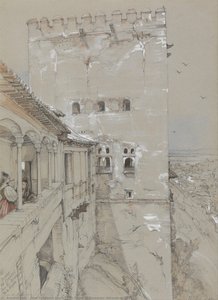
- Spanish & Moroccan Influences (1832-1834): A tour of Spain and Morocco proved pivotal. He produced numerous lithographs later published as “Sketches and Drawings of the Alhambra” (1835) and “Lewis’s Sketches of Spain and Spanish Character” (1836).
- Egyptian Period (1841-1851): His sojourn in Cairo was arguably his most productive. Here, he perfected his Orientalist style, creating highly detailed works showcasing both realistic genre scenes and idealized depictions of upper-class Egyptian interiors.
Notable Works
Lewis created a substantial body of work celebrated for its meticulous detail and evocative atmosphere. Some of his most recognized pieces include:
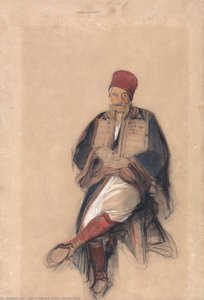
- A Bedouin (Yale Center for British Art, New Haven) – A watercolor exemplifying his Orientalist style.
- The Ramesseum at Thebes (Yale Center for British Art, New Haven) – Showcasing his remarkable attention to architectural detail.
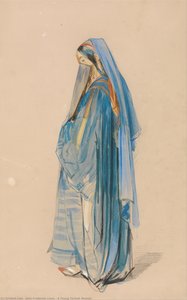
- A Young Turkish Woman (Yale Center for British Art, New Haven) – Another striking example of his Orientalist work.
- Harem Life in Constantinople - A detailed oil painting depicting Ottoman domestic life.
Influences and Artistic Style
Lewis’s style was shaped by several influences, most notably Sir Thomas Lawrence's emphasis on portraiture and composition. However, his direct observation of Middle Eastern cultures allowed him to develop a unique aesthetic characterized by:
- Meticulous Detail: A commitment to accurately representing textures, patterns, and architectural elements.
- Rich Color Palette: Employing vibrant hues inspired by the landscapes and costumes he encountered.
- Genre Scenes & Interior Views: Focusing on everyday life and intimate domestic settings.
Legacy and Historical Significance
Lewis’s contribution to the art world lies in his significant role in developing Orientalist painting. His meticulous representations of Islamic architecture, furnishings, and costumes set new standards for realism within the genre. He helped popularize a romanticized yet detailed vision of the Middle East among Western audiences. After returning to England in 1851, he continued to paint until his death on August 15, 1876, in Walton-on-Thames.
His work continues to be studied and admired for its artistic merit and historical insight into 19th-century perceptions of the Orient.
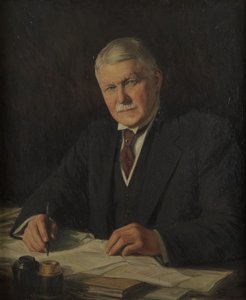
John Frederick Lewis
1804 - 1876 , United Kingdom
Quick Facts
- Birth Date: July 14, 1804
- Birth Place: London, United Kingdom
- Death Date: August 15, 1876
- Influenced By: Sir Thomas Lawrence
- Movement: Orientalism
- Name: John Frederick Lewis
- Nationality: British
- Notable Works:
- A Bedouin
- The Ramesseum at Thebes
- A Young Turkish Woman
- Harem Life in Constantinople
Related Articles
John Frederick Lewis: Orientalism, Detail & Genre Painting in 19th-Century British Art
Explore the captivating Orientalist paintings of John Frederick Lewis! Discover his mastery of detail, genre scenes & influence on 19th-century British art. Learn about his life, techniques & legacy at ArtsDot.

John Singer Sargent's 25 Masterpieces: Portraits & Beyond | ArtsDot
Explore 25 iconic John Singer Sargent paintings – from dazzling portraits to Impressionist landscapes. Discover the stories behind Madame X, El Jaleo & more! Find museum-quality art reproductions and elevate your home decor with ArtsDot.com.

John Constable's Masterpieces: Explore 25 Iconic Landscapes for Your Home
Journey through John Constable's 25 most celebrated landscapes. Explore Romanticism, Dedham Vale & his masterful use of light in iconic paintings like 'Hay Wain'. Find museum-quality art reproductions and elevate your home decor on ArtsDot.com.
John Frederick Herring Sr.: Equestrian Mastery & the Rise of Sporting Art in Victorian England
Explore the life & work of John Frederick Herring Sr., a leading Victorian equestrian artist. Discover his masterpieces, patronage, techniques & investment potential. Expert insights for collectors.
Edward Morland Lewis: A Rising Star of Victorian Narrative Realism
Explore the captivating works of Edward Morland Lewis, a key figure in Victorian genre painting. Discover his realistic depictions of everyday life, artistic influences, and current market value with ArtsDot.