 Preview
 Send
Send Share
Share
 Details

 Download
 Similars
 X-Ray
X-Ray Diaporama
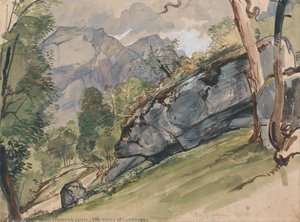
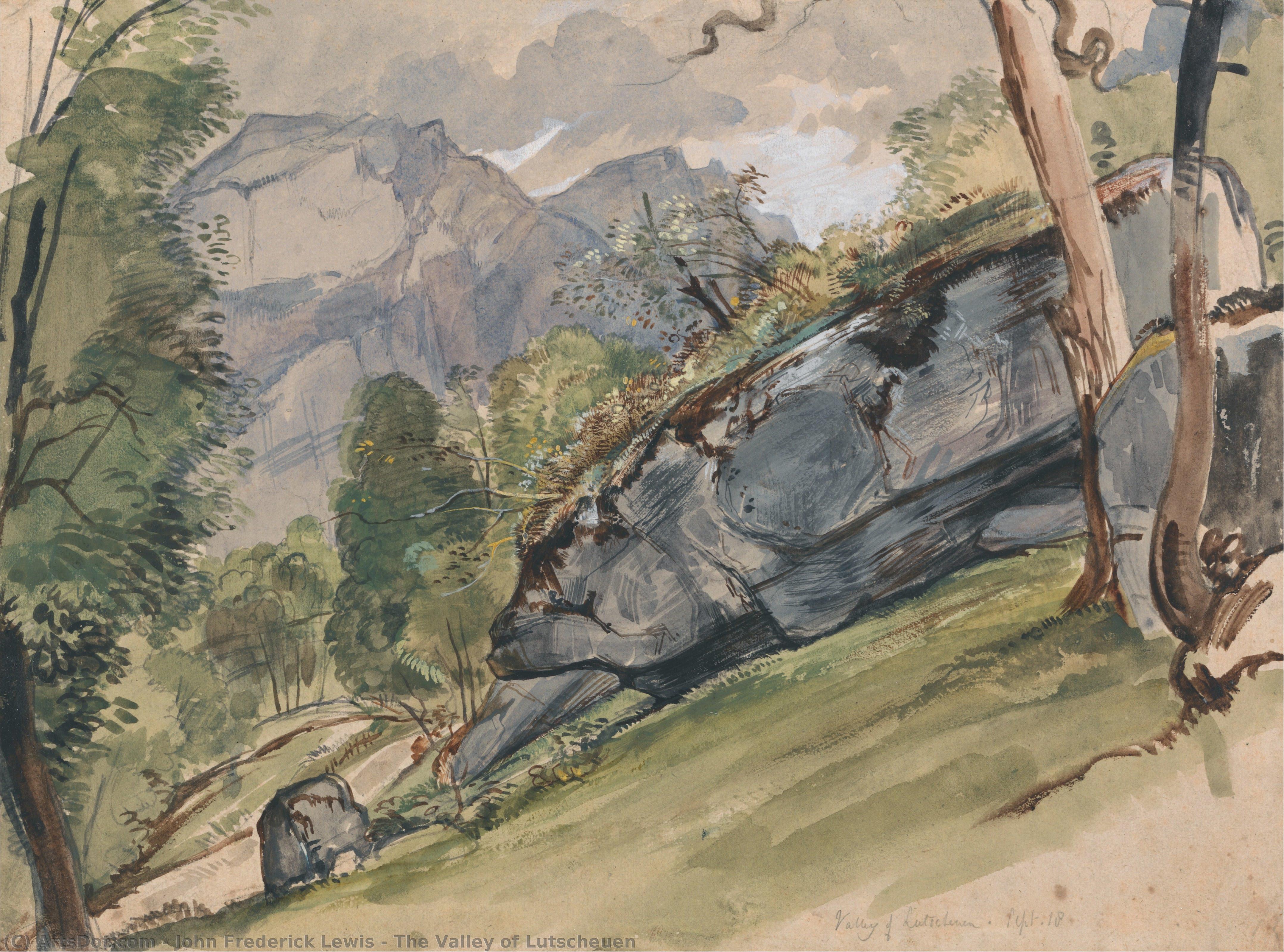
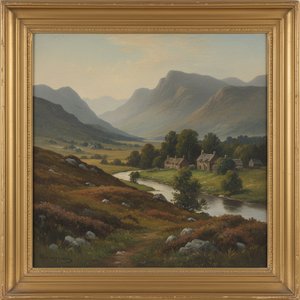
The Valley of Lutscheuen


 Read More
Hand Made Oil Reproduction
Hand-painted oil on canvas in your size and frame, made to order by our artists. ( Buy Print Buy Image)




P118B $10

P118H $10

P118W $10

P438Z $10

P508JH $12

P508YH $12

P805H $10

P805Z $10

P919BZ $10

P919G $10

P919XJ $10

P959ZH $10

P968JZ $12

W106C $8

W218G $10

W218JH $8

W218Y $10

W307PJ $10

W316G $10

W316PJ $8

W316Y $10

W398PJ $8

W4111J $10

W500HY $15

W500JH $15

W692G $12

W849H $8

W940BG $15

W953PJ $8




Pick from our preset sizes that match the artwork's original proportions.

You may enter your own dimensions to fit a specific frame or space. If your selected size does not match the original image's proportions, we will either crop the artwork or extend the painting with additional hand-painted elements. A digital mockup will be sent for your approval before production begins.
Please note that the on-screen preview does not reflect the actual cropping or extension. Only the mockup will accurately show the final composition.
While custom sizes are available, we recommend selecting a dimension from the predefined list to preserve the original proportions.
After order, ArtsDot.com team will email client for instructions and provide a mockup preview
Worldwide Delivery () in 3/4 weeks instead of standard 5 weeks. (16 August). No compromise on quality.

Free Worldwide Express Shipping

High-Quality Linen Canvas

Full Shipping Insurance

Customs Tax Refund Guarantee

True Color Matching Guarantee

60-Day Return Policy (Defects Only)

100% Money-Back Guarantee

Bulk Discount Offer
 Glass option is only available in size under 110 CM

The Valley of Lutscheuen
Reproduction Medium
Reproduction Size
-


Total Price
$ 263
Artwork Description
A Glimpse of a Lost World: The Genesis of “The Valley of Lutscheuen”
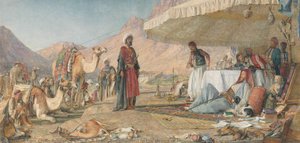
John Frederick Lewis’s “The Valley of Lutscheuen,” painted in 1827, isn't merely a landscape; it’s a meticulously crafted portal into a world both familiar and profoundly distant. Born from the burgeoning fascination with the East that gripped Europe during the early 19th century, this watercolor and graphite masterpiece embodies the spirit of Orientalism – a genre defined not just by its subject matter but by the artist's attempt to capture an elusive, romanticized essence of foreign lands. Lewis, having spent formative years in Cairo, brought with him a deep understanding of Islamic architecture, customs, and the subtle nuances of light and shadow that characterized the region’s landscapes. The painting isn’t a straightforward depiction of a valley; it's a carefully constructed illusion, designed to evoke a sense of timelessness and serene beauty – a deliberate antidote to the often-turbulent realities of the era.
Lewis’s artistic journey began under the tutelage of Sir Thomas Lawrence, a formative experience that instilled in him a rigorous approach to composition and technique. However, it was his extended sojourn in Egypt—a period of intense observation and immersion—that truly shaped his style. He wasn't simply sketching; he was actively studying the way light played across ancient stone, the patterns woven into textiles, and the expressions on the faces of local people. This dedication to detail is immediately apparent in “The Valley of Lutscheuen,” where every element – from the rugged texture of the mountains to the delicate folds of the figures’ garments – feels painstakingly rendered.
Technique and Materials: A Masterclass in Watercolor
What distinguishes “The Valley of Lutscheuen” is not just its subject matter, but also Lewis's masterful handling of watercolor. He employed a technique that combined delicate washes with precise graphite outlining, creating a remarkable sense of depth and texture. The layering of colors—subtle blues and greens for the distant mountains, warmer ochres and browns for the foreground—is executed with an almost photographic realism. The use of white gouache adds highlights and definition, while the careful scratching out in the medium creates a dynamic interplay between light and shadow, lending the scene a palpable sense of atmosphere. It’s a testament to Lewis's skill that he could achieve such intricate detail and luminosity using this relatively fluid medium.
The choice of paper – cream wove – further contributes to the painting’s overall effect. This type of paper provides a slightly textured surface, allowing the watercolor pigments to settle in with greater depth and preventing them from becoming overly flat or glossy. This careful attention to materials underscores Lewis's commitment to creating a work of enduring quality.
Symbolism and Context: More Than Just a Landscape
Beyond its aesthetic beauty, “The Valley of Lutscheuen” is rich in symbolic meaning. The valley itself represents a sanctuary—a place of peace and tranquility removed from the complexities of European society. The figures depicted – likely shepherds or travelers – embody a sense of timelessness and connection to nature. Their simple attire and unhurried pace suggest a life lived in harmony with the land, a stark contrast to the increasingly industrialized world that was rapidly transforming Europe. The painting can be interpreted as an idealized vision of the East—a romanticized portrayal of a culture perceived as both exotic and virtuous.
Furthermore, “The Valley of Lutscheuen” reflects the broader intellectual currents of its time. Orientalism wasn’t simply about depicting foreign lands; it was also about exploring questions of identity, cultural difference, and the relationship between East and West. Lewis's work, like that of many other Orientalist painters, engaged with these complex themes in a nuanced and often ambivalent way.
A Timeless Appeal: The Painting’s Enduring Legacy
“The Valley of Lutscheuen” continues to captivate viewers today because it transcends its historical context. Its serene beauty, meticulous detail, and evocative atmosphere evoke a sense of wonder and nostalgia—a longing for a world that may never have truly existed but nonetheless feels profoundly real. Reproductions of this painting offer an opportunity to bring this timeless scene into your own home, adding a touch of elegance and sophistication to any space. It’s more than just a decoration; it's a window into the soul of Orientalism—a testament to the power of art to transport us beyond our everyday lives.
Related Artworks
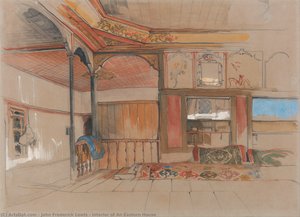
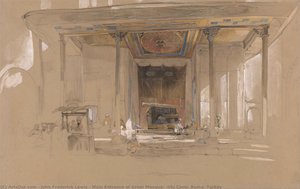
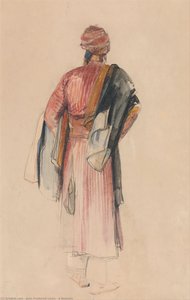
Artist Biography
John Frederick Lewis: A Life in Orientalist Painting
Early Life and Training
John Frederick Lewis, a prominent English Orientalist painter, was born on July 14, 1804, in London. He was the son of Frederick Christian Lewis, an engraver and landscape painter. This familial artistic background undoubtedly influenced his early development. His formal training began under the tutelage of Sir Thomas Lawrence, where he honed his skills alongside fellow artists like Edwin Landseer. This foundational period instilled in him a strong understanding of technique and composition.
Artistic Career & Development
Lewis’s artistic career unfolded through several distinct phases, each marked by evolving styles and thematic focuses:
- Orientalist Period: Lewis embarked on extensive travels throughout the Mediterranean region, meticulously capturing its essence in detailed watercolor and oil paintings. He frequently revisited compositions, rendering them across multiple mediums.
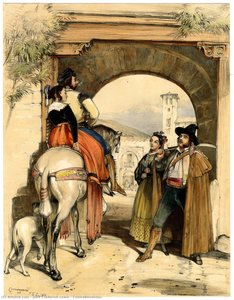
- Spanish & Moroccan Influences (1832-1834): A tour of Spain and Morocco proved pivotal. He produced numerous lithographs later published as “Sketches and Drawings of the Alhambra” (1835) and “Lewis’s Sketches of Spain and Spanish Character” (1836).
- Egyptian Period (1841-1851): His sojourn in Cairo was arguably his most productive. Here, he perfected his Orientalist style, creating highly detailed works showcasing both realistic genre scenes and idealized depictions of upper-class Egyptian interiors.
Notable Works
Lewis created a substantial body of work celebrated for its meticulous detail and evocative atmosphere. Some of his most recognized pieces include:
- A Bedouin (Yale Center for British Art, New Haven) – A watercolor exemplifying his Orientalist style.
- The Ramesseum at Thebes (Yale Center for British Art, New Haven) – Showcasing his remarkable attention to architectural detail.
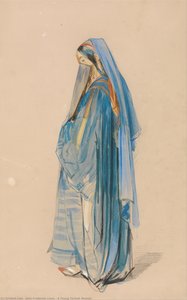
- A Young Turkish Woman (Yale Center for British Art, New Haven) – Another striking example of his Orientalist work.
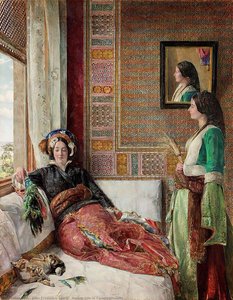
- Harem Life in Constantinople - A detailed oil painting depicting Ottoman domestic life.
Influences and Artistic Style
Lewis’s style was shaped by several influences, most notably Sir Thomas Lawrence's emphasis on portraiture and composition. However, his direct observation of Middle Eastern cultures allowed him to develop a unique aesthetic characterized by:
- Meticulous Detail: A commitment to accurately representing textures, patterns, and architectural elements.
- Rich Color Palette: Employing vibrant hues inspired by the landscapes and costumes he encountered.
- Genre Scenes & Interior Views: Focusing on everyday life and intimate domestic settings.
Legacy and Historical Significance
Lewis’s contribution to the art world lies in his significant role in developing Orientalist painting. His meticulous representations of Islamic architecture, furnishings, and costumes set new standards for realism within the genre. He helped popularize a romanticized yet detailed vision of the Middle East among Western audiences. After returning to England in 1851, he continued to paint until his death on August 15, 1876, in Walton-on-Thames.
His work continues to be studied and admired for its artistic merit and historical insight into 19th-century perceptions of the Orient.
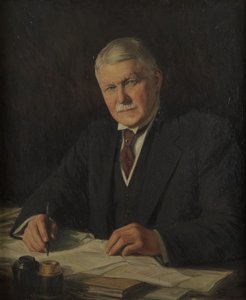
John Frederick Lewis
1804 - 1876 , United Kingdom
Quick Facts
- Birth Date: July 14, 1804
- Birth Place: London, United Kingdom
- Death Date: August 15, 1876
- Influenced By: Sir Thomas Lawrence
- Movement: Orientalism
- Name: John Frederick Lewis
- Nationality: British
- Notable Works:
- A Bedouin
- The Ramesseum at Thebes
- A Young Turkish Woman
- Harem Life in Constantinople
Related Articles
John Frederick Lewis: Orientalism, Detail & Genre Painting in 19th-Century British Art
Explore the captivating Orientalist paintings of John Frederick Lewis! Discover his mastery of detail, genre scenes & influence on 19th-century British art. Learn about his life, techniques & legacy at ArtsDot.
John Frederick Kensett: Luminosity, Landscape & the American Identity
Explore the luminous landscapes of John Frederick Kensett, a master of Luminism and key figure in the Hudson River School. Discover his serene paintings & enduring legacy with ArtsDot.
Richard Parkes Bonington: A Brief but Brilliant Career – Romantic Landscapes & the Dawn of Plein Air Painting
Explore the short but impactful career of Richard Parkes Bonington, a pivotal figure bridging British Romanticism & French plein air painting. Discover his luminous landscapes and lasting influence on Delacroix & beyond.
George Elbert Burr: A Pioneer of American Tonalism & Evocative Landscape Painting
Explore the captivating landscapes of George Elbert Burr, a pioneer of American Tonalism. Discover his masterful etchings, drypoints & watercolors – and learn about collecting this influential artist's work.
Sir John Watson Gordon: A Study in Scottish Landscape Painting & Tonal Impressionism
Explore the captivating portraits of Sir John Watson Gordon, a leading Scottish master. Discover his evolution from neoclassical style to atmospheric Tonalism and influence on 19th-century British art. Learn about his iconic sitters & legacy.