Early Life & Artistic Beginnings: A Transatlantic Talent
 Wikipedia: Richard Parkes Bonington
Richard Parkes Bonington (25 October 1802 – 23 September 1828) was an English Romantic landscape painter. He moved to France at the age of 14 and can also be considered as a French artist, and an intermediary bringing aspects of English style to Fran...
Richard Parkes Bonington’s story is one of remarkable, if tragically curtailed, promise. Born in Arnold, Nottinghamshire, in 1802, his early artistic inclinations were nurtured by his father, a man of varied talents who served as both gaoler and drawing master. This initial grounding in watercolor techniques would prove foundational, though the young Bonington’s path soon led him across the Channel to France – a move that irrevocably shaped his artistic destiny. The family's relocation to Calais in 1817 wasn’t merely a change of scenery; it was an immersion into a different aesthetic sensibility, one that would blend seamlessly with the English traditions he already possessed. While his father established a lace factory, Richard began formal lessons with François Louis Thomas Francia, a painter recently returned from England and deeply influenced by the work of J.M.W. Turner and Thomas Girtin. This early exposure to the atmospheric effects and loose brushwork characteristic of British watercolorists set him on a course that would ultimately redefine landscape painting.
Parisian Training & The Fusion of Styles
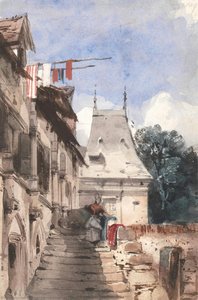
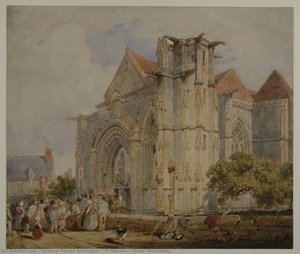
The 1818 move to Paris marked a pivotal moment in Bonington’s development. He enrolled at the École des Beaux-Arts, studying under Baron Antoine-Jean Gros, a prominent figure in the Neoclassical tradition. However, it was outside the formal curriculum that Bonington truly flourished. A burgeoning friendship with Eugène Delacroix proved particularly influential; their shared studio space fostered an exchange of ideas and techniques that would reverberate through both artists’ work. Bonington didn't simply absorb Gros’s academic rigor; he synthesized it with his inherent English sensibility, creating a unique style characterized by a remarkable lightness of touch and a keen eye for color. He diligently copied Old Master landscapes in the Louvre, honing his skills while simultaneously developing an increasingly personal approach to depicting nature. This period saw him experimenting with lithography, illustrating Baron Taylor’s *Voyages pittoresques dans l'ancienne France* and creating architectural series that showcased his growing mastery of detail and composition.
Capturing Light & Atmosphere: Bonington’s Landscape Innovations
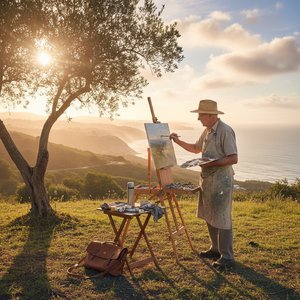
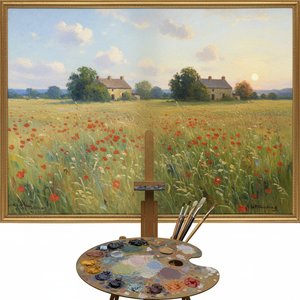
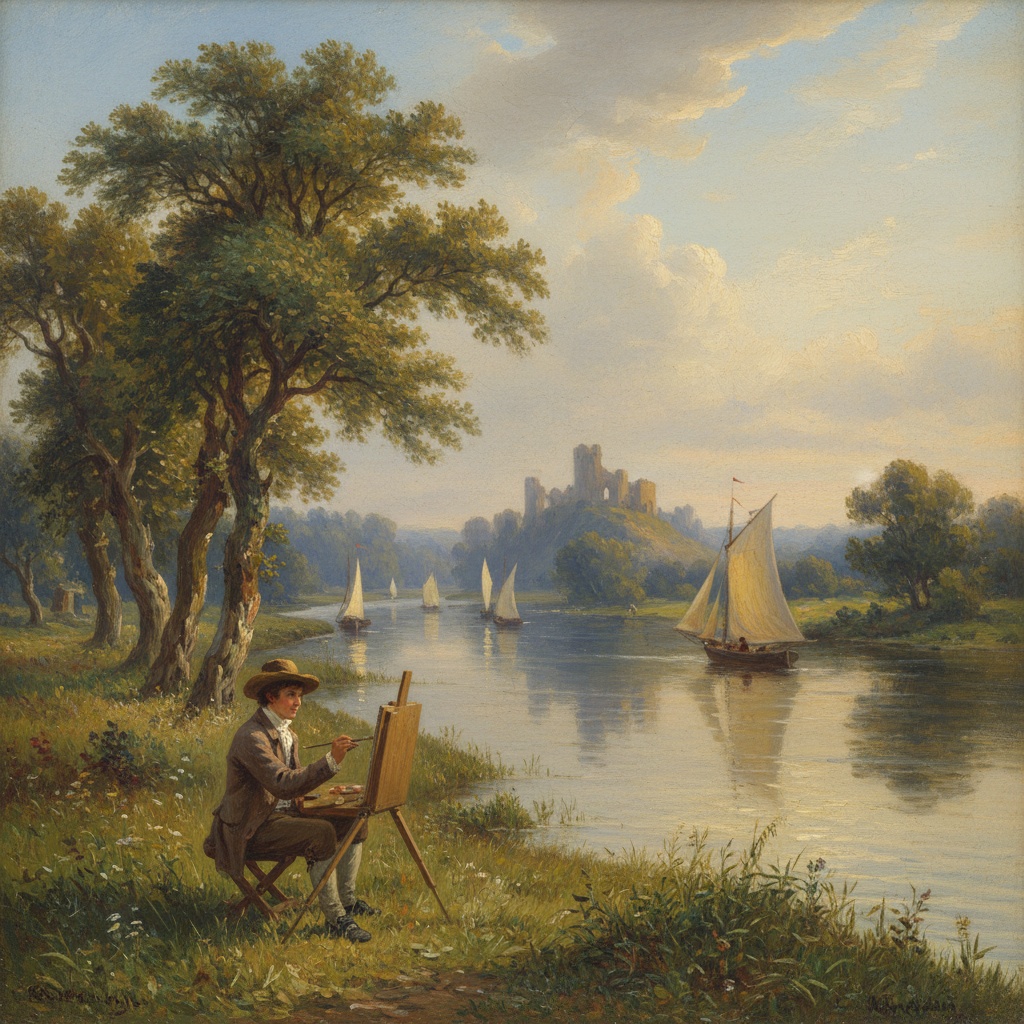
En plein air (pronounced [ɑ̃ plɛ.n‿ɛʁ]; French for 'outdoors'), or plein-air painting, is the act of painting outdoors. This method contrasts with studio painting or academic rules that might create a predetermined look. The theory of 'En plein air' ...
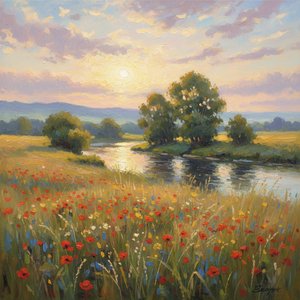
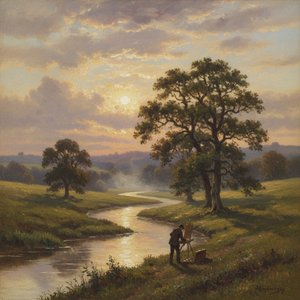
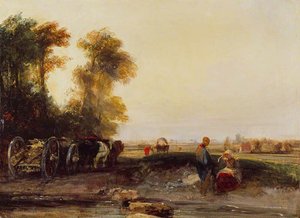
Bonington’s landscapes are defined by an almost ethereal quality, a luminous rendering of light and atmosphere that set him apart from his contemporaries. He eschewed the dramatic narratives often found in Romantic painting, instead focusing on capturing the subtle nuances of coastal scenes – the play of sunlight on water, the shifting mists over fields, the delicate hues of twilight. His low horizons and expansive skies weren’t merely stylistic choices; they were a deliberate attempt to convey the vastness and emotional power of nature. He possessed an extraordinary ability to translate fleeting impressions onto canvas, creating works that felt both immediate and timeless. This innovative approach wasn't simply about technical skill; it was about capturing a *feeling*, an experience of being present in the landscape. His 1824 success at the Paris Salon – sharing a gold medal with Constable and Copley Fielding – signaled the recognition of this groundbreaking style, though his contribution remained somewhat overshadowed by the established reputations of his peers.
Historical Paintings and Genre Scenes: Beyond the Pastoral
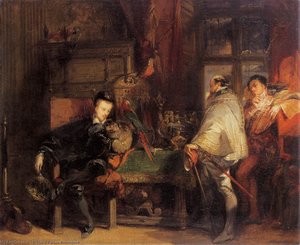
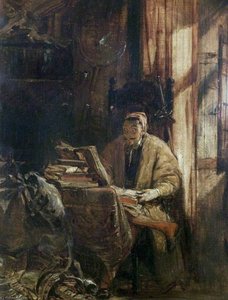 Don Quixote in His Study
Discover Richard Parkes Bonington’s ‘Don Quixote in His Study’ (1826). A realistic oil painting of an elderly woman, rich in detail & dramatic chiaroscuro lighting. Explore Romanticism's quiet introspection.
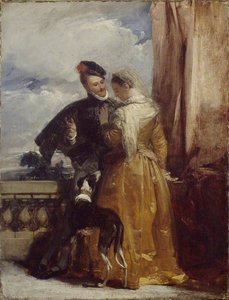
While Bonington is best known for his landscapes, he also demonstrated considerable talent in historical and genre painting. Works like “Don Quixote in His Study” (1826) reveal a meticulous attention to detail and a sophisticated understanding of chiaroscuro lighting. These paintings weren’t simply exercises in academic skill; they offered glimpses into everyday life, imbued with a quiet introspection that resonated with the Romantic sensibility. “Parlerre d'eau à Versailles” (1826), for example, captures Parisian park life with a delicate realism, hinting at the grandeur of Versailles while focusing on the intimate details of human interaction. These genre scenes showcase Bonington’s versatility and his ability to apply his distinctive style to a variety of subjects. He wasn’t confined by convention; he approached each subject with a fresh perspective, infusing it with his signature lightness of touch and atmospheric sensitivity.
A Lasting Legacy: Influence on Delacroix and the Barbizon School
Richard Parkes Bonington's career was tragically cut short by tuberculosis in 1828, at the age of just twenty-five. Yet, despite his brief working life, his impact on the course of 19th-century art was profound. Eugène Delacroix famously described his work as “a type of diamond which flatters and ravishes the eye,” recognizing its unique brilliance and sureness of touch. More significantly, Bonington’s approach to landscape painting deeply influenced the Barbizon School, a group of French artists who championed realism and direct observation of nature. Jean-Baptiste-Camille Corot, in particular, credited Bonington with being the first truly naturalistic landscape painter in France, acknowledging his subtle handling of color and atmosphere as a pivotal moment in the development of modern painting. His emphasis on capturing light and atmosphere paved the way for Impressionism, solidifying his position as a key precursor to this revolutionary movement.
Rediscovering Bonington: Yale's Treasures and Modern Appreciation
For many years, Bonington remained relatively unknown outside of connoisseur circles. However, recent scholarship and exhibitions have brought renewed attention to his remarkable achievements. The Yale Center for British Art holds the largest collection of Bonington’s paintings in North America, thanks to the discerning eye of Paul Mellon, who recognized his exceptional talent. These works offer a unique opportunity to appreciate the full range of his artistic vision – from luminous coastal scenes to intimate genre studies and ambitious historical compositions. Today, Richard Parkes Bonington is increasingly celebrated as a pivotal figure bridging British Romanticism and French plein air painting, a master of light and atmosphere whose legacy continues to inspire artists and captivate audiences. ArtsDot.com offers high-quality reproductions of Bonington’s masterpieces, allowing you to experience the beauty and brilliance of his work firsthand. Explore our collection today and discover the enduring appeal of this extraordinary artist.