Early Life & Artistic Foundations: From Glasgow School to Barbizon Influence
 Wikipedia: Alfred East
Sir Alfred Edward East (15 December 1844 – 28 September 1913) was an English painter. == Life == East was born in Kettering in Northamptonshire and studied at the Glasgow School of Art. His romantic landscapes show the influence of the Barbizon sch...
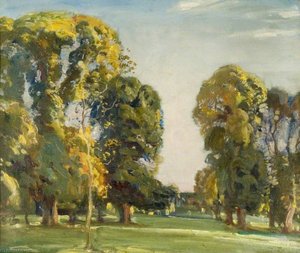
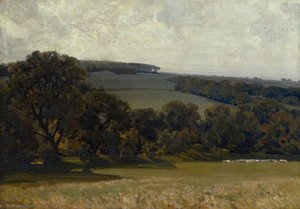
Sir Alfred Edward East (15 December 1844 – 28 September 1913) emerged from the vibrant artistic milieu of Victorian Britain, a period deeply enamored with both meticulous realism and burgeoning romantic ideals. His journey began at the Glasgow School of Art, where he received foundational training that would later be subtly yet powerfully overlaid by the allure of continental European painting. While initially steeped in the traditions of British landscape—a genre already rich with masters like Constable and Turner—East’s artistic trajectory took a decisive turn towards France and the Barbizon school. This wasn't merely an adoption of style; it was a philosophical shift, a yearning to capture not just *what* was seen, but *how* it felt to be immersed in nature. The Barbizon painters, with their emphasis on direct observation and unvarnished depictions of rural life, resonated deeply with East’s own developing sensibilities. They eschewed the grand historical narratives favored by the academies, instead focusing on the poetry of everyday scenes, a focus that would become central to his own work.
The Rise of 'En Plein Air': East's Embrace of Direct Observation
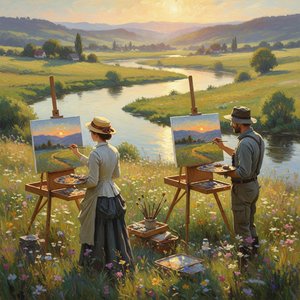
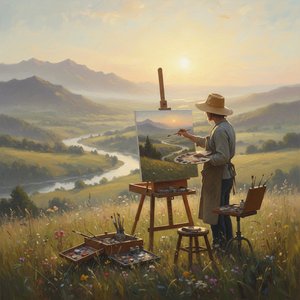
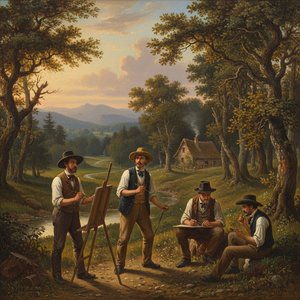
En plein air (pronounced [ɑ̃ plɛ.n‿ɛʁ]; French for 'outdoors'), or plein-air painting, is the act of painting outdoors. This method contrasts with studio painting or academic rules that might create a predetermined look. The theory of 'En plein air' ...
The mid-19th century witnessed a revolution in painting practice: the rise of en plein air, or outdoor painting. Before this, artists largely confined their work to studios, relying on sketches and memory to recreate scenes. The advent of portable paint tubes—a relatively recent invention—and the growing desire for authenticity fueled this movement. Alfred East was an early and enthusiastic adopter of this technique. He understood that capturing the fleeting nuances of light and atmosphere required being *present* in the landscape, directly confronting its ever-changing beauty. This wasn’t simply about technical accuracy; it was about conveying a sense of immediacy, of experiencing the scene alongside the viewer. His commitment to painting outdoors distinguished him from many contemporaries and laid the groundwork for his distinctive style. He didn't just paint landscapes; he painted the *experience* of being within them.
East’s Japanese Journey (1889): A Transformative Commission and its Impact
In 1889, a remarkable opportunity arose that would profoundly shape East’s artistic vision: a commission from Marcus Huish, managing director of the Fine Art Society, to spend six months in Japan documenting the country's landscape and people. This was an unusual undertaking for a British artist at the time, as Japan had only recently opened its doors to Westerners. The experience proved transformative. East wasn’t merely recording picturesque scenes; he was immersing himself in a completely different aesthetic sensibility—one characterized by simplicity, harmony, and a deep reverence for nature. Japanese art emphasized suggestion rather than explicit detail, focusing on capturing the essence of a scene through carefully chosen compositions and evocative brushwork. This influence is subtly visible in East’s later works, particularly his use of space and his ability to convey atmosphere with remarkable economy. The exhibition of 104 paintings from this tour was a spectacular success, introducing Japanese aesthetics to a wider British audience and solidifying East's reputation.
Mastering Atmospheric Effects: Techniques for Painting Skies & Light
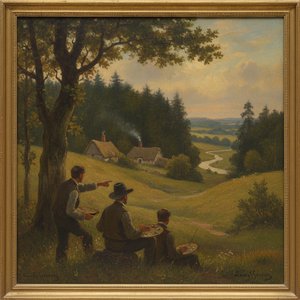
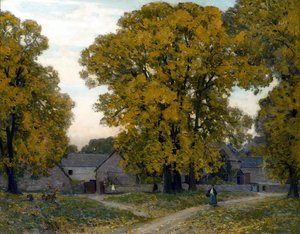
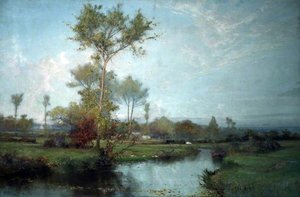 October Glow, near Yardley Woods
Discover "October Glow" by Alfred East (1889). A romantic landscape painting capturing autumn colors near Yardley Woods. Explore this evocative Barbizon-influenced artwork.
East’s landscapes are particularly celebrated for their evocative skies and masterful handling of light. He wasn’t interested in simply replicating the color of the sky; he sought to capture its mood, its weight, its very essence. In his own writings—most notably *The Art of Landscape Painting in Oil Colour* (1906)—he emphasized the importance of regular practice: “if you make a practice of painting a sky every morning…you will find at the end of six months that you know something of its variations.” He advocated for a direct, observational approach, urging artists to avoid flat skies and embrace the interplay of light and shadow. East’s technique involved layering colors—often using broken brushstrokes—to create a sense of depth and luminosity. He also understood the importance of allowing colors to mix optically, rather than on the palette, creating a more vibrant and naturalistic effect. His advice wasn't merely about technical skill; it was about cultivating an intimate understanding of nature’s rhythms.
Legacy and Recognition: The Royal Society, Knighthood, and the Kettering Gallery
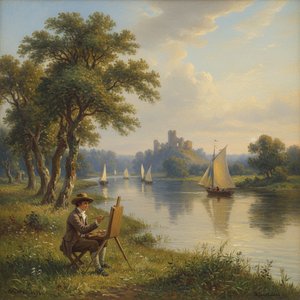
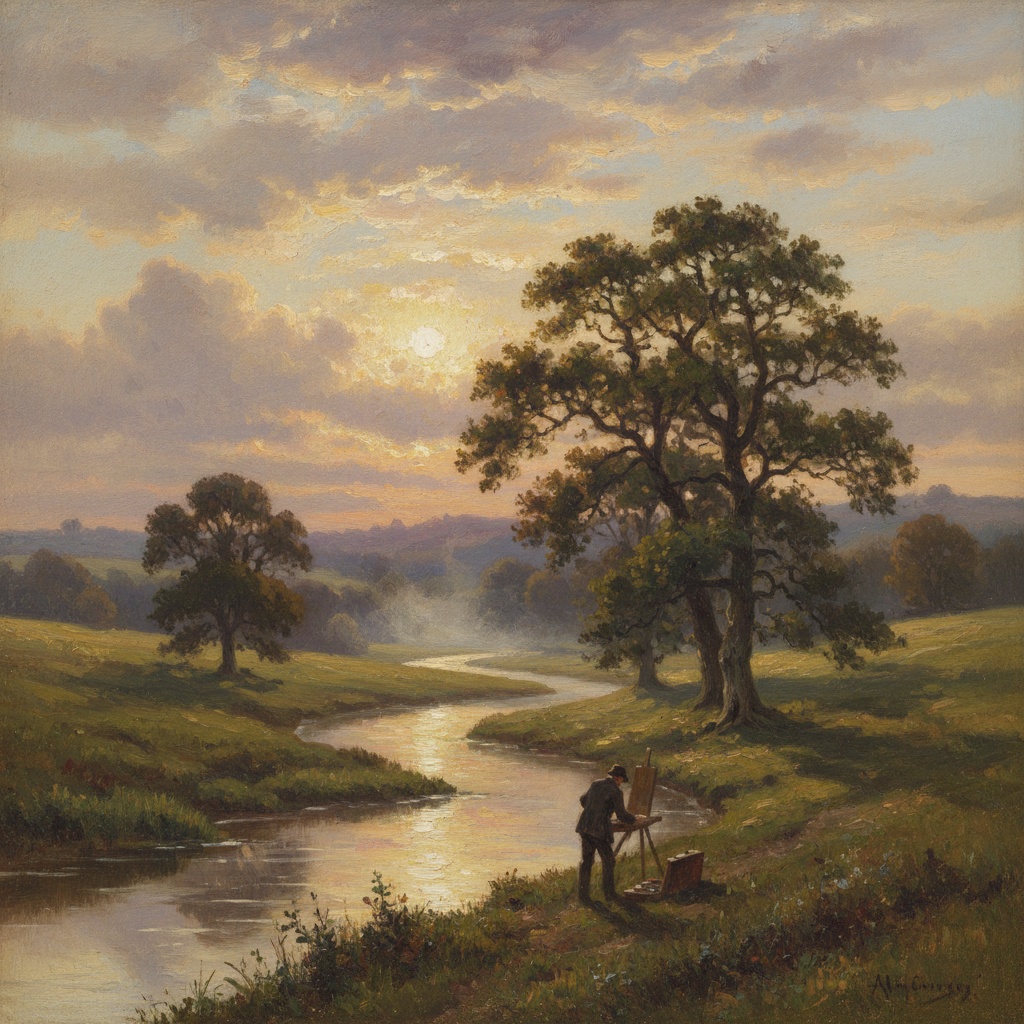
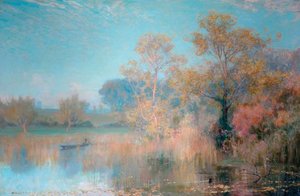 Lakeside Landscape
Admire 'Lakeside Landscape' by Alfred East – a romantic British countryside scene. Hand-painted reproduction of this serene 19th-century oil painting, perfect for art lovers.
Alfred East enjoyed considerable success during his lifetime, becoming a regular exhibitor at the Royal Academy from 1883. In 1906, he was elected president of the Royal Society of British Artists, a position he held until his death—a testament to his standing within the artistic community. He received a knighthood in 1910, further cementing his reputation as one of Britain’s leading landscape painters. However, perhaps his most enduring legacy is the Alfred East Art Gallery in Kettering, Northamptonshire, designed by John Alfred Gotch and opened shortly before his passing in 1913. The gallery was intended to showcase his own work and provide a space for local artists—a reflection of his commitment to fostering artistic talent within his community. His body lay in state there upon his death, attracting thousands of mourners, a powerful demonstration of the affection and respect he commanded.
Rediscovering East Today: Appreciation of a Lyrical Landscape Painter
While perhaps not as widely recognized today as some of his contemporaries, Alfred East’s work continues to resonate with those who appreciate subtle beauty and atmospheric depth. His paintings offer a glimpse into a bygone era—a time when artists sought to capture the poetry of nature through direct observation and heartfelt expression. Works like “Lakeside Landscape” and “October Glow, near Yardley Woods” exemplify his lyrical style, showcasing his ability to evoke mood and atmosphere with remarkable sensitivity. East’s influence can be seen in the work of later landscape painters who embraced en plein air techniques and sought to capture the fleeting beauty of the natural world. Today, ArtsDot offers high-quality reproductions of East's masterpieces, allowing art lovers to experience the tranquility and beauty of his landscapes firsthand. His paintings are a reminder that true artistry lies not just in technical skill, but in the ability to connect with nature on a deeply emotional level.