The Dawn of Landscape: Early Representations & Romantic Ideals
 Richard Parkes Bonington: A Brief but Brilliant Career – Romantic Landscapes & the Dawn of Plein Air Painting
Explore the short but impactful career of Richard Parkes Bonington, a pivotal figure bridging British Romanticism & French plein air painting. Discover his luminous landscapes and lasting influence on Delacroix & beyond.
Before the advent of portable paint tubes and a dedicated artistic philosophy, the landscape existed primarily as a backdrop – a scenic element within larger narratives of mythology, religion, or portraiture. Artists like Jacob van Ruysdael and Claude Lorrain masterfully depicted perspective and atmosphere, yet their scenes often felt constructed, idealized versions of nature rather than direct observations. The true shift began in the early 19th century with artists who dared to look at the natural world not as a setting, but as a subject worthy of independent study. This nascent fascination was spearheaded by British painters like John Constable and J.M.W. Turner, whose works signaled a move towards capturing the emotional resonance of specific places. Constable’s groundbreaking paintings, exhibited in Paris in 1824, particularly *View on the Stour* and *The Hay Wain*, weren't merely depictions of rural England; they were imbued with a sense of personal connection to the land, a feeling that resonated deeply with audiences accustomed to more formal artistic traditions. Turner, meanwhile, explored the sublime power of nature – its dramatic skies, turbulent seas, and overwhelming scale – foreshadowing the Romantic movement’s emphasis on individual experience and emotional intensity.
This early embrace of landscape wasn't simply about aesthetic preference; it reflected a broader cultural shift. The Industrial Revolution was transforming Europe, leading to urbanization and a growing sense of alienation from the natural world. Artists responded by elevating nature as a source of spiritual solace and national identity. The Romantic era championed subjectivity, imagination, and passion – qualities perfectly embodied in the untamed beauty of landscapes. This period laid the groundwork for a more direct engagement with the outdoors, setting the stage for the revolutionary practice that would soon follow.
En Plein Air: Capturing the Ephemeral Moment
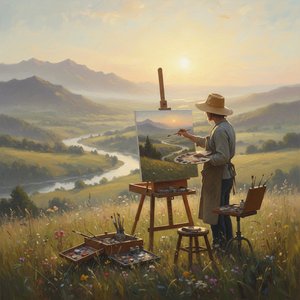
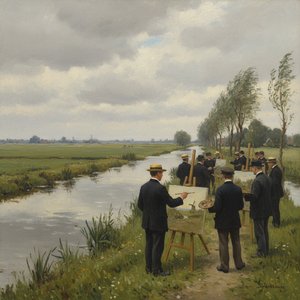
En plein air (pronounced [ɑ̃ plɛ.n‿ɛʁ]; French for 'outdoors'), or plein-air painting, is the act of painting outdoors. This method contrasts with studio painting or academic rules that might create a predetermined look. The theory of 'En plein air' ...
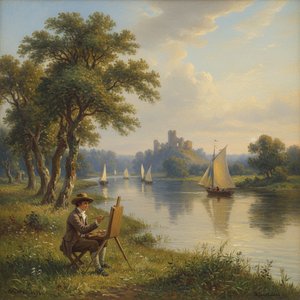
The phrase *en plein air* – French for “in the open air” – encapsulates far more than just painting outdoors. It represents a fundamental shift in artistic methodology, prioritizing direct observation and the fleeting effects of light and atmosphere. While sketches made from nature existed previously, it was Pierre-Henri de Valenciennes who first articulated the concept of *landscape portraiture* in his 1800 treatise, *Reflections and Advice to a Student on Painting, Particularly on Landscape*. He advocated for painting directly onto canvas *in situ*, within the landscape itself. This wasn’t merely about technical accuracy; it was about capturing the sensory experience – the changing colors of the sky, the play of light on water, the subtle nuances of weather. The invention of the collapsible tin paint tube in 1841 by Winsor & Newton proved pivotal, finally providing artists with a practical means to transport their palettes and work directly from nature.
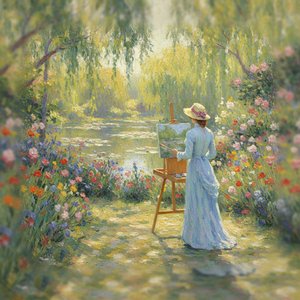
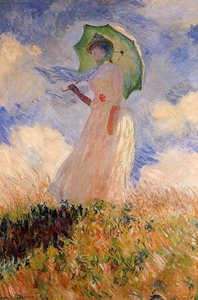
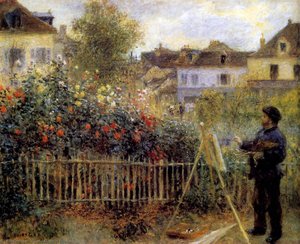
However, it was Claude Monet who truly championed *en plein air* painting as an artistic credo. Driven by a desire to depict the “impression” of light at specific moments in time, he famously carried multiple canvases outdoors, working on each one successively as the conditions changed. This dedication to capturing the ephemeral – the transient beauty of a sunrise, the shifting shadows of a summer afternoon – became synonymous with Impressionism and redefined the very nature of landscape painting.
Barbizon School & The Rise of Naturalism
Before Monet’s radical experiments, the Barbizon school in mid-19th century France played a crucial role in paving the way for *en plein air* practices. Artists like Théodore Rousseau and Charles-François Daubigny rejected the academic conventions of studio painting, choosing instead to work directly from nature in the Forest of Fontainebleau. Unlike their predecessors who often idealized landscapes, the Barbizon painters sought to depict scenes with a greater degree of realism, focusing on the everyday life of rural France and the inherent beauty of the natural world.
The Barbizon school’s influence extended beyond their direct observations of nature. They fostered a sense of artistic community, encouraging collaboration and shared exploration of landscape subjects. Their commitment to painting *en plein air*, even if they often finished works in the studio, laid the foundation for the Impressionists' more radical approach. They emphasized tonal values and atmospheric effects, creating paintings that felt grounded in reality – a departure from the highly polished, idealized landscapes of earlier generations.
Impressionism’s Embrace of Light and Atmosphere
 Capturing Fleeting Light: A Comprehensive Exploration of Impressionistic Landscape Painting
Explore the captivating world of Impressionistic landscape painting! Discover techniques, key artists like Monet & Renoir, and its lasting influence on art history. A comprehensive guide for enthusiasts.
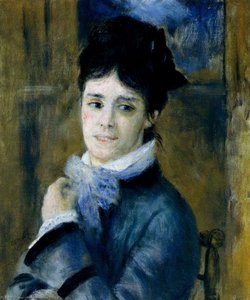
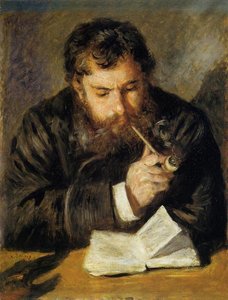
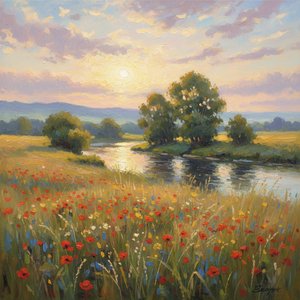
The Impressionist movement represents the culmination of the trends established by Constable, Turner, and the Barbizon school. Artists like Monet, Renoir, Camille Pissarro, and Alfred Sisley embraced *en plein air* painting with unparalleled fervor, rejecting the closed system of academic art in favor of capturing modern life and the subjective experience of light and color. Their paintings are characterized by loose brushwork, vibrant palettes, and a focus on fleeting moments – scenes bathed in sunlight, shimmering water reflections, and atmospheric haze.
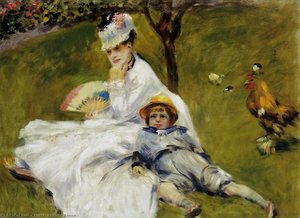
Monet’s series paintings, such as his depictions of haystacks, Rouen Cathedral, and water lilies, exemplify the Impressionist commitment to capturing the changing effects of light. By painting the same subject repeatedly under different conditions, he demonstrated that perception is subjective and constantly evolving. Renoir, too, embraced *en plein air* painting, focusing on scenes of leisure and social life, often depicting figures bathed in dappled sunlight. The Impressionists’ revolutionary techniques not only transformed landscape painting but also challenged traditional notions of artistic representation, paving the way for modern art.
Beyond Impressionism: Continuing Legacies in Outdoor Painting
The influence of *en plein air* painting extended far beyond the Impressionist movement. In Italy, the Macchiaioli group similarly embraced direct observation and outdoor work, connecting them to their French counterparts. Across Europe and America, artists continued to explore the possibilities of painting from nature, adapting the techniques and philosophies of Impressionism to suit their own artistic visions. American Impressionists like John Singer Sargent blended academic training with Impressionist principles, creating luminous landscapes that captured the beauty of the American countryside.
Even as art movements evolved throughout the 20th century, the legacy of *en plein air* painting persisted. Artists continued to seek out opportunities to work directly from nature, recognizing its unique ability to capture the emotional and sensory dimensions of a place. Today, *en plein air* painting remains a popular practice among both professional and amateur artists, a testament to its enduring appeal.
The Enduring Appeal: Why Artists Still Seek the Open Air
Why does *en plein air* painting continue to captivate artists today? The answer lies in its inherent challenges and rewards. Painting outdoors forces artists to confront the unpredictable nature of light, weather, and environment – a constant negotiation with reality that demands quick thinking, skillful observation, and a willingness to embrace imperfection. It’s a practice that fosters a deep connection to the land, encouraging artists to see beyond surface appearances and capture the essence of a place.
Moreover, *en plein air* painting offers a sense of immediacy and authenticity that is difficult to replicate in the studio. The visible brushstrokes, the vibrant colors, and the atmospheric effects all contribute to a feeling of being present in the landscape – a direct connection between artist, nature, and viewer. At ArtsDot.com, we celebrate this enduring legacy by offering high-quality reproductions of masterpieces created *en plein air*, allowing you to bring the beauty and emotional power of these iconic landscapes into your own home. Explore our collection today and discover the captivating world of outdoor painting – a testament to the transformative power of art and nature.