Preview
 Send
Send Share
Share
 Details

 Download
 Similars
 X-Ray
X-Ray Diaporama
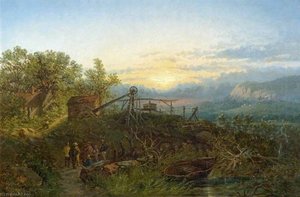
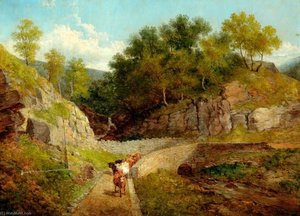
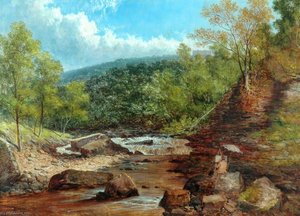
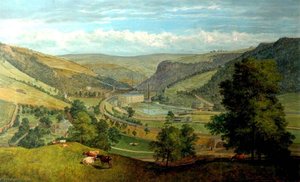
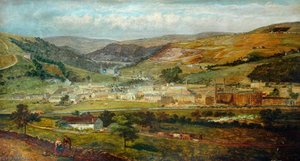
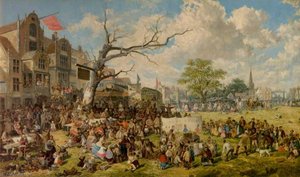
Burnley Valley from Crofts Stones
 1870
1870 65.0 x 106.0 cm
 Read More
Hand Made Oil Reproduction
Hand-painted oil on canvas in your size and frame, made to order by our artists. ( Buy Print Buy Image)




































Pick from our preset sizes that match the artwork's original proportions.

You may enter your own dimensions to fit a specific frame or space. If your selected size does not match the original image's proportions, we will either crop the artwork or extend the painting with additional hand-painted elements. A digital mockup will be sent for your approval before production begins.
Please note that the on-screen preview does not reflect the actual cropping or extension. Only the mockup will accurately show the final composition.
While custom sizes are available, we recommend selecting a dimension from the predefined list to preserve the original proportions.
After order, ArtsDot.com team will email client for instructions and provide a mockup preview
Worldwide Delivery () in 3/4 weeks instead of standard 5 weeks. (22 August). No compromise on quality.

Free Worldwide Express Shipping

High-Quality Linen Canvas

Full Shipping Insurance

Customs Tax Refund Guarantee

True Color Matching Guarantee

60-Day Return Policy (Defects Only)

100% Money-Back Guarantee

Bulk Discount Offer
 Glass option is only available in size under 110 CM

Burnley Valley from Crofts Stones
Reproduction Medium
Reproduction Size
-


Total Price
$ 263
Related Artworks










Artist Biography
A Venetian Visionary: The Life and Legacy of John Holland
Born in England around 1799, John Holland emerged as a luminous figure within the Victorian art world, a painter whose brush possessed the rare ability to bridge the gap between meticulous scientific observation and the sweeping emotional grandeur of Romanticism. While his biographical footprints may appear light in the vast annals of history, his artistic output reveals a man deeply attuned to the ephemeral rhythms of nature. Primarily celebrated as a watercolorist with an extraordinary gift for landscape, Holland’s work serves as a window into a bygone era, capturing the ethereal light of Venice and the rugged, pastoral charm of Portugal with a precision that remains breathtaking even centuries later.
The foundation of Holland’s distinctive style was laid during his formative years through a profound mentorship. He had the distinct privilege of apprenticing under John Ruskin, the preeminent Victorian critic and artist whose philosophy centered on a reverence for natural truth and the sublime. From Ruskin, Holland inherited more than just technical proficiency; he absorbed a way of seeing. This training instilled in him a disciplined approach to color mixing and a delicate touch in his brushwork, allowing him to render the subtle textures of botanical specimens and the shifting atmospheres of maritime scenes with equal mastery. This early exposure to Romantic ideals ensured that even his most detailed studies were imbued with a sense of poetic movement and emotional depth.
The Golden Years: Venice and Botanical Discovery
The zenith of Holland’s creative journey occurred during his transformative sojourn in Venice between 1825 and 1830. It was within the labyrinthine canals and sun-drenched piazzas of this floating city that his talent truly blossomed. During this period, he produced an astonishing collection of watercolors that are much more than mere topographical records; they are atmospheric meditations on light and water. His depictions of Venetian palaces and gardens utilize a luminous palette that captures the way sunlight dances upon the Adriatic, reflecting the influence of Ruskin’s belief in capturing the "truth" of the natural world.
Parallel to his fascination with grand landscapes, Holland harbored a fervent, almost scientific passion for botany. This dual interest led him to document various plant species encountered during his travels with an exquisite level of detail. His botanical watercolors stand as a testament to his patience and observational prowess, blending the precision of a naturalist with the soul of an artist. In these works, one finds a seamless integration of scientific accuracy and artistic grace, making him a significant figure in the tradition of 19th-century natural history illustration.
Mastery of Medium and Lasting Significance
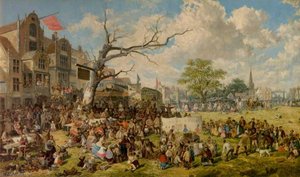
Though watercolor was his primary vehicle for capturing fleeting light, Holland also demonstrated remarkable versatility in oil on canvas. His larger-scale works often leaned toward a more robust, narrative style, as seen in pieces like Holiday Time (Fair Day), where he captured the vibrant social energy of English rural life. Whether depicting the tranquil, sunset-soaked seascapes of The Fishing Fleet off the West Coast or the rugged, romantic realism of the Isle of Man in Port e Chee, Braddan, his ability to convey a sense of place and time remained constant.
The historical significance of John Holland lies in his role as a bridge between eras. He carried the rigorous observational standards of the early 19th century into the more emotive, atmospheric sensibilities of the Victorian age. His legacy is preserved not only in museum collections but also in the enduring way his work continues to inspire those who seek beauty in the minute details of a leaf or the vast expanse of a horizon. To study Holland is to experience the world through the eyes of a man who found the infinite within the intimate.
john holland
1799 - 1879
Quick Facts
- Artistic Movement Or Style: Watercolor Landscapes
- Artists Who Influenced This Artist:
- George Stubbs
- James Turner
- Date Of Birth: 1799
- Date Of Death: 1879
- Full Name: John Holland
- Nationality: English
- Notable Artworks:
- Venetian Canal View
- Portuguese Coastline
- Place Of Birth: England