 Preview
 Send
Send Share
Share
 Details

 Download
 Similars
 X-Ray
X-Ray Diaporama
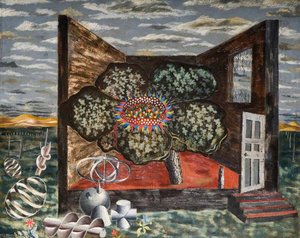
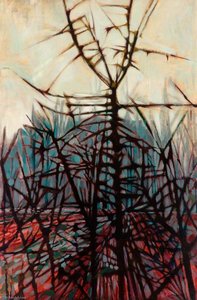
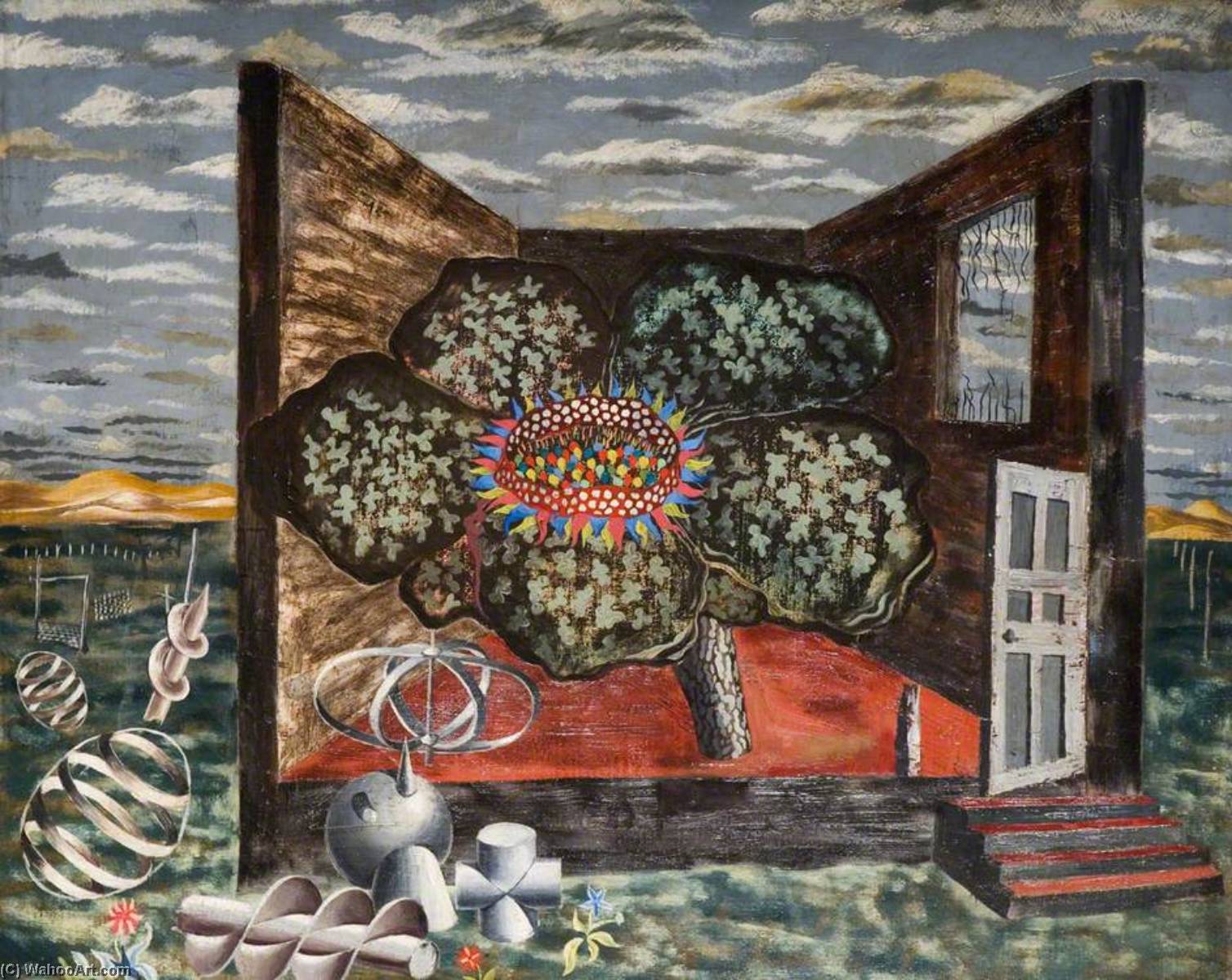
Atomic Flower
 Surrealism
 1940
1940 51.0 x 61.0 cm
 Wolverhampton Art Gallery
 Read More
Hand Made Oil Reproduction
Hand-painted oil on canvas in your size and frame, made to order by our artists. ( Buy Print Buy Image)




































Pick from our preset sizes that match the artwork's original proportions.

You may enter your own dimensions to fit a specific frame or space. If your selected size does not match the original image's proportions, we will either crop the artwork or extend the painting with additional hand-painted elements. A digital mockup will be sent for your approval before production begins.
Please note that the on-screen preview does not reflect the actual cropping or extension. Only the mockup will accurately show the final composition.
While custom sizes are available, we recommend selecting a dimension from the predefined list to preserve the original proportions.
After order, ArtsDot.com team will email client for instructions and provide a mockup preview
Worldwide Delivery () in 3/4 weeks instead of standard 5 weeks. (18 August). No compromise on quality.

Free Worldwide Express Shipping

High-Quality Linen Canvas

Full Shipping Insurance

Customs Tax Refund Guarantee

True Color Matching Guarantee

60-Day Return Policy (Defects Only)

100% Money-Back Guarantee

Bulk Discount Offer
 Glass option is only available in size under 110 CM

Atomic Flower
Reproduction Medium
Reproduction Size
-


Total Price
$ 263
Related Artworks
Artist Biography
A Visionary Lens: The Life and Legacy of John Humphrey Spender
Born into the vibrant, intellectual atmosphere of London in 1910, John Humphrey Spender was an artist whose very essence was shaped by a confluence of literary brilliance and visual curiosity. As the son of the journalist Harold Spender and Violet Schuster, his upbringing was steeped in the traditions of European art and literature. Though tragedy claimed his mother early in his childhood, the influence of his brothers—the renowned poet Stephen Spender and the explorer Michael Spender—provided a rich tapestry of intellectual stimulation. It was Michael who, on Humphrey’s tenth birthday, gifted him a sophisticated German camera, an act that would forever alter the trajectory of his life, planting the seeds for a career defined by a profound, observant eye.
Spender’s journey through the arts was never linear, reflecting the multifaceted nature of his creative spirit. After attending Gresham’s School, he briefly immersed himself in art history at Freiburg University, where he encountered the avant-garde movements of continental Europe. This exposure to European film and photography breathed a new dimension into his understanding of composition and light. While he initially pursued architecture at the Architectural Association, the rigid structures of design eventually gave way to the fluid, emotive possibilities of the visual arts. By the 1930s, Spender had established himself in London’s bustling Strand district, working alongside Bill Edmiston in a photography studio that served as both a professional launchpad and the site of a significant personal romance.
The Intersection of Social Realism and Humanism
Spender’s artistic output is most celebrated for its ability to bridge the gap between the commercial and the profound. As a photographer, he became a vital contributor to the Mass Observation movement, capturing the raw, unvarnated pulse of British life during the mid-20th century. His work, particularly in series such as 'Worktown Study', exemplifies the tenets of social realism, documenting the dignity of the working class and the quiet rhythms of everyday existence with a humanist touch. He possessed a rare ability to find the extraordinary within the ordinary, turning a street corner or a factory floor into a stage for human drama.
This mastery of observation extended seamlessly into his work as a painter and designer. His canvases often explored themes that mirrored his photographic sensibilities—still lifes, landscapes, and interiors that breathed with a quiet, contemplative energy. In works like 'Atomic Flower', one can witness a fascinating blend of Cubism and Symbolism, where vibrant hues and expressive lines create a dreamlike, surrealist atmosphere. Conversely, his oil paintings such as 'Stone Walls' demonstrate a different facet of his talent, utilizing warm tones and soft brushstrokes to evoke the serene, pastoral beauty of the British countryside.
A Lasting Impression on British Art
Throughout his long and prolific career, which spanned from the 1930s until his passing in 2005, Spender remained a pivotal figure within the artistic circles of his time, notably associated with the Euston Road School. His versatility allowed him to navigate the worlds of high-fashion advertising for publications like Harper’s Bazaar and the gritty, documentary-style photography of the post-war era without ever losing his unique artistic voice. He was a master of light, whether capturing it through the lens of a camera or applying it with a brush to a canvas.
The historical significance of John Humphrey Spender lies in his role as a visual chronicler of a transformative era. His body of work serves as a poignant archive of post-war Britain, preserving the textures, emotions, and social shifts of a nation in flux. To look upon a Spender piece is to engage with a legacy of deep empathy and meticulous observation, reminding us that the most profound truths are often found in the simplest moments of life.
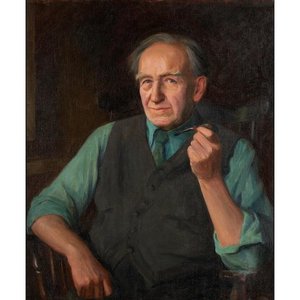
John Humphrey Spender
1910 - 2005 , United Kingdom
Quick Facts
- Artistic Movement Or Style: Humanist landscapes; Social realism
- Artists Or Movements Influenced By This Artist: ['Mass Observation']
- Artists Who Influenced This Artist: ['Christopher Tunnard']
- Date Of Birth: 1910-04-10
- Date Of Death: 2005-03-11
- Full Name: John Humphrey Spender
- Nationality: British
- Notable Artworks:
- Stone Walls
- Atomic Flower
- Winter Blackthorn
- Place Of Birth: London, United Kingdom
Related Articles

John Singer Sargent's 25 Masterpieces: Portraits & Beyond | ArtsDot
Explore 25 iconic John Singer Sargent paintings – from dazzling portraits to Impressionist landscapes. Discover the stories behind Madame X, El Jaleo & more! Find museum-quality art reproductions and elevate your home decor with ArtsDot.com.

John Constable's Masterpieces: Explore 25 Iconic Landscapes for Your Home
Journey through John Constable's 25 most celebrated landscapes. Explore Romanticism, Dedham Vale & his masterful use of light in iconic paintings like 'Hay Wain'. Find museum-quality art reproductions and elevate your home decor on ArtsDot.com.
Blossoming Symbolism: A Historical Journey Through Flowers in Western Painting
Explore the rich history of flower symbolism in Western painting! Discover how artists from the Renaissance to Modernism used blossoms to convey meaning, emotion & beauty. Learn about iconic artworks and movements.

Surrealism's Visionaries: 10 Masterpieces for Your Home | ArtsDot
Journey into the dreamlike world of Surrealism! Explore 10 masterpieces by Dali, Magritte & Miró that redefined art. Discover their stories & find museum-quality reproductions to elevate your home decor on ArtsDot.com.
Surrealist Painting Masterpieces: 10 Artworks That Redefined Reality | ArtsDot
Journey into the dreamlike world of Surrealism! Explore 10 masterpieces by Dali, Magritte & Miró that redefined art. Discover their stories & find museum-quality reproductions to elevate your home decor on ArtsDot.com.