 Preview
 Send
Send Share
Share
 Details

 Download
 Similars
 X-Ray
X-Ray Diaporama
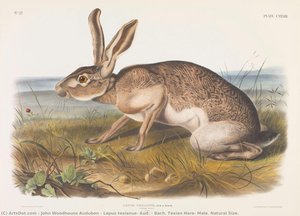
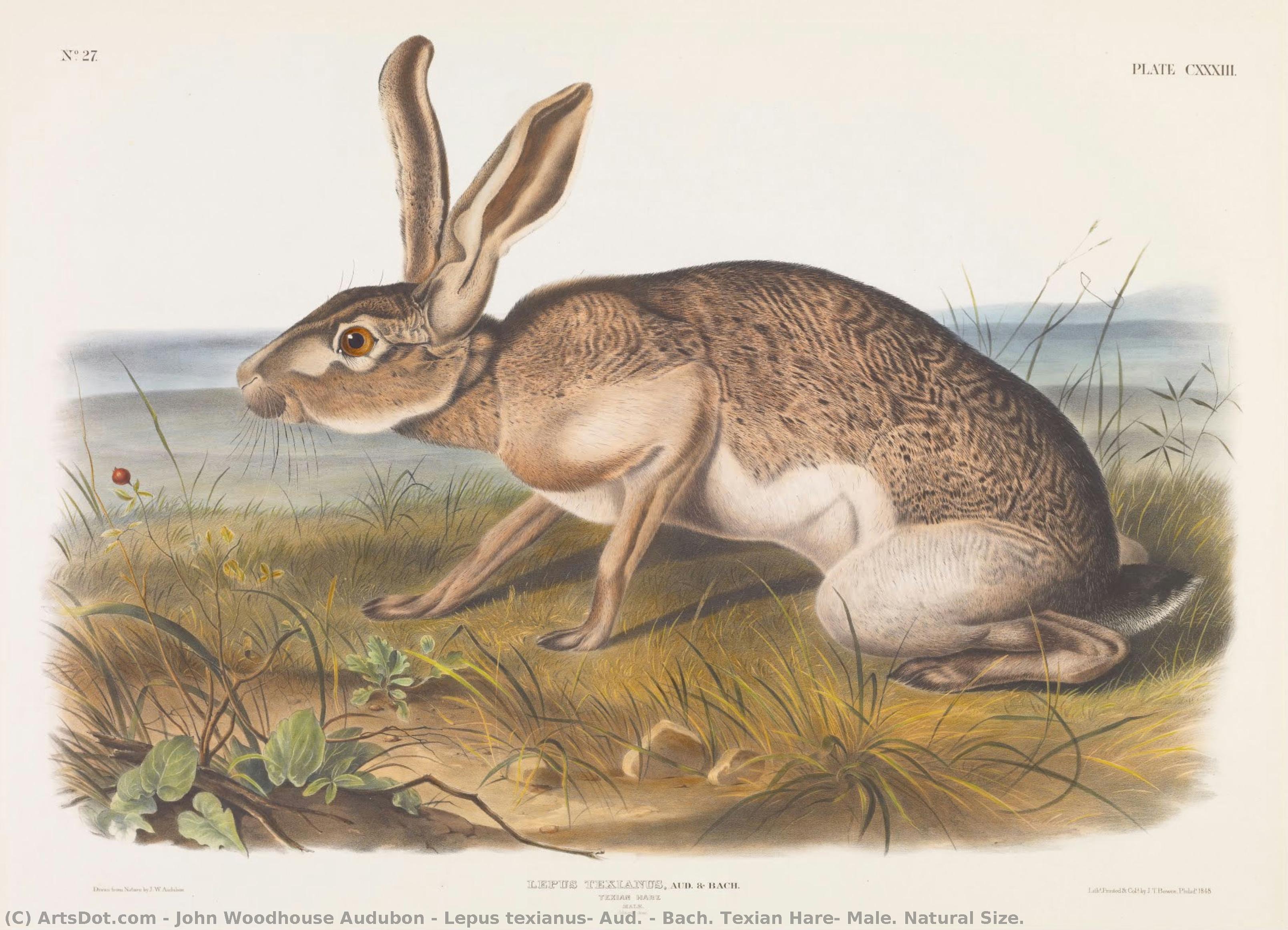
Lepus texianus, Aud. & Bach. Texian Hare, Male. Natural Size.
 Watercolor
- WallArt
- Naturalism
 1848
1848- 19th Century
 70.0 x 55.0 cm
 Amon Carter Museum of American Art
 Read More
Hand Made Oil Reproduction
Hand-painted oil on canvas in your size and frame, made to order by our artists. ( Buy Print Buy Image)




P118B $10

P118H $10

P118W $10

P438Z $10

P508JH $12

P508YH $12

P805H $10

P805Z $10

P919BZ $10

P919G $10

P919XJ $10

P959ZH $10

P968JZ $12

W106C $8

W218G $10

W218JH $8

W218Y $10

W307PJ $10

W316G $10

W316PJ $8

W316Y $10

W398PJ $8

W4111J $10

W500HY $15

W500JH $15

W692G $12

W849H $8

W940BG $15

W953PJ $8




Pick from our preset sizes that match the artwork's original proportions.

You may enter your own dimensions to fit a specific frame or space. If your selected size does not match the original image's proportions, we will either crop the artwork or extend the painting with additional hand-painted elements. A digital mockup will be sent for your approval before production begins.
Please note that the on-screen preview does not reflect the actual cropping or extension. Only the mockup will accurately show the final composition.
While custom sizes are available, we recommend selecting a dimension from the predefined list to preserve the original proportions.
After order, ArtsDot.com team will email client for instructions and provide a mockup preview
Worldwide Delivery () in 3/4 weeks instead of standard 5 weeks. (16 August). No compromise on quality.

Free Worldwide Express Shipping

High-Quality Linen Canvas

Full Shipping Insurance

Customs Tax Refund Guarantee

True Color Matching Guarantee

60-Day Return Policy (Defects Only)

100% Money-Back Guarantee

Bulk Discount Offer
 Glass option is only available in size under 110 CM

Lepus texianus, Aud. & Bach. Texian Hare, Male. Natural Size.
Reproduction Medium
Reproduction Size
-


Total Price
$ 263
Artwork Description
A Moment Frozen in Time: The Texian Hare
In the quiet, sun-dappled landscapes of the mid-19th century American frontier, there exists a profound stillness captured within the brushstrokes of John Woodhouse Audubon. His masterpiece, Lepus texianus, Aud. & Bach. Texian Hare, Male, is far more than a mere biological study; it is an intimate encounter with the soul of the wild. The painting presents a male Texian hare, rendered in natural size, caught in a moment of quiet vulnerability as it bows its head to forage amidst the lush grasses. There is a rhythmic peace to the composition, where the soft textures of the rabbit's fur meet the gentle, shimmering backdrop of distant water, creating a sense of sanctuary that transcends the centuries.
To gaze upon this work is to step into the legacy of the Audubon lineage, where scientific precision meets the poetic beauty of the natural world. The artist employs a delicate technique that honors the tradition of ornithological and zoological illustration while elevating it to the realm of fine art. Every strand of fur and every blade of grass is treated with an observant eye, yet the execution remains fluid and atmospheric. This balance of detail and atmosphere allows the viewer to feel the humidity of the air and the soft rustle of the meadow, making the piece an immersive experience for any observer.
The Artistry of Naturalism and Legacy
John Woodhouse Audubon, working in the shadow of his legendary father, John James Audubon, brought a unique sensitivity to the depiction of North American fauna. While his father often focused on the dramatic interplay between predator and prey, Woodhouse possessed a singular talent for capturing the quiet, unobserved moments of life. In this work, the technique serves a higher purpose: to document the dignity of the subject. The use of light is particularly masterful, casting soft shadows that give the hare a three-dimensional presence, making it appear almost as if it might leap from the canvas and into the room.
For the discerning collector or interior designer, this painting offers a sophisticated bridge between classical naturalism and contemporary elegance. Its palette—composed of earthy tones, muted greens, and soft blues—provides a calming influence that integrates seamlessly into diverse decor styles, from traditional manor houses to modern, organic-inspired interiors. It is a piece that does not demand attention through loud colors, but rather commands respect through its quiet strength and historical depth.
A Timeless Addition to the Curated Home
Owning a high-quality reproduction of such a significant work allows one to bring a fragment of American history into a personal space. This painting serves as a window into 1848, a period of exploration and profound connection to the land. It evokes themes of resilience, peace, and the enduring beauty of the natural cycle. Whether placed in a study, a library, or a serene living area, the Texian Hare acts as a focal point of contemplation, inviting guests to pause and appreciate the intricate wonders of the earth.
Choosing this piece is an investment in an aesthetic that celebrates the intersection of science and art. It is an ideal selection for those who seek to surround themselves with works that possess both intellectual substance and emotional resonance. Through the meticulous recreation of Audubon's original vision, this artwork continues to breathe life into modern spaces, reminding us of our eternal connection to the wild landscapes that define our world.
Related Artworks


Artist Biography
A Legacy Painted in Detail
John Woodhouse Audubon (1812 – 1862) stands as a testament to artistic dedication and scientific curiosity—a rare confluence that yielded extraordinary results. As the son of the celebrated ornithologist John James Audubon, he inherited an unwavering passion for observing and documenting the natural world, translating this fascination into breathtaking watercolor paintings that continue to captel audiences today. His contribution to the field of ornithology is undeniable, yet equally remarkable is his ability to capture the essence of wildlife with unparalleled artistic precision, creating a visual language where scientific accuracy meets the soul of the American wilderness.
Born in Kentucky, Audubon’s formative years were steeped in the traditions of American frontier life. Growing up alongside his father, he absorbed firsthand knowledge of animal behavior and habitat—a foundation that would profoundly shape his artistic vision. The influence of Romanticism permeated his aesthetic sensibilities, fostering a deep reverence for nature and emphasizing emotional expression alongside factual accuracy. This delicate balance became a hallmark of his distinctive style, allowing him to portray not just the anatomy of a creature, but its very spirit within the landscape.
The Birds of America Revisited
Audubon’s artistic career gained significant momentum with the monumental undertaking of The Birds of America, Second Edition, which commenced in 1839 and concluded in 1843. As his father's son and collaborator, he oversaw this ambitious endeavor, ensuring that the meticulous detail characteristic of the original work was faithfully reproduced and expanded upon. The resulting illustrations—a stunning array of watercolor paintings depicting birds in their natural environments—became iconic symbols of American natural history.
Through this work, John Woodhouse Audubon achieved several milestones:
- Mastery of Watercolor: He refined the use of transparent washes to create depth, texture, and the lifelike sheen of feathers.
- Scientific Documentation: He bridged the gap between fine art and biological study, providing essential visual records for naturalists.
- Expansion of the Audubon Canon: His contributions ensured the longevity of his father's legacy by bringing a fresh, refined perspective to the second edition of their most famous project.
Artistic Significance and Historical Impact
The significance of John Woodhouse Audubon extends far beyond the mere reproduction of existing works. He possessed a unique ability to interpret the wildness of the American frontier through a lens of sophisticated artistry. His work serves as a vital historical window into an era of North American ecology that has since been irrevocably changed. By documenting species with such intimacy, he helped foster a national identity rooted in the appreciation of the continent's diverse and magnificent fauna.
His legacy remains etched in the annals of American art history, representing a period where the explorer's eye and the artist's hand were inseparable. To look upon an Audubon painting is to witness a moment of profound connection between man and nature, a connection that continues to inspire collectors and historians alike. His life, though cut short in 1862, left behind a vibrant, enduring record of a world captured in exquisite, permanent detail.
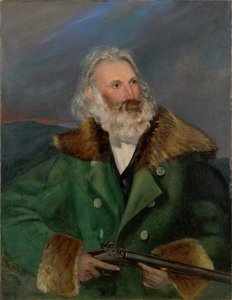
John Woodhouse Audubon
1812 - 1862 , United States of America
Quick Facts
- Artistic Movement Or Style: Wildlife Painting
- Artists Or Movements Influenced By This Artist: ['Romanticism']
- Artists Who Influenced This Artist: ['John James Audubon']
- Date Of Birth: November 30, 1812
- Date Of Death: 1862
- Full Name: John Woodhouse Audubon
- Nationality: American
- Notable Artworks:
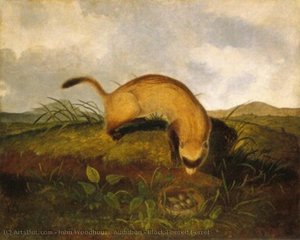
- Black-Footed Ferret
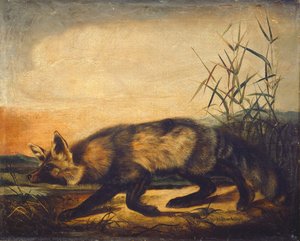
- Long-Tailed Red Fox
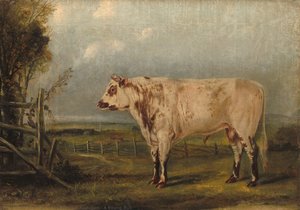
- A Young Bull
- Place Of Birth: Kentucky, United States
Related Articles

John Singer Sargent's 25 Masterpieces: Portraits & Beyond | ArtsDot
Explore 25 iconic John Singer Sargent paintings – from dazzling portraits to Impressionist landscapes. Discover the stories behind Madame X, El Jaleo & more! Find museum-quality art reproductions and elevate your home decor with ArtsDot.com.

John Constable's Masterpieces: Explore 25 Iconic Landscapes for Your Home
Journey through John Constable's 25 most celebrated landscapes. Explore Romanticism, Dedham Vale & his masterful use of light in iconic paintings like 'Hay Wain'. Find museum-quality art reproductions and elevate your home decor on ArtsDot.com.

Keith Haring: Subverting Pop Culture – An Examination of Social Commentary & Artistic Innovation
Explore the revolutionary art of Keith Haring – a powerful blend of pop aesthetics & social activism. Discover his iconic works, influences, and collecting insights. Expert analysis for discerning collectors.
Gwen John: Intimacy, Modernity & the Quiet Power of Welsh Portraiture
Explore the captivating world of Gwen John, a pioneering Welsh artist renowned for her intimate portraits & subtle style. Discover her life, legacy, and how to bring her timeless beauty into your home with ArtsDot.

John Frederick Lewis: Orientalism, Detail & Genre Painting in 19th-Century British Art
Explore the captivating Orientalist paintings of John Frederick Lewis! Discover his mastery of detail, genre scenes & influence on 19th-century British art. Learn about his life, techniques & legacy at ArtsDot.