 Preview
 Send
Send Share
Share
 Details

 Download
 Similars
 X-Ray
X-Ray Diaporama
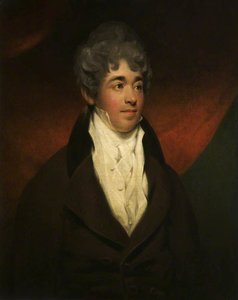
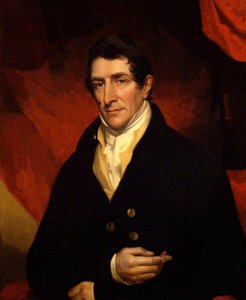
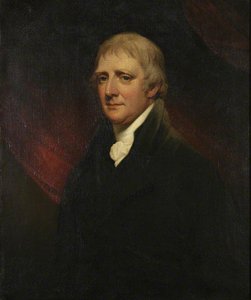
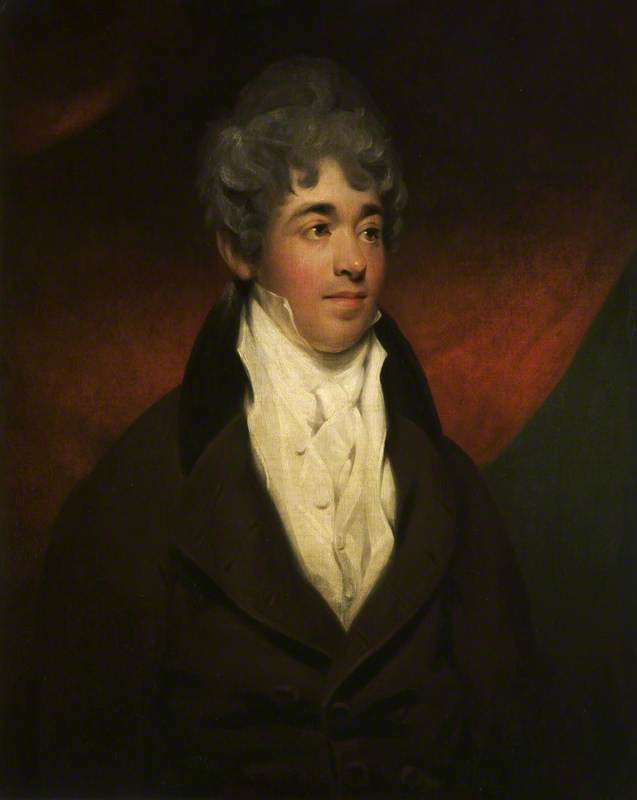
The Honourable William Booth Grey (1773–1852)
 Neoclassicism
 1801
1801 74.0 x 61.0 cm
 National Trust
 Read More
Hand Made Oil Reproduction
Hand-painted oil on canvas in your size and frame, made to order by our artists. ( Buy Print Buy Image)




































Pick from our preset sizes that match the artwork's original proportions.

You may enter your own dimensions to fit a specific frame or space. If your selected size does not match the original image's proportions, we will either crop the artwork or extend the painting with additional hand-painted elements. A digital mockup will be sent for your approval before production begins.
Please note that the on-screen preview does not reflect the actual cropping or extension. Only the mockup will accurately show the final composition.
While custom sizes are available, we recommend selecting a dimension from the predefined list to preserve the original proportions.
After order, ArtsDot.com team will email client for instructions and provide a mockup preview
Worldwide Delivery () in 3/4 weeks instead of standard 5 weeks. (20 August). No compromise on quality.

Free Worldwide Express Shipping

High-Quality Linen Canvas

Full Shipping Insurance

Customs Tax Refund Guarantee

True Color Matching Guarantee

60-Day Return Policy (Defects Only)

100% Money-Back Guarantee

Bulk Discount Offer
 Glass option is only available in size under 110 CM

The Honourable William Booth Grey (1773–1852)
Reproduction Medium
Reproduction Size
-


Total Price
$ 263
Related Artworks
Artist Biography
John James Halls: A Victorian Painter of Myth and Majesty
John James Halls (1776–1853) stands as a prominent figure in Victorian English art, celebrated primarily for his opulent portraits and ambitious mythological landscapes that captured the spirit of the era. Born in Colchester, Essex, Halls’ artistic journey began under the influence of his father, Jean-Jacques Rousseau—a philosopher whose ideas profoundly shaped Halls' worldview – and he was named after the famed writer by his parents. His familial connections extended to Dr. John Garnett, Dean of Exeter, adding another layer of aristocratic pedigree to his formative years. Halls’ early artistic endeavors gained recognition with a landscape exhibited at the Royal Academy in 1791, marking him as an emerging talent within London's burgeoning art scene. Recognizing his potential, he swiftly established himself as a professional artist around 1797, immersing himself in the vibrant cultural milieu of the capital city. Notably, Halls accompanied Henry Fuseli and others to Paris in 1802, embarking on a scholarly pilgrimage to study the vast collections amassed by Napoleon Bonaparte—a formative experience that undoubtedly broadened his artistic horizons. His prolific output during this period included striking depictions of mythological narratives like ‘Fingal Assailing the Spirit of Loda’ (1798), ‘Zephyr and Aurora’ (1799), and ‘Creon Finding Hémon and Antigone’ (1800). These canvases showcased Halls' masterful command of composition and dramatic lighting, reflecting the Romantic aesthetic prevalent at the time. However, Halls’ artistic ambitions extended beyond mythological subjects; he tackled monumental biblical scenes such as ‘Lot’s Wife’ (1802), ‘Hero and Leander’ (1808), and ‘Danae’ (1811)—works that demonstrated his ability to convey complex emotions and narratives with meticulous detail. Moving into portraiture, Halls achieved considerable success, securing commissions from influential figures like Charles Kean—resulting in a celebrated depiction of Richard III engraved by Samuel Freeman in 1807—and Lord Denman—whose portrait was exhibited at the Royal Academy in 1819 and subsequently acquired by the National Portrait Gallery. His artistic prowess culminated in a monumental stained-glass window for Lichfield Cathedral, commissioned through his friend Henry Salt—a testament to Halls’ enduring reputation as a respected artist and craftsman. Furthermore, he undertook scholarly endeavors alongside his artistic pursuits, editing biographies of Nathaniel Pearce and Henry Salt, cementing his legacy as both an artist and intellectual. Hall's contribution to Victorian art is particularly noteworthy for his engagement with engraving, collaborating extensively with Samuel Freeman to produce stunning mezzotint prints of iconic subjects like Kean’s Richard III and Lord Denman—a technique that allowed him to disseminate his artistic vision beyond the canvas itself. His work continues to resonate today, embodying the grandeur and emotional depth characteristic of Victorian art and securing his place as a significant artist within British cultural history.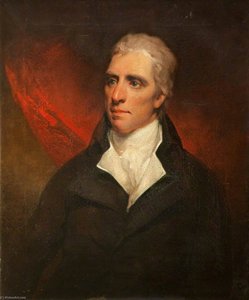
john james halls
1776 - 1853
Quick Facts
- Artistic Movement Or Style: Romanticism
- Artists Or Movements Influenced By This Artist: ['Romanticism']
- Artists Who Influenced This Artist: ['Henry Fuseli']
- Date Of Death: 1853
- Full Name: John James Halls
- Nationality: English
- Notable Artworks:
- Lot's Wife
- Zephyr and Aurora
- Creon finding Hémon and Antigone
- Place Of Birth: Colchester, England
Related Articles
Whistler's Masterpieces: Explore 25 Iconic Paintings & Aesthetic Art for Your Home
Journey through 25 iconic James Abbott McNeill Whistler paintings! Explore his masterpieces of Aestheticism, from 'Nocturne in Black and Gold' to captivating portraits. Find museum-quality art reproductions & elevate your home decor with ArtsDot.com. Discover the full collection online.

John Singer Sargent's 25 Masterpieces: Portraits & Beyond | ArtsDot
Explore 25 iconic John Singer Sargent paintings – from dazzling portraits to Impressionist landscapes. Discover the stories behind Madame X, El Jaleo & more! Find museum-quality art reproductions and elevate your home decor with ArtsDot.com.

John Constable's Masterpieces: Explore 25 Iconic Landscapes for Your Home
Journey through John Constable's 25 most celebrated landscapes. Explore Romanticism, Dedham Vale & his masterful use of light in iconic paintings like 'Hay Wain'. Find museum-quality art reproductions and elevate your home decor on ArtsDot.com.

Sir Alfred Munnings' Masterpieces: 25 Paintings That Define Equine Art | ArtsDot
Explore 25 iconic Sir Alfred Munnings paintings! Discover the beauty of British Impressionism, equine art & rural England. Find museum-quality reproductions and elevate your home decor with ArtsDot. Explore the full collection online.
John Graham Gilbert: Rediscovering a Victorian Master of Narrative & Portraiture
Discover the captivating world of John Graham Gilbert, a Victorian master! Explore his portraits, genre scenes & illustrations. Learn about his influences, legacy & find high-quality reproductions at ArtsDot.