 Preview
 Send
Send Share
Share
 Details

 Download
 Similars
 X-Ray
X-Ray Diaporama
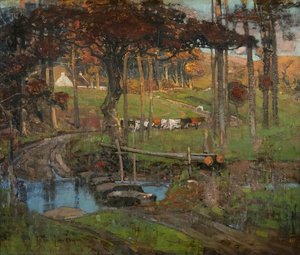
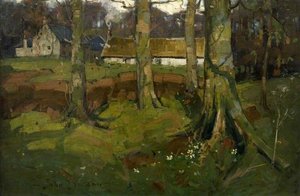
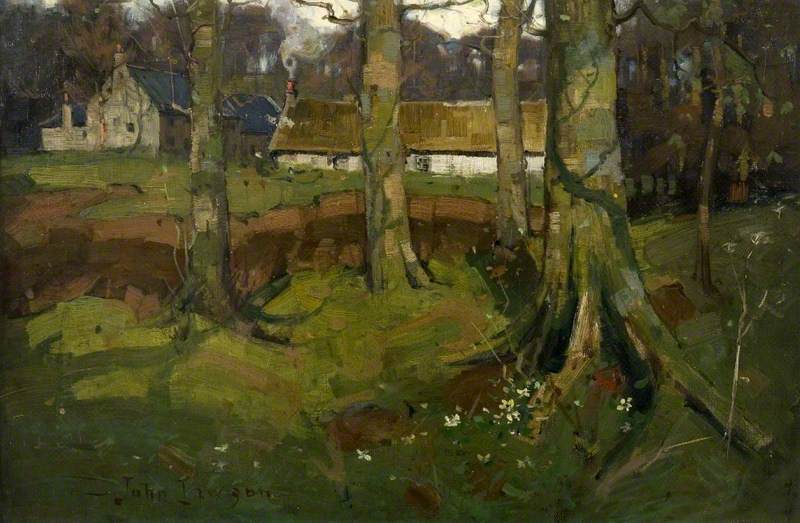
Landscape, Dunlop
 1909
1909 42.0 x 61.0 cm
 Read More
Hand Made Oil Reproduction
Hand-painted oil on canvas in your size and frame, made to order by our artists. ( Buy Print Buy Image)




































Pick from our preset sizes that match the artwork's original proportions.

You may enter your own dimensions to fit a specific frame or space. If your selected size does not match the original image's proportions, we will either crop the artwork or extend the painting with additional hand-painted elements. A digital mockup will be sent for your approval before production begins.
Please note that the on-screen preview does not reflect the actual cropping or extension. Only the mockup will accurately show the final composition.
While custom sizes are available, we recommend selecting a dimension from the predefined list to preserve the original proportions.
After order, ArtsDot.com team will email client for instructions and provide a mockup preview
Worldwide Delivery () in 3/4 weeks instead of standard 5 weeks. (21 August). No compromise on quality.

Free Worldwide Express Shipping

High-Quality Linen Canvas

Full Shipping Insurance

Customs Tax Refund Guarantee

True Color Matching Guarantee

60-Day Return Policy (Defects Only)

100% Money-Back Guarantee

Bulk Discount Offer
 Glass option is only available in size under 110 CM

Landscape, Dunlop
Reproduction Medium
Reproduction Size
-


Total Price
$ 263
Artwork Description
The Artist's Style
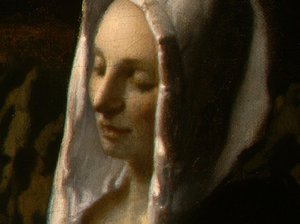
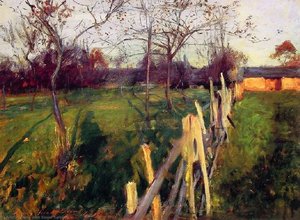
John Lawson's style is characterized by his use of soft colors and gentle brushstrokes, which evoke a sense of calmness and simplicity. The painting Landscape, Dunlop is no exception, with its muted tones and peaceful atmosphere. This style is reminiscent of other famous artists, such as Camille Pissarro, who also created beautiful landscapes that captured the essence of rural life. For example, Pissarro's painting Chaponval Landscape can be found on ArtsDot.com.Similar Works
Other artists, such as George Reid, have also created beautiful landscapes that showcase rural life. For instance, Reid's painting Milking Time can be found on ArtsDot.com. These paintings demonstrate the beauty of rural life and the importance of preserving these scenes for future generations.- Rural landscapes are an important part of art history, as they capture the essence of a bygone era.
- Oil on canvas is a popular medium for creating these types of paintings, as it allows for rich colors and textures.
- The Glasgow Museums Resource Centre is home to many beautiful paintings, including Landscape, Dunlop by John Lawson.
In conclusion, Landscape, Dunlop by John Lawson is a beautiful and serene painting that captures the essence of rural life in the early 20th century. Its soft colors and gentle brushstrokes evoke a sense of calmness and simplicity, making it a must-see for art lovers. For more information on this painting and other similar works, visit ArtsDot.com.
Related Artworks








Artist Biography
John Lawson (1868–1909): Bridging Cartography and Impressionism
John Lawson was a Scottish painter and cartographer whose distinctive style combined meticulous topographical detail with expressive brushwork, marking him as a pivotal figure in the late Victorian landscape movement. Born in Killermont House, Scotland, around 1868, Lawson’s artistic journey began amidst a burgeoning interest in scientific observation—a fascination that would profoundly shape his approach to artmaking.Early Life and Influences
Lawson's upbringing instilled in him a deep appreciation for the natural world, particularly the rugged beauty of the Scottish Highlands. This formative experience fueled his ambition to capture landscapes with unprecedented accuracy while simultaneously conveying their emotional resonance. He studied at Glasgow School of Art under William Cruikshank RSW FRBS, where he honed his skills in watercolor and oil painting—techniques that would become central to his artistic practice. Cruikshank’s emphasis on tonal harmony and atmospheric perspective undoubtedly influenced Lawson's stylistic choices.Cartographic Precision Meets Artistic Vision
Lawson’s reputation rests not solely on his paintings but also on his groundbreaking cartographic work, specifically his detailed maps of Bombay (Mumbai), India—a project commissioned by the East India Company in 1897. Unlike conventional topographical maps of the time, Lawson's charts prioritized artistic interpretation alongside scientific data. He painstakingly rendered rivers, hills, and settlements with remarkable precision, yet he infused them with subtle color palettes and textural brushstrokes that conveyed a palpable sense of place—a technique that foreshadowed developments in Impressionist painting. His meticulous mapping process involved extensive fieldwork and the use of innovative surveying instruments, demonstrating his commitment to both artistic creativity and scientific rigor.Notable Paintings and Artistic Style
Lawson’s oeuvre comprises approximately 150 paintings, predominantly executed in oil on board, showcasing a distinctive style characterized by muted tonal harmonies and textured surfaces. Recurring motifs include Highland landscapes—particularly dramatic vistas of lochs and mountains—and depictions of coastal scenes bathed in atmospheric light. Lawson's brushwork is loose yet controlled, prioritizing tonal gradations over sharp delineation—a stylistic hallmark that aligns closely with the principles championed by Impressionists like Claude Monet and Frederic Church. His canvases often capture fleeting moments of beauty, conveying a sense of immediacy and emotional depth. Examples include “Ely Cathedral,” “Granary No. 4,” “Samos” and “Betty Blue.”Legacy and Significance
John Lawson’s contribution to both painting and cartography transcends mere stylistic innovation; he represents a paradigm shift in how landscapes were represented during the Victorian era. By blending scientific observation with artistic expression, Lawson established a precedent for conveying not only visual accuracy but also emotional experience—a legacy that continues to inspire artists today. His maps of Bombay stand as invaluable historical documents, offering insights into colonial India and demonstrating the transformative potential of combining technical expertise with aesthetic sensibility. Lawson’s enduring influence is evident in subsequent generations of landscape painters who embraced his approach to tonal harmony and textural brushwork, cementing his place as a cornerstone of British art history.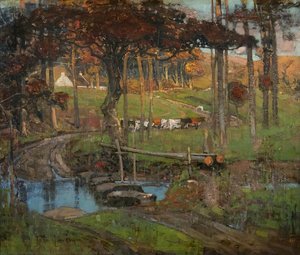
john lawson
1868 - 1909
Quick Facts
- Artistic Movement Or Style: Landscape Painting
- Artists Or Movements Influenced By This Artist: ['']
- Artists Who Influenced This Artist: ['']
- Date Of Death: 1909
- Full Name: John Lawson
- Nationality: British
- Notable Artworks:
- Ely Cathedral
- Granary No. 4
- Samos
- Place Of Birth: Glasgow, Scotland