 Preview
 Send
Send Share
Share
 Details

 Download
 Similars
 X-Ray
X-Ray Diaporama
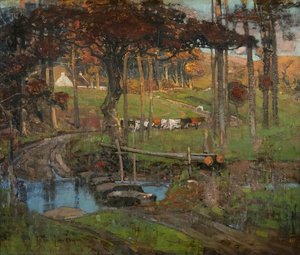
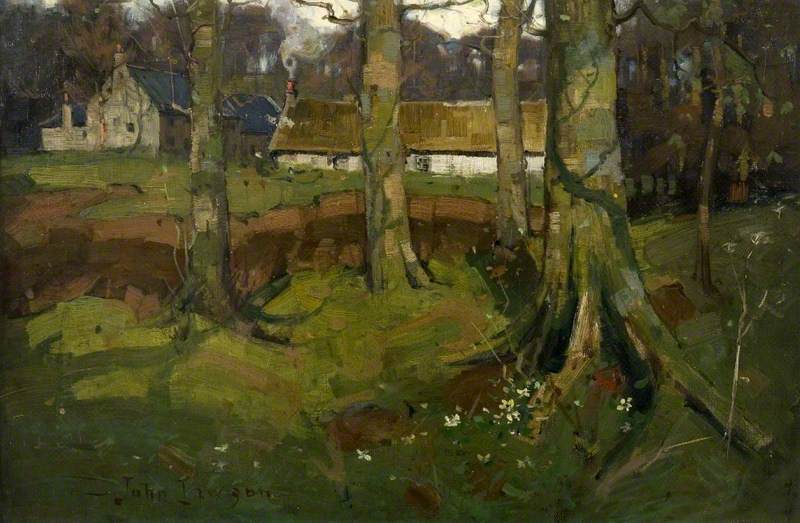
Landscape, Dunlop
 1909
1909 42.0 x 61.0 cm
 Read More
Hand Made Oil Reproduction
Hand-painted oil on canvas in your size and frame, made to order by our artists. ( Buy Print Buy Image)




































Pick from our preset sizes that match the artwork's original proportions.

You may enter your own dimensions to fit a specific frame or space. If your selected size does not match the original image's proportions, we will either crop the artwork or extend the painting with additional hand-painted elements. A digital mockup will be sent for your approval before production begins.
Please note that the on-screen preview does not reflect the actual cropping or extension. Only the mockup will accurately show the final composition.
While custom sizes are available, we recommend selecting a dimension from the predefined list to preserve the original proportions.
After order, ArtsDot.com team will email client for instructions and provide a mockup preview
Worldwide Delivery () in 3/4 weeks instead of standard 5 weeks. (26 August). No compromise on quality.

Free Worldwide Express Shipping

High-Quality Linen Canvas

Full Shipping Insurance

Customs Tax Refund Guarantee

True Color Matching Guarantee

60-Day Return Policy (Defects Only)

100% Money-Back Guarantee

Bulk Discount Offer
 Glass option is only available in size under 110 CM

Landscape, Dunlop
Reproduction Medium
Reproduction Size
-


Total Price
$ 263
Artwork Description
The Artist's Style
John Lawson's style is characterized by his use of soft colors and gentle brushstrokes, which evoke a sense of calmness and simplicity. The painting Landscape, Dunlop is no exception, with its muted tones and peaceful atmosphere. This style is reminiscent of other famous artists, such as Camille Pissarro, who also created beautiful landscapes that captured the essence of rural life. For example, Pissarro's painting Chaponval Landscape can be found on ArtsDot.com.Similar Works
Other artists, such as George Reid, have also created beautiful landscapes that showcase rural life. For instance, Reid's painting Milking Time can be found on ArtsDot.com. These paintings demonstrate the beauty of rural life and the importance of preserving these scenes for future generations.- Rural landscapes are an important part of art history, as they capture the essence of a bygone era.
- Oil on canvas is a popular medium for creating these types of paintings, as it allows for rich colors and textures.
- The Glasgow Museums Resource Centre is home to many beautiful paintings, including Landscape, Dunlop by John Lawson.
In conclusion, Landscape, Dunlop by John Lawson is a beautiful and serene painting that captures the essence of rural life in the early 20th century. Its soft colors and gentle brushstrokes evoke a sense of calmness and simplicity, making it a must-see for art lovers. For more information on this painting and other similar works, visit ArtsDot.com.
Related Artworks








Artist Biography
The Intersection of Precision and Poetry: The Life of John Lawson
In the twilight of the Victorian era, a unique artistic voice emerged from the rugged landscapes of Scotland, one that sought to reconcile the rigid demands of scientific observation with the fluid beauty of Impressionism. John Lawson (1868–1909) was not merely a painter of scenery, but a chronicler of space and terrain. Born in the historic Killermont House, Lawson’s early years were steeped in the atmospheric grandeur of the Scottish Highlands. This environment, characterized by shifting mists and dramatic topographical shifts, served as his first classroom. His formative education at the Glasgow School of Art under the tutelage of William Cruikshank provided him with a technical foundation in oil and watercolor, yet it was Lawson’s innate desire to bridge the gap between the measurable world and the felt experience that would define his legacy.
Lawson’s artistic development was uniquely shaped by his dual identity as both an artist and a cartographer. While many of his contemporaries focused solely on the emotional resonance of light, Lawson possessed a surveyor's eye for detail. This duality reached its zenith in 1897, when he was commissioned by the East India Company to produce detailed maps of Bombay (now Mumbai), India. These were not the sterile, clinical charts typical of colonial administration; instead, they were masterpieces of topographical art. In these works, Lawson applied a painterly touch to scientific data, using subtle color palettes and textured brushstrokes to render rivers, hills, and settlements. By infusing cartographic precision with an Impressionistic sensibility, he captured not just the layout of a city, but its very soul—a feat that foreshadowed the modern movement toward expressive realism.
A Legacy Written in Landscape and Light
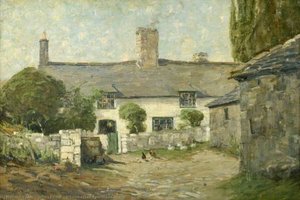
The breadth of Lawson’s oeuvre reflects a deep devotion to the quiet moments of the natural world. His paintings often serve as windows into a bygone era of rural tranquility, where the passage of time is marked only by the movement of light across a field or the gentle ripple of a river. In works such as Landscape, Dunlop and Whitewashed Farmstead, one can observe his mastery of tonal harmony and atmospheric perspective. He had an uncanny ability to utilize soft colors and gentle brushstrokes to evoke a sense of profound serenity, making the viewer feel the stillness of the British countryside. His technical skill allowed him to capture the architectural dignity of structures like Killermont House, treating stone and timber with the same reverence as the surrounding flora.
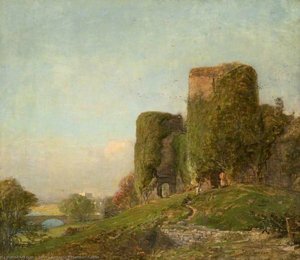
Beyond his landscapes, Lawson’s historical significance lies in his ability to elevate the utilitarian to the level of fine art. His contribution to the late Victorian landscape movement was pivotal because he refused to choose between accuracy and expression. Even in his more monumental works, such as Rhuddlan Castle, where he navigated complex lighting and large-scale compositions, the meticulousness of a mapmaker remains visible beneath the painterly surface. Though his life was tragically short, ending in 1909, the impact of his vision persists. He remains a celebrated figure for those who find beauty in the intersection of truth and art, leaving behind a body of work that continues to resonate with the timeless allure of the earth's most peaceful corners.
john lawson
1868 - 1909
Quick Facts
- Artistic Movement Or Style: Landscape Painting
- Artists Or Movements Influenced By This Artist: ['']
- Artists Who Influenced This Artist: ['']
- Date Of Death: 1909
- Full Name: John Lawson
- Nationality: British
- Notable Artworks:
- Ely Cathedral
- Granary No. 4
- Samos
- Place Of Birth: Glasgow, Scotland