 Preview
 Send
Send Share
Share
 Details

 Download
 Similars
 X-Ray
X-Ray Diaporama
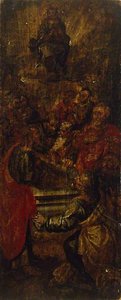
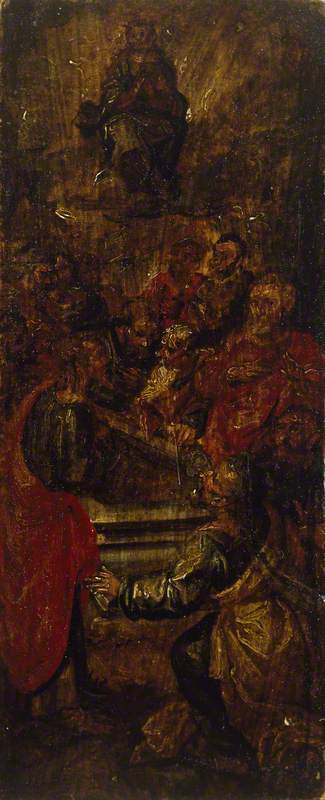
The Assumption of the Virgin
 Oil On Canvas
- WallArt
- Baroque
 1820
1820- Late Medieval
 25.0 x 10.0 cm
 The Ashmolean Museum of Art And Archaeology
 Read More
Hand Made Oil Reproduction
Hand-painted oil on canvas in your size and frame, made to order by our artists. ( Buy Print Buy Image)




P118B $10

P118H $10

P118W $10

P438Z $10

P508JH $12

P508YH $12

P805H $10

P805Z $10

P919BZ $10

P919G $10

P919XJ $10

P959ZH $10

P968JZ $12

W106C $8

W218G $10

W218JH $8

W218Y $10

W307PJ $10

W316G $10

W316PJ $8

W316Y $10

W398PJ $8

W4111J $10

W500HY $15

W500JH $15

W692G $12

W849H $8

W940BG $15

W953PJ $8




Pick from our preset sizes that match the artwork's original proportions.

You may enter your own dimensions to fit a specific frame or space. If your selected size does not match the original image's proportions, we will either crop the artwork or extend the painting with additional hand-painted elements. A digital mockup will be sent for your approval before production begins.
Please note that the on-screen preview does not reflect the actual cropping or extension. Only the mockup will accurately show the final composition.
While custom sizes are available, we recommend selecting a dimension from the predefined list to preserve the original proportions.
After order, ArtsDot.com team will email client for instructions and provide a mockup preview
Worldwide Delivery () in 3/4 weeks instead of standard 5 weeks. (16 August). No compromise on quality.

Free Worldwide Express Shipping

High-Quality Linen Canvas

Full Shipping Insurance

Customs Tax Refund Guarantee

True Color Matching Guarantee

60-Day Return Policy (Defects Only)

100% Money-Back Guarantee

Bulk Discount Offer
 Glass option is only available in size under 110 CM

The Assumption of the Virgin
Reproduction Medium
Reproduction Size
-


Total Price
$ 263
Artwork Description
The Assumption of the Virgin – A Timeless Vision by John Linnell
John Linnell’s “The Assumption of the Virgin,” painted in 1820, is more than just a depiction of a pivotal religious event; it's an immersive experience, a carefully constructed tableau brimming with serene beauty and profound spiritual resonance. Created during a period when Romanticism was subtly shaping artistic sensibilities, this work stands as a testament to Linnell’s mastery of capturing both the grandeur of divine intervention and the intimate details of human emotion. The painting immediately draws the viewer into a scene of ethereal grace – the Virgin Mary ascends heavenward, enveloped in a luminous cloud, while angels, rendered with delicate precision, lift her towards the celestial realm.
Linnell’s style is distinctly British Romantic, yet subtly infused with an Italianate influence. He eschews dramatic, theatrical gestures in favor of a restrained elegance, prioritizing atmosphere and emotional depth over overt narrative detail. The composition is meticulously balanced, utilizing a pyramidal structure that directs the eye upwards towards Mary's ascent. Note the careful arrangement of the apostles below, each rendered with individual expressions of awe and reverence – their postures conveying a shared sense of wonder at this extraordinary event. Linnell’s use of color is particularly noteworthy; he employs a palette of soft blues, golds, and pearlescent whites to create an atmosphere of otherworldly serenity, while subtle gradations of tone suggest the depth and volume of the clouds surrounding Mary.
A Historical Context – Marian Devotion in Early 19th Century England
The painting’s subject—the Assumption of the Virgin—held immense significance within the religious landscape of early 19th century England. While not formally defined as dogma until much later, the belief in Mary's ascension to heaven was deeply ingrained in Catholic and Anglican traditions. This devotional practice fueled a surge in artistic representations of the event, each striving to capture its spiritual essence. Linnell’s work reflects this fervent piety, yet it transcends mere illustration; he imbues the scene with an almost palpable sense of reverence and contemplation.
The painting emerged during a time when religious art was experiencing a revival, driven by a renewed interest in medieval iconography and a desire to connect with traditional spiritual values. Linnell’s work can be seen as part of this broader movement, reflecting the artistic trends of his era while also establishing his own distinctive style. The choice of Toledo, Spain – the site of the original church where the painting was commissioned – adds another layer of historical context, grounding the scene in a specific geographical and cultural setting.
Symbolism and Artistic Technique – Layers of Meaning
“The Assumption” is rich with symbolic detail. The ascending figure of Mary represents her divine elevation and foreshadows her role as Queen of Heaven. The angels, depicted with their wings outstretched, symbolize God’s grace and protection. The apostles below represent the faithful, united in prayer and adoration. Linnell masterfully employs techniques such as sfumato – a subtle blurring of lines and colors – to create an ethereal quality, particularly around Mary's form and the surrounding clouds. The use of gold leaf adds to the painting’s luminosity, further enhancing its otherworldly atmosphere.
The meticulous detail evident in Linnell’s rendering of the drapery, the folds of the robes, and the expressions on the faces of the angels speaks to his technical skill and dedication. He demonstrates a keen understanding of anatomy and perspective, creating a remarkably realistic yet idealized depiction of this sacred event. The painting's scale – 25 x 10 cm – is intimate enough to draw the viewer in, while still conveying the grandeur of the scene.
Emotional Impact and Legacy – A Vision of Serenity
“The Assumption of the Virgin” transcends its religious subject matter to offer a profound meditation on themes of faith, hope, and transcendence. The painting’s serene atmosphere evokes a sense of peace and tranquility, inviting viewers to contemplate the mysteries of the divine. It is not merely a representation of an event but a visual embodiment of spiritual aspiration – a yearning for connection with something greater than oneself.
Linnell's work continues to resonate today, offering a timeless vision of beauty and spirituality. Reproductions of this captivating artwork can bring a sense of serenity and contemplation to any space, serving as a reminder of the enduring power of faith and art. Its delicate balance of realism and idealism makes it an ideal addition to both private collections and institutional settings, embodying the best qualities of British Romanticism.
Related Artworks


Artist Biography
John Linnell: A British Painter of Rural Scenes and Portraits
- Born: Bloomsbury, United Kingdom (1959)
- Died: 1882
Early Life and Artistic Training
John Linnell's artistic journey began with rigorous training that laid the foundation for his future success. While specific details of his early education remain somewhat scarce, it is evident that he received a solid grounding in traditional techniques. His early works, though not widely recognized during his lifetime, already hinted at the mastery he would later achieve. Linnell was heavily influenced by renowned artists such as Leonardo da Vinci and Vincent van Gogh, whose works can be found on platforms like ArtsDot.com.
Artistic Style and Notable Works
Linnell's style is characterized by a fascinating blend of traditional British art with subtle hints of modernity. He demonstrated a keen eye for detail and an ability to capture the essence of his subjects, whether they were landscapes or portraits. His use of color, texture, and composition distinguishes his paintings.
- The Poet's Garden: This piece showcases Linnell’s mastery of capturing light and the essence of nature, drawing comparisons to Pierre-Auguste Renoir's Bathers series.
- Westminster Abbey at Night: Demonstrates his skill in urban landscapes, reminiscent of the works by George Stubbs and Arthur Hacker.
- The Baby Marcelle Roulin: Highlights his ability to capture the innocence and beauty of his subjects.
- Cap d'Antibes: A notable landscape painting available on ArtsDot.com.
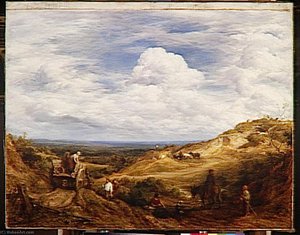
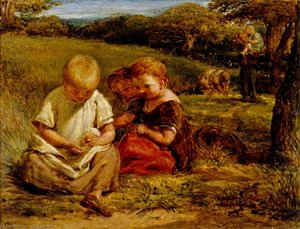
- Haying And Playing: A serene 19th-century British landscape painting with realistic detail and muted tones.
- Harvesting: A pastoral painting capturing rural life with realistic detail and muted tones.
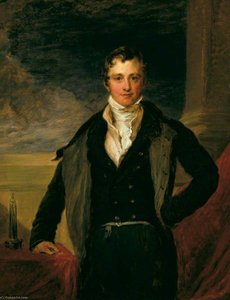
- Doctor Robert Walker: A poignant portrait showcasing realism and somber beauty.
- Richard Trevithick: A striking portrait highlighting realism and dramatic lighting.
- General John Le Mesurier And His Wife Martha With A Legal Representative Of The British Government At The Handing Over Of The Island Of Alderney: A historical British artwork depicting a significant event.
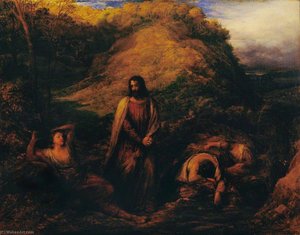
- Job Offering A Sacrifice On His Return To Prosperity: A dramatic biblical scene with rich colors and dynamic lighting, showcasing faith and divine intervention.
- A Cottage In A Wooded Landscape: A captivating monochrome charcoal drawing of rural tranquility.
Influences and Legacy
John Linnell's influence on British art is undeniable. His unique style has inspired many artists, and his works continue to be celebrated by art enthusiasts worldwide. He skillfully combined elements of Romanticism and Neoclassicism in his work, demonstrating a deep understanding of artistic traditions while forging his own distinct path. ArtsDot.com offers a range of his paintings, providing access to his artistry for both seasoned collectors and those new to the world of fine art.
Historical Significance
Linnell's contribution lies in his ability to portray everyday life—rural scenes, portraits of notable figures—with a realism tempered by artistic sensitivity. He captured moments in time, preserving them on canvas for future generations. His work reflects the social and cultural landscape of 19th-century Britain, offering valuable insights into the lives and values of that era.

John Linnell
1959 - 1882 , United Kingdom
Quick Facts
- Artistic Movement Or Style: Traditional British art
- Artists Who Influenced This Artist:
- Leonardo da Vinci
- Vincent van Gogh
- Date Of Birth: 1959
- Date Of Death: 1882
- Full Name: John Linnell
- Nationality: British
- Notable Artworks:
- The Poet's Garden
- Westminster Abbey at Night
- Baby Marcelle Roulin
- Cap d’Antibes
- Haying And Playing
- Harvesting
- Doctor Robert Walker
- Richard Trevithick
- General John Le Mesurier
- Job Offering A Sacrifice
- A Cottage In A Wooded Landscape
- Place Of Birth: Bloomsbury, United Kingdom
Related Articles

John Singer Sargent's 25 Masterpieces: Portraits & Beyond | ArtsDot
Explore 25 iconic John Singer Sargent paintings – from dazzling portraits to Impressionist landscapes. Discover the stories behind Madame X, El Jaleo & more! Find museum-quality art reproductions and elevate your home decor with ArtsDot.com.

John Constable's Masterpieces: Explore 25 Iconic Landscapes for Your Home
Journey through John Constable's 25 most celebrated landscapes. Explore Romanticism, Dedham Vale & his masterful use of light in iconic paintings like 'Hay Wain'. Find museum-quality art reproductions and elevate your home decor on ArtsDot.com.

Fra Angelico's Masterpieces: 25 Renaissance Paintings for Your Home | ArtsDot
Explore 25 breathtaking masterpieces by Fra Angelico, a Renaissance master. Discover the stories behind his iconic frescoes, Annunciations & religious art. Find museum-quality reproductions and elevate your home decor with ArtsDot.com.
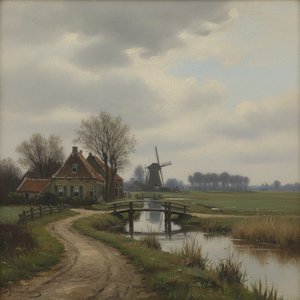
Jacob Henricus Maris: A Master of Dutch Atmospheric Realism & the Intimate Landscape
Explore the captivating world of Jacob Henricus Maris, a leading figure of the Dutch Hague School. Discover his atmospheric landscapes, signature brushstrokes & lasting influence on 19th-century art. Learn more at ArtsDot.
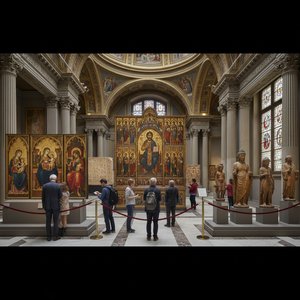
Sacred Narratives Embodied: A Comprehensive Exploration of Religious Iconography in Art History
Explore the rich history of religious iconography in art! Discover symbolism, movements & masterpieces from Byzantine to Renaissance periods. Expert insights for collectors and enthusiasts at ArtsDot.