

 Preview
 Send
Send Share
Share
 Details

 Download
 Similars
 X-Ray
X-Ray Diaporama
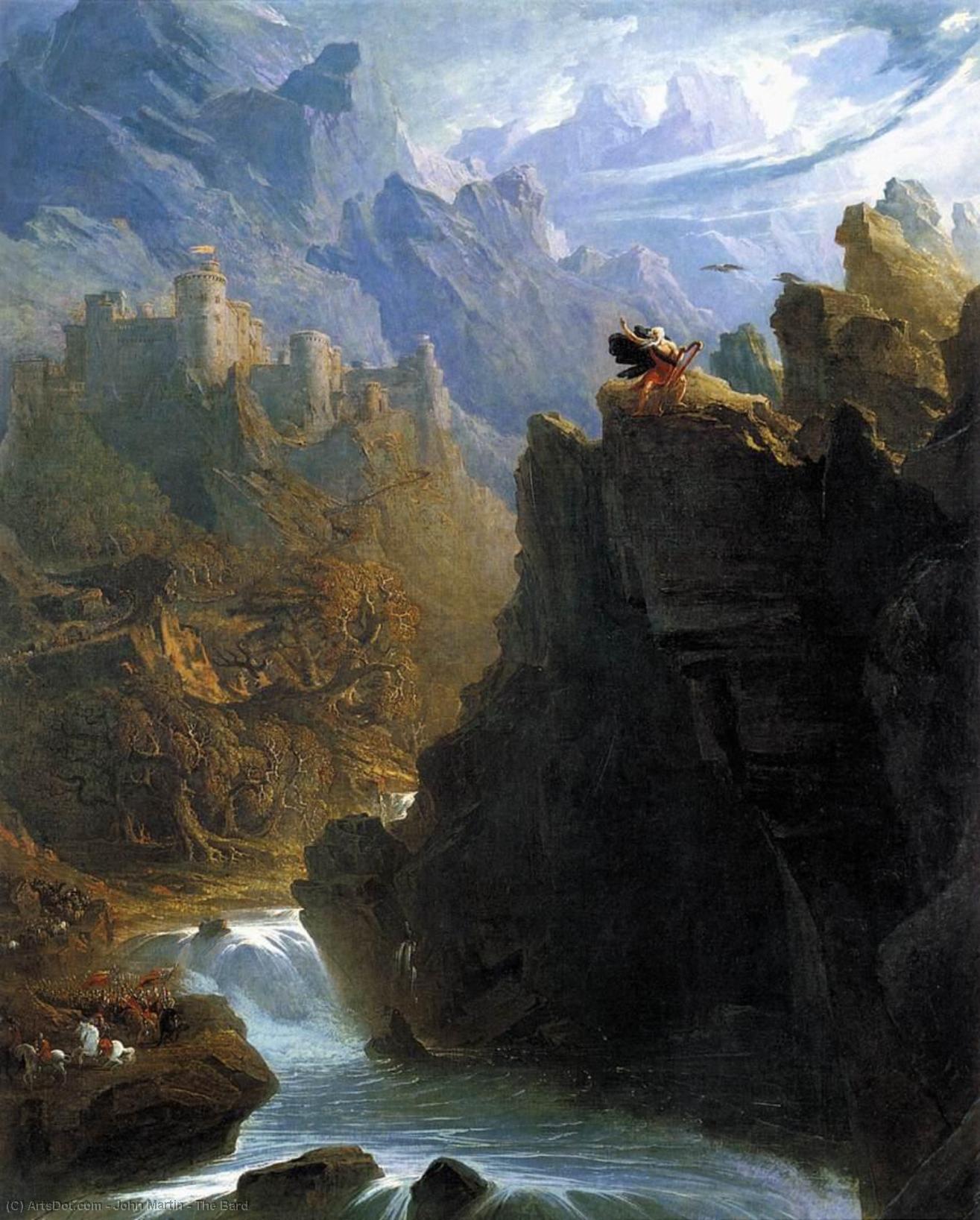
The Bard
 Acrylic On Canvas
- WallArt
- Romantic Landscape Painting
 1817
1817 127.0 x 102.0 cm
 Yale Center for British Art
 Read More
Purchase a high-resolution, enhanced digital image, far superior to the online preview.
Each file is meticulously prepared by our in-house specialists using advanced tools and expert manual retouching. We ensure every image has exceptional clarity, precise color accuracy, and fine detail.
The final file is delivered via email within 72 hours, optimized for immediate use in professional, editorial, and print environments. This is the same quality trusted by top-tier design studios, publishers, and galleries.
Digital Image
Download a high-resolution file for personal display, printing, and creative projects. ( Buy Print Buy Hand Made Painting)
Included in Every Digital Image Order
Expert Digital Delivery, Guaranteed
When you choose ArtsDot.com, you're not just getting an image - you're receiving a professionally enhanced digital artwork, crafted with precision and backed by a satisfaction guarantee. Here's everything that comes with your order, automatically:

Fast Email Delivery
Your high-resolution digital image file will be emailed to you within 72 hours of ordering - ready for immediate use.

AI-Enhanced Digital File
Your artwork is professionally optimized using advanced AI tools and manual editing, ensuring maximum detail, clarity, and color accuracy.

Free Lifetime Re-Delivery
Accidentally deleted or lost your file? No worries - we'll resend it to you anytime, free of charge.

No Import Fees - Ever
Enjoy your artwork instantly with zero customs, duties, or delivery fees - digital downloads are always tax-free.

Color Accuracy Guarantee
We ensure your digital image reflects the original colors as closely as possible using professional tools and color management.

60-Day Satisfaction Guarantee
If you're not satisfied with your digital image, we'll revise it or refund 100% within 60 days - no questions asked.

100% Money-Back Guarantee
Not satisfied? Get a full refund within 60 days of receiving your digital file - no questions asked.

Bulk Order Discounts
Buy 3 images, save 10% - Buy 5, save 15% - Buy 10+, save 20%. Great for creative projects, galleries, and agencies.
Collectible Description
A Vision of Sublime Power: John Martin’s “The Bard”
John Martin (1789–1854) stands as an undisputed titan of Romantic landscape painting, an artist whose canvases ignited the imaginations of Victorian audiences and cemented his legacy as a prophet of apocalyptic grandeur. Born in Haydon Bridge, Northumberland, on July 19, 1789, he ascended from modest origins to achieve unparalleled fame, celebrated for his monumental history paintings—particularly those depicting biblical narratives—that wrestled with themes of faith, morality, and the overwhelming force of God’s judgment upon humanity. His influence extended far beyond the artistic realm, shaping Victorian sensibilities and inspiring a fascination with dramatic storytelling and visceral emotional experience.The Poem That Inspired Epic Scale
Martin's artistic trajectory was irrevocably shaped by Thomas Gray’s haunting poem “The Bard,” published in 1817. Gray’s verses explored themes of melancholy remembrance and the fading glory of heroic ideals—a poignant counterpoint to the burgeoning optimism of the era. Recognizing the poem’s inherent dramatic potential, Martin embarked on a monumental undertaking: translating its spirit into a visual masterpiece that would transcend mere representation and embody the sublime terror of divine retribution.A Landscape Sculpted in Light and Shadow
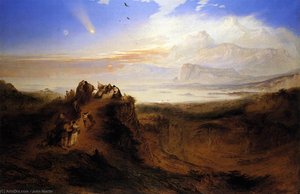
“The Bard,” completed around 1817, is an exemplar of Romantic landscape painting at its most ambitious. Executed in oil on canvas—a medium favored by Martin for its ability to capture nuanced tonal variations—the painting measures a commanding 127 x 102 cm and currently resides at the Yale Center for British Art in New Haven. The scene unfolds amidst a turbulent gorge dominated by jagged cliffs, towering mountains, and a raging river plummeting into abysmal depths. Martin’s meticulous attention to detail is immediately apparent: minuscule figures—representing shepherds tending their flocks—are dwarfed by the immensity of the landscape, emphasizing humanity's insignificance before the majesty of nature.Symbolism Rooted in Biblical Narrative
The painting’s symbolism resonates deeply with Christian iconography. The castle perched atop a craggy peak serves as an emblem of English power and resilience—a defiant bastion against the encroaching forces of chaos and decay. However, its stony architecture mirrors the peaks surrounding it, suggesting that even the most formidable structures are ultimately vulnerable to the relentless erosions of time and divine wrath. Above all, “The Bard” conveys a profound sense of awe and terror—the sublime experience described by Edmund Burke as confronting beauty mingled with horror. Martin’s masterful use of chiaroscuro—the dramatic interplay between light and shadow—amplifies this emotional impact, drawing the viewer into the heart of the scene and immersing them in its overwhelming grandeur.A Legacy Enduring Through Reproduction
John Martin's “The Bard” continues to inspire admiration for its breathtaking scale, evocative atmosphere, and masterful technique. Reproductions of this iconic artwork offer collectors and interior designers alike a chance to experience firsthand the profound emotional resonance of Romantic landscape painting—a testament to Martin’s enduring vision of sublime power and his unparalleled ability to translate poetic contemplation into visual spectacle.Related Artworks

Artist Biography
John Martin: A Master of Melodramatic Romanticism
John Martin (1789-1854) was a celebrated English romantic painter, engraver, and illustrator whose dramatic compositions captivated the Victorian public. Born in Haydon Bridge, Northumberland, on July 19, 1789, he rose from humble beginnings to become one of the most popular artists of his day, renowned for his vast landscapes populated by minute figures and depicting biblical scenes and fantastical narratives with a powerful sense of scale and emotion.
Early Life and Artistic Development
Martin's early life was marked by practical pursuits. He was apprenticed to a coachbuilder in Newcastle upon Tyne, where he learned heraldic painting – a skill that would later inform his meticulous attention to detail. In 1806, he moved to London, marrying at the age of nineteen and supporting himself through drawing lessons and commissions for watercolors and decorative work on china and glass. This period honed his technical skills while allowing him to explore various artistic mediums. His early works show a developing interest in dramatic lighting and composition, foreshadowing his later signature style.
Artistic Style and Notable Works
Martin's distinctive style is characterized by its grand scale, melodramatic intensity, and meticulous detail. He frequently depicted biblical subjects, such as The Destruction of Sodom and Gomorrah and Belshazzar’s Feast, with a theatrical flair that resonated deeply with audiences. His landscapes, like Harnham Church, near Salisbury, demonstrated his ability to capture serene countryside scenes while maintaining a sense of grandeur. Key works showcasing his artistic prowess include:
- The Destruction of Sodom and Gomorrah: A monumental depiction of divine retribution, demonstrating Martin’s skill in portraying chaos and destruction on a vast scale.
- Belshazzar's Feast: Illustrating the biblical story with dramatic lighting and intricate detail, highlighting the downfall of Babylon.
- Manfred and the Alpine Witch: Inspired by Byron’s poem, this work exemplifies Martin’s ability to translate literary narratives into visually stunning compositions.
- Satan Arousing the Fallen Angels (from Paradise Lost): A powerful interpretation of Milton's epic poem, showcasing his skill in depicting dramatic scenes from literature.
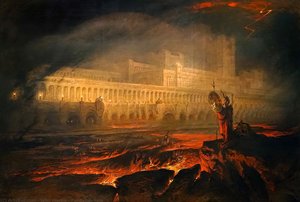
- Pandemonium: A fantastical depiction of the capital of Hell, demonstrating Martin’s imaginative scope and mastery of perspective.
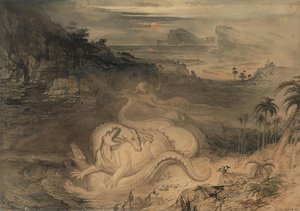
- The Country of the Iguanodon: An early example of paleoart, reflecting a burgeoning interest in scientific discovery during his time.
Recognition and Legacy
John Martin achieved considerable recognition during his lifetime. He was referred to as "the most popular painter of his day" by Walter Sickert in 1821 and received a gold medal from the Russian Tsar Nicholas I. He was awarded the Order of Leopold from Prince Leopold of Saxe-Coburg and Gotha, becoming the official historical painter to Prince Leopold. His works were exhibited at both the National Gallery and the Tate Gallery, solidifying his place within the British art establishment.
Despite a period of relative obscurity after his death on February 17, 1854, Martin’s work has experienced a resurgence in appreciation. Today, his paintings are recognized for their unique blend of Romantic drama, meticulous detail, and imaginative scope. His influence can be seen in the works of later artists, including James Francis Danby, who was inspired by Martin's dramatic landscapes. John Martin remains an important figure in British art history, celebrated for his ability to transport viewers to epic worlds filled with both awe-inspiring beauty and terrifying power.
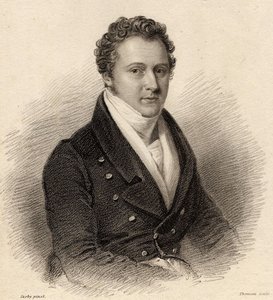
John Martin
1789 - 1854 , United Kingdom
Quick Facts
- Birth_Date: 1789-07-19
- Birth_Place: Haydon Bridge, United Kingdom
- Death_Date: 1854-02-17
- Influenced: ['James Francis Danby']
- Movement: Romanticism
- Name: John Martin
- Nationality: English
- Notable_Works:
- The Destruction of Sodom and Gomorrah
- Belshazzar's Feast
- Harnham Church, near Salisbury
- Keelmen Heaving in Coals by Night
- Ploughing up Turnips, near Slough
- The Evening of the Deluge
- Manfred and the Alpine Witch
- Satan Arousing the Fallen Angels, Book 1, line 314, from John Milton, Paradise Lost
- Pandemonium
- The Country of the Iguanodon
- Eve
- The Plains of Heaven

