 Preview
 Send
Send Share
Share
 Details

 Download
 Similars
 X-Ray
X-Ray Diaporama
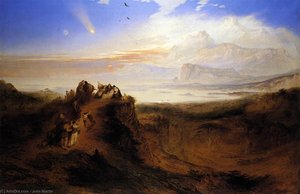
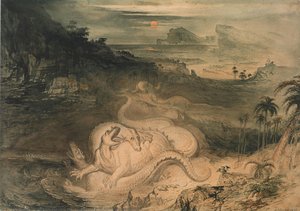
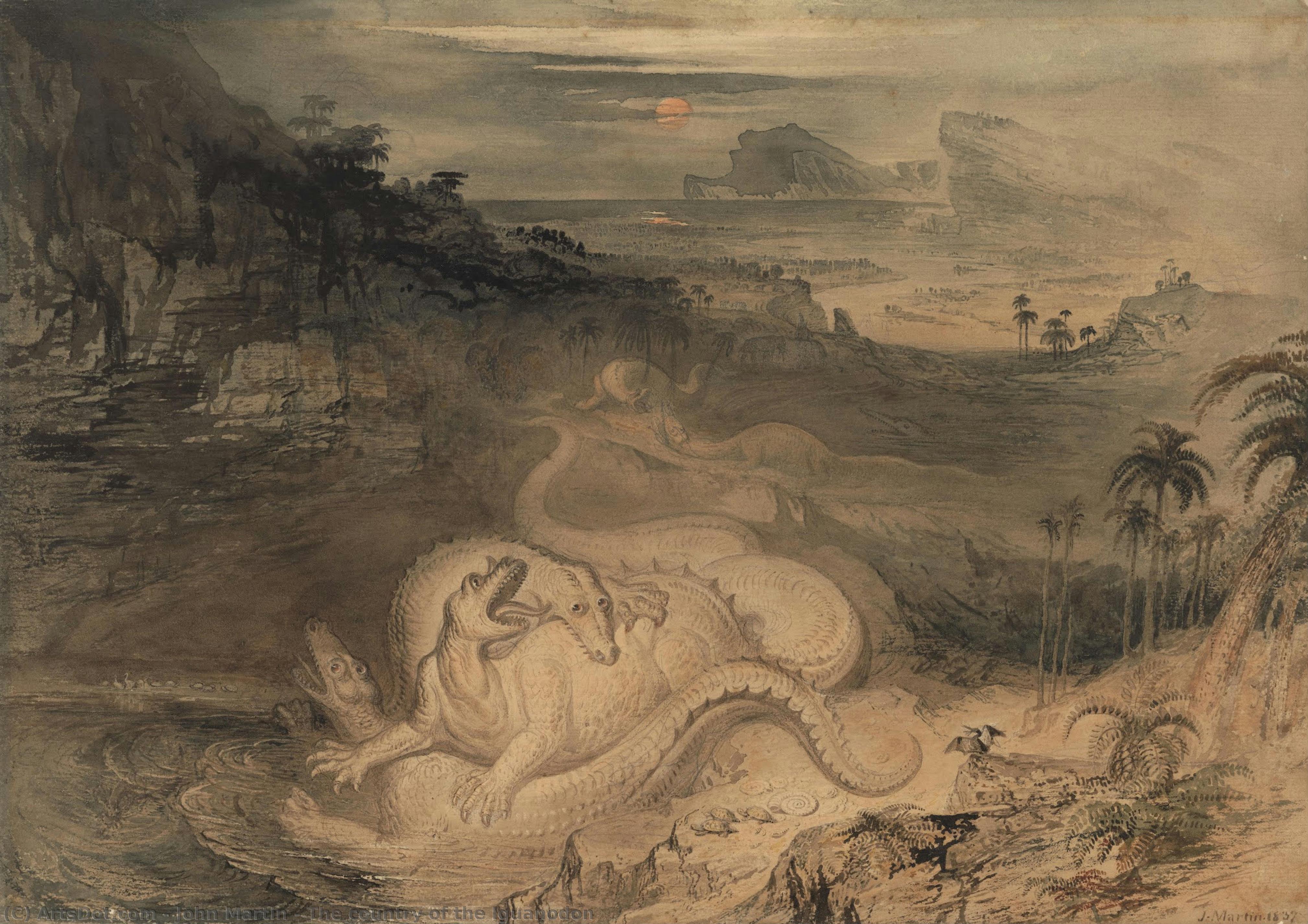
The country of the Iguanodon


 Read More
Hand Made Oil Reproduction
Hand-painted oil on canvas in your size and frame, made to order by our artists. ( Buy Print Buy Image)




P118B $10

P118H $10

P118W $10

P438Z $10

P508JH $12

P508YH $12

P805H $10

P805Z $10

P919BZ $10

P919G $10

P919XJ $10

P959ZH $10

P968JZ $12

W106C $8

W218G $10

W218JH $8

W218Y $10

W307PJ $10

W316G $10

W316PJ $8

W316Y $10

W398PJ $8

W4111J $10

W500HY $15

W500JH $15

W692G $12

W849H $8

W940BG $15

W953PJ $8




Pick from our preset sizes that match the artwork's original proportions.

You may enter your own dimensions to fit a specific frame or space. If your selected size does not match the original image's proportions, we will either crop the artwork or extend the painting with additional hand-painted elements. A digital mockup will be sent for your approval before production begins.
Please note that the on-screen preview does not reflect the actual cropping or extension. Only the mockup will accurately show the final composition.
While custom sizes are available, we recommend selecting a dimension from the predefined list to preserve the original proportions.
After order, ArtsDot.com team will email client for instructions and provide a mockup preview
Worldwide Delivery () in 3/4 weeks instead of standard 5 weeks. (25 August). No compromise on quality.

Free Worldwide Express Shipping

High-Quality Linen Canvas

Full Shipping Insurance

Customs Tax Refund Guarantee

True Color Matching Guarantee

60-Day Return Policy (Defects Only)

100% Money-Back Guarantee

Bulk Discount Offer
 Glass option is only available in size under 110 CM

The country of the Iguanodon
Reproduction Medium
Reproduction Size
-


Total Price
$ 263
Artwork Description
A Symphony of Scale and Sublime Terror: John Martin’s “The Country of the Iguanodon”
John Martin (1789-1854) stands as a titan amongst Romantic landscape painters, his canvases resonating with an unparalleled ambition to evoke awe and terror – emotions central to the movement's core aesthetic. Born in Haydon Bridge, Northumberland, Martin’s journey from humble beginnings to artistic acclaim exemplifies the transformative power of passion and dedication. His apprenticeship as a coachbuilder instilled a meticulous attention to detail that would become synonymous with his distinctive style, shaping him into one of Britain’s most celebrated visual artists.The Genesis of Vision: Collaboration and Inspiration
Martin's fascination with geology stemmed directly from an encounter with Gideon Mantell, the paleontologist whose groundbreaking discovery of Iguanodon fossils captivated Victorian scientific circles. A visit to Mantell’s Brighton home in August 1834 ignited Martin’s imagination, prompting him to envision a landscape dominated by colossal reptiles battling for dominance – a concept he eloquently conveyed to Mantell himself. As Mantell documented in his journal, “Mr Martin was deeply interested in the remains of the Iguanodon, etc. I wish I could induce him to portray the country of the Iguanodon.” This shared enthusiasm fueled Martin’s artistic endeavor, demonstrating how scientific curiosity could inspire profound creative expression.A Masterpiece of Romantic Landscape Painting
“The Country of the Iguanodon,” completed in 1837, exemplifies Martin's mastery of the sublime – a genre characterized by overwhelming grandeur and emotional intensity. The watercolor captures a dramatic confrontation between prehistoric creatures, rendered with breathtaking perspective and meticulous detail. Dominating the composition are two immense Iguanodons intertwined, their serpentine lines guiding the viewer’s gaze into an expansive vista teeming with ferns, palm trees, and rocky outcrops bathed in the golden light of sunset. Martin skillfully employs chiaroscuro – dramatic contrasts between light and dark – to heighten the sense of scale and create a palpable atmosphere of primal fear.Symbolism Beneath the Surface: Confrontation and Transcendence
Beyond its visual splendor, “The Country of the Iguanodon” carries symbolic weight. The struggle depicted represents humanity’s confrontation with forces beyond comprehension—the vastness of geological time and the humbling realization of our insignificance within the cosmos. Martin's use of classical motifs – reminiscent of Virgil’s Georgics – underscores the grandeur of nature and elevates the scene to a realm of transcendent beauty. The painting serves as a powerful reminder that art can inspire contemplation on fundamental questions about existence and our place in the universe.A Legacy Enduring Through Reproduction
Today, ArtsDot offers exceptional reproductions of Martin’s “The Country of the Iguanodon,” allowing collectors and interior designers alike to experience the sublime terror and breathtaking beauty of this iconic artwork firsthand. Each print is crafted with archival inks on premium canvas, ensuring that its vibrant colors and textural detail faithfully capture the essence of Martin's original vision—a testament to his enduring influence on Romantic art history.Related Artworks

Artist Biography
John Martin: A Master of Melodramatic Romanticism
John Martin (1789-1854) was a celebrated English romantic painter, engraver, and illustrator whose dramatic compositions captivated the Victorian public. Born in Haydon Bridge, Northumberland, on July 19, 1789, he rose from humble beginnings to become one of the most popular artists of his day, renowned for his vast landscapes populated by minute figures and depicting biblical scenes and fantastical narratives with a powerful sense of scale and emotion.
Early Life and Artistic Development
Martin's early life was marked by practical pursuits. He was apprenticed to a coachbuilder in Newcastle upon Tyne, where he learned heraldic painting – a skill that would later inform his meticulous attention to detail. In 1806, he moved to London, marrying at the age of nineteen and supporting himself through drawing lessons and commissions for watercolors and decorative work on china and glass. This period honed his technical skills while allowing him to explore various artistic mediums. His early works show a developing interest in dramatic lighting and composition, foreshadowing his later signature style.
Artistic Style and Notable Works
Martin's distinctive style is characterized by its grand scale, melodramatic intensity, and meticulous detail. He frequently depicted biblical subjects, such as The Destruction of Sodom and Gomorrah and Belshazzar’s Feast, with a theatrical flair that resonated deeply with audiences. His landscapes, like Harnham Church, near Salisbury, demonstrated his ability to capture serene countryside scenes while maintaining a sense of grandeur. Key works showcasing his artistic prowess include:
- The Destruction of Sodom and Gomorrah: A monumental depiction of divine retribution, demonstrating Martin’s skill in portraying chaos and destruction on a vast scale.
- Belshazzar's Feast: Illustrating the biblical story with dramatic lighting and intricate detail, highlighting the downfall of Babylon.
- Manfred and the Alpine Witch: Inspired by Byron’s poem, this work exemplifies Martin’s ability to translate literary narratives into visually stunning compositions.
- Satan Arousing the Fallen Angels (from Paradise Lost): A powerful interpretation of Milton's epic poem, showcasing his skill in depicting dramatic scenes from literature.
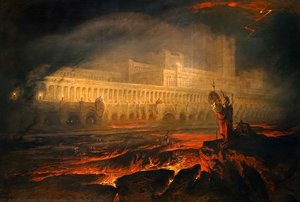
- Pandemonium: A fantastical depiction of the capital of Hell, demonstrating Martin’s imaginative scope and mastery of perspective.
- The Country of the Iguanodon: An early example of paleoart, reflecting a burgeoning interest in scientific discovery during his time.
Recognition and Legacy
John Martin achieved considerable recognition during his lifetime. He was referred to as "the most popular painter of his day" by Walter Sickert in 1821 and received a gold medal from the Russian Tsar Nicholas I. He was awarded the Order of Leopold from Prince Leopold of Saxe-Coburg and Gotha, becoming the official historical painter to Prince Leopold. His works were exhibited at both the National Gallery and the Tate Gallery, solidifying his place within the British art establishment.
Despite a period of relative obscurity after his death on February 17, 1854, Martin’s work has experienced a resurgence in appreciation. Today, his paintings are recognized for their unique blend of Romantic drama, meticulous detail, and imaginative scope. His influence can be seen in the works of later artists, including James Francis Danby, who was inspired by Martin's dramatic landscapes. John Martin remains an important figure in British art history, celebrated for his ability to transport viewers to epic worlds filled with both awe-inspiring beauty and terrifying power.
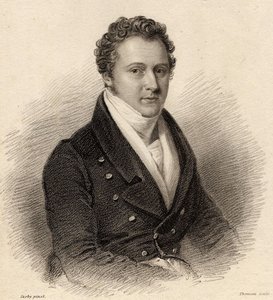
John Martin
1789 - 1854 , United Kingdom
Quick Facts
- Birth_Date: 1789-07-19
- Birth_Place: Haydon Bridge, United Kingdom
- Death_Date: 1854-02-17
- Influenced: ['James Francis Danby']
- Movement: Romanticism
- Name: John Martin
- Nationality: English
- Notable_Works:
- The Destruction of Sodom and Gomorrah
- Belshazzar's Feast
- Harnham Church, near Salisbury
- Keelmen Heaving in Coals by Night
- Ploughing up Turnips, near Slough
- The Evening of the Deluge
- Manfred and the Alpine Witch
- Satan Arousing the Fallen Angels, Book 1, line 314, from John Milton, Paradise Lost
- Pandemonium
- The Country of the Iguanodon
- Eve
- The Plains of Heaven
Related Articles

John Constable's Masterpieces: Explore 25 Iconic Landscapes for Your Home
Journey through John Constable's 25 most celebrated landscapes. Explore Romanticism, Dedham Vale & his masterful use of light in iconic paintings like 'Hay Wain'. Find museum-quality art reproductions and elevate your home decor on ArtsDot.com.

Watercolor Wonders: 10 Masterpieces That Redefined Art History | ArtsDot
Journey through 10 legendary watercolor masterpieces by Sargent, Turner & Homer! Explore iconic landscapes, portraits & floral art that redefined history. Find museum-quality reproductions and curated decor ideas at ArtsDot.com.

Romantic Landscapes: 10 Masterpieces for Your Home | ArtsDot
Journey through 10 Romantic landscape masterpieces by Friedrich, Turner & Cole. Explore emotional art, sublime nature scenes & iconic 19th-century paintings. Find museum-quality reproductions for your home at ArtsDot.com – discover the full collection online!

John Singer Sargent's 25 Masterpieces: Portraits & Beyond | ArtsDot
Explore 25 iconic John Singer Sargent paintings – from dazzling portraits to Impressionist landscapes. Discover the stories behind Madame X, El Jaleo & more! Find museum-quality art reproductions and elevate your home decor with ArtsDot.com.

Ephemeral Visions: Exploring the Artistic Legacy & Contemporary Practice of Watercolor Painting
Explore the captivating world of watercolor painting! Discover its rich history, essential techniques, influential artists & collecting tips. A comprehensive guide for art enthusiasts from ArtsDot.