 Send
Send Share
Share
 Details

 Download
 Similars
 Diaporama
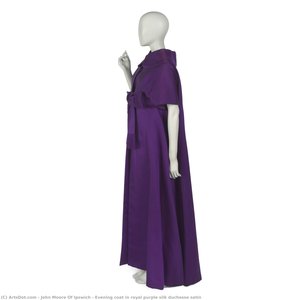
Evening coat in royal purple silk duchesse satin


 Read More
Hand Made Oil Reproduction
Hand-painted oil on canvas in your size and frame, made to order by our artists. ( Buy Print Buy Image)




































Pick from our preset sizes that match the artwork's original proportions.

You may enter your own dimensions to fit a specific frame or space. If your selected size does not match the original image's proportions, we will either crop the artwork or extend the painting with additional hand-painted elements. A digital mockup will be sent for your approval before production begins.
Please note that the on-screen preview does not reflect the actual cropping or extension. Only the mockup will accurately show the final composition.
While custom sizes are available, we recommend selecting a dimension from the predefined list to preserve the original proportions.
After order, ArtsDot.com team will email client for instructions and provide a mockup preview
Worldwide Delivery () in 3/4 weeks instead of standard 5 weeks. (31 August). No compromise on quality.

Free Worldwide Express Shipping

High-Quality Linen Canvas

Full Shipping Insurance

Customs Tax Refund Guarantee

True Color Matching Guarantee

60-Day Return Policy (Defects Only)

100% Money-Back Guarantee

Bulk Discount Offer
 Glass option is only available in size under 110 CM

Evening coat in royal purple silk duchesse satin
Reproduction Medium
Reproduction Size
-


Total Price
$ 263
A Symphony in Royal Purple: The Elegance of 1966 Couture
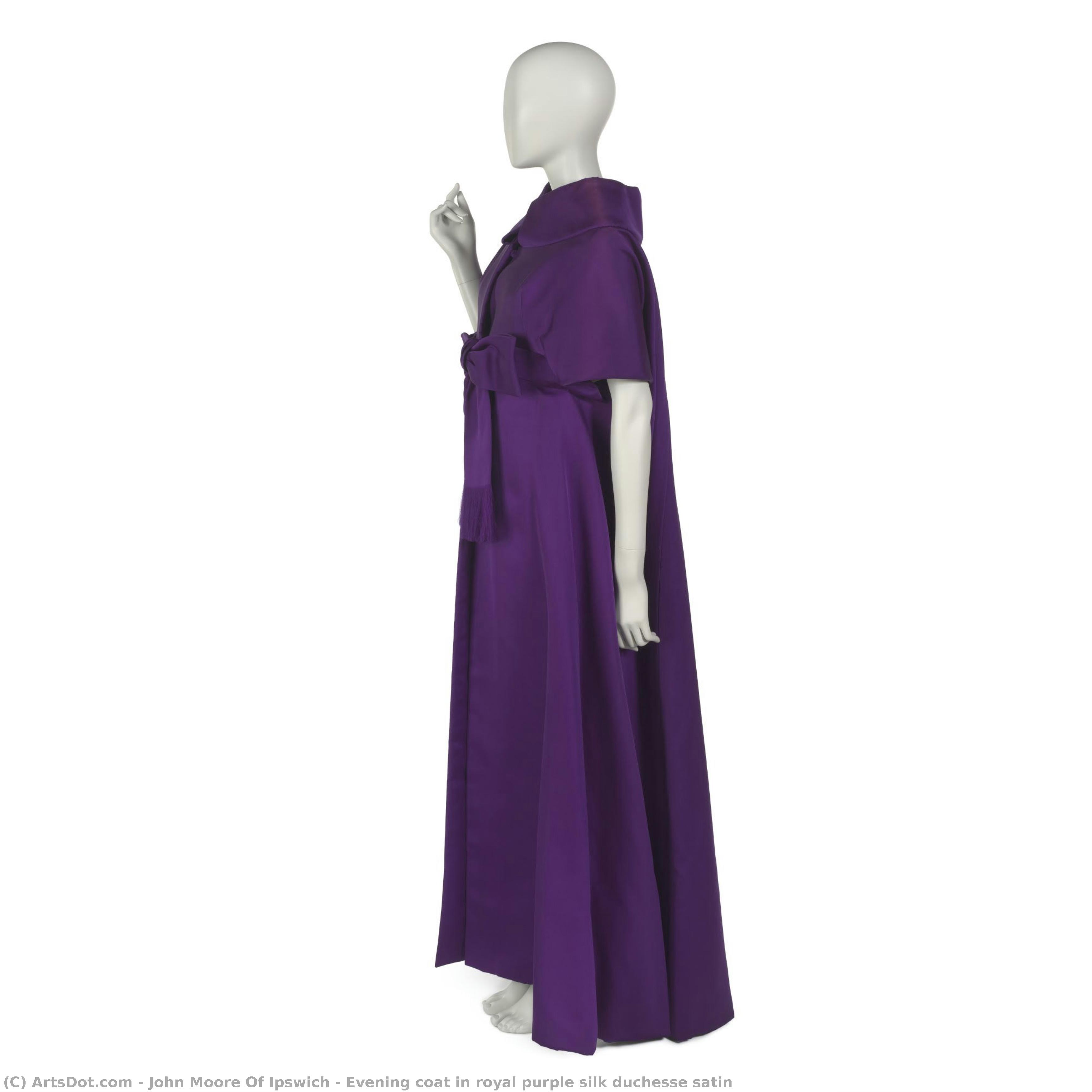
In the realm of mid-century fashion, few garments command attention with the quiet authority of this evening coat, a masterpiece of construction and color from 1966. Rendered in a breathtakingly deep royal purple silk duchesse satin, the piece serves as a testament to the era's fascination with sculptural silhouettes and luxurious textures. The garment is not merely clothing; it is an architectural feat of textile art. Through the use of bias-cut panels, the coat achieves a fluid, organic movement that catches the light with every imagined step, creating a shimmering interplay of highlights and deep, velvety shadows. This technique allows the heavy satin to drape with a grace that feels both substantial and ethereal, embodying the sophisticated glamour of the late sixties.
The design is defined by its masterful use of line and form, where the A-line silhouette provides a structured foundation for more whimsical, romantic details. The wide-mounted rolled collar frames the wearer with a sense of regal importance, while the oversized self-bow at the waist acts as a dramatic focal point. This bow, concealing the center front closure, features pendant streamers that finish in delicate self-fringe, adding a tactile, kinetic element to the composition. Such details suggest a profound understanding of how fashion interacts with motion, transforming a static object into a living expression of elegance. For the discerning collector or interior designer, this piece offers a rich palette of deep violet and lustrous sheen, making it an evocative subject for high-quality reproductions intended to anchor a room with a sense of historical prestige.
The Legacy of Craftsmanship and Materiality
To appreciate this evening coat is to appreciate the meticulous tradition of New York couture. The label John Moore / New York connects this garment to a lineage of sartorial excellence, where the choice of material—silk duchesse satin—is paramount. This specific fabric is renowned for its high luster and stiff drape, qualities that allow the coat's structural elements, such as the high waistline and the longer back hem, to maintain their crisp, dramatic shape. The interior, lined in white silk satin, provides a hidden layer of luxury, a secret softness against the skin that mirrors the outward opulence.
Beyond its physical attributes, the coat carries an emotional resonance of confidence and poise. It evokes an era of formal splendor, where dressing was an act of ceremony. The deep purple hue, historically associated with royalty and spiritual depth, imbues the piece with a sense of mystery and importance. When reimagined as a fine art reproduction, the focus remains on this interplay of light, texture, and historical weight. It serves as an inspiration for those looking to infuse their spaces with the romanticism of the past, offering a visual narrative of sophistication that transcends the boundaries of fashion to become a timeless element of decorative art.
Related Artworks


Artist Biography
The Maritime Visionary of Suffolk
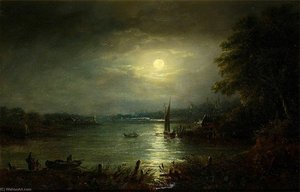
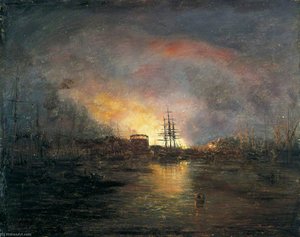
Born in the historic town of Woodbridge in 1821, John Moore of Ipswich emerged as a profound voice within the British maritime and landscape tradition. His life was deeply intertwined with the salt air and industrious spirit of the Suffolk coast, a setting that would later become the soul of his artistic output. Though he began his professional journey not in an atelier but as a painter and decorator, this practical foundation provided him with a unique, tactile understanding of color and surface. As a self-taught artist, Moore possessed a raw, unmediated connection to his subject matter, allowing him to translate the rhythmic pulse of the sea and the quiet dignity of the English countryside into works of enduring emotional resonance.
The trajectory of Moore’s career was marked by a transition from the utilitarian application of pigment to the sublime exploration of light and atmosphere. His early years in Ipswich, a bustling port city, placed him at the heart of a thriving seafaring culture. This environment served as his primary instructor, teaching him to observe the intricate interplay between the shifting tides and the heavy, moisture-laden skies of East Anglia. His mastery lay in capturing the dual nature of the coast: the dramatic, turbulent energy of waves crashing against rugged cliffs and the profound, meditative stillness of calm waters reflecting a twilight sky.
Artistic Evolution and the Ipswich Fine Art Club
While his roots were firmly planted in the local soil of Suffolk, Moore’s artistic horizons expanded through significant intellectual and social connections. His studies in London brought him into contact with the influential George Frederic Watts, whose Symbolist leanings encouraged Moore to look beyond mere visual accuracy toward a deeper, more psychological exploration of his landscapes. This exposure infused his work with a sense of narrative depth, where a simple seascape could evoke feelings of solitude, resilience, or awe.
A pivotal moment in his professional development arrived in 1874, when he became a founding member of the Ipswich Fine Art Club. This institution was more than just a social circle; it was a crucible for creativity that fostered intellectual exchange among the region's most talented painters. Through this club, Moore helped establish a localized artistic movement that celebrated the specific beauty of the Suffolk landscape, ensuring that the maritime heritage of Ipswich was immortalized through fine art. His ability to find patrons among the wealthy inhabitants of the town further solidified his standing as a prominent figure in the regional art scene.
Legacy and Enduring Themes
The oeuvre of John Moore is characterized by a remarkable versatility, ranging from sweeping maritime vistas to intimate rural scenes. His paintings often serve as windows into a vanished era of British life, capturing the essence of the following themes:
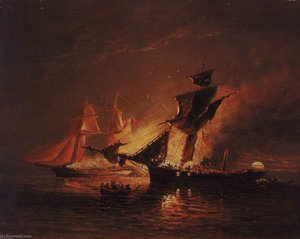
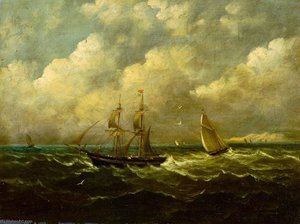
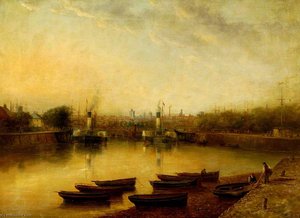
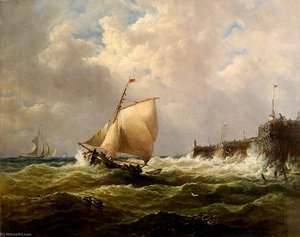
- Maritime Grandeur: Works such as Shipping at Harbour Mouth demonstrate his ability to depict the power of the ocean and the resilience of vessels navigating treacherous waters.
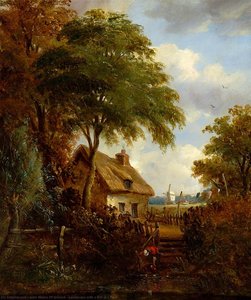
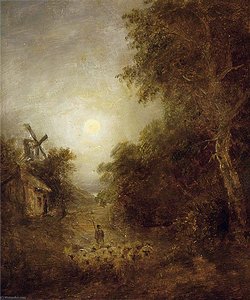
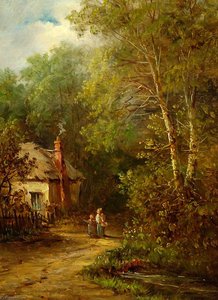
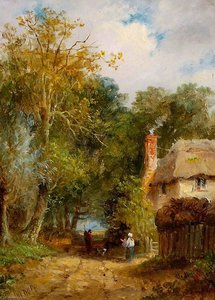
- Rural Tranquility: In pieces like Cottage in a Wood, Moore shifts his focus to the pastoral, using soft light and balanced compositions to evoke a sense of peace and the timelessness of nature.
- Atmospheric Perspective: Drawing inspiration from masters like Turner and Constable, he utilized tonal gradation and light to create depth, making the viewer feel the dampness of the mist or the warmth of a setting sun.
By the time of his passing in 1902, John Moore had left an indelible mark on the landscape of British art. He remains a celebrated figure not merely for his technical skill, but for his ability to capture the very breath of the Suffolk coast. His work continues to resonate with modern audiences, offering a nostalgic and deeply moving connection to the maritime traditions and the serene, rugged beauty of the English seaside.
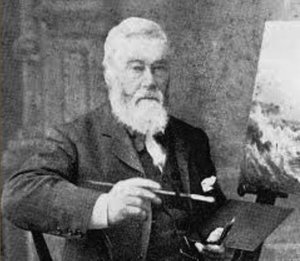
john moore of ipswich
1821 - 1902
Quick Facts
- Artistic Movement Or Style: Romanticism
- Artists Or Movements Influenced By This Artist: ['Hudson Lowe']
- Artists Who Influenced This Artist:
- Turner
- Ruskin
- Date Of Birth: 1821
- Date Of Death: 1902
- Full Name: John Moore
- Nationality: British
- Notable Artworks:
- The Ipswich Docks
- Cornwall Coast
- Place Of Birth: Ipswich, England
Related Articles

John Constable's Masterpieces: Explore 25 Iconic Landscapes for Your Home
Journey through John Constable's 25 most celebrated landscapes. Explore Romanticism, Dedham Vale & his masterful use of light in iconic paintings like 'Hay Wain'. Find museum-quality art reproductions and elevate your home decor on ArtsDot.com.
John Singer Sargent's 25 Masterpieces: Portraits & Beyond | ArtsDot
Explore 25 iconic John Singer Sargent paintings – from dazzling portraits to Impressionist landscapes. Discover the stories behind Madame X, El Jaleo & more! Find museum-quality art reproductions and elevate your home decor with ArtsDot.com.
Henry Moore: Sculpting Modernity – Form, Emotion & the Human Condition
Explore the revolutionary sculptures of Henry Moore – abstract forms, reclining figures & powerful expressions of the human condition. Discover his legacy & artistic process with ArtsDot.
Gwen John: Intimacy, Modernity & the Quiet Power of Welsh Portraiture
Explore the captivating world of Gwen John, a pioneering Welsh artist renowned for her intimate portraits & subtle style. Discover her life, legacy, and how to bring her timeless beauty into your home with ArtsDot.
John Frederick Lewis: Orientalism, Detail & Genre Painting in 19th-Century British Art
Explore the captivating Orientalist paintings of John Frederick Lewis! Discover his mastery of detail, genre scenes & influence on 19th-century British art. Learn about his life, techniques & legacy at ArtsDot.