 Preview
 Send
Send Share
Share
 Details

 Download
 Similars
 X-Ray
X-Ray Diaporama
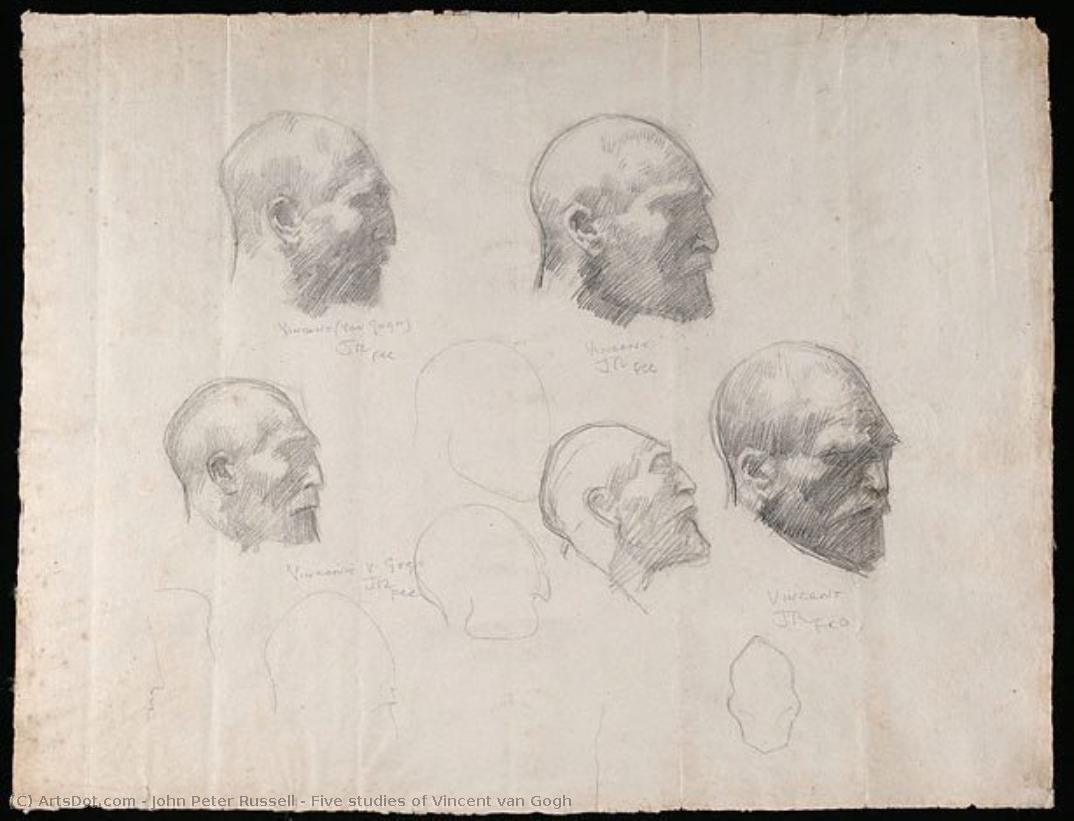
Five studies of Vincent van Gogh
 Charcoal
- WallArt
- Realism Impressionism
 1888
1888- 19th Century
 47.0 x 62.0 cm
 Art Gallery of New South Wales
 Read More
Hand Made Oil Reproduction
Hand-painted oil on canvas in your size and frame, made to order by our artists. ( Buy Print Buy Image)




P118B $10

P118H $10

P118W $10

P438Z $10

P508JH $12

P508YH $12

P805H $10

P805Z $10

P919BZ $10

P919G $10

P919XJ $10

P959ZH $10

P968JZ $12

W106C $8

W218G $10

W218JH $8

W218Y $10

W307PJ $10

W316G $10

W316PJ $8

W316Y $10

W398PJ $8

W4111J $10

W500HY $15

W500JH $15

W692G $12

W849H $8

W940BG $15

W953PJ $8




Pick from our preset sizes that match the artwork's original proportions.

You may enter your own dimensions to fit a specific frame or space. If your selected size does not match the original image's proportions, we will either crop the artwork or extend the painting with additional hand-painted elements. A digital mockup will be sent for your approval before production begins.
Please note that the on-screen preview does not reflect the actual cropping or extension. Only the mockup will accurately show the final composition.
While custom sizes are available, we recommend selecting a dimension from the predefined list to preserve the original proportions.
After order, ArtsDot.com team will email client for instructions and provide a mockup preview
Worldwide Delivery () in 3/4 weeks instead of standard 5 weeks. (17 August). No compromise on quality.

Free Worldwide Express Shipping

High-Quality Linen Canvas

Full Shipping Insurance

Customs Tax Refund Guarantee

True Color Matching Guarantee

60-Day Return Policy (Defects Only)

100% Money-Back Guarantee

Bulk Discount Offer
 Glass option is only available in size under 110 CM

Five studies of Vincent van Gogh
Reproduction Medium
Reproduction Size
-


Total Price
$ 363
Artwork Description
An Intimate Encounter with a Legend
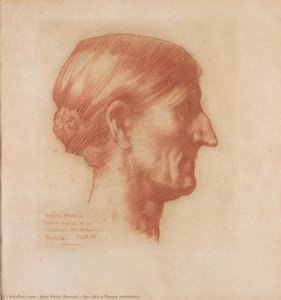
In the quiet, charcoal-smudged pages of John Peter Russell’s "Five studies of Vincent van Gogh," we are invited into a deeply personal moment of artistic observation. Created in 1888, this series of sketches transcends mere portraiture, offering instead a raw and unvarnished glimpse into the soul of one of history's most turbulent geniuses. Rather than presenting a single, polished image, Russell has arranged five distinct studies around a central, frontal view of Van Gogh’s face, creating a circular composition that feels both spontaneous and profoundly focused. It is as if we are witnessing the artist’s hand moving rapidly across the paper, capturing the shifting light and the heavy weight of thought upon his subject's features.
The emotional resonance of this work lies in its intimacy. There is no distance between the viewer and the subject; instead, we feel the presence of a shared history between two masters. Russell, an Australian Impressionist who moved within the most vibrant circles of Paris, captures not just the likeness of his friend, but the very essence of Van Gogh’s character. The sketches move from profile to angled perspectives, suggesting a restless energy—a search for truth through the repetition of form and the exploration of different facets of a single, iconic identity.
The Mastery of Line and Shadow
Technically, this work is a masterclass in the economy of means. Utilizing the primal medium of charcoal on paper, Russell eschews the distraction of color to focus entirely on the architecture of the human face. The palette is strictly monochromatic, relying on a sophisticated range of grays, blacks, and the warm, off-white tones of the paper itself. This limited spectrum forces the eye to find depth within the texture of the strokes. Through the expert use of hatching and cross-hatching, Russell builds volume and weight, defining the rugged contours of the nose, the hollows of the eyes, and the thick, textured hair that became so synonymous with Van Gogh.
The linework is remarkably fluid, possessing a certain "sketch-like" quality that celebrates the process of creation. Some lines are bold and assertive, carving out the structural boundaries of the skull, while others are light and ethereal, suggesting the soft play of diffused light across skin. This variation in pressure creates a tactile sensation, making the graininess of the charcoal almost palpable to the viewer. For the collector or interior designer, this piece offers a sophisticated textural element, providing a sense of depth and organic movement that complements both minimalist and classical environments.
A Timeless Legacy for the Modern Collector
Beyond its technical brilliance, "Five studies of Vincent van Gogh" serves as a poignant historical document. It captures a moment in time when the boundaries of modern art were being redrawn by figures like Russell and Van Gogh. The work embodies the spirit of the late 19th-century avant-garde—a period defined by experimentation, raw emotion, and the breaking of traditional academic constraints. To possess a reproduction of this piece is to hold a fragment of art history, a tribute to the enduring friendship and mutual influence that shaped the trajectory of Impressionism.
For those seeking to curate a space with intellectual depth and emotional gravity, these studies offer an unparalleled opportunity. The artwork’s understated elegance makes it a versatile choice for high-end decor; its monochromatic nature allows it to integrate seamlessly into diverse color schemes, while its subject matter provides an immediate point of conversation. It is more than a drawing; it is an evocative window into the creative struggle and the profound beauty found in the simplest of marks.
Related Artworks
Artist Biography
The Rediscovered World of John Peter Russell
John Peter Russell remains a compelling, almost paradoxical figure in the history of Australian art. Often dubbed “Australia’s Lost Impressionist,” his story is one of transatlantic artistic exchange, personal tragedy, and eventual rediscovery. Born in Sydney in 1858, Russell's path diverged from the typical colonial trajectory when, at eighteen, he embarked for Europe – initially to pursue engineering, but swiftly drawn into the vibrant world of art. This decision would place him at the very heart of the burgeoning Impressionist movement and forge connections with some of its most iconic figures. His early education at Goulburn School provided a foundation, yet it was his studies under Alphonse Legros at the Slade School of Fine Art in London (1881-1883) that truly ignited his artistic ambitions. This formal training instilled in him a strong draughtsmanship, but it was his subsequent move to Paris and tutelage under Fernand Cormon that unlocked his passion for color and light.Parisian Circles and the Dawn of Impressionism
Paris in the 1880s was a crucible of artistic innovation, and Russell quickly immersed himself within its dynamic circles. It was here he formed a particularly close friendship with Vincent van Gogh, a relationship documented by Russell’s striking 1886 portrait of the artist – considered one of the most important depictions of Van Gogh created by a contemporary. This portrait offers a poignant glimpse into Van Gogh's character and foreshadows the emotional intensity that would come to define his work. Beyond Van Gogh, Russell’s artistic development was profoundly shaped by his encounter with Claude Monet. Spending time painting alongside Monet at Belle Île, he absorbed the techniques of *plein air* painting, embracing broken brushstrokes and a heightened sensitivity to atmospheric effects. This period marked a turning point in Russell's style, as he began to fully embrace the principles of Impressionism. However, his influence wasn’t solely received; Russell also proved to be a significant source of inspiration for others. Henri Matisse himself credited Russell with introducing him to the core tenets of Impressionism and color theory during a visit to Belle Île in the 1890s – a testament to Russell's understanding and articulation of these artistic principles.Belle Île: A Sanctuary of Light and Color
The island of Belle Île, off the coast of Brittany, became central to Russell’s life and art. He settled there with his wife, Marianna Mattiocco – a model for Auguste Rodin – and established a home that served as both studio and sanctuary. The rugged coastline, dramatic cliffs, and ever-changing light of Belle Île provided endless inspiration. His seascapes from this period are particularly noteworthy, capturing the raw energy and beauty of the Atlantic Ocean with vibrant color and loose brushwork. Works like *Les aiguilles de Coton, Belle-Île* (1897), a delicate watercolor depicting the island’s distinctive rock formations, exemplify his ability to translate fleeting impressions into enduring images. Russell's style during this time was characterized by an optimistic portrayal of landscapes and figures, infused with a joyful sense of light and color. He wasn’t merely replicating what he saw; he was interpreting it through the lens of his own unique sensibility. Paintings like *Mon Ami 'Polite'* (c. 1900), a portrait of a local fisherman, demonstrate his skill in capturing not only physical likeness but also the character and atmosphere of his subjects.Tragedy, Obscurity, and Lasting Legacy
The course of Russell’s life took a tragic turn with the death of his wife, Marianna, in 1907. Overwhelmed by grief, he made the devastating decision to destroy approximately 400 of his paintings – an immeasurable loss to art history. He eventually returned to Sydney in old age, living a relatively quiet life and largely withdrawing from the artistic community. Following his death in 1930, Russell’s work fell into obscurity for decades. However, thanks to the efforts of his niece, Thea Proctor, and subsequent scholarship, his reputation began to be restored in the late 20th century. Biographies were published, exhibitions were mounted, and a growing appreciation emerged for his unique contribution to both Australian and European art. Today, Russell’s works are held in major galleries around the world, including the Musée d'Orsay and the Musée Rodin in Paris, as well as prominent institutions in Australia. His story serves as a powerful reminder of the often-overlooked contributions of artists who operate outside the mainstream, and his work stands as a testament to the enduring power of Impressionism and the beauty of light and color. He remains a vital bridge between Australian and French artistic traditions, finally receiving the recognition he deserved as a pioneering figure in modern art.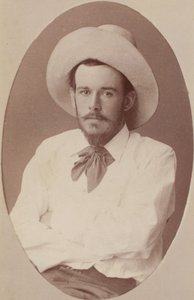
John Peter Russell
1858 - 1930 , Australia
Quick Facts
- Artistic Movement Or Style: Impressionism
- Artists Or Movements Influenced By This Artist: ['Henri Matisse']
- Artists Who Influenced This Artist:
- Claude Monet
- Vincent van Gogh
- Date Of Birth: 16 June 1858
- Date Of Death: 30 April 1930
- Full Name: John Peter Russell
- Nationality: Australian
- Notable Artworks:
- Van Gogh Portrait (1886)
- Belle Île Seascapes
- Madame Sisley (1887)
- Mon Ami 'Polite' (c. 1900)
- Place Of Birth: Sydney, Australia
Related Articles
Van Gogh's Masterpieces: Explore 25 Iconic Paintings & Art for Your Home
Journey through Vincent van Gogh's 25 most iconic paintings! Explore 'Starry Night', 'Sunflowers,' and more—discover the stories, techniques & emotions behind these Post-Impressionist masterpieces. Find museum-quality art reproductions for your home at ArtsDot.com.
John Singer Sargent's 25 Masterpieces: Portraits & Beyond | ArtsDot
Explore 25 iconic John Singer Sargent paintings – from dazzling portraits to Impressionist landscapes. Discover the stories behind Madame X, El Jaleo & more! Find museum-quality art reproductions and elevate your home decor with ArtsDot.com.
Decoding Van Gogh's Turmoil: ArtsDot’s Masterful Reproductions of Emotional Depth
Discover exquisite Van Gogh reproductions from ArtsDot – expert art specialists offering museum-quality prints & custom paintings. Trust our authentic process and elevate your collection today.
The Nuances of Graphite: Exploring Emotional Depth & Technical Mastery in Pencil Drawing
Explore the captivating world of graphite drawing! Discover its rich history, master essential techniques like chiaroscuro, and learn how artists evoke emotion through this timeless medium. Expert insights for art enthusiasts.

Rembrandt's Masterpieces: Explore 25 Iconic Paintings & Prints | ArtsDot
Journey through Rembrandt van Rijn's 25 most iconic paintings & etchings. Explore Dutch Golden Age masterpieces, dramatic chiaroscuro, and timeless portraits. Find museum-quality art reproductions to elevate your home decor on ArtsDot.com.