 Preview
 Send
Send Share
Share
 Details

 Download
 Similars
 X-Ray
X-Ray Diaporama
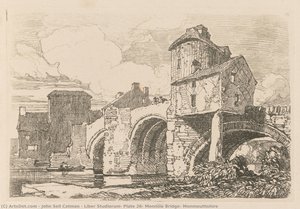
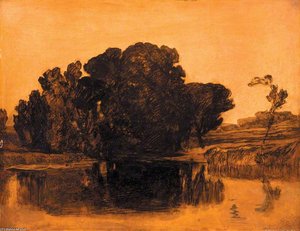
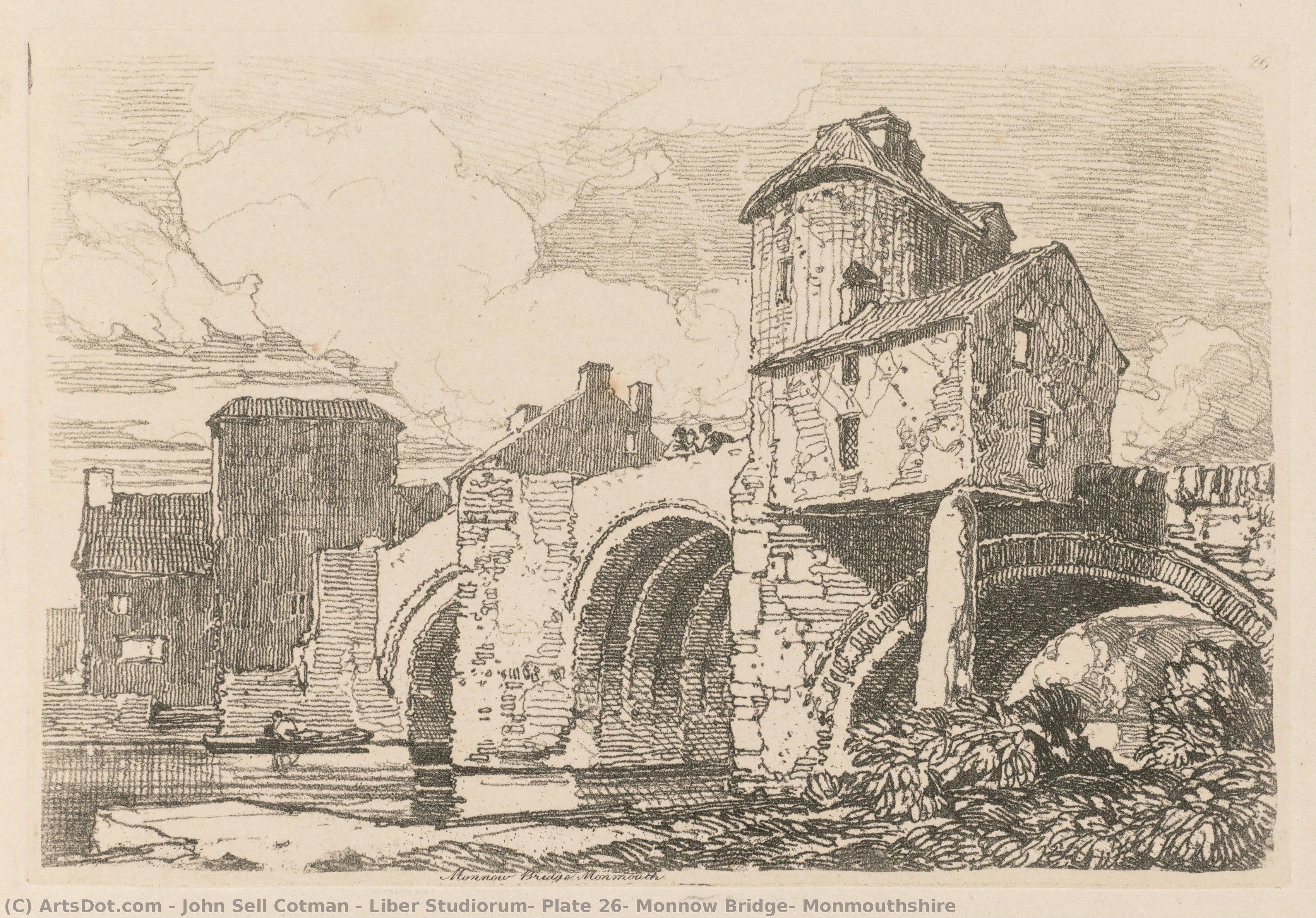
Liber Studiorum: Plate 26, Monnow Bridge, Monmouthshire
 Acrylic On Canvas
- WallArt
- Romanticism
 1838
1838 49.0 x 32.0 cm
 Cleveland Museum of Art
 Read More
Giclée / Art Print
Museum-quality giclée or canvas print with fast production and flexible finish options. ( Buy Hand Made Painting Buy Image)




P118B $10

P118H $10

P118W $10

P438Z $10

P508JH $12

P508YH $12

P805H $10

P805Z $10

P919BZ $10

P919G $10

P919XJ $10

P959ZH $10

P968JZ $12

W106C $8

W218G $10

W218JH $8

W218Y $10

W307PJ $10

W316G $10

W316PJ $8

W316Y $10

W398PJ $8

W4111J $10

W500HY $15

W500JH $15

W692G $12

W849H $8

W940BG $15

W953PJ $8




Pick from our preset sizes that match the artwork's original proportions.

You may enter your own dimensions to fit a specific frame or space. If your selected size does not match the original image's proportions, we will either crop the artwork or extend the image with a mirrored or solid-fill edge. A digital mockup will be sent for your approval before production begins.
Please note that the on-screen preview does not reflect the actual cropping or extension. Only the mockup will accurately show the final composition.
While custom sizes are available, we recommend selecting a dimension from the predefined list to preserve the original proportions.
Worldwide Delivery () in 2 weeks instead of standard 4/5 weeks. (16 August)

Free Worldwide Express Shipping

High-Quality Linen Canvas

Full Shipping Insurance

Customs Tax Refund Guarantee

True Color Matching Guarantee

60-Day Return Policy (Defects Only)

100% Money-Back Guarantee

Bulk Discount Offer
 Glass option is only available in size under 110 CM

Liber Studiorum: Plate 26, Monnow Bridge, Monmouthshire
Giclée / Art Print
Reproduction Size
-


Total Price
$ 63
Collectible Description
Liber Studiorum: Plate 26, Monnow Bridge, Monmouthshire – A Vision of Romantic Landscape
John Sell Cotman’s “Liber Studiorum,” published in London in 1838, represents a cornerstone of British Romantic landscape painting. This plate showcases his masterful depiction of Monnow Bridge, spanning the River Wye in Monmouthshire, Wales—a location that held particular significance for Cotman and served as inspiration for numerous sketches and watercolors throughout his career. The etching itself is executed with remarkable precision on soft ground, demonstrating Cotman’s dedication to capturing subtle tonal variations and textural nuances – a technique favored by Turner and Girtin during their formative years.- Subject Matter: The composition focuses intently on the bridge's architectural grandeur juxtaposed against the expansive Welsh countryside. Lush greenery dominates the background, punctuated by distant hills and atmospheric haze, creating a sense of sublime beauty characteristic of Romantic aesthetics.
- Style & Technique: Cotman’s style leans heavily into Impressionistic influences, prioritizing capturing fleeting moments of light and color rather than striving for photographic realism. The etching process itself contributes to this effect, allowing for nuanced shading and highlighting that would be impossible with oil paint alone.
- Historical Context: Produced during the Victorian era, “Liber Studiorum” reflects a broader artistic movement concerned with exploring emotion and imagination alongside observation of nature. It aligns perfectly with the burgeoning interest in topographical accuracy combined with expressive artistry—a trend championed by artists like Turner who sought to convey spiritual experience through visual representation.
- Symbolism: The bridge serves as more than just an architectural element; it symbolizes connection – linking the human realm to the untamed wilderness. Its weathered stone conveys resilience and permanence, mirroring the enduring beauty of the landscape itself.
- Emotional Impact: Viewing this print evokes a feeling of tranquility and awe—a testament to Cotman’s ability to translate his profound appreciation for nature into a powerfully evocative image. The muted palette and atmospheric perspective invite contemplation and encourage viewers to immerse themselves in the serene grandeur of Monnow Bridge.
Further Exploration
For those interested in delving deeper into Cotman's artistic legacy, examining similar works from “Liber Studiorum” offers invaluable insight into his stylistic evolution and thematic preoccupations. Furthermore, researching the broader context of Welsh landscape painting during the Victorian period illuminates the intellectual currents that shaped Cotman’s creative endeavors. The Metropolitan Museum of Art’s collection provides a superb resource for appreciating this seminal piece of Romantic art.Related Artworks
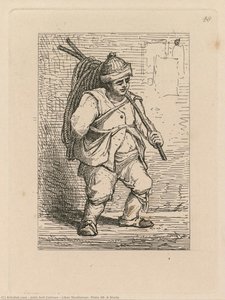
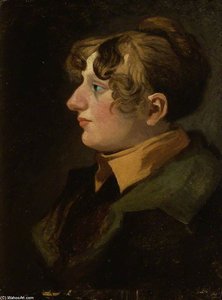
Artist Biography
A Norfolk Son: The Life and Art of John Sell Cotman
John Sell Cotman, a name synonymous with the evocative landscapes and maritime scenes of early 19th-century England, emerged from the thriving artistic community of Norwich to become a pivotal figure in British Romanticism. Born on May 16, 1782, into a family engaged in the prosperous trades of silk merchantry and lace dealing, Cotman’s path wasn't immediately destined for artistry. Yet, an innate sensitivity to the natural world and a burgeoning talent quickly steered him away from commerce and toward a life dedicated to capturing its beauty on canvas and paper. His early education at Norwich Grammar School provided a foundation, but it was his move to London in 1798 that truly ignited his artistic journey. There, he encountered the luminaries of the era – J.M.W. Turner, Peter de Wint, and Thomas Girtin – joining Girtin’s sketching club and embarking on formative excursions to Wales and Surrey. These experiences were transformative, instilling in him a passion for *plein air* observation and a dedication to translating fleeting impressions into enduring works of art. His debut at the Royal Academy in 1800, with scenes of Surrey and Harlech Castle, signaled the arrival of a significant new voice within the British art scene.
The Norwich School and Artistic Development
Cotman’s artistic identity became inextricably linked to the Norwich School, a group of painters who celebrated the distinctive character of the Norfolk countryside. Unlike many of their contemporaries preoccupied with grand historical narratives or idealized classical forms, the Norwich School artists focused on depicting the local landscape with realism and sensitivity. Cotman quickly rose as one of its leading figures, developing a style characterized by masterful watercolor technique, meticulous attention to detail, and a uniquely Romantic sensibility. He possessed an exceptional ability to utilize washes and dry brushstrokes to create atmospheric effects, capturing subtle nuances of light and color that imbued his landscapes with a sense of tranquility and mood. His etchings and illustrations further demonstrated his versatility and commitment to documenting the world around him. While grounded in observation, Cotman’s work often transcended mere representation, evoking feelings of melancholy, awe, or quiet contemplation through carefully constructed compositions and evocative perspectives. He wasn't simply recording what he saw; he was interpreting it through a lens of poetic feeling.
A Master of Mediums: Watercolor, Etching, and Beyond
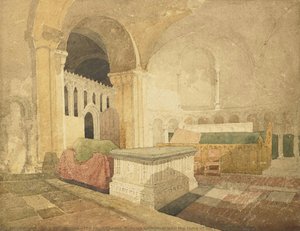
Cotman’s artistic output spanned a diverse range of mediums, but he is perhaps best known for his watercolor paintings. He elevated the medium to new heights, demonstrating its potential for expressive depth and atmospheric nuance. His watercolors are not merely sketches or studies; they are finished works of art that possess a remarkable sense of completeness. Beyond watercolor, Cotman was a prolific etcher, producing hundreds of plates that showcase his skill in line and tone. These etchings often served as preparatory studies for his paintings, but many stand on their own as compelling works of art. He also engaged in illustration, contributing to various publications with detailed and accurate depictions of architectural subjects and landscapes. This commitment to diverse artistic pursuits underscores his dedication to both technical mastery and a comprehensive exploration of the visual world. Notable examples include “The Jesus Chapel, Norwich Cathedral with the tomb of Sir Thomas Windham,” a quintessential example of the Norwich School’s style, and "View From Yarmouth Bridge, Norfolk, Looking Towards Breydon, Just After Sunset," which beautifully captures the charm of maritime life.
Legacy and Influence
John Sell Cotman's influence extended far beyond his own prolific output. He played a crucial role in shaping the development of British art, particularly within the context of the Norwich School movement. His emphasis on direct observation, atmospheric effects, and emotional resonance resonated with subsequent generations of artists. Furthermore, his dedication to teaching ensured that his artistic principles were passed down to a new cohort of painters. Both of his sons, Miles Edmund Cotman and John Joseph Cotman, followed in their father’s footsteps, contributing to the family's enduring legacy within the art world. Today, Cotman’s works are held in prestigious collections worldwide, including the Tate Gallery, the British Museum, the Victoria and Albert Museum, and the Yale Center for British Art. His paintings continue to captivate viewers with their beauty, sensitivity, and profound connection to the natural world. He remains a celebrated figure, not only as a master of watercolor and etching but also as a key representative of the Romantic spirit in English art. His dedication to capturing the essence of place and emotion ensures his enduring relevance for generations to come.
Further Exploration
- To delve deeper into Cotman’s life and work, visit ArtsDot.com or consult his Wikipedia page: https://en.wikipedia.org/wiki/John_Sell_Cotman
- Explore the extensive collection of Cotman’s works at the Castle Museum and Art Gallery in Norwich, boasting over 2000 pieces.
- Discover more about the Norwich School of painters and their contribution to British art history.
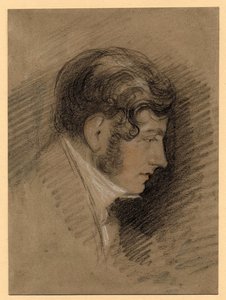
John Sell Cotman
1782 - 1842 , United Kingdom
Quick Facts
- Artistic Movement Or Style: Norwich School, Romanticism
- Artists Or Movements Influenced By This Artist:
- Norwich School painters
- Miles Edmund Cotman
- John Joseph Cotman
- Artists Who Influenced This Artist:
- J.M.W. Turner
- Peter de Wint
- Thomas Girtin
- Date Of Birth: May 16, 1782
- Date Of Death: 1842
- Full Name: John Sell Cotman
- Nationality: British
- Notable Artworks:
- Jesus Chapel, Norwich Cathedral
- View From Yarmouth Bridge
- Saint James Of Compostela
- An Old House At St Albans
- Drainage Mills In The Fens
- Place Of Birth: Norwich, UK
Related Articles

John Constable's Masterpieces: Explore 25 Iconic Landscapes for Your Home
Journey through John Constable's 25 most celebrated landscapes. Explore Romanticism, Dedham Vale & his masterful use of light in iconic paintings like 'Hay Wain'. Find museum-quality art reproductions and elevate your home decor on ArtsDot.com.
Watercolor Wonders: 10 Masterpieces That Redefined Art History | ArtsDot
Journey through 10 legendary watercolor masterpieces by Sargent, Turner & Homer! Explore iconic landscapes, portraits & floral art that redefined history. Find museum-quality reproductions and curated decor ideas at ArtsDot.com.

John Singer Sargent's 25 Masterpieces: Portraits & Beyond | ArtsDot
Explore 25 iconic John Singer Sargent paintings – from dazzling portraits to Impressionist landscapes. Discover the stories behind Madame X, El Jaleo & more! Find museum-quality art reproductions and elevate your home decor with ArtsDot.com.

Ephemeral Visions: Exploring the Artistic Legacy & Contemporary Practice of Watercolor Painting
Explore the captivating world of watercolor painting! Discover its rich history, essential techniques, influential artists & collecting tips. A comprehensive guide for art enthusiasts from ArtsDot.

Beyond the Horizon: 10 Landscape Masterpieces for Your Home Decor
Journey through 10 breathtaking landscape paintings by Monet, Van Gogh & more! Explore iconic artworks, artistic techniques & find inspiration for your home decor. Museum-quality reproductions at ArtsDot.com. Discover all masterpieces on ArtsDot.com