 Preview
 Send
Send Share
Share
 Details

 Download
 Similars
 X-Ray
X-Ray Diaporama
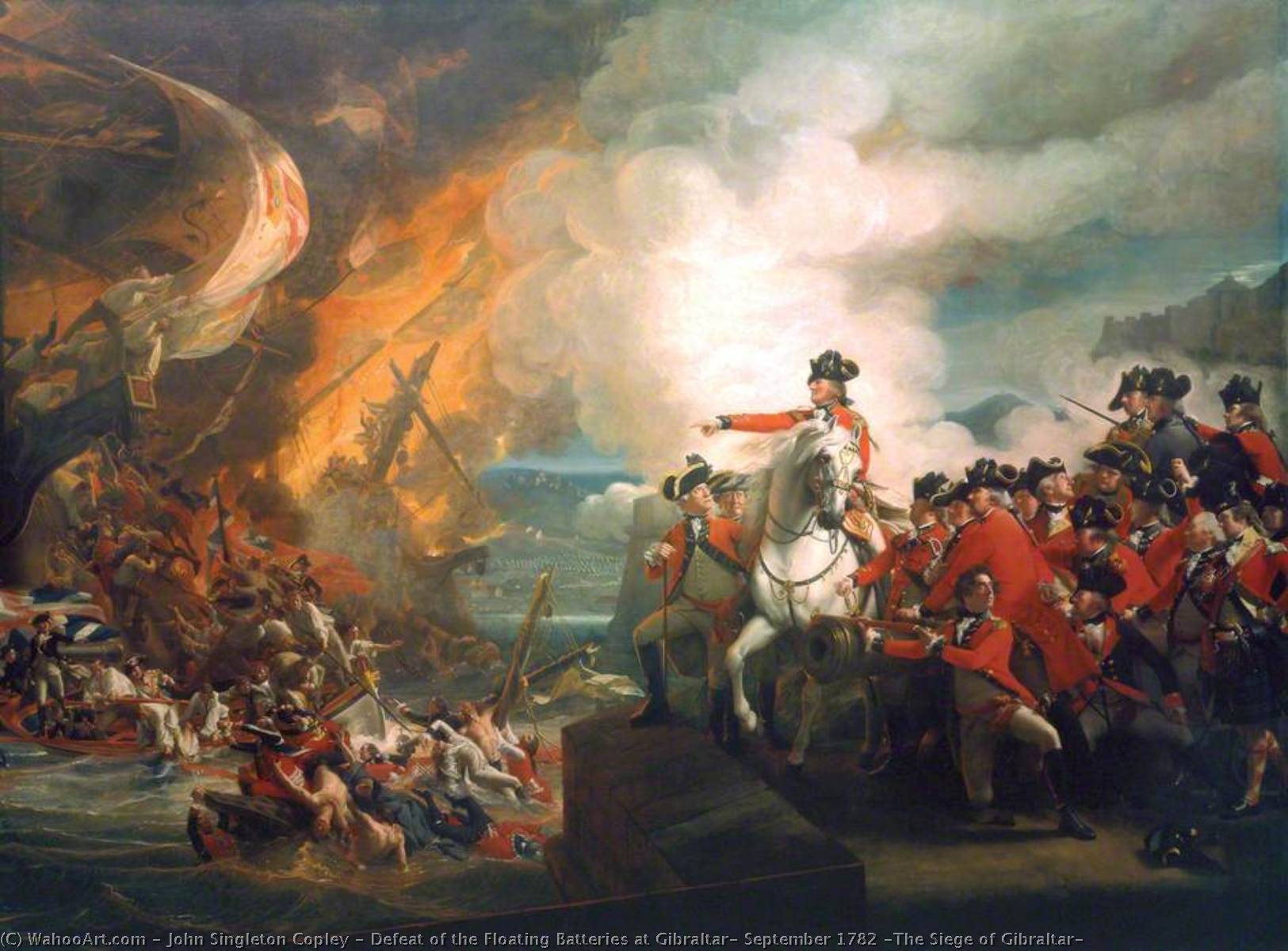
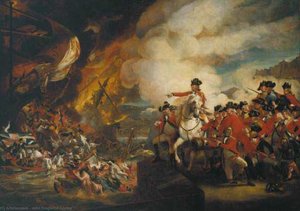
Defeat of the Floating Batteries at Gibraltar, September 1782 (The Siege of Gibraltar)
 Oil On Canvas
- WallArt
- Neoclassical Realism
 1791
1791 544.0 x 754.0 cm
 Guildhall Art Gallery
 Read More
Giclée / Art Print
Museum-quality giclée or canvas print with fast production and flexible finish options. ( Buy Hand Made Painting Buy Image)




P118B $10

P118H $10

P118W $10

P438Z $10

P508JH $12

P508YH $12

P805H $10

P805Z $10

P919BZ $10

P919G $10

P919XJ $10

P959ZH $10

P968JZ $12

W106C $8

W218G $10

W218JH $8

W218Y $10

W307PJ $10

W316G $10

W316PJ $8

W316Y $10

W398PJ $8

W4111J $10

W500HY $15

W500JH $15

W692G $12

W849H $8

W940BG $15

W953PJ $8




Pick from our preset sizes that match the artwork's original proportions.

You may enter your own dimensions to fit a specific frame or space. If your selected size does not match the original image's proportions, we will either crop the artwork or extend the image with a mirrored or solid-fill edge. A digital mockup will be sent for your approval before production begins.
Please note that the on-screen preview does not reflect the actual cropping or extension. Only the mockup will accurately show the final composition.
While custom sizes are available, we recommend selecting a dimension from the predefined list to preserve the original proportions.
Worldwide Delivery () in 2 weeks instead of standard 4/5 weeks. (16 August)

Free Worldwide Express Shipping

High-Quality Linen Canvas

Full Shipping Insurance

Customs Tax Refund Guarantee

True Color Matching Guarantee

60-Day Return Policy (Defects Only)

100% Money-Back Guarantee

Bulk Discount Offer
 Glass option is only available in size under 110 CM

Defeat of the Floating Batteries at Gibraltar, September 1782 (The Siege of Gibraltar)
Giclée / Art Print
Reproduction Size
-


Total Price
$ 63
Collectible Description
A Tempestuous Triumph: Copley’s “Defeat of the Floating Batteries”
John Singleton Copley's monumental canvas, "The Defeat of the Floating Batteries at Gibraltar," isn't merely a depiction of naval combat; it’s a vibrant tableau of strategic brilliance, desperate courage, and the raw energy of a pivotal moment in the American Revolutionary War. Completed in 1791, this imposing work—measuring over 42 square meters—captures the chaotic drama of the Great Siege of Gibraltar, a protracted struggle for control of a vital Mediterranean port between Britain and Spain. Copley, a Boston-born artist who later established himself in London, masterfully blends historical accuracy with dramatic flair, creating an image that resonates with both its immediate action and broader implications.
The painting’s genesis lies within the intense political climate of the late 18th century. Spain, allied with France, sought to wrest Gibraltar from British hands, a strategic foothold crucial for controlling trade routes in the Mediterranean. The siege itself was a protracted affair, marked by innovative weaponry on both sides – most notably, the Spanish deployment of “floating batteries,” ingenious vessels designed to bombard the fortress walls at close range. Copley’s commission by the City of London Corporation aimed to commemorate this decisive victory for the British, solidifying their control and bolstering morale during a period of significant upheaval.
A Symphony of Light and Shadow: Technique and Composition
Copley's artistic approach is immediately striking. He eschewed the traditional, often idealized, depictions of battle prevalent at the time, opting instead for a dynamic realism that vividly portrays the gritty realities of naval warfare. The composition is meticulously structured, guiding the viewer’s eye through the scene with a masterful use of light and shadow. A dramatic diagonal line, formed by the advancing British troops and the burning ships in the background, creates a sense of movement and urgency. The artist skillfully employs loose brushstrokes to convey the turbulence of the sea and the chaos of battle, while also rendering the figures with remarkable detail and sensitivity.
Notably, Copley’s decision to portray the action from the landward perspective—looking out to sea—was a deliberate departure from conventional naval paintings. This choice emphasizes the strategic importance of Gibraltar, highlighting the vulnerability of the Spanish fleet and the resilience of the British garrison. The use of muted colors – predominantly browns, grays, and ochres – contributes to the painting’s somber mood, punctuated by flashes of fiery red as the floating batteries succumb to British firepower. The inclusion of several prominent officers, rendered with individual character and bearing, elevates the scene beyond a simple depiction of combat, transforming it into a celebration of leadership and strategic acumen.
Symbolism and Emotional Resonance
Beyond its historical accuracy, “The Defeat of the Floating Batteries” is rich in symbolic meaning. The burning ships represent not just military defeat but also the destruction of Spanish technological innovation – a potent symbol of British ingenuity and dominance. The heroic figure of General George Augustus Eliott, commanding from the ramparts, embodies courage, strategic thinking, and unwavering resolve. His posture, his gaze fixed on the unfolding battle, conveys an almost palpable sense of command and determination.
Furthermore, the painting’s scale—one of the largest oil paintings produced by Copley—underscores its significance. It wasn't merely a record of events; it was intended to be a powerful statement about British strength and strategic prowess. The emotional impact is profound: viewers are drawn into the heart of the action, experiencing the intensity of the battle alongside the soldiers and officers depicted. The painting’s enduring appeal lies in its ability to capture not just a historical event but also the spirit of a nation at war.
A Legacy of Artistic Innovation
“The Defeat of the Floating Batteries” stands as a testament to John Singleton Copley's artistic vision and his pivotal role in shaping American art. His willingness to embrace realism, his innovative compositional techniques, and his ability to capture both historical detail and emotional depth cemented his place as one of the most important artists of his era. Reproductions of this magnificent work continue to captivate audiences today, offering a glimpse into a dramatic chapter in British military history and showcasing the enduring power of art to illuminate the past.
Related Artworks




Artist Biography
A Pioneer Bridging Worlds: The Life and Art of John Singleton Copley
John Singleton Copley, born in Boston in 1738, occupies a unique and pivotal position in the history of American art. He wasn’t merely a painter; he was a cultural bridge, forging a distinctly Anglo-American aesthetic during a period of immense political and social upheaval. His story is one of self-taught brilliance, relentless ambition, and an uncanny ability to capture not just likenesses, but the very essence of his subjects within the context of their time. Copley’s early life was steeped in the bustling maritime world of colonial Boston, a city brimming with merchants, shipbuilders, and burgeoning wealth. His father, Richard Copley, though absent shortly after John's birth, was a tobacco merchant, while his mother, Mary Singleton Copley, ran a shop on Long Wharf. This environment instilled in young John an acute awareness of the material world – the textures of fabrics, the gleam of silver, the subtle nuances of social standing – all elements that would later define his artistic style. His stepfather, Peter Pelham, an engraver and limner (an artist who created portraits on vellum or parchment), provided some initial guidance, but Copley’s talent was largely self-cultivated through diligent study and practice. He devoured any available engravings, meticulously copying them to master technique, and quickly surpassed his stepfather's abilities.The Rise of a Colonial Portraitist
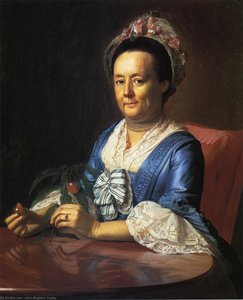
By the 1760s, Copley had established himself as Boston’s premier portraitist, catering to the city’s elite. His success wasn’t simply due to technical skill; it was his ability to imbue his portraits with a psychological depth rarely seen in colonial American art. He moved beyond mere representation, striving to capture the character and social standing of his sitters. This involved meticulous attention to detail – the precise rendering of fabrics, jewelry, and furnishings – but also a keen understanding of posture, expression, and gesture. Copley’s portraits weren't just images; they were statements about wealth, power, and social aspiration. He skillfully incorporated symbolic objects into his compositions, subtly hinting at his subjects’ professions or interests. A merchant might be depicted with imported goods in the background, a lawyer with legal texts, or a naval officer with nautical instruments. This attention to detail and symbolism elevated his work beyond simple portraiture, transforming it into a form of social commentary. His portraits of prominent figures like *Mrs. Ezekiel Gondthwait (Elizabeth Lewis)* exemplify this approach – the elegant pose, luxurious fabrics, and subtle details all convey a sense of refinement and status.Ambition and the Call of Europe
Despite his success in Boston, Copley harbored ambitions that extended beyond the colonial art world. He yearned for recognition from the established artistic circles of London and Rome, and sought to test his skills against the masters of European painting. In 1766, he sent his *Boy with a Flying Squirrel* to the Society of Artists in London, where it received considerable praise from Joshua Reynolds and Benjamin West – two leading figures in the British art scene. This encouragement fueled Copley’s desire for further training and exposure. However, family obligations and a thriving practice kept him rooted in Boston for another decade. Finally, in 1774, with his wife Susanna Farnsworth Clarke and their children, he embarked on a journey to Europe, intending to study the Old Masters and establish himself as a historical painter. The outbreak of the American Revolution shortly after his arrival complicated matters, forcing Copley to navigate a politically charged environment while pursuing his artistic goals.Historical Narratives and Lasting Legacy
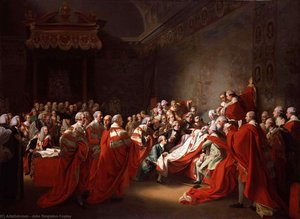
In London, Copley found both opportunities and challenges. He continued to paint portraits, securing commissions from prominent British figures, but he also turned his attention to historical painting – a genre considered more prestigious than portraiture at the time. His most ambitious work in this vein was *The Death of Major Peirson*, depicting a scene from the Battle of Jersey during the American Revolutionary War. While technically impressive, it received mixed reviews, with some critics questioning its composition and dramatic impact. Copley’s later historical paintings, such as *The Colapse of the Earl of Chatham in the House of Lords*, were more successful, demonstrating his ability to capture complex emotions and dramatic moments. Though he never fully achieved the level of acclaim he sought in Europe, John Singleton Copley left an indelible mark on both American and British art history. He pioneered a uniquely Anglo-American style, blending European techniques with a distinctly colonial sensibility. His portraits remain invaluable historical documents, offering glimpses into the lives and values of a bygone era. He is remembered not only for his artistic skill but also for his role in shaping a national identity through his art. He died in London in 1815, leaving behind a legacy that continues to inspire artists and captivate audiences today.Influences and Artistic Development
- Early Influences: Copley’s early artistic development was heavily influenced by the engravings he meticulously copied, particularly those of European masters like Rembrandt van Rijn and Antoine Watteau.
- Peter Pelham's Guidance: His stepfather, Peter Pelham, provided initial training in portraiture and engraving techniques, laying the foundation for his future success.
- Joshua Reynolds & Benjamin West: The encouragement and feedback from these prominent British artists during Copley’s early submissions to London exhibitions were crucial in shaping his ambitions and artistic direction.
- Rococo Style: Copley initially embraced the Rococo style, evident in his use of delicate colors, graceful poses, and ornate details. However, he gradually moved towards a more realistic and restrained approach.
- Historical Painting Inspiration: His exposure to historical paintings by artists like Benjamin West inspired him to explore this genre, though he often struggled to fully reconcile it with his natural talent for portraiture.

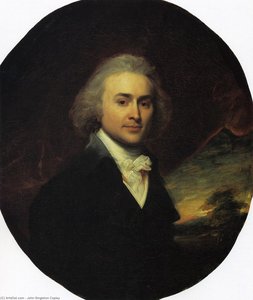
John Singleton Copley
1738 - 1815 , United Kingdom
Quick Facts
- Artistic Movement Or Style: Portraiture, Realism
- Artists Or Movements Influenced By This Artist: Generations of artists
- Date Of Birth: 1738
- Date Of Death: 1815
- Full Name: John Singleton Copley
- Nationality: Anglo-American
- Notable Artworks:
- Earl of Chatham
- Mr. & Mrs. Izard
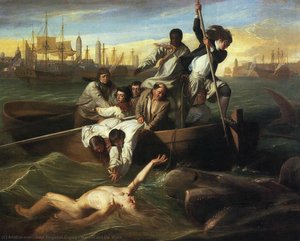
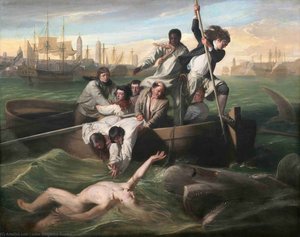
- Watson and the Shark
- Place Of Birth: Boston, UK
Related Articles

The Golden Age Reforged: Dramatic Realism & Religious Zeal in Spanish Baroque Art
Explore the dramatic world of Spanish Baroque art! Discover masters like Zurbarán & the powerful influence of religious zeal on painting techniques – a guide for collectors and enthusiasts.
British Museum Masterpieces: Explore 25 Iconic Artworks & Decor Inspiration
Journey through 25 iconic artworks at the British Museum, London! Explore masterpieces from Egyptian sculptures to Renaissance paintings & uncover their stories. Find museum-quality art reproductions and curated decor ideas on ArtsDot.com.
Thomas Butterworth (1768–1842): Navigating the Aesthetics of British Marine Painting
Explore the captivating maritime art of Thomas Butterworth (1768–1842). Discover his stunning depictions of Napoleonic naval battles and life at sea, commissioned works for the East India Company, and enduring legacy. Learn more today!

Rafael de Penagos: A Study in Spanish Portraiture & Artistic Identity
Explore the life & art of Rafael de Penagos, a leading Spanish Art Deco illustrator. Discover his iconic 'Penagos Woman', commercial work, and lasting legacy. Learn about this pivotal figure in 20th-century Spanish art history.
Philip James de Loutherbourg: Romantic Visions of Maritime Life & the Sublime
Explore the dramatic naval scenes & landscapes of Philip James de Loutherbourg (1740-1812), a key figure in Romantic painting. Discover his legacy, theatrical innovations & iconic works like 'The Battle of the Nile' at ArtsDot.